The Best Small Towns To Retire In Alabama
Fairhope draws so many retirees to the bluffs above Mobile Bay that its median age has climbed past 48, nearly a decade older than the Alabama average. Florence anchors the Shoals along the Tennessee River with a college town's cultural calendar and home values under $200,000. Guntersville wraps a walkable downtown around the largest lake in the state. Retirement in Alabama runs on specifics like these, helped along by a state that exempts Social Security and traditional pension income from tax and carries one of the lowest effective property tax rates in the country, with residents 65 and older exempt from the state portion entirely. The eight towns below span the Tennessee Valley, the Appalachian foothills, two of the South's premier lakes, and the eastern shore of Mobile Bay, each with its own version of an affordable and walkable retirement.
Florence

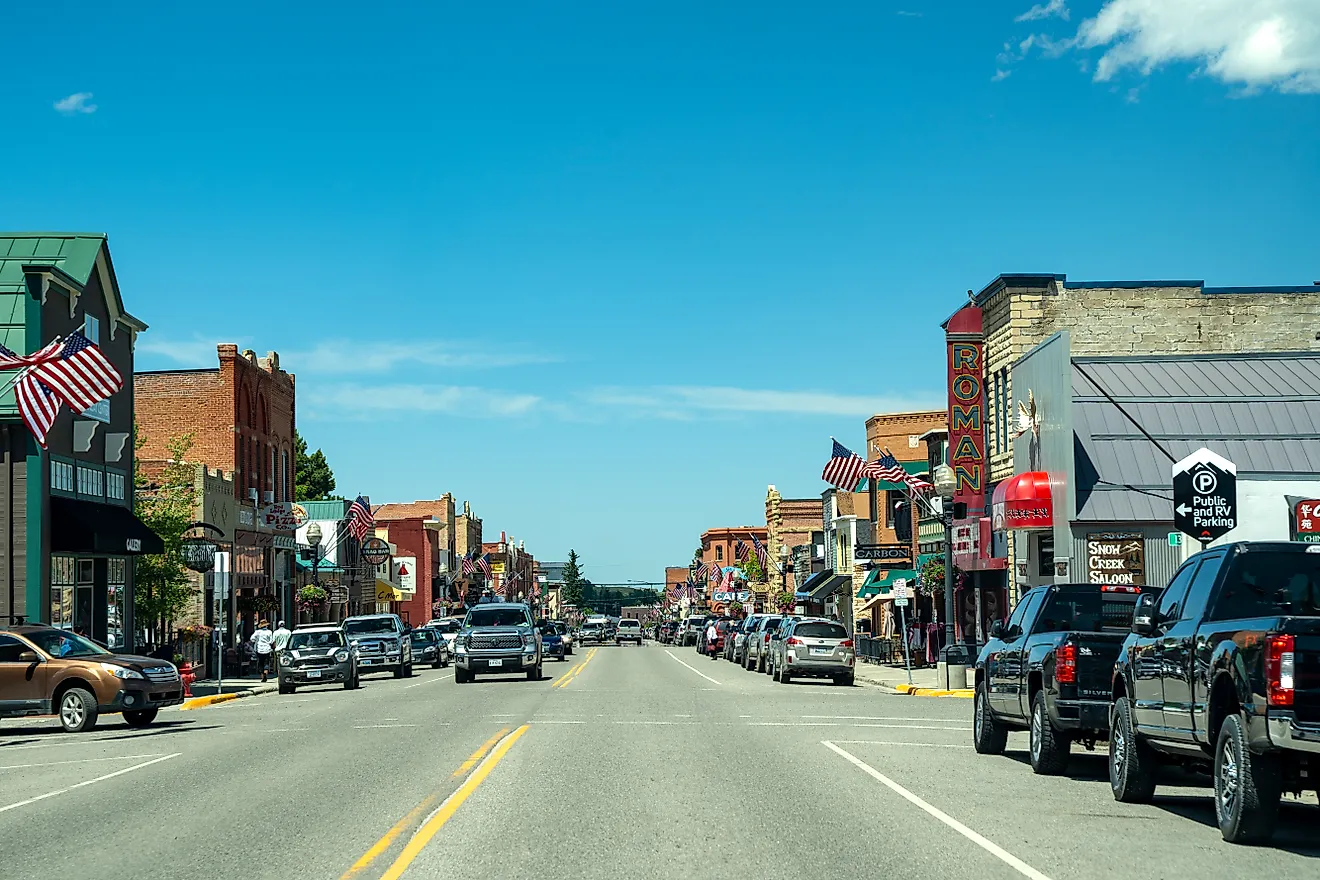
Florence sits on the north bank of the Tennessee River in the northwest corner of the state, the largest of the four Shoals communities and home to the University of North Alabama, whose downtown campus keeps a year-round calendar of lectures, theater, and free public concerts. The riverfront and Wilson Park anchor a walkable core, and the W.C. Handy Music Festival each July fills the streets in honor of the Florence-born musician regarded as the father of the blues. The Frank Lloyd Wright Rosenbaum House, the only Wright-designed building in Alabama, operates as a museum a few blocks from the river.
The cost of living in Florence runs roughly 20 percent below the national average, with home values around $200,000, and about 18 percent of residents are 65 or older. McFarland Park on the river runs a campground, walking trail, and boat access right at the edge of town, and the surrounding Tennessee River lake system (Wilson Lake and Wheeler Reservoir) keeps fishing and boating close at hand. North Alabama Medical Center provides acute and emergency care in town, with Helen Keller Hospital across the river in Sheffield. The university's lifelong-learning offerings let residents audit courses, which is part of why the Shoals has drawn a steady retiree following.
Guntersville

Guntersville occupies a peninsula nearly surrounded by Lake Guntersville, the largest lake in Alabama at roughly 69,000 acres with more than 900 miles of shoreline. The walkable downtown runs antique stores, boutiques, and the City Harbor waterfront development, where cafes, a steakhouse, and live music sit directly on the water. The Guntersville Museum, housed in a former National Guard armory, keeps free rotating exhibits on lake history and regional Native American artifacts.
Lake Guntersville State Park covers about 5,900 acres on the eastern shore with a lodge, an 18-hole golf course, a beach complex, and a hiking network, and the lake is a nationally ranked bass-fishing destination that hosts major tournaments through the year; wintering bald eagles draw birders to the park each January. Home values run in the low-to-mid $300,000s, and the overall cost of living sits near the national average. Marshall Medical Center North, a 90-bed acute-care hospital with a Trauma III emergency department, serves the town, and a VA outpatient clinic handles routine care for military retirees. The town markets itself plainly as Alabama's lake city, and the population of about 9,500 keeps it firmly small-town in scale.
Fort Payne

Fort Payne sits in a valley between Lookout Mountain and Sand Mountain in the southern Appalachians of northeastern Alabama, eight miles below DeSoto State Park and its 3,500 acres of Civilian Conservation Corps-built cabins, sandstone-ledge waterfalls, and the boardwalk-accessible Talmadge Butler Trail. Little River Canyon National Preserve, one of the deepest canyon systems east of the Mississippi, runs along the mountain's southern rim with overlooks and a paved rim parkway. The 1891 Fort Payne Depot Museum, a Richardsonian Romanesque train station on the National Register, traces the region through Cherokee removal and the city's mining and textile-mill eras.
Fort Payne built its 20th-century economy on hosiery mills and is the hometown of the country band Alabama, whose fan club and annual June celebration still draw to town. Home values here run under $200,000, among the most affordable on this list, and Chattanooga's metro amenities are about an hour northeast. DeKalb Regional Medical Center, a 134-bed acute-care hospital with 24-hour emergency services, anchors in-town healthcare. The DeKalb County seat carries about 14,000 residents, and the mountain setting gives it cooler summers and actual fall color, which is rarer in the Deep South than the brochures suggest.
Alexander City

Alexander City stands at the north end of Lake Martin, a 44,000-acre reservoir with 750 miles of wooded shoreline that has become one of the most sought-after lake-retirement markets in the Southeast. Wind Creek State Park, seven miles south, runs more than 600 campsites and a public beach on the western shore, and the Russell Lands development at Russell Crossroads adds a market, a restaurant, and an open Towne Green for weekend music. Hank Williams wrote "Kaw-Liga" and "Your Cheatin' Heart" while staying at a Lake Martin cabin in 1952.
The town sits inside the triangle formed by Atlanta, Birmingham, and Montgomery, each roughly 90 minutes to two hours away, with a low crime rate and a cost of living below the state average. Russell Medical, an 81-bed acute-care hospital founded in 1923 and a member of the UAB Health System since 2020, runs a UAB-affiliated cancer center, robotic surgery, and an outpatient rehabilitation wing; its Russell Legacy Project is adding 26 single-family cottages and a dedicated center for aging-population care on the hospital campus. Willow Point Golf and Country Club and the city-owned Lake Winds course handle the golf calendar. The population is about 14,500.
Opelika

Opelika runs its retirement appeal through a restored downtown: the Railroad Avenue Historic District preserves 105 brick commercial buildings on the National Register, with an active rail corridor and storefronts now holding restaurants, galleries, and a Saturday market beneath the 1896 Lee County Courthouse. The Robert Trent Jones Golf Trail's Grand National course, ranked by Golf Digest among the best public golf in the country, sits just outside town. Auburn University is next door in Auburn, and Columbus, Georgia, lies about 28 miles east across the Chattahoochee.
The Opelika SportsPlex and Aquatics Center keeps an indoor pool, an indoor walking track, and sports fields under one roof, and Chewacla State Park, 12 miles south, runs a 26-acre lake with hiking and cottage camping. Healthcare in Opelika is a genuine regional asset rather than a single hospital: East Alabama Medical Center is a 316-bed acute-care hospital serving an 11-county area, recognized as a Best-In-State hospital and a Level III Trauma Center. Property taxes here run roughly 0.4 percent of value, and the population of about 33,000 has been growing steadily on the back of the Auburn-Opelika economy.
Daphne

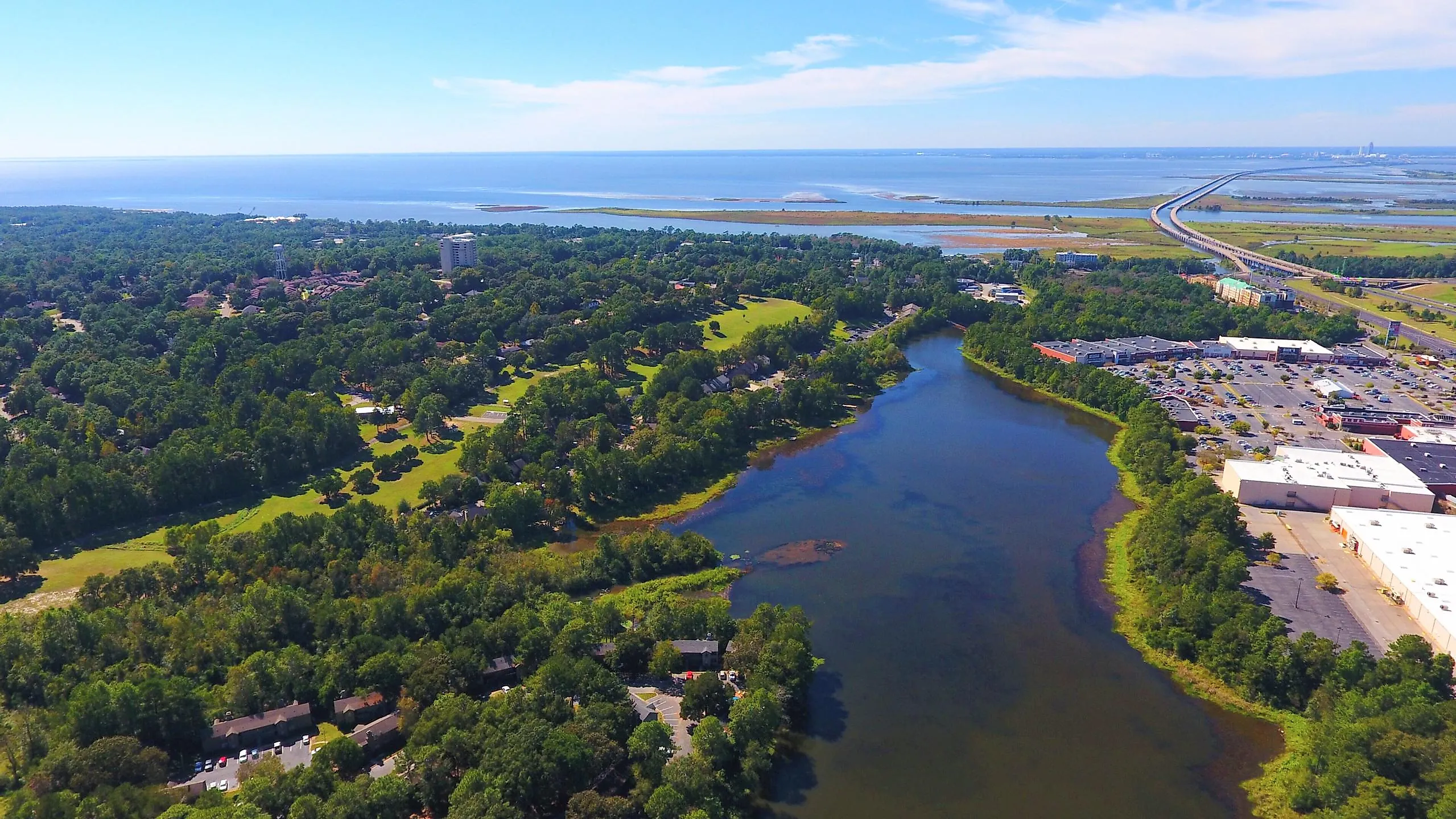
Daphne sits on the bluffs of the eastern shore of Mobile Bay, the largest city in Baldwin County and a longtime residential base for Gulf Coast retirees, with about 17 percent of residents over 65. The town is known as the Jubilee City for an unusual overnight event in which crabs, shrimp, and flounder crowd into the bay shallows, drawing residents to the water with buckets and nets, a phenomenon documented in only a couple of places worldwide. Village Point Park Preserve, a 70-acre nature reserve on the bayfront, runs boardwalks and trails through marshland busy with pelicans, terns, and herons.
May Day Park and Bayfront Park add bay access and sunset views within the town itself, and Historic Blakeley State Park, just north, preserves the site of one of the last major battles of the Civil War alongside river trails. Home values average around $323,000, higher than the inland towns on this list but below the coastal beachfront. Thomas Hospital, a certified Primary Stroke Center, is seven miles south in Fairhope, and Daphne itself runs several senior-living communities including The Brennity and Seagrass Village. As with the rest of the Gulf Coast, hurricane exposure is a real planning factor, and homeowners should account for wind and flood insurance costs.
Fairhope

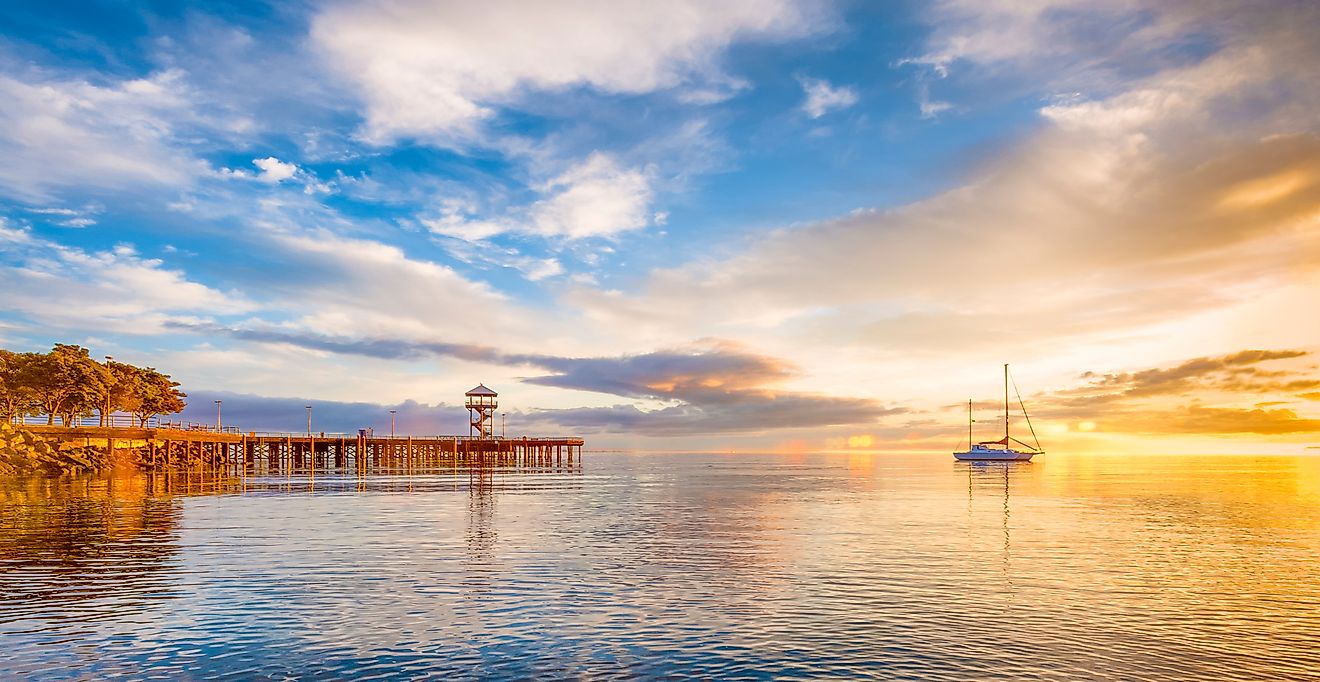
Fairhope was founded in 1894 as a single-tax utopian colony on the eastern shore of Mobile Bay, and the deliberate planning that came with that founding left a downtown that still ranks among the most walkable in the state, with flower-lined streets, independent bookstores and galleries, and a Municipal Pier reaching into the bay for the sunset crowd. The town's median age has climbed past 48 as retirees and artists have continued to settle, one of the oldest age profiles of any Alabama city. The Fairhope Arts and Crafts Festival each March draws well over 100,000 visitors across a single weekend.
Weeks Bay National Estuarine Research Reserve, a short drive south, protects a tidal estuary with boardwalks and a pitcher-plant bog. Fairhope's home prices and median household income both run well above the state average, reflecting the demand that the bay-front setting and the downtown have created. Thomas Hospital, a Primary Stroke Center serving the entire eastern shore, is in town. The population of roughly 24,000 to 27,000 has been among the fastest-growing in Alabama, and the same Gulf hurricane exposure that affects Daphne and Foley applies here, with insurance priced accordingly.
Foley

Foley sits about 12 miles inland from the white-sand Gulf beaches of Gulf Shores and Orange Beach, close enough for regular beach days without the beachfront price tag or the direct surge exposure, and a 2024 GOBankingRates study ranked it the most cost-effective retirement city in the United States. Downtown Foley pairs a restored railroad-heritage district and the twice-weekly Heritage Park farmers market with Tropic Falls at OWA, a 520-acre entertainment complex with an indoor water park and a pedestrian shopping-and-dining district.
Graham Creek Nature Preserve covers about 500 acres on the south side of town with disc golf, kayak launches, and woodland trails, a quieter counterpoint to the OWA crowds. The median listing price in Foley ran around $335,000 in 2025, and Live Oak Village is among the better-known full-service retirement communities in town. Baldwin Health, a 142-bed hospital, provides inpatient, emergency, and surgical care within Foley itself, which is part of what lifted the town's retirement ranking. The Gulf Coast hurricane considerations that apply across Baldwin County apply here too, though the inland position offers somewhat more shelter than the beachfront communities to the south.
Matching The Town To The Retirement
The eight towns sort cleanly along a few axes. For the lowest entry price, Fort Payne and Florence both keep home values under or near $200,000, with Fort Payne adding mountain seasons and Florence adding a university town's calendar. For lake living, Guntersville and Alexander City offer two of the South's largest reservoirs, one in the north and one in the central part of the state, each with a state park and a regional hospital. Opelika sits in the middle on price while offering the deepest in-town medical resource on the list in East Alabama Medical Center. The eastern-shore trio of Daphne, Fairhope, and Foley carries the highest prices and the Gulf hurricane exposure, but also the warmest winters, the most established retiree infrastructure, and proximity to the beaches; Foley trades a little distance from the water for the lowest cost of the three. The state tax treatment, low property taxes, and exemption on Social Security and pension income hold across all eight.