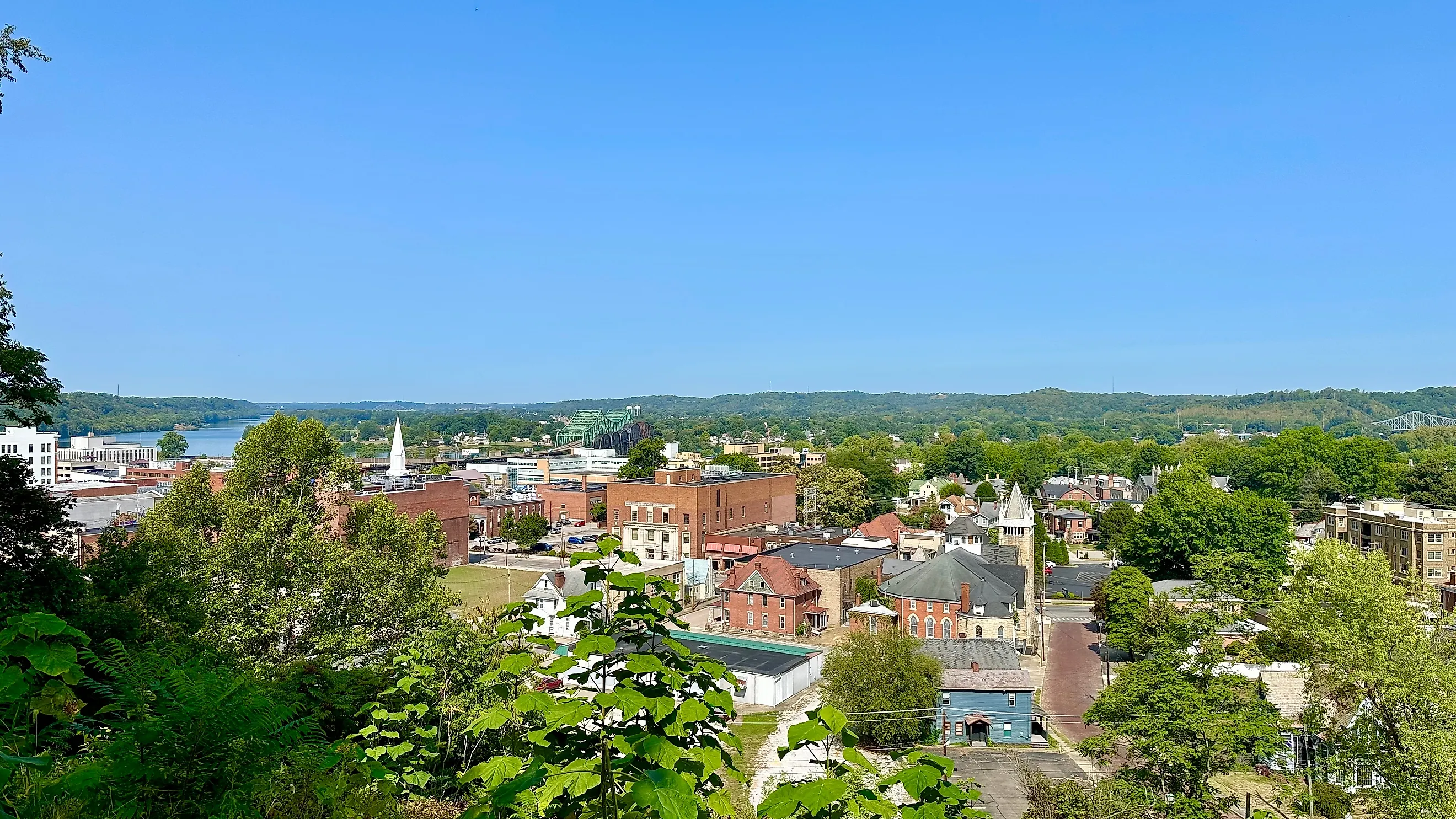
10 Most Neighborly Towns In West Virginia
West Virginia has long held the slogan “Wild and Wonderful,” and while the wild can speak for itself, the wonderful often comes from the experiences hidden in countless little towns. From Wheeling’s historic Centre Market, a thriving marketplace that predates the state itself, to the award-winning dining and artisan shops of Lewisburg, the Mountain State has long been home to the kind of people who have never met a stranger. The ten communities represented here share something that cannot be quantified or qualified in any list or any other way: a genuine, unhurried way of life that makes every person who comes through the community feel, almost instantly, that they have come home.
Wheeling

Wheeling’s position in the northern panhandle allows it to sit as a centerpiece of the state as Interstate 70 departs Ohio and enters Pennsylvania, crossing a small section of the Mountain State in the process. A short look through the landmarks and attractions, and it’s easy to see how history drives much of the tourism here in “The Friendly City.” Wheeling has been the state’s first capital twice, and it’s the place where delegates met to create a new state in 1863. This is also reflected in the city’s early days, with river trade, nail manufacturing, and glass factories, which created real prosperity, as seen in the brick buildings along Main and Market Streets.
The Centre Market was here 10 years before the state formed during the Civil War and continues to operate today. The scene is bustling with small shops, bakeries, and a candy store that spans the first floor of two small buildings. Located within the main structure, anchoring Centre Market, Coleman’s Fish Market offers its famous fried fish sandwich, a regional favorite. Just a few blocks away, the West Virginia Independence Hall is dedicated to the rooms where the plans for the new state were drawn up in 1861. From the split with Virginia, the exhibits show the state's evolution through original documents and restored rooms, giving visitors a sense of the changes in the state’s history.
Lewisburg

One of the focal points for travelers to Greenbrier County is Lewisburg. Established in 1782, much of the architecture of buildings from the 1700s and 1800s remains visible on Washington Street. Along that road, older facades now house art galleries, bookstores, and wine shops. Many travelers to Lewisburg find themselves at the historic local accommodation, the General Lewis Inn, which has been here and has been continually operating since 1929. This is a testament to the spirit of its ownership, much of which has been a single family, for the thousands of guests over the past nearly 100 years.
Lewisburg offers many dining options, and many choose the Stardust Café, which evolved from a small bakery and coffee shop into a full-blown sit-down restaurant serving upscale dishes. Away from the city center, natural attractions like the Lost World Caverns await the adventurous members of a group. The tour here quickly dips beneath the surface, moving through rock shapes shaped by time.
Beckley

Deep within the coal-rich terrain of southern West Virginia, Beckley began as a modest county seat established in 1838. As mines opened across the region during the late nineteenth century, so did its role grow beyond local governance into a bigger epicenter for what the regional residents needed. Beckley, positioned near New River Gorge National Park and Preserve, now serves travelers seeking access to rugged trails and running rivers as a county base of operations.
Along Neville Street, you find restaurants like The Char, known for flame-kissed cuts of meat paired with daily catches, served in warm, unpretentious surroundings, despite the upscale dishes. To learn about the growth of Beckley, visitors often take a trip through the Beckley Exhibition Coal Mine. This is a one-of-a-kind experience: a trip into a mine with a former miner, aboard a vintage rail car, as the host explains the process, regales stories, and answers questions.
Weirton

Large enough to span into Brooke and Hancock Counties, Weirton has always been a city that was shaped by steel. Established in 1909 by Ernest Tener Weir, the company known as Weirton Steel rose near the Ohio River; for many years, its mills influenced life in the city and exported its product around the globe. Although output has lessened over time, the industry remains central to how the town moves and functions in this community. Exploring the history here will take a visitor to the Weirton Area Museum and Cultural Center, where old pictures, artifacts, and tools showcase the region’s path from its first inhabitants to its peak industrial years.
Take the time to experience one local custom, DiCarlo's Pizza, which offers a distinct square-cut style. The crust is baked with sauce and then topped with cold cheese and other toppings, letting the cheese melt as you snack. Just a short distance away, inside the small town of Newell, visitors to Hancock County find another regional attraction that draws visitors from all over the country: The Homer Laughlin China Company, which makes the colorful ceramic Fiesta Dinnerware.
Parkersburg

Roughly halfway between Wheeling and Charleston, at the confluence of the Ohio and Little Kanawha Rivers, is Parkersburg. Homes rise close together in Julia-Ann Square, each one part of a quiet neighborhood pattern formed long ago; most date between 1850 and 1910, their facades showing off varied designs from a time fond of ornate details. A short walk leads to Holl's Swiss Chocolatiers, where handmade truffles are crafted using methods passed down through generations.
One spot has remained open since 1899: North End Tavern is much more than a pub. This has been a gathering spot for the community, offering a wide menu of comforting food and laying claim as the oldest restaurant in the state. Along the water, paddle-driven boats carry visitors toward Blennerhassett Island Historical State Park. There, a rebuilt home from 1798 stands amid guided tours in period attire, alongside carriage trips that reveal ties to Aaron Burr, the famous political rival of Alexander Hamilton.
Martinsburg

Headed to the eastern panhandle, keep an eye out for the town of Martinsburg. This place is growing fast, mostly because it sits so close to Washington, DC, that it has become a natural spot for commuters. The town itself dates back to 1778, and its prominence grew significantly in the mid-19th century with the arrival of the Baltimore & Ohio Railroad. Several signs still point to that time in the community’s life, such as the historic B&O Railroad Roundhouse.
To truly experience the welcoming nature of the ever-expanding Martinsburg, visitors should begin with the historic King Street district. This part of town is lively and active, with boutiques, galleries, and eateries in buildings originally built in the mid-1800s. A good example of the kind of finds to discover here includes a popular stop for sweet treats, Annie’s Cookie Bakery, operating out of a repurposed historic home.
For an even greater deep dive into history, specifically the parts that this city played in national conflicts like the Civil War, guests should carve out time to visit the Belle Boyd House, a property once belonging to a famed Confederate spy positioned here. Today, it’s a fascinating museum to walk through some of the unknown espionage that shaped the war.
Morgantown

Morgantown is one of the largest cities in the state, but still small enough to be considered personable. Much of what happens here is connected to West Virginia University, the state's flagship institution and home of the Mountaineers. Even beyond the school’s gentrification of the community, generations of families have called Morgantown home and have appreciated its convenient location along the Monongahela River for outdoor recreation, including swimming, kayaking, and fishing. Morgantown is also a convenient base for exploring the nearby Cooper’s Rock State Forest, about 15 miles away. This natural wonder overlooks the Cheat River Gorge from a massive sandstone overlook, offering sweeping views that have drawn visitors since the 1800s.
High Street is a popular place for those wanting to experience the pulse of what makes Morgantown a neighborly community. Red-brick pathways pass small music stores, reading spots, and outdoor seating that is often full of local residents and students alike as they bustle through downtown. A now-familiar name, Iron Horse Tavern at 140 High Street is renowned throughout the city and among students for its combination of pub fare, sizable burgers, and craft beers.
Charles Town

Established in 1786 by Charles Washington (George Washington’s younger brother), the town reveals its past through the streets you pass as you stroll through. Streets like George, Samuel, and Lawrence are tied to Charles’ family, and the community's layout is compact and walkable. In the middle rests the Jefferson County Courthouse, the site of John Brown’s 1859 trial following events at Harpers Ferry. The Jefferson County Museum, located nearby in a separate historic building, houses artifacts related to John Brown’s trial, the raid on the federal arsenal at Harpers Ferry, and exhibits on slavery and abolition during this tumultuous period in American history.
When exploring the blocks of the historic downtown, many of the residents in the region will point people to Abolitionist Ale Works. The establishment's name points to Charles Town's role in the John Brown trial and sentencing; they serve delicious pizza pies and brews that keep you coming back for more.
Clarksburg

Founded in 1785, Clarksburg is one of the most neighborly communities in central West Virginia. The town has multiple layers of history connected to wars, beginning with its naming in honor of Revolutionary War hero George Rogers Clark. During the Civil War, the town served as a key resupply hub for Union forces. A good look at the patriotic focus of this municipality is at the Harrison County Courthouse, which features a statue of the most famous military figure from Clarksburg, Thomas “Stonewall” Jackson, and a flagstaff taken from the USS West Virginia, a sunken ship from the infamous attack on Pearl Harbor in World War II.
For more about the renowned Confederate military strategist Stonewall Jackson, visitors to Clarksburg often stop by his birthplace, memorialized by a plaque on Main Street, and at the Clarksburg History Museum. Many of the earliest immigrants to Clarksburg were said to be Italian, and that celebration of this heritage lives on in the popular eatery here in town, Minard's Spaghetti Inn. The restaurant has been operating since the late 1930s, serving hand-shaped noodles and a house-made sauce.
Point Pleasant

Point Pleasant lies at the confluence of the Kanawha and Ohio rivers. Called Tu-Endie-Wei (“point between two rivers”) by the Wyandotte people, the town’s strange and sometimes violent history took shape here during the 1774 clash known as the Battle of Point Pleasant. Today, a green space where combat once occurred is the Tu-Endie-Wei State Park. Inside the park, there is a solid granite monument meant to recognize the frontiersmen who were killed in the famous battle here. Another structure in the park, the Mansion House Museum, was once a tavern that served these same frontiersmen, braving the rough conditions of untamed West Virginia.
The Mothman is the main focus of Point Pleasant these days, with a festival every September featuring live music, experiences, storytelling, and food that draws thousands of cryptid enthusiasts to dive into the lore. One of the centerpieces of this unique story of a flying, red-eyed beast that was present when a tragedy struck the town in the late 1960s is the Mothman Museum on Main Street.
Neighborly Places in West Virginia
Feeling welcome in West Virginia often goes far beyond the signs you see when you cross the state line. Neighborly communities are beckoning travelers to experience the Wild and Wonderful that the state is known for, from Cooper’s Rock State Forest near Morgantown, to the proximity to New River Gorge in spots like Beckley. When you seek out the history found in every single one of the downtowns on this list, you find places that helped to form the state in the Civil War, held the trial for a famous abolitionist, or became a legendary location for one of the nation’s most recognized cryptid monsters. Every town has a story to tell and a population that cannot wait to take a minute and tell you all about it.