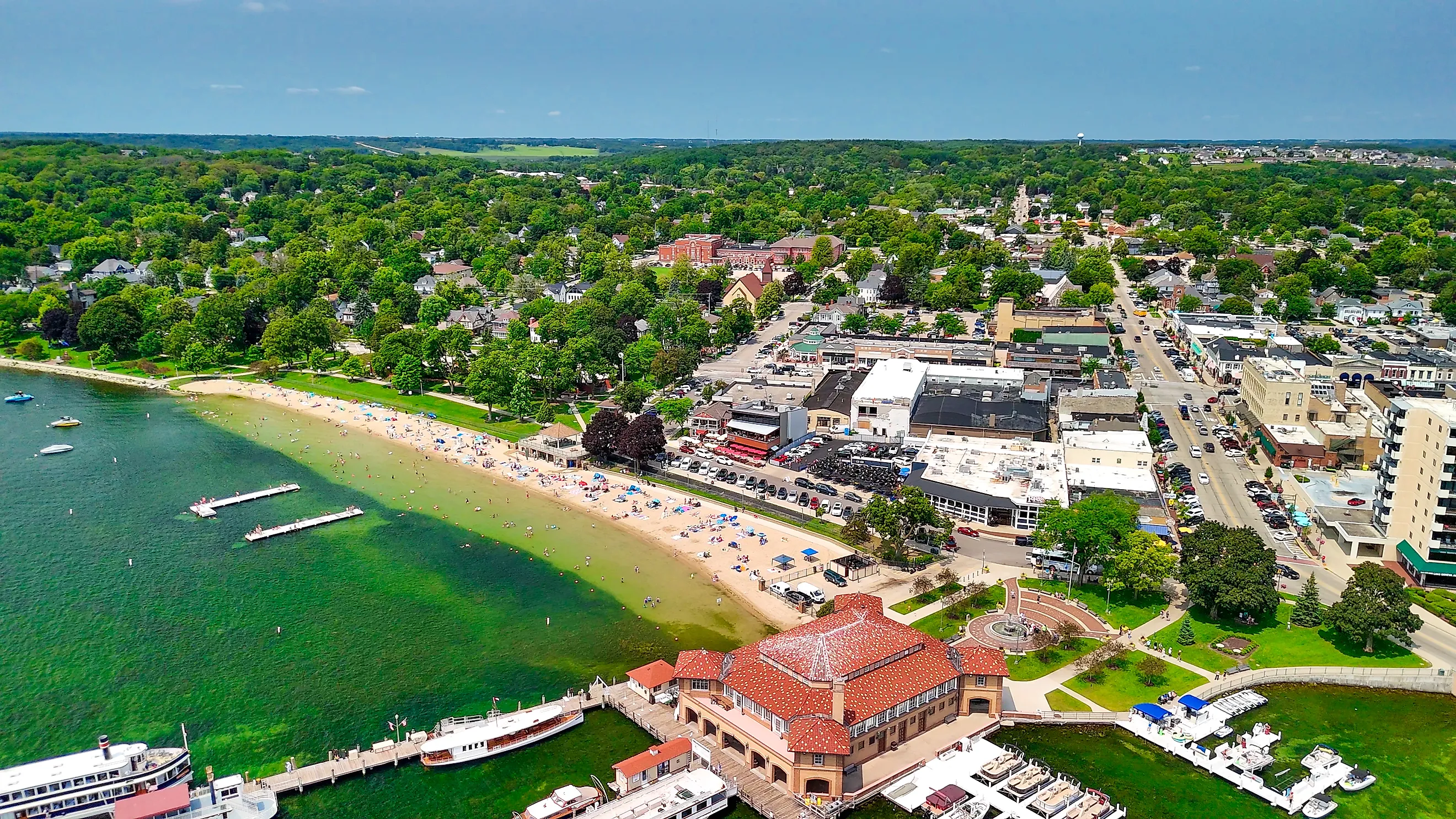
10 Most Breathtaking Towns In Wisconsin
Some of Wisconsin's prettiest towns were built to look like somewhere else. New Glarus went full Swiss village, and Stockholm did the same thing in Swedish. Wealthy Chicago families lined Lake Geneva with summer mansions. A circus man dressed up a Baraboo theater like a French opera hall. Those borrowed looks took root and aged into something beautiful. Here are ten Wisconsin towns worth the drive for the view and the backstory, both.
Bayfield

This is the town that is not pretending to be anywhere. Bayfield just sits on a steep hillside above Lake Superior and lets red sandstone cliffs do the talking. From most street corners the water fills the whole view, with the Apostle Islands parked out on the horizon. Twenty-one of those islands make up the Apostle Islands National Lakeshore, and in summer you can paddle a kayak straight into the sea caves that waves have been carving into the sandstone for centuries. It is the sort of thing that sounds like a brochure until you are actually inside a cave in a plastic boat.
Back on land, the Bayfield Maritime Museum keeps the shipwreck stories and the old fishing gear, down by the timber docks where the paddling trips launch. If you want the postcard version, drive up to Hauser's Superior View Farm, pick your own fruit, and drink a cider roughly 600 feet above the lake. The name is not being modest.
New Glarus

Now the pretending starts, and New Glarus is the most enthusiastic about it. Swiss immigrants settled here in 1845, and their descendants have kept the chalet rooflines, the flower boxes, and the hand-carved balconies going ever since. The town leans into the "America's Little Switzerland" bit so hard that it works. Start on 2nd Street at the Chalet of the Golden Fleece, a Bernese-style house from the 1930s stuffed with folk art, cuckoo clocks, and a genuinely random assortment of antiques. A few blocks on, the Swiss Historical Village lines up 14 restored buildings, including a log cabin, a schoolhouse, and a replica cheese factory, which is about the most Wisconsin sentence I can write.
When you have had your fill of heritage, the Sugar River State Trail follows an old rail line on crushed limestone past farm fields and trestle bridges. It ends, conveniently, near the New Glarus Brewing Company, where you can drink a very good beer on a hilltop and look out over the countryside that started the whole Swiss idea.
Stockholm
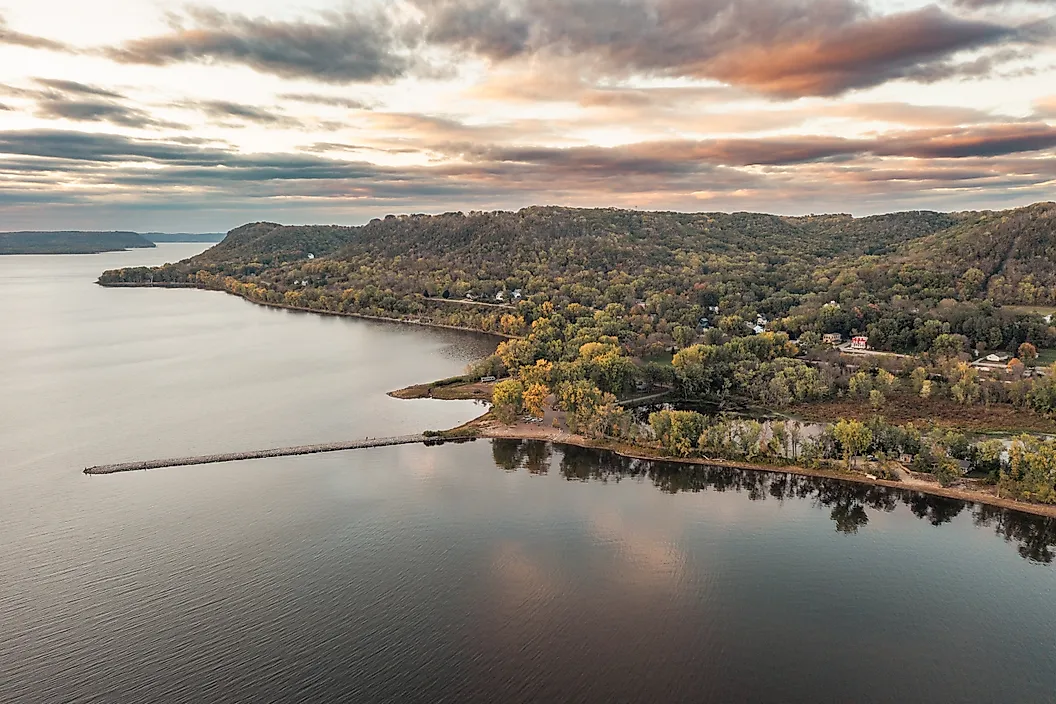
Stockholm took the same idea as New Glarus and went Swedish with it, on a much smaller scale. This is a village you could walk end to end during a phone call, and the Nordic bones still show in the wood-framed storefronts. The Great River Road, one of the best drives in the country, runs right through it, hugging the shore of Lake Pepin the whole way. For the big view, climb up to Maiden Rock Bluff, a 400-foot limestone cliff over the Mississippi where peregrine falcons nest along the edge. Spotting one feels like winning a small prize.
Down at street level, the Stockholm Pie and General Store bakes fresh pies daily inside a restored building from the 1850s, using fruit from area orchards. Get there before the tour buses figure it out, which they are increasingly doing.
Fish Creek

Fish Creek trades imported architecture for imported crowds, in the best way. It is a tiny harbor community in Door County where cedar bluffs curl around a bay and the shops sit a few steps from the water. The main event is Peninsula State Park, 3,700 acres of limestone cliffs and thick forest with eight miles of shoreline. At the top of Eagle Bluff, the 60-foot Eagle Tower gives you the whole peninsula at once. You earn it with 100 steps, or you take the 850-foot canopy walk, a gently sloping ramp that winds up through the treetops and is a genuinely lovely way to reach the top.
In the village, the Alexander Noble House from 1875 is the oldest wood-frame home in town, all Greek Revival trim, and it runs as a little museum of Victorian life. A couple of blocks away, the White Gull Inn has been feeding people on Main Street for well over a century, and its Friday fish fry is the kind of local institution that outlasts trends.
Cedarburg

Cedarburg sits about 20 miles north of Milwaukee and has one of the most intact old downtowns in the state, with more than a hundred limestone and Cream City brick buildings still standing. The showpiece is Cedar Creek Settlement, a former woolen mill whose timber beams and stone walls now shelter boutiques, galleries, and a winery. It is the rare adaptive reuse that did not sand off all the character. Just outside the core, the Wisconsin Museum of Quilts and Fiber Arts fills a restored farmstead, and the timber-frame barn is honestly as photogenic as the quilts inside it.
For a stretch of legs, the Ozaukee Interurban Trail runs along an old electric railway line and makes for an easy walk or ride through the countryside. While you are out, detour to the Cedarburg Covered Bridge just north of town, a pine lattice-truss span from 1876 and, per local pride, the last original covered bridge left in Wisconsin.
Port Washington

Fifteen miles up the shore from Cedarburg, Port Washington swaps creek and limestone for open water. The streets tip downhill toward a working harbor on Lake Michigan, and the 1860 Light Station sits right at the tip of it. You can tour the restored keeper's quarters and climb toward the lantern room for a look down over the town grid, which is exactly the vantage point the lightkeepers had, minus the daily labor.
Coming back down, wander Franklin Street to find the Paint on Port murals, including "We All Come to the Water," a piece on North Franklin inspired by the lake and its fish. From there it is a short walk east to Coal Dock Park, a reclaimed industrial spit turned green space with a long promenade. You can watch the boats, look for migrating shorebirds, and generally pretend you had somewhere to be.
Mineral Point

Mineral Point is the town that comes by its imported look honestly. Cornish miners arrived in the 1830s, saw the lead-rich hills, and built the stone cottages they knew from home, by hand. A lot of those cottages are still standing, and the best of them are preserved at Pendarvis, a 4.5-acre site that tells the lead-mining story without turning it into a diorama. On the same street, Shake Rag Alley spreads across a couple of wooded acres of gardens and restored buildings, running hands-on workshops in pottery, blacksmithing, and other old crafts, which is a nice way to leave with a souvenir you actually made.
End the day at the Commerce Street Brewery Hotel, a brewpub and inn inside an 1854 stone warehouse. Thick limestone walls, heavy timber, arched windows, a beer in your hand. The miners would probably approve, or at least recognize the room.
Lake Geneva

If Mineral Point was built by people who worked for a living, Lake Geneva was built by people who wanted a break from it. After the Chicago fire, the city's wealthy families put up summer mansions along the shore here, and you can inspect them up close on the Lake Geneva Shore Path. The 21-mile public footpath is the genuinely great local quirk: it legally crosses the manicured lawns of century-old estates, water on one side, someone's very nice garden on the other. Big Foot Beach State Park breaks up the estates with a quiet stretch of sand and wooded picnic grounds.
For a slower look, the U.S. Mailboat Tour still delivers mail across the lake the old-fashioned way, with a carrier who leaps from the moving boat onto each pier and, ideally, back on again. When you dock, the Geneva Lake Museum is a few blocks off, with a mocked-up early street of period storefronts that leans fully into the nostalgia.
Minocqua

Up in the Northwoods, Minocqua sits on a peninsula that pokes so far into Lake Minocqua the old downtown was reachable only by water until a railroad bridge connected it in 1887. People still call it "The Island City," and the water is genuinely the point. On the west side, the Bearskin State Trail runs from downtown toward Tomahawk across old railroad trestles and under a canopy of hardwoods.
The scenery is not the only draw, though. The Min-Aqua Bats water ski show has been running three nights a week each summer since 1950, free to watch, and it is exactly as wonderfully odd as free lakeside human pyramids should be. Once your neck is done craning, Gaslight Square Shoppes gathers a bunch of vendors under one roof, done up with cast-iron lamps and brick-paved lanes to mimic the early 1900s. Another town, another era borrowed and kept.
Baraboo

Baraboo saves the biggest flex for last. This was the winter home of the Ringling Brothers Circus, and the money shows. Al Ringling, the eldest brother, built the Al. Ringling Theatre here in 1915, and its interior is said to be modeled on the opera house at the Palace of Versailles, right down to the gilded plasterwork and painted ceiling. A French royal opera hall, in a Wisconsin town of about 12,000, because a circus man wanted to give his hometown something grand. It is a lot, and it is great.
That same taste carries over to the Al. Ringling Mansion, a Romanesque Revival pile of sandstone with hand-painted ceilings, carved woodwork, and now an on-site brewery and guest suites. When you want the natural version of dramatic, drive south to Devil's Lake State Park, where 500-foot quartzite cliffs, some of the oldest exposed rock in the Midwest, drop toward a spring-fed lake. It is the one view around here that nobody had to import.
Why These Towns Stay With You
The fun of this list is watching borrowed identities settle into real places. Cornish miners, Swiss and Swedish immigrants, Gilded-Age Chicagoans, and a homesick circus king each left a look behind, and the towns kept building on it until the look became the truth. Then Wisconsin's own landscape, the sandstone caves, the quartzite bluffs, the endless lakes, quietly stole the show anyway. Pick any one of these and you get both at once: somewhere that was made to resemble another place, sitting in scenery that could only be here.