10 Best Places To Live In Arizona In 2026
When it comes to putting down roots, Arizona has wide-reaching appeal. Chandler is a magnet for employment opportunities. Tucson lures newcomers and in-state migrants with its big-city services and housing options well below the state's typical listing price. Flagstaff swaps Arizona's signature desert heat for pine forests and snowy winters at 7,000 feet. Choosing where to live in Arizona is really a choice between trade-offs. The 10 communities on this list offer enough variety to cater to families, retirees, and outdoor-minded adventure-seeking enthusiasts alike. Read on to learn more about how each of them makes the case for itself.
Scottsdale

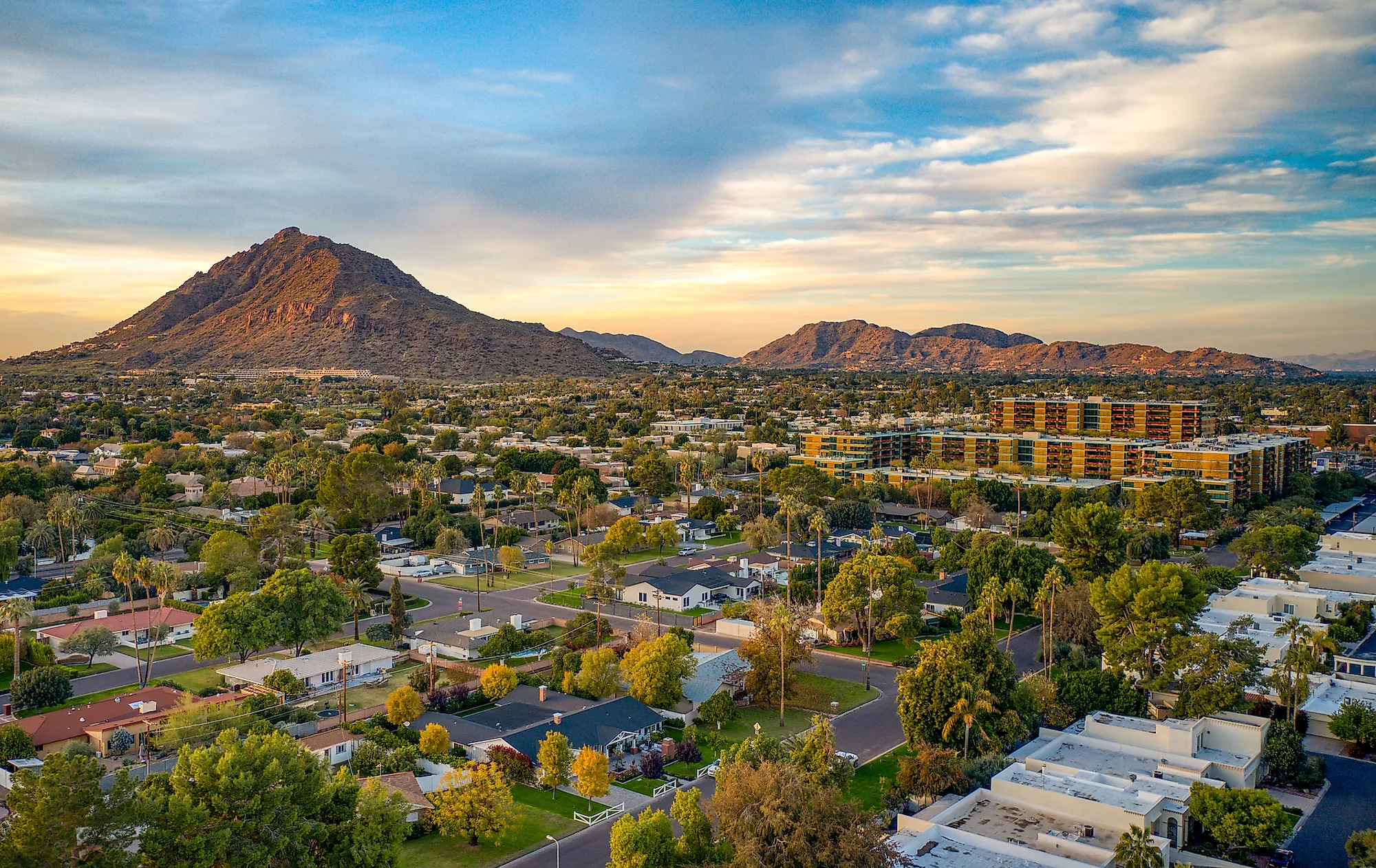
Scottsdale makes sense for buyers who can afford a substantial housing premium and want employment, healthcare, restaurants, and outdoor recreation concentrated within the same city. The current median listing price is about $915,625, nearly twice Arizona's median of $467,000. The McDowell Sonoran Preserve is a major reason outdoor-minded residents embrace the Scottsdale price tag. Its trailheads connect neighborhoods with protected desert and routes such as the Gateway Loop, allowing an early hike without turning it into a drive across the Valley.
The employment base is broader than Scottsdale's tourism reputation suggests. HonorHealth is a major local employer, while Mayo Clinic, Vanguard, General Dynamics, Axon, and other large organizations have operations in the area. That gives professionals opportunities in healthcare, finance, technology, and defense without relying entirely on Phoenix's employment market. Daily life changes considerably depending on the neighborhood. Old Town puts restaurants, galleries, Scottsdale Fashion Square, and the Scottsdale Museum of Contemporary Art close together. Northern Scottsdale trades that density for easier access to desert trails.
Oro Valley

Oro Valley works particularly well for people who want Tucson's healthcare and employment base without living in the city center. The town sits directly north of Tucson, with the Santa Catalina Mountains along its eastern side. Catalina State Park sits immediately east of town and connects hikers with trails into the Santa Catalina Mountains. That access gives Oro Valley a practical advantage for residents who hike regularly, rather than for those who treat the mountains as an occasional weekend destination.
Its crime statistics are among the safest in Arizona. SafeWise ranked Oro Valley third among qualifying cities in 2026, with 0.5 violent crimes per 1,000 residents. Healthcare and bioscience jobs give residents employment options closer to home. Roche Tissue Diagnostics has a major operation in Oro Valley, while Oro Valley Hospital handles local hospital and emergency care. Amphitheater Public Schools serves the area, and the University of Arizona is in Tucson to the south.
Tucson

Tucson is the value choice on this list for someone who wants the services of a major Arizona city without Phoenix-area housing prices. Its current median listing price is about $362,450, more than $100,000 below Arizona's statewide median of $467,000. Outdoor recreation comes from several directions. Saguaro National Park has separate districts west and east of Tucson, while Sabino Canyon sits northeast of central Tucson. Someone choosing a neighborhood can therefore weigh proximity to work and schools against the trails and recreation areas they expect to use most often.
Despite the relatively affordable cost, residents still have access to institutions normally associated with more expensive cities. The University of Arizona supports education, research, athletics, and employment, while Banner-University Medical Center Tucson is Southern Arizona's only Level I Trauma Center. Transportation is another point in Tucson's favor. Sun Tran operates the local bus network, while the Sun Link streetcar connects the University of Arizona area with Fourth Avenue, downtown, and the Mercado District. That makes living without a car more realistic in some central neighborhoods than it is in many Arizona suburbs.
Flagstaff

Flagstaff belongs on the list because it provides a version of Arizona living that none of the Valley communities can match. At roughly 7,000 feet, residents get snowy winters, cooler summers, ponderosa pine forests, and skiing close to home. The compromise is housing. Flagstaff remains one of Arizona's more expensive markets, so it makes the most sense for residents who place a high value on climate and outdoor access.
Northern Arizona University gives the city a steady base of education and research jobs while supporting college sports and cultural programming. Flagstaff Medical Center serves as an important healthcare hub for northern Arizona. Mountain Line buses give residents a public transportation option, particularly around Northern Arizona University and central Flagstaff. Outside the developed city, Coconino National Forest provides extensive hiking and cycling access, while Arizona Snowbowl operates on the San Francisco Peaks north of town.
Gilbert

Gilbert earns its place largely through its combination of family resources, high household incomes, and comparatively low crime rates. SafeWise ranked it seventh among qualifying Arizona cities for 2026, with 1.3 violent crimes and 7.8 property crimes per 1,000 residents. Its property crime rate has fallen from 10.3 per 1,000 in 2024. The 110-acre Riparian Preserve at Water Ranch gives residents more than 4.5 miles of trails, an urban fishing lake, and a wildlife habitat without leaving town. Downtown Gilbert's Heritage District caters to a different part of daily life, with restaurants such as Joe's Real BBQ and Liberty Market, as well as community events.
Housing requires a larger budget than the Arizona average. Gilbert's current median listing price is about $619,450, compared with $467,000 statewide. That difference puts more weight on what residents get for the added expense. Gilbert Public Schools and Higley Unified School District serve local families, while healthcare employers include Banner Health and Dignity Health. The East Valley address also keeps residents close to Chandler's large technology and financial employment base.
Surprise

Surprise combines relatively attainable Phoenix-area housing with some of Arizona's strongest recent crime numbers. Its current median listing price is about $442,336, slightly below Arizona's statewide median of $467,000. Surprise Recreation Campus offers residents a cluster of public amenities, including the city's aquatic center, library, and sports facilities. Surprise Stadium is also the spring training home of the Kansas City Royals and Texas Rangers, making Cactus League baseball part of the local calendar rather than a cross-Valley outing.
SafeWise ranked Surprise second among qualifying Arizona cities for 2026. The city reported 1.0 violent crime and 8.9 property crimes per 1,000 residents, with the property crime rate dropping from 14.1 in 2024. That combination makes Surprise worth considering for families and retirees who don't need to commute to the East Valley. Healthcare is available nearby through Banner Del E. Webb Medical Center in Sun City West, while the growing northwest Valley has added shopping and medical services closer to residential neighborhoods.
Chandler

Chandler is one of Arizona's strongest choices for professionals who want to live close to major employers rather than commute into central Phoenix. Intel employs about 10,000 people in the city, Wells Fargo has roughly 5,500 employees, and Bank of America has about 3,600. Loop 101 and Loop 202 make Chandler practical for people whose jobs take them elsewhere in the East Valley. Residents staying closer to home have downtown restaurants, the Chandler Center for the Arts, and community events without making the trip to Phoenix.
The Price Corridor strengthens that advantage. The business district around Loop 101 and Loop 202 accounts for 41,620 jobs across roughly 5.7 square miles, concentrating technology, financial, and professional employment in one part of the city. Chandler's median listing price is currently about $564,750, higher than Arizona's $467,000 median but below Gilbert's $619,450. Chandler Unified School District serves much of the community, and Chandler-Gilbert Community College gives residents a higher-education option close to home.
Queen Creek

Queen Creek makes the strongest case for households that want more space on the southeastern side of metro Phoenix and are willing to pay for it. This town, however, has a higher median household income than many Arizona communities, helping offset some of its higher housing costs. Outdoor access is a bigger reason to choose Queen Creek over a more central Valley suburb. San Tan Mountain Regional Park covers more than 10,000 acres on the southeastern side of the Valley, with trails crossing desert terrain around Goldmine Mountain. Horseshoe Park & Equestrian Centre keeps the area's equestrian roots visible through competitions and community events.
Safety is another selling point. SafeWise ranked Queen Creek fourth among qualifying Arizona cities for 2026, reporting 1.2 violent crimes and 8.3 property crimes per 1,000 residents. The property crime rate has fallen from 10.1 per 1,000 in 2024. Queen Creek Unified School District serves many local families, while Banner Ironwood Medical Center provides the area's hospital and emergency services. New retail and employment development has reduced the need for every errand or appointment to involve a drive to Chandler or Mesa.
Goodyear

Goodyear has become a stronger choice as employment has expanded across the West Valley. Residents working in healthcare, logistics, manufacturing, aerospace, and distribution can increasingly find jobs west of Phoenix rather than having to cross the entire metropolitan area. Estrella Mountain Regional Park is one reason to choose Goodyear rather than a denser part of the metro area. The 19,840-acre park sits on the city's southern side, putting mountain and desert trails within easy reach for regular use. Goodyear Ballpark adds another local perk each spring when the Cleveland Guardians and Cincinnati Reds arrive for Cactus League games.
Its housing market also aligns more closely with the Arizona norm than many East Valley alternatives. The current median listing price is about $482,500, only modestly above the statewide figure of $467,000. Healthcare is available through Abrazo West Campus, which operates a Level I Trauma Center. Local school options include districts serving Goodyear and the surrounding West Valley, while Interstate 10 provides commuters with a direct route to Phoenix.
Marana

Marana gives residents a middle ground between Tucson and the more expensive Oro Valley market. Housing costs are higher than in Tucson but generally lower than in Oro Valley, and Interstate 10 is the main commuting route to Tucson. The Tortolita Mountains add a lifestyle advantage that is difficult to quantify through housing data. The Wild Burro Trailhead at Dove Mountain connects residents with miles of mountain trails, while the Tortolita Preserve has additional routes for hiking, cycling, and horseback riding.
The town also performs well in recent safety comparisons. SafeWise ranked Marana eighth among qualifying Arizona cities for 2026. Its property crime rate fell from 22.5 per 1,000 residents in 2024 to 13.5 per 1,000 in 2026, although its violent crime rate increased to 1.2 per 1,000. Local employers include Marana Unified School District, MHC Healthcare, Sargent Aerospace & Defense, and Marana Aerospace Solutions. Those aerospace and healthcare jobs matter for residents who would rather not depend entirely on Tucson for employment.
Why These Places Stand Out
The best place to live in Arizona depends heavily on what someone needs from their home. Tucson makes a strong case for buyers watching housing costs, while Chandler puts thousands of technology and financial jobs within city limits. Surprise pairs housing near the statewide median with the No. 2 position in SafeWise's 2026 Arizona rankings. For those with a flexible budget, Scottsdale combines high-end housing with a substantial employment and healthcare base, while Flagstaff's higher prices buy access to a cooler mountain climate. Gilbert and Queen Creek appeal to households prioritizing East Valley schools, recreation, and lower crime rates. Oro Valley and Marana create another choice around Tucson. Oro Valley costs more but has exceptionally low violent crime figures and immediate access to the Santa Catalina Mountains. Marana generally offers a less expensive alternative, with aerospace employment and the Tortolita Mountain trails close by.