10 Best Downtowns In North Carolina
There’s nothing quite like stumbling upon a picture-perfect downtown to wander. This could mean family-owned bookshops, cafes that smell like freshly brewed coffee beans and baked pastries, or unique hand-crafted items in shops that encapsulate the pride of their town or state. North Carolina truly has it all when it comes to the great outdoors with the Blue Ridge Parkway and the Atlantic shores. As an added bonus, the state's small-town downtowns are some of the best in the nation.
Davidson

Situated about thirty minutes north of Charlotte and next to Lake Norman, Davidson is a small college town. Its downtown serves as a genuine community hub. The walkable Main Street features short blocks, shaded sidewalks, and a blend of retail, dining, and civic spaces that remain lively all day.
Downtown businesses are locally owned and closely tied to the community. Independent shops, such as Main Street Books, known for staff-written recommendations, and The Village Store, which focuses on handcrafted gifts and regional goods, anchor the retail core without relying on national chains. This local emphasis gives downtown Davidson a consistent, lived-in feel rather than a seasonal or tourist-driven atmosphere.
Public gathering spaces are vital. From spring to fall, the Davidson Farmers Market takes place weekly on the town green, attracting residents for fresh produce, prepared foods, and live music. Accommodation, dining, and campus buildings are seamlessly integrated into the street grid, ensuring foot traffic remains focused rather than dispersed. Restaurants such as The Crazy Pig enhance downtown’s evening scene, and ongoing events and performances help extend activity beyond regular business hours.
With its walkable layout, strong local ownership, and a steady mix of daily services and community events, Davidson stands out as one of North Carolina’s most functional and cohesive small-town downtowns.
Blowing Rock

Blowing Rock gets its name from The Blowing Rock, a cliffside formation that has been a notable landmark in North Carolina’s Blue Ridge Mountains for many years. Although this attraction draws visitors, the town’s walkable downtown is a key reason Blowing Rock remains distinctive. Located along Main Street, the downtown area is small, walkable, and suited for leisurely exploration rather than brief visits.
Retail in downtown Blowing Rock is dominated by locally owned shops rather than chains. Stores such as Final Touches, High Country Candles, and The Funky Tulip offer specialty gifts, home goods, and regional products that give the area a distinct identity. Dining is woven directly into the street grid, with casual cafes like Social on Main alongside long-established restaurants such as The Best Cellar at The Inn at Ragged Gardens, helping keep downtown active throughout the day and into the evening.
Access to outdoor recreation is another advantage. Just a short walk from Main Street, the Glen Burney Falls Trail takes you into a wooded ravine with multiple waterfalls. The trail offers a direct link between downtown and the surrounding nature, although its steeper parts are better for experienced hikers. Overall, Blowing Rock’s compact downtown, diverse local businesses, and quick access to nature make it one of the most complete and practical small-town centers in the High Country.
Seagrove

Seagrove is renowned as the Handmade Pottery Capital of the United States, home to over 100 active potters in the area. Situated just south of Asheboro, the town doesn't have a traditional Main Street. Instead, its character is defined by a cluster of studios, galleries, and cultural centers that together serve as the town’s heart.
The North Carolina Pottery Center serves as the focal point of this network, highlighting centuries of pottery traditions in the state with exhibitions, artifacts, and rotating displays. Visitors and residents tend to travel between individual studios instead of shopping blocks. Long-standing operations like Seagrove Pottery, Village Pottery Marketplace, and Seagrove Art Pottery exhibit handcrafted stoneware and uphold the region’s enduring craft heritage.
Instead of foot traffic concentrated in one corridor, Seagrove’s activity is spread across rural roads and studio clusters, creating a slower, more deliberate pace that reflects its artisan roots. This layout makes Seagrove distinct among North Carolina’s downtown experiences, emphasizing cultural continuity and working craftsmanship over retail density or nightlife. As a result, Seagrove stands out not for a single street or square but for the depth and authenticity of its creative economy.
Bryson City

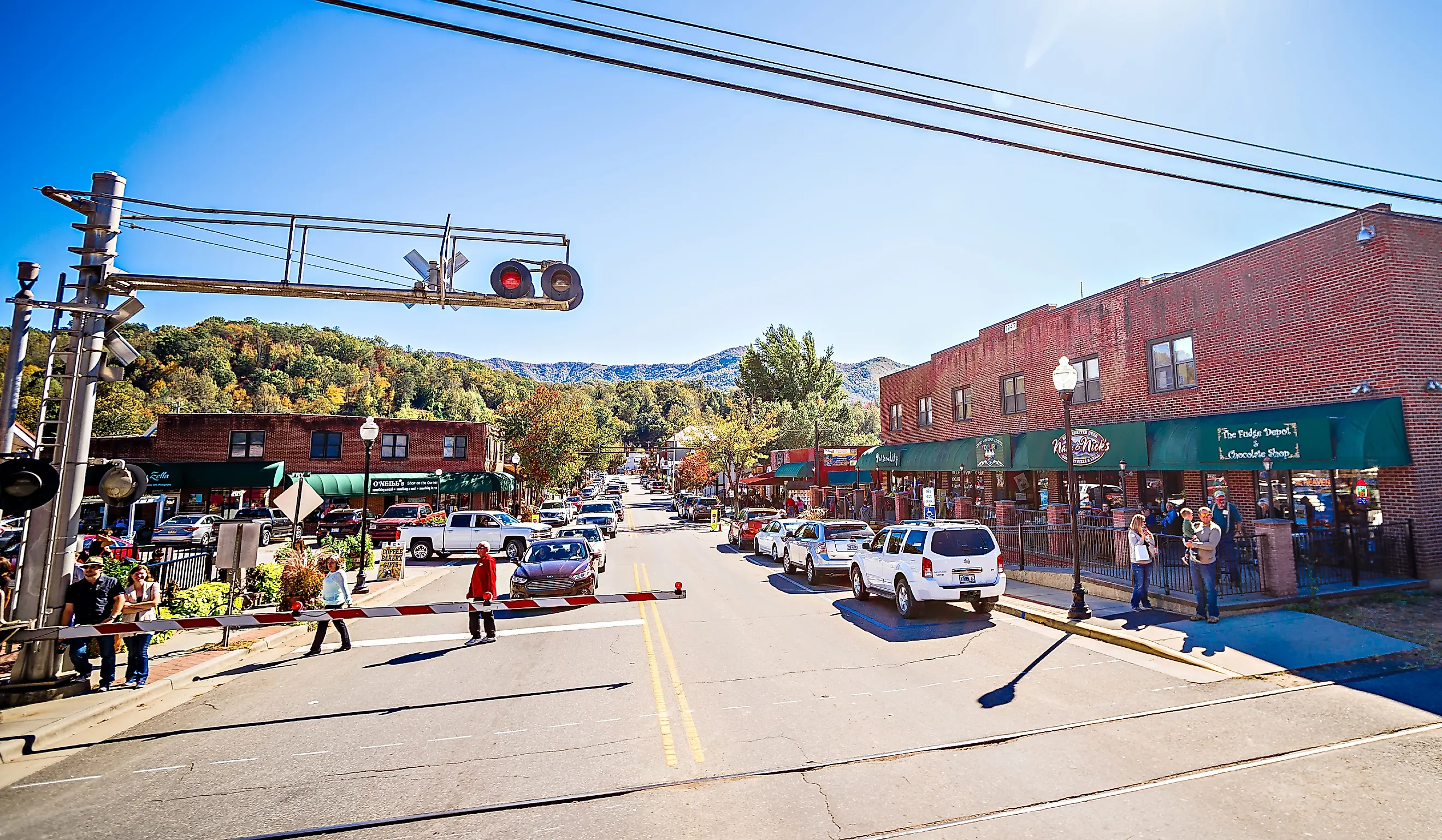
Bryson City serves as one of western North Carolina’s most active small-town downtowns, shaped by its location at the edge of the Great Smoky Mountains. While the surrounding landscape draws hikers, paddlers, and cyclists, the downtown itself functions as a compact service and gathering center that supports year-round use rather than seasonal traffic alone.
Main Street and nearby blocks are pedestrian-friendly and densely filled with locally owned stores. Outdoor gear shops like Endless River Adventures and Bryson City Outdoors are situated right in the downtown area, strengthening the town’s character and keeping activity centralized instead of dispersing along highways. Retail stores such as Mrkt on the Square and McClanahan’s provide diverse shopping options and attract daily visitors beyond peak recreation times.
Food and drink further extend downtown use into the evening. Local breweries, including Bryson City Brewing and Mountain Layers Brewing, provide informal gathering spaces that serve residents and visitors alike without shifting the downtown away from its community focus. This mix of retail, outfitting, and social spaces gives Bryson City a downtown that feels active yet not overbuilt.
With its human-scale street layout, locally anchored businesses, and direct links to the surrounding mountains, Bryson City stands out as a High Country downtown that balances outdoor identity with everyday functionality.
Washington

Located on the north bank of the Pamlico River, Washington, often known as Little Washington, boasts one of the most unified waterfront downtowns in eastern North Carolina. Main Street is just a short walk from the river, enabling public areas, shops, and restaurants to operate seamlessly as a cohesive whole.
Downtown Washington is designed for easy pedestrian access to the water. The Washington Waterfront Docks connect directly to Festival Park and the riverwalk, creating a continuous stretch of open space for walking, community events, and casual gatherings. This layout keeps foot traffic concentrated and makes the waterfront an extension of downtown rather than a standalone attraction.
Historic buildings play a key role in shaping downtown’s character and daily life. The West Main, a restored early 20th-century building, exemplifies the town’s adaptive reuse strategy by integrating lodging, dining, and social spaces within the downtown area. Establishments like The Mulberry House contribute to evening activity while preserving a scale that complements the surrounding streetscape.
Washington’s working waterfront remains active through fishing access, docks, and marine-related businesses. Piers and local outfitters, including Eastside Bait and Tackle, support residents and recreational use without overwhelming the downtown’s residential feel. Together, these elements give Washington a downtown that balances public access, historic preservation, and everyday functionality along one of the state’s largest river systems.
Edenton

Edenton is one of North Carolina’s oldest towns and remains among its best-preserved historic downtowns. Founded in the early 1700s along Albemarle Sound, the town quickly developed as a port and civic center, a legacy that still shapes the layout and architecture of its downtown today.
Downtown Edenton is small and very walkable, focusing more on preservation than redevelopment. Local shops like Surf, Wind, and Fire, Polka Dot Palm, and Edenton Tea Company are housed in restored historic buildings, providing steady daytime activity without crowding the streets. This balance helps the area serve as both a commercial hub and a residential neighborhood.
Historic interpretation is woven directly into everyday use. Edenton’s seasonal trolley tours follow routes through the downtown and surrounding neighborhoods, linking landmarks such as the Penelope Barker House, former mill sites, and clusters of preserved Victorian-era homes. These sites remain part of the town’s active fabric rather than isolated museum pieces.
The waterfront also holds significant importance. Restaurants such as Herringbone help stretch downtown toward the water, and culinary programs at The Cotton Gin Inn bring evening activity with classes and special events. Collectively, Edenton’s well-preserved architecture, walkable streets, and vibrant waterfront contribute to making it one of the most unified historic downtowns in eastern North Carolina.
China Grove

In Rowan County, China Grove is a small town with a downtown that features a short, walkable strip of locally owned shops. Instead of big attractions, it acts as a neighborhood commercial center, offering residents retail, dining, and gathering areas all within a compact area.
Independent shops form the backbone of downtown activity. Businesses such as Old Town Soap Co. and Wanderer’s Rest Emporium specialize in handmade and locally produced goods, reinforcing a strong connection to regional crafts and small-scale entrepreneurship. This local ownership gives downtown China Grove a consistent, everyday rhythm rather than a seasonal or tourist-driven feel.
Food and beverages extend downtown activity into the evening. Grove Cartel Brewing Co. serves as a key fixture with a relaxed taproom, regular live music, and straightforward dining choices that invite residents to stay longer rather than just passing through. This creates a downtown that stays lively after dark without losing its small-town charm.
Outdoor recreation complements downtown life without defining it. Nearby Lake Corriher, just outside China Grove, offers walking trails and paddle access for residents seeking quiet recreation. Together, these elements make China Grove a modest yet functional downtown built around local businesses, community use, and a walkable layout.
Hillsborough

Hillsborough is among North Carolina’s most historically preserved downtown areas, reflecting its significance as an early political and commercial hub. Situated in Orange County, the town features a dense core of buildings from the late 18th and 19th centuries that are actively used today, rather than being kept solely as static historical displays.
Downtown Hillsborough is compact and walkable, with historic homes, civic buildings, and storefronts lining short blocks near the Eno River. Seasonal walking tours, organized by the local visitors center, offer structured access to the town’s history while reinforcing the downtown’s role as a living historic district. Preservation efforts emphasize continued use, allowing businesses, residences, and public spaces to coexist within the same historic framework.
Community programming strengthens this link to history. Every spring, the Alliance for Historic Hillsborough organizes a Revolutionary War living history event featuring demonstrations and reenactments along the downtown streets. Instead of being a one-day event, it underscores Hillsborough’s focus on public history and civic engagement.
Historic buildings continue to anchor downtown life. The Colonial Inn, a landmark dating back more than two centuries, exemplifies the town’s approach to adaptive reuse by combining lodging, dining, and gathering spaces in the downtown core. Together, Hillsborough’s preserved architecture, walkable layout, and active history programming make it one of the state’s strongest examples of a downtown where historic character and daily function remain closely aligned.
Brevard

Brevard is a compact, active downtown hub in western North Carolina, shaped by its proximity to some of the state’s most extensive public lands. While nearby forests and parks define the region, the downtown itself serves as a concentrated center for retail, dining, and cultural activity rather than a pass-through for outdoor traffic.
Downtown Brevard is walkable and visually cohesive, with locally owned shops lining its main streets. Specialty retailers like Theophilus, Magnolia Vintage Co., and Newfound Artisan occupy restored storefronts, attracting steady daytime foot traffic. Restaurants are also part of the downtown scene, providing a variety of casual and sit-down dining options that keep the area lively beyond business hours.
Music plays a central role in downtown life. Regular live performances at venues such as 185 King Street and Brevard Brewing Company reinforce Brevard’s reputation as a small town where evening activity remains concentrated downtown rather than dispersed along highways. This consistent programming supports a downtown that feels active without being overcrowded.
Brevard's human-scale layout, strong local ownership, and diverse mix of retail, dining, and music venues make its downtown a true community hub rather than merely a gateway to outdoor attractions nearby.
Manteo

Located on Roanoke Island in the Outer Banks, Manteo features one of the region’s most walkable and community-oriented waterfront downtowns. The town’s compact layout allows shops, public spaces, and the boardwalk to function together as a cohesive center rather than separate attractions.
Downtown Manteo is organized around its waterfront. The boardwalk connects directly to small businesses, galleries, and restaurants, keeping foot traffic concentrated along the harbor. George Washington Creef Park is a key public gathering space and hosts a seasonal farmers market that reinforces the downtown’s role as a local meeting point rather than a purely commercial strip.
The waterfront stays lively beyond just recreation. Charter boats, tour operators, and outfitters run from downtown docks, preserving Manteo’s character as a working harbor. Cultural venues also boost downtown activity, especially The Lost Colony Waterside Theatre, which strengthens the town’s tradition of performance and history.
With its pedestrian-friendly scale, integrated waterfront, and a consistent mix of retail, public space, and cultural programming, Manteo stands out as one of the Outer Banks’ strongest downtowns, balancing coastal character with everyday functionality.
These ten North Carolina towns showcase the diversity of downtowns across the state, from mountain communities such as Blowing Rock, Brevard, and Bryson City to coastal towns like Edenton, Washington, and Manteo. Although each downtown embodies its unique local environment, they all have common qualities including walkable streets, locally owned businesses, historic buildings that have been preserved, and public spaces designed for everyday use rather than seasonal tourists.
Whether influenced by riverfronts, college campuses, working harbors, or long-standing craft traditions, these downtowns serve as genuine community hubs. They collectively demonstrate how North Carolina’s small towns depend on vibrant, well-visited downtowns to support local life throughout the mountains, Piedmont, and coast.