6 Most Rattlesnake Infested Areas in West Virginia
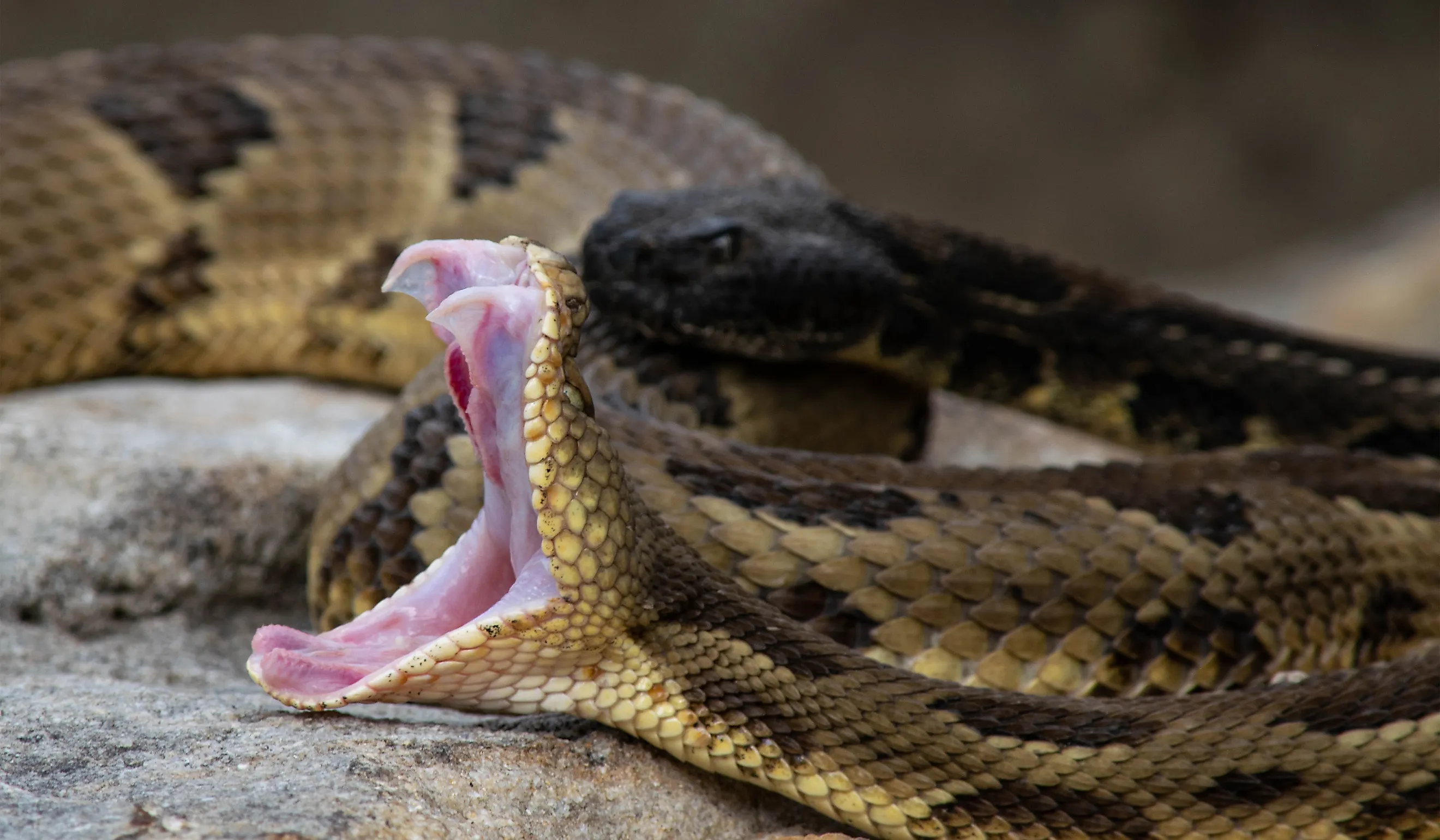
West Virginia is home to only one species of rattlesnake: the timber rattlesnake. The state is notably proud of this venomous resident as it is the official reptile of West Virginia. Measuring anywhere between 3 and 5 feet in length, this large snake is typically brown or yellowish with dark blotches on its body that resemble Hershey's Kisses. Its most iconic feature is its rattle, which it uses to warn off humans and large animals. Although it rarely bites humans, its fangs contain enough venom to kill a person. It can live in many types of ecosystems, but it prefers high elevation forests, river bluffs, and other rocky areas where it can find a den during the winter or a "pit" where it can wait for prey to pass by it. With so much human activity and rattlesnake presence in the state's outdoor landmarks, it's very important to be careful when visiting these 6 of the most rattlesnake-infested areas in West Virginia
Blackwater Falls State Park

This Allegheny Mountains park has the most colorful waterfalls in West Virginia. The Blackwater Falls is a 57-foot waterfall with waters that have a slight red tinge due to tannic acid from hemlock and red spruce needles. The water flows into the Blackwater River, which then goes into the Blackwater Canyon.

The falls contain several other landmarks of note, such as Pendleton Lake for fishing or boating, and over 20 miles of hiking trails, including the Balsam Fir Trail and Red Spruce Trail. Visitors to the park have found creative places to hide small items with geocaching, especially near the water. However, as you're searching for those items, you need to be careful where you put your hand, as you might touch a timber rattlesnake.

Hikers have spotted rattlesnakes along with other nonvenomous snakes hiding in the park. Interestingly enough, rattlesnakes are known to share dens with other snakes during the winter. During the spring months, you might see these snakes crawl out of their dens to go find a hunting spot.
New River Gorge National Park & Preserve

This awe-inspiring gorge was formed by the New River, which, despite the name, is one of the oldest rivers in the world. Situated in the Appalachian Mountains, the New River Gorge National Park & Preserve teaches visitors both natural and human history, with railroad tracks and coal mines spread throughout the land.

As it is a canyon, there are activities both up and down the national park. For example, there are climbing routes on the steep walls of the gorge, as well as 53 miles of the New River for whitewater rafting. Above the canyon are hiking trails passing through old-growth forests, such as Burnwood Trail, or by abandoned mines like the Brooklyn Mine Trail.

Within the cliffs and waters of New River Gorge are nearly 40 reptile species (that have been identified), including West Virginia's timber rattlesnake. These snakes tend to favor the rocky areas, but can be found anywhere in the park, like swimming in the New River during the summer or basking in the sun out on the trails. As mentioned above, this rattlesnake isn't typically aggressive, as long as you keep your distance and don't step on or harass it.
Canaan Valley Wildlife Refuge

Sitting in the Allegheny Mountains in West Virginia's eastern "tail", the Canaan Valley Wildlife Refuge is a swampy forested land that was established in the 1990s after a long legal battle between citizens and the Allegheny Power Systems company. To this day, the refuge is a protected environment, filled with shrublands, marshes, and other ecosystems. It's also the highest-elevation valley east of the Rocky Mountains, making it ideal for skiing in the winter.

Popular activities in the refuge include going hiking on 31 miles of trails, or taking a camera to snap pictures of the 198 bird species that live here. The wider Canaan Valley is known for having a timber rattlesnake population, especially in the woods. From its size, one might believe it would be a daring creature, but it is actually quite timid, preferring to hide in wait for prey or flee when humans come near it. It is different in that regard from West Virginia's other venomous snake, the copperhead, which tends to freeze in place when approached. This is why the copperhead causes the most bites out of any venomous snake in the U.S.
Coopers Rock State Forest

Coopers Rock State Forest is right on the border between West Virginia and Pennsylvania. The park is named after the legend of a cooper outlaw who allegedly hid from the law in this forest and continued his business of barrel making. The views here are legendary as well, with overlooks into the canyon.

The state forest contains around 50 miles of trails, including the Henry Clay Iron Furnace Trail to an abandoned iron furnace from the 19th century. One of the trails in this park is called Rattlesnake Trail, which is fitting considering the large population of timber rattlesnakes that call this park home.
The West Virginia Division of Natural Resources did a study documenting these snakes and found they have a stable population here. However, if you encounter this snake in the wild, you should leave it alone, as it is illegal to harm a timber rattlesnake.
Monongahela National Forest

This 1 million-acre forest is commonly called the Mon by locals. Stretching across 10 counties in West Virginia, it has some of West Virginia's best natural landmarks, such as the highest peak in the state: the 4,863 feet Spruce Knob.

The forest has some of the cleanest water in the state, with its headwaters providing water for the Potomac, Greenbrier, Elk, and other rivers. This water also supports the largest area of bogs in West Virginia via the Cranberry Glades Botanical Area.

The forest has a large population of timber rattlesnakes, but that population grows slowly as it takes time for the snakes to reproduce. Pregnant rattlesnakes will go to warmer places to wait to give birth, such as log or rock piles. These snakes can find plenty of prey in mice, smaller reptiles, and frogs.
Ohio River

The Ohio River flows through or around the natural border of six states, including West Virginia. It forms the entirety of West Virginia's border with Ohio, and its wider river basin provides drinking water for the state. It's 981 miles long, making it one of the longest rivers in the U.S., and is home to many types of aquatic and semiaquatic wildlife.

There are 159 reported species of fish in the Ohio River, including catfish, largemouth bass, sauger, black carp, walleye, and many others. Watersnakes are also a common sight here, from the copper-bellied watersnake to ribbonsnakes. Timber rattlesnakes also live near the Ohio River, and at times have been spotted swimming in it.
The timber rattlesnake is a strong swimmer, even by snake standards, and is known to move in the river to go from one hunting ground to another or simply to cool off during a heat wave. During the mating season from summer to fall, timber rattlesnakes are especially active as they look for a mate, making it more likely for humans to run into them either on the Ohio River or in parks located on river bluffs or woodlands.
The timber rattlesnake is well beloved by wildlife experts and professionals in West Virginia, who respect its powerful venom and threatening presence. West Virginia's mountains, streams, and valleys are a rattlesnake's hunting grounds after all. Hikers don't need to be frightened of this snake, despite its strong venom, as long as they stay on designated trails, keep away from any snakes they encounter, and wear proper clothing and footwear. In the rare event that a rattlesnake bites you, don't apply any ice or tourniquet to the wound or attempt to suck out the venom. Instead, seek medical attention to receive anti-venom treatment. It's also a good idea to never hike alone, so that you can send someone for help if you get bit in the middle of the woods.