7 Small Towns in New York with the Best Downtowns
From Long Island to the Adirondacks, the state of New York features some of the most walkable, historic, and beautiful downtowns in the country. Small towns tucked along the Finger Lakes, on the Atlantic coast, or in the Catskill Mountains are exceptionally beautiful, and their downtowns offer truly engaging environments to explore, shop, and dine. Lake Placid's prestigious Olympic legacy, Ocean Beach's totally car-free zone, and Woodstock's hippie counterculture all factor into why these downtowns are worth visiting. Visually striking streetscapes and unique local businesses make each of these New York downtowns an experience that can’t be replicated elsewhere in the state.
Sag Harbor

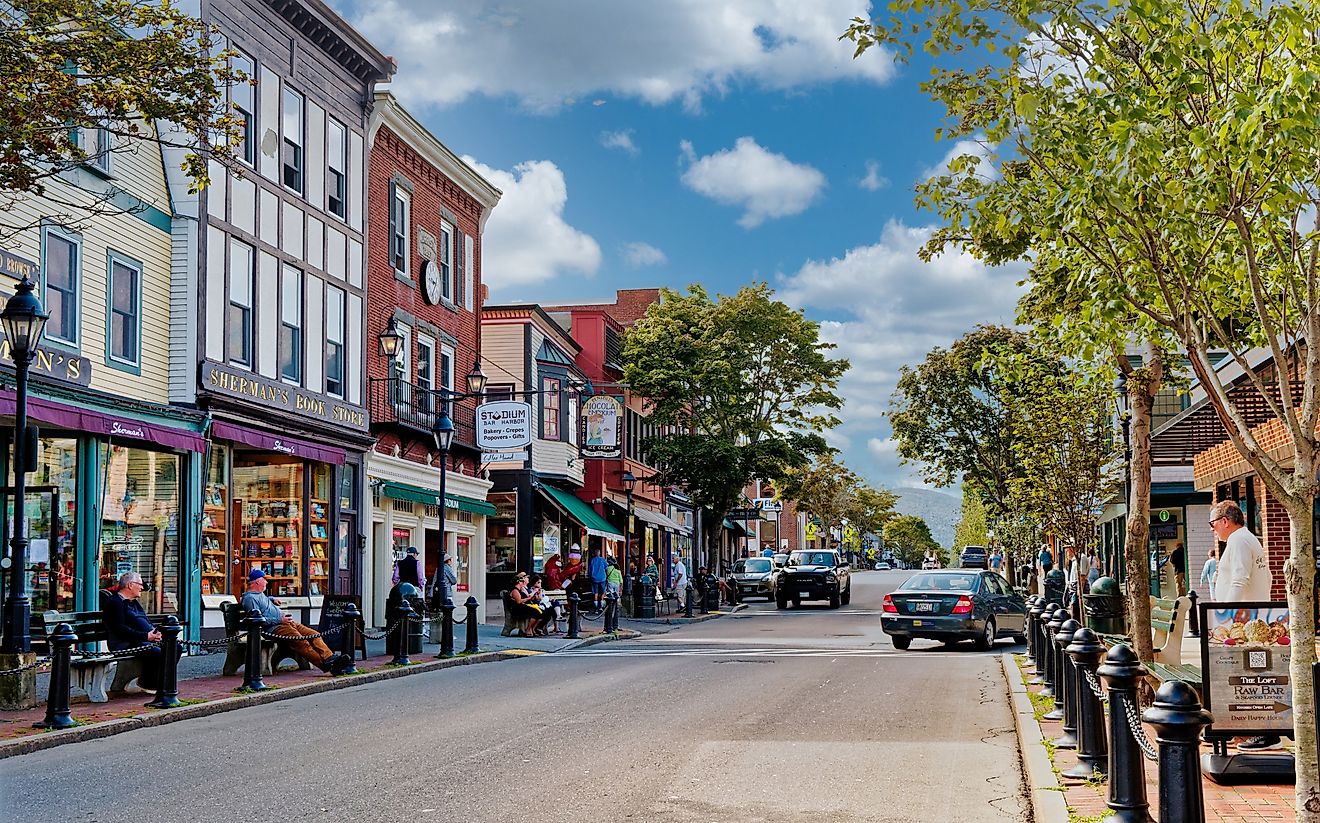
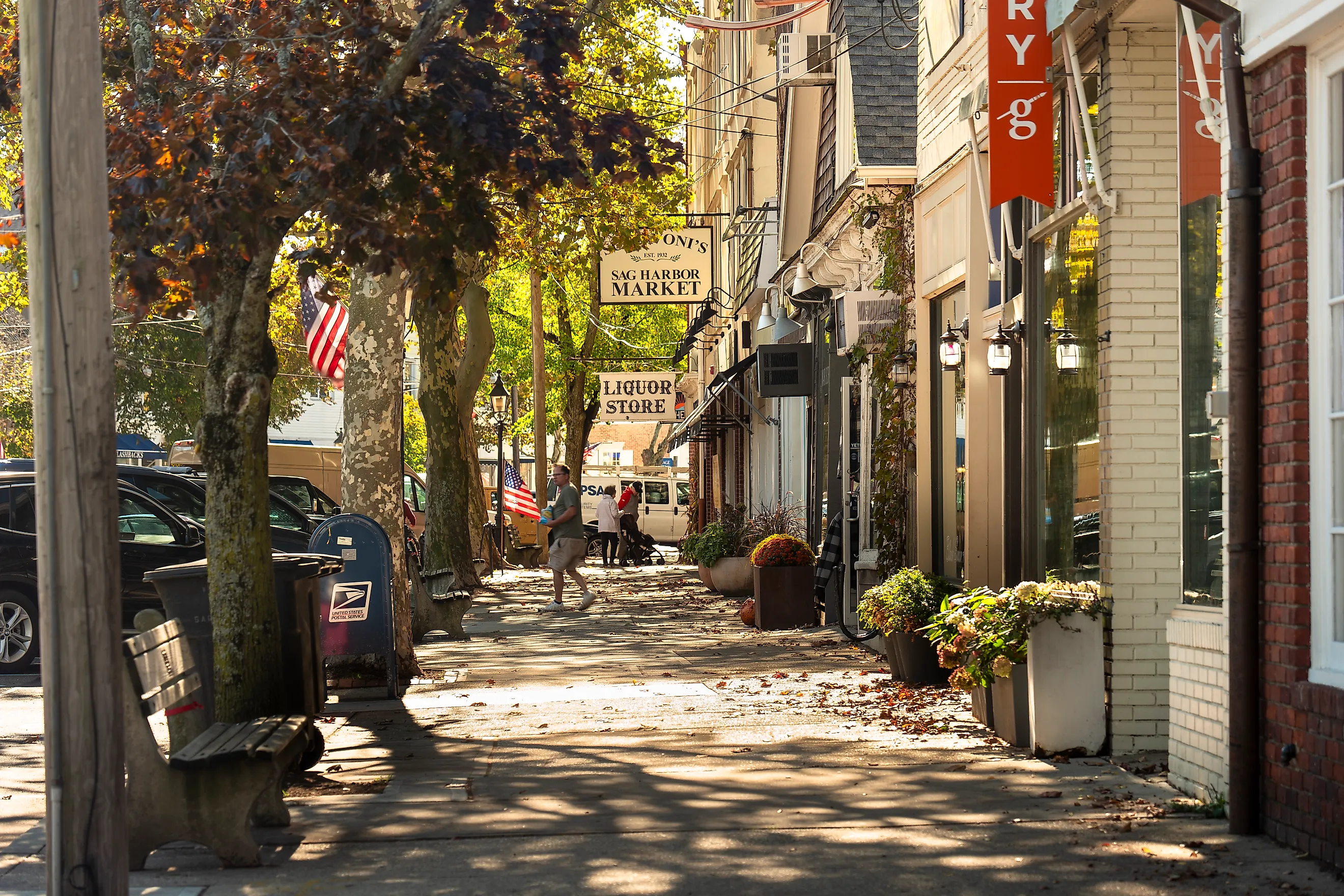
Sag Harbor’s downtown follows the street grid from its whaling heyday in the 1840s, running from Long Wharf on the harbor inland to Jermain Avenue. The village sits on the northern shore of Long Island’s South Fork, with three harbors on Sag Harbor, Great, and Little Peconic Bays. Main Street is lined with Greek Revival captains’ houses, pre-Civil War storefronts, and converted churches that reflect the town’s maritime past. The Sag Harbor Whaling & Historical Museum lives in whale oil millionaire Benjamin Huntting II’s former home, preserving logbooks, scrimshaw, and artifacts from when the village ranked as the fourth-busiest whaling port in the world. Canio’s Books, open since 1980, carries regional titles and hosts weekly author readings in a narrow, wood-paneled space. Fine dining and waterfront access intersect on the wharf, where the American Hotel, built in 1846, offers formal harborside meals; Le Bilbouquet (best known from its flagship location in the Upper East Side) serves French dishes in a space frequented by New York celebrities; and Tutto Il Giorno provides Italian cuisine with outdoor seating amid flowering hydrangeas in spring.
Skaneateles

Every December, Genesee Street in downtown Skaneateles transforms for the Dickens Christmas Celebration, when storefronts and streets are decorated in Victorian style, echoing the 19th-century brick and stone facades that line the thoroughfare. The festival highlights the street’s historic architecture, making it clear why this main axis has remained the village’s commercial heart since the 1800s. Genesee Street runs parallel to Skaneateles Lake, with the northern end anchored by Clift Park, where piers extend into the water, and open lawns provide a direct link between the lakefront and downtown. Along Genesee, the Sherwood Inn has welcomed visitors since 1807. On Fennell Street, the Old Stone Mill houses Skaneateles Artisans, presenting work from more than 90 artists across the Finger Lakes and New England. The Skaneateles Historical Society Museum, in the 1899 Old Creamery on Hannum Street, preserves antique boats, photos, and local artifacts that provide context to the streets and buildings downtown. Compact and visually cohesive, the village grid keeps Skaneateles Lake in sight from almost every block, with Thayer Park offering a quieter green space across from the historic Thayer House.
Ocean Beach

Ocean Beach’s downtown runs along Bay Walk, a boardwalk lined with shops, restaurants, and galleries, entirely free of cars. Access to this Fire Island town is limited to ferries from Bay Shore, water taxis, and seasonal marinas, which keeps the streets pedestrian- and bicycle-friendly and sets it apart from mainland New York downtowns. The seaside village lies between the Atlantic Ocean and the Great South Bay, with boardwalks and tree-lined paths connecting beachfront restaurants, boutiques, and public amenities like basketball courts and playgrounds. Strict village rules ensure that the signage, lighting, and public amenities adhere to a precise aesthetic. Shops and dining cluster in the compact commercial core, where Matthew’s Seafood House serves locally caught fish, The Island Mermaid offers bayfront seating, Scoops Ice Cream Parlor provides desserts, and The Sandbar is a hotspot for live music. Ocean Beach itself is only a few minutes' walk from the heart of downtown.
Cold Spring

Cold Spring’s downtown runs straight from the Metro-North platform to the Hudson River, and that short stretch tells you exactly why this village stands apart. The entire core is listed on the National Register of Historic Places, with intact 19th-century brick storefronts, cast-iron details, and Greek Revival facades that trace back to the boom sparked by the West Point Foundry, established in 1818 to manufacture artillery for the U.S. Army. The foundry’s ruins remain within village limits at the West Point Foundry Preserve, just uphill from Main Street, where preserved casting pits and furnace foundations sit minutes from coffee counters and gallery windows. Main Street narrows as it approaches Foundry Dock Park, where the pavement gives way to open riverfront and direct sightlines across the Hudson to Storm King Mountain. The 1893 Cold Spring Depot, steps from the tracks, now houses a restaurant inside the original station building. Midway up the corridor, Split Rock Books focuses on Hudson Valley history and regional authors, while the Putnam History Museum, inside an 18th-century building on Chestnut Street, documents the village’s industrial rise and Civil War ties.
Woodstock

Woodstock’s name traveled the world in 1969, even though the festival actually took place in the town of Bethel. But downtown Woodstock’s vibrant creativity actually predates the festival by decades. In 1902, the Byrdcliffe Arts Colony took root on Mount Guardian, establishing one of the earliest American Arts and Crafts communities and drawing painters, writers, and designers into the Catskills permanently. That incredible legacy feeds directly into downtown, where Tinker Street runs through the center of the village, parallel to the Sawkill Creek, with low-rise 20th-century storefronts clustered tightly around the Village Green. A few doors from the Green, Woodstock Music Shop sells vinyl, instruments, and vintage audio equipment, reinforcing the town’s long relationship with working musicians. Farther along Tinker Street, Oriole 9 serves breakfast and lunch with ingredients sourced from nearby Hudson Valley farms. Across the street, Mirabai of Woodstock fills a converted house with books and spiritual texts, its garden bordering the Shelter restaurant. Also just off the Village Green is the Woodstock Artists Association and Museum, which maintains rotating exhibitions of regional artists, keeping the village’s exhibition history active within walking distance of the cafés and record bins.
Cooperstown

Otsego Lake’s nine-mile length narrows toward downtown Cooperstown, a village founded in 1786. Main Street runs a tight grid a block up from the water, lined with intact 19th-century commercial buildings that funnel straight to the home of the National Baseball Hall of Fame and Museum. Opened in 1939, it holds more than 40,000 three-dimensional artifacts and draws hundreds of thousands annually, turning a rural Otsego County village into a year-round sports archive. Two blocks southwest, Doubleday Field, rebuilt in 1920 and later expanded, stages amateur tournaments and Hall of Fame weekend games behind its grandstand and brick entrance on Main Street. Surrounding the entrance on Main Street are Sal’s Pizzeria of Cooperstown, Doubleday Café, and Norbu Restaurant, whose award-winning chef is Michelin Star-recognized. All of these downtown attractions are just a couple of blocks away from Lakefront Park and the docks from where the Glimmerglass Queen Tour Boat Company launches into the lake.
Lake Placid

At 1,800 feet in the Adirondacks, downtown Lake Placid curves around Mirror Lake with Olympic infrastructure rising directly behind its storefronts. It remains the only U.S. town to host two Winter Games (1932 and 1980), and that history isn’t tucked away in plaques. The Lake Placid Olympic Museum inside the Olympic Center downtown preserves artifacts from both Games, including the original scoreboard from the 1980 U.S.-USSR hockey matchup, steps from the Herb Brooks Arena where the “Miracle on Ice” unfolded. Main Street bends along the western edge of Mirror Lake, with Mid’s Park providing direct lake access in the center of downtown. Smoke Signals restaurant occupies the former Lake Placid Hardware building and serves barbecue from a deck overlooking the water. Directly south of Mid’s Park is The Tap House Lake Placid and Adirondack Popcorn Co., which sells hand-popped caramel corn from a narrow storefront.
Sag Harbor’s whaling-era streets, Skaneateles’s lakefront Victorian facades, Ocean Beach’s car-free Bay Walk, and Cold Spring’s Hudson Riverfront grid each center downtown activity around history, water, and intimate local businesses. In Woodstock, Tinker Street’s galleries and music shops cluster near the Village Green, while Cooperstown funnels visitors straight to the Baseball Hall of Fame. Each of these New York State downtowns delivers an immediate sense of the town’s character while inviting further exploration.