The State Parks With The Best Fall Color Camping
Fall camping trades the summer crowds for cool nights and a canopy that turns red, orange, and gold overhead. At the ten state parks below, campsites sit right beside the peak-color window, and the walk to an overlook is short. Some hold hardwood gorges cut by rivers. Others rise into aspen groves or canyon rims where cottonwoods light up against the rock. Each entry names the trail with the best color, the weeks when the leaves usually turn, and where to pitch a tent nearby. Plan the trip around the peak window, because in most of these parks it lasts only two or three weeks.
Porcupine Mountains Wilderness State Park, Michigan

At nearly 60,000 acres, the Porkies form Michigan's largest state park, spread across the western Upper Peninsula along the Lake Superior shore. Over 90 miles of trails run through old-growth hardwood and hemlock, and the Escarpment Trail is the one to hike for color. Its rocky ridgeline sits high above the Big Carp River valley, with the reds and golds of the canopy filling the view down to Lake of the Clouds. An out-and-back covers roughly 8 miles. Colors usually peak between late September and early October. Hiking is free, but camping and vehicle access need a permit from Michigan State Park and Harbor Reservations, and popular sites fill months ahead. Campers can choose outpost sites, hike-in yurts, or backcountry spots beside a river or waterfall.
Letchworth State Park, New York

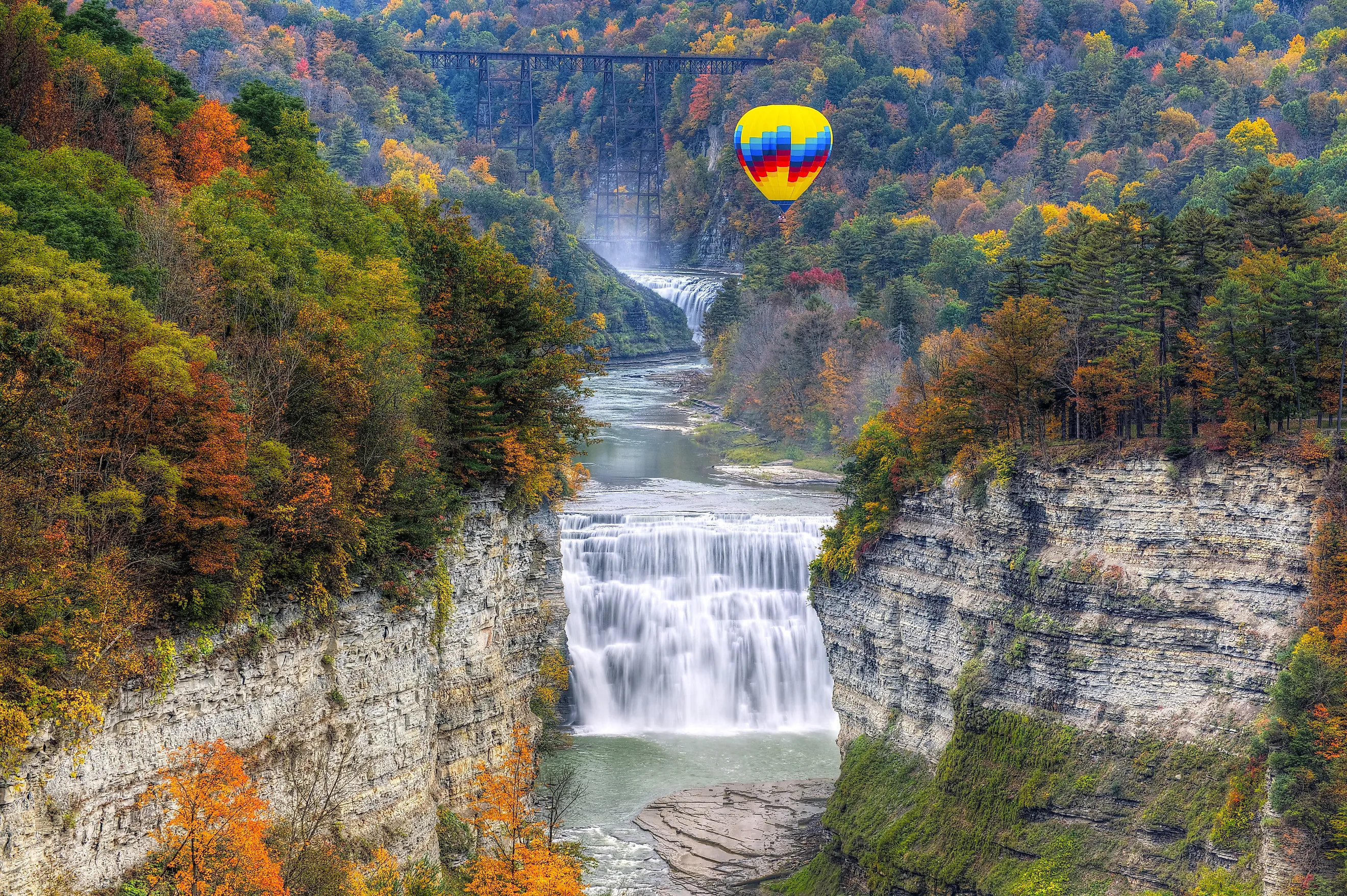
The Genesee River cuts a gorge up to 600 feet deep through Letchworth, which is why upstate New Yorkers call it the "Grand Canyon of the East." Three major waterfalls sit along that gorge, and the color peaks around them between late September and mid-October. The Gorge Trail, marked Trail #1, runs about 7 miles along the rim and links all three falls, with gold and red treetops crowding the canyon walls the whole way. The park covers roughly 14,000 acres, with more than 66 miles of trails in total. Day hiking is free; camping and parking require a reservation through the park office. Few places let you photograph fall foliage and a waterfall in the same frame, and at Letchworth you can do it three times over.
Franconia Notch State Park, New Hampshire

Franconia Notch is known for classic New England color across its 6,692 acres in the heart of the White Mountains. The Flume Gorge cuts an 800-foot granite chasm through the park, and the Artist's Bluff Trail climbs to a short loop with a wide view over the notch and its turning maples and birches. Leaves generally peak from late September into early October. Lafayette Place Campground has 97 tent sites with no RV hookups, so nights here stay quiet. Anyone skipping the tent can still see the color from the parkway, which winds the length of the notch below the ridgelines.
Devil's Lake State Park, Wisconsin

Wisconsin's largest and most-visited state park sees more than two million visitors a year across its 9,217 acres in the south-central part of the state. Quartzite bluffs rise 500 feet above the lake, and the hardwood canopy below the East Bluff turns yellow, orange, and red around mid-October. The East Bluff Trail climbs to a vantage over the South Valley, where the color spreads out beneath the rock. Three campgrounds, Quartzite, Northern Lights, and Ice Age, sit within the park, and sites near the water book up fast in autumn. The lake sits close to Madison and the Wisconsin Dells, which makes Devil's Lake an easy weekend for a spur-of-the-moment color trip.
Baxter State Park, Maine

Mount Katahdin anchors Baxter, a wilderness park in northern Maine where maples run gold and red to the horizon. The best reflection is at Sandy Stream Pond, where the autumn canopy mirrors on still water with Katahdin behind it. Moose feed in that area often, especially at dawn and dusk, so keep your distance if one crosses the trail. Peak color here comes early, usually mid-September into early October. Baxter's primitive camping is the draw for anyone who wants a true backcountry night, and sites should be reserved at least two weeks out. There are no hookups and no crowds, just tent sites among the trees.
Custer State Park, South Dakota

Aspens are the story at Custer State Park, in the Black Hills next to Mount Rushmore National Memorial. In fall they turn a bright gold that catches the low light, and a free-roaming bison herd of roughly 1,300 moves through the same country. The Needles Highway winds past granite spires and gold groves, and Legion Lake Campground has lakeside sites among the color-lined hillsides. Peak runs from late September through the first week of October. Watch for bison grazing an aspen stand in the morning sun; this is one of the few color trips where the wildlife rivals the leaves.
Palo Duro Canyon State Park, Texas

The "Grand Canyon of Texas" runs 120 miles across the Panhandle, and its fall color comes from cottonwoods rather than a dense hardwood forest. Along the Prairie Dog Town Fork of the Red River, those cottonwoods turn bright yellow against the red canyon walls, a contrast you won't find in the northern parks on this list. Color usually peaks between mid-October and mid-November, later than most. Mesquite and Hackberry campgrounds sit down on the canyon floor, so campers wake up among the yellow and orange leaves. Rates range across primitive tent sites and cabins, and both fill on autumn weekends. The late timing makes Palo Duro Canyon a good backup when the northern parks have already dropped their leaves.
Tettegouche State Park, Minnesota

Tettegouche sits on Minnesota's North Shore, where sugar and red maples turn blazing red and crimson while aspens and poplars go golden. Waterfalls and clifftop overlooks break up the forest, and the color peaks between late September and early October. Baptism River Campground is the pick for leaf season because it sits right under the maple canopy, close to the Illgen Falls trailhead that leads deeper into the color. Drive-in and walk-in sites are both available, and prices stay modest for the North Shore. The season here is short, so a well-timed weekend is worth booking early.
Cloudland Canyon State Park, Georgia

On the western edge of Lookout Mountain in northwest Georgia, Cloudland Canyon is known for deep Appalachian gorge views, waterfalls, and a mix of oak, maple, and dogwood. The Main Overlook is the spot for color: oaks deepen to red, dogwoods to dark scarlet, and maples throw off red, orange, and yellow all at once. West Rim Campground sits closest to those canyon-rim views. Backcountry tent sites run cheap, while cottages cost more, so the park suits both a bare-bones night and a warmer cabin stay. Southern color arrives late, generally late October into November, extending the camping season well past the northern parks.
Mount Magazine State Park, Arkansas

Signal Hill, the high point of Mount Magazine, reaches 2,753 feet, making it the highest spot in Arkansas and a wide vantage over the Ozarks in fall. Oak, sassafras, and hickory turn red, orange, and yellow across the slopes, usually peaking between early and mid-October. The North Rim, Signal Hill, and Mossback Ridge trails all open onto the color. Cameron Bluff Campground has 18 tent and RV sites with high-elevation views straight into the autumn canopy. Rates land in the mid-range for a state park, and the bluff-edge sites are the ones to reserve first.
Fall Color Beyond the National Parks
A national park is not the only place to spend a fall night under changing leaves. Whichever region you start from, one of these parks sits within a short drive of a peak-color canopy, with a campsite right beneath it. The northern gorges and lakeshores turn first, in late September; the southern canyons and Appalachian rims stay colorful into November, which stretches the season for anyone willing to travel for it. The reward is the same everywhere on this list: waking up to red, orange, and gold in every direction, with the trail to the overlook starting a few steps from the tent.