7 Snake Infested State Parks In Wyoming
Wyoming is a wild, rugged state with a comparatively low human population but teeming with wildlife. With all its rocky canyons, river valleys, and rolling plains, Wyoming is prime real estate for 14 different snake species, including 3 venomous ones. For hikers, snake lovers, campers, and nature lovers exploring Wyoming’s vast state parks, it's best to wear long pants, watch your step, and keep an eye out for snakes that could strike out if threatened. Below, we have listed seven state parks in Wyoming where snakes tend to congregate.
But note, when we say that these parks are "snake-infested," that is not meant to imply that snakes don't belong there and need to be removed. On the contrary, these reptiles occupy a key space in the environment that would have ripple effects up and down the food chain if they were not part of it. What it does mean, though, is that these parks are, how do we say this nicely, blessed with an abundance of snakes. And for snake lovers, that's a good thing.
Curt Gowdy State Park

Curt Gowdy State Park is an 11,000-acre park located near the Laramie Mountains. It's named for a beloved Wyoming sportscaster and avid outdoorsman. Its reservoirs, rolling hills, and extensive trail system all draw tourists, but they're also features that help snakes thrive. The park’s mix of grasslands, exposed rock, and forested areas provides lots of good habitat for snakes.
Prairie rattlesnakes are most active in the park between spring and early fall. During that time, visitors may also notice several nonvenomous snake species, especially on warm days when snakes come out to absorb heat on open ground near trails or campsites. These sightings are usually brief, and most snakes move off quickly once they sense people nearby.
Because campsites and picnic areas often sit right next to undeveloped land, it is not unusual for snakes to pass through the edges of these spaces. Prairie rattlesnakes depend on their natural coloring to blend in and often remain motionless when left alone. By feeding on rodents, they help keep populations in check around areas of frequent human use. Encounters are rare, but paying attention in tall grass, rocky areas, and sun-warmed paths helps reduce surprises.

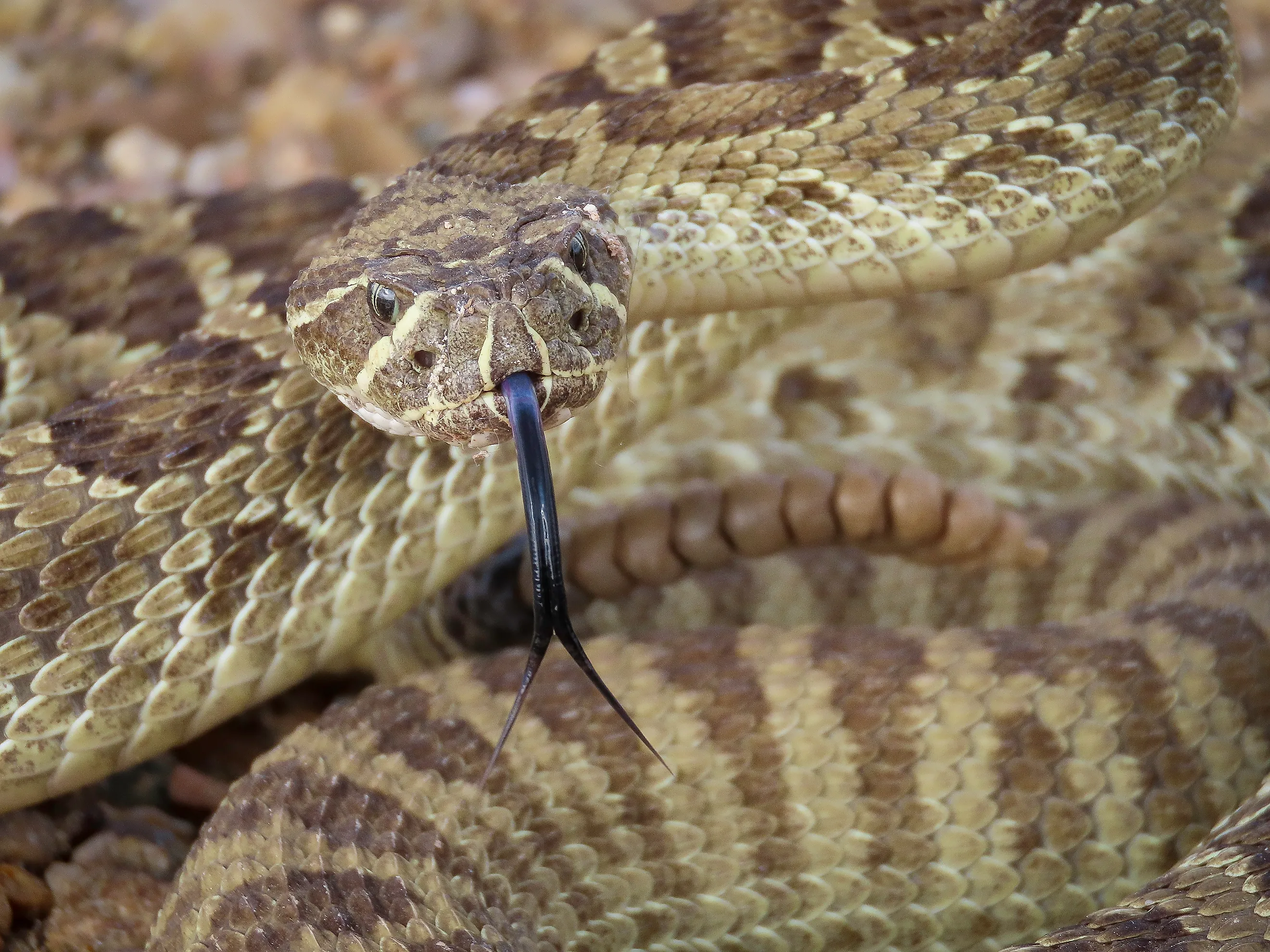
Prairie Rattlesnake — the primary rattlesnake found in Curt Gowdy State Park. This species is venomous, so admire it from a safe distance and let it mind its business.
Hot Springs State Park

Hot Springs State Park runs along the Bighorn River in Thermopolis and is defined by mineral hot springs that keep parts of the ground warm throughout the year. That steady warmth, paired with reliable water, creates conditions that appeal to a variety of wildlife, including snakes. Prairie rattlesnakes are known to occur in the area, along with nonvenomous species such as gopher snakes. The park also offers educational programs that introduce visitors to native reptiles and explain how they fit into the local environment.
Gopher snakes are often confused with rattlesnakes because of their size and markings, but they pose no danger to people and help control rodent populations. Snakes are most commonly spotted along the park’s quieter edges, such as riverbanks, rocky slopes, and undisturbed vegetation. Their presence is a sign of a functioning ecosystem, where predator and prey populations stay in balance. When encountered, most snakes move away on their own if they are given room.

Bear River State Park

Bear River State Park is a smaller, more developed park in Evanston, Wyoming, built around walking paths, open green space, and wildlife exhibits. Snakes are not commonly seen along the maintained trails, but they are part of the natural environment just beyond the park’s landscaped areas. Inside the visitor center, live native snakes are kept for educational programs, giving visitors a chance to see local species up close and learn how they fit into Wyoming’s ecosystems.
Outside the busiest parts of the park, the Bear River corridor supports grasslands and riverside habitat where snakes naturally live. Species living there include the prairie rattlesnake, gopher snake, and plains garter snake. Educational displays explain how to recognize venomous and nonvenomous snakes and outline the role snakes play in maintaining balance within the local food web.

Boysen State Park

Boysen State Park covers a wide area near Wind River Canyon and wraps around the shores of Boysen Reservoir. The park’s mix of rocky slopes, open shoreline, and rolling hills creates good conditions for snakes, especially in spots that receive plenty of sun. Prairie rattlesnakes and western hog-nosed snakes have been seen here, often in areas with loose soil or exposed ground. Snakes are sometimes spotted near the water as well, since they are capable swimmers.
Western hog-nosed snakes are nonvenomous and may put on an exaggerated display when startled, but they pose no danger to people. Prairie rattlesnakes in the park focus on hunting rodents and usually stay still unless someone gets too close. Boysen’s range of habitats supports a steady snake population, which reflects the park’s overall ecological health. In quieter, less developed parts of the park, watching where you step around rocks and brush helps avoid unexpected encounters.

Devils Tower National Monument

Devils Tower National Monument is home to several reptile species, with snakes being the most common. Prairie rattlesnakes are the only venomous snakes regularly found in the area, while bullsnakes are the most frequently seen and can grow quite large. During warmer months, bullsnakes are often spotted along trails, where they come out to warm themselves. Other species found in the monument include milk snakes, garter snakes, and yellow-bellied racers.
Yellow-bellied racers are nonvenomous and rely on speed to escape when startled. Around Devils Tower, snakes tend to favor sunny spots such as trail edges and rocky clearings, where they can regulate their body temperature. Their role in controlling rodent populations helps maintain balance within the local ecosystem. Encounters with snakes are usually short, and most will move away on their own if given space.

Sinks Canyon State Park

Sinks Canyon State Park has south-facing slopes that get steady sunlight, which makes them ideal spots for snakes to warm themselves. Prairie rattlesnakes are often found in rocky areas where they hunt rodents, and bullsnakes are also common throughout the canyon. Bullsnakes can look a lot like rattlesnakes because of their size and markings, but they are nonvenomous and do not have a rattle. Even so, they are sometimes mistaken for rattlesnakes and killed.
Both snakes play an important role in keeping small mammal populations in check. Prairie rattlesnakes tend to avoid people and depend on camouflage to stay hidden. When they are noticed, they usually move away if given room. The combination of sun-exposed slopes, rocky cover, and available prey makes Sinks Canyon a consistent area for snake activity within Wyoming’s state parks.

Seminoe State Park

Seminoe State Park surrounds the Seminoe Reservoir and consistently sees snake activity thanks to its rocky ground and reliable access to water. Prairie rattlesnakes and bullsnakes are commonly observed, and the midget faded rattlesnake has also been documented in the area. These snakes tend to gather in warm, sheltered spots along the shoreline and on nearby slopes, where the ground retains heat and prey is available.
Bullsnakes are often mistaken for rattlesnakes, but they are nonvenomous and play a helpful role by controlling rodent populations. Records show that western hog-nosed snakes and pale milk snakes lived in the region before construction of the reservoir changed the landscape. Even with those changes, Seminoe State Park still supports a steady snake population, showing how well these reptiles adapt to Wyoming’s dry, open environments.
Wildlife Awareness in Wyoming Parks
Snakes are an essential part of Wyoming’s ecosystems. That's especially obvious in state parks that combine sunny rocks for sunbathing and cover, water, and abundant prey. Species such as prairie rattlesnakes, bullsnakes, and garter snakes help control rodent and small animal populations, supporting ecological balance across the state.
For people visiting these parks, learning about the indigenous species isn't something to do out of mild curiosity. It's vital to be able to distinguish venomous and nonvenomous species and give them their space. Observing snakes at a distance and allowing them space ensures that people and animals can share these landscapes responsibly.