7 Snake Infested State Parks In Utah
Utah is home to 31 native snake species, including seven venomous ones. Despite their cold-blooded, limbless limitations, many of these serpents turn up statewide, across hot and cold climates, low valleys and high elevations, deserts and oases alike. The Beehive State is tailor-made for snakes, not only in its varied environments, but also in its abundance of small mammals, birds, and other reptiles that make up the daily diet of these secretive creatures. As a result, Utah has several clear snake hotspots. Case in point: these seven snake-infested state parks.
Dead Horse Point State Park

This ominously-named but exceptionally beautiful state park lies about 30 miles from the quirky adventure town of Moab, sandwiched between Canyonlands National Park and Arches National Park. The rocky peninsula of Dead Horse Point State Park is criss-crossed by hiking and mountain biking trails, and constant cliffside views of the Colorado River, 2,000 feet below. Bike rentals are available on-site. Drive-in campsites and yurts allow visitors to soak in the inspiring sunrises and sunsets, as well as the brilliant night skies in between.
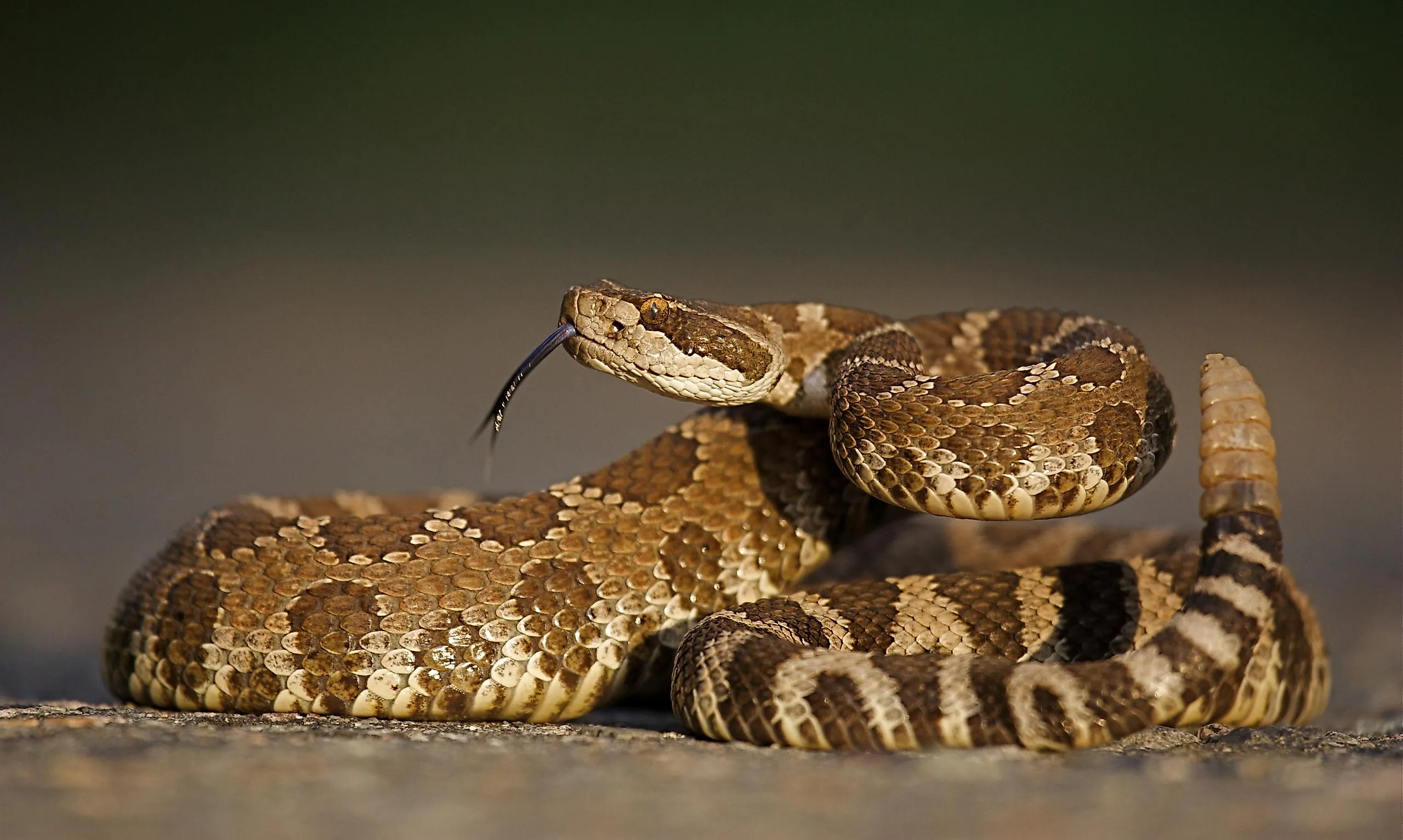
At Dead Horse Point State Park, you might spot some bighorns and pronghorns, chipmunks and cottontails, mountain lions and bobcats, foxes and coyotes, sagebrush lizards, scorpions, and of course, snakes. Two common species include the harmless gopher snake, specifically the Great Basin Gophersnake (Pituophis catenifer deserticola), and the venomous midget faded rattlesnake (Crotalus oreganus concolor). The former averages four feet in length and has a light-brown or yellowish base, whereas the rattler is only about half as long and tends to have a more gray or reddish-brown body. Because both species share similar dark blotching, they are easy to confuse at first glance, which is reason enough to give either a wide berth and listen for that distinctive rattle.
Antelope Island State Park

Speaking of snake-infested peninsulas, let's turn our attention next to Antelope Island State Park. Sitting immediately northwest of Salt Lake City, on Antelope Island (which becomes a peninsula when Great Salt Lake's levels are low), this is another hub for hiking and mountain biking, as well as horseback riding, beachcombing, buoyant saltwater swims, and primitive camping.
In terms of wildlife, Antelope Island State Park is a sanctuary for free-range bison, mule deer, pronghorns (i.e., antelope), millions of shoreline birds, and three species of non-venomous snakes. Gopher snakes again make an appearance. In fact, because they occur in such abundance and because they primarily prey on rodents and other small animals, they act as a natural buffer against venomous intruders. So morning motorists should stay alert, as snakes often sprawl out on the park’s asphalt roads to soak up early heat.
Some sources cite the blue racer as sharing space with these gopher snakes, but given the known distributions, this is likely a case of mistaken identity. It is its speedy cousin, the western yellow-bellied racer (Coluber constrictor mormon), that occurs in most areas of Utah (except the West Desert). And finally, the wandering garter snake (Thamnophis elegans vagrans) occurs statewide, but usually near water, hence its propensity for Antelope Island.
Goblin Valley State Park

With a name like Goblin Valley, it should come as little surprise that a few scaly residents call this central Utah park home. Named for the mushroom-shaped (or goblin-esque) sandstone formations scattered across its Martian landscape, Goblin Valley State Park is a stimulating place for a hike. There are five established hiking trails for casual visitors, but experienced backcountry buffs can also delve deeper into the undefined desert wilderness. In either case, the familiar combination of gopher snakes and midget faded rattlesnakes can be expected in these parts.
The midget faded rattlesnake (which, by the way, is a subspecies of the western rattlesnake) can be found here as well, sometimes even in the middle of the park's disc golf course. Despite its humble stature, this little fellow has one of the most potent venoms of any North American snake, a mixture of myotoxins and neurotoxins. To help minimize harmful encounters, park officials recommend giving snakes plenty of space and moving away.
Kodachrome Basin State Park

Shifting down into south-central Utah, we arrive at a collection of 67 red spires, aka "sedimentary pipes," within Kodachrome Basin State Park. This evocative name was bestowed by the National Geographic Society in reference to the landscape's multi-hued sandstone striations that reveal upwards of 180 million years of geological deposits. As has become the custom of Utah's state parks, hiking and mountain biking are two of the go-to modes of recreation, but horseback riding is also a memorable way to explore Kodachrome's natural beauty, and it's an effective way for ophidiophobes to keep off the ground.
Kodachrome Basin once again welcomes the gopher snake, and midget faded rattlesnake, but also introduces us to the Great Basin rattlesnake (Crotalus oreganus lutosus) and the desert striped whipsnake (Masticophis taeniatus taeniatus). Though averaging a full foot longer than its Crotalus cousin, the Great Basin rattlesnake doesn't pack the same bite as the midget faded rattlesnake. Instead, it wields only a moderately potent venom (though plenty for subduing rodents, birds, and lizards) and a mixture of toxin types. As for the whipsnake, this long, slender, large-eyed, and cream-striped serpent might spook some visitors with its agility (particularly, its climbing skills), but it is entirely harmless to us humans.
Snow Canyon State Park

Don't be misled by the name; cold-blooded creatures love the dunes and craggy sandstone cliffs of this southwestern Utah playground. Snow Canyon State Park consists of 7,400 acres within the 62,000-acre Red Cliffs Desert Reserve, right where the Great Basin Desert, Mojave Desert, and Colorado Plateau collide. As visitors explore Snow Canyon's 38 miles of hiking trails, 15 miles of equestrian trails, and 3 miles of paved walking/cycling paths, they may encounter such critters as the common chuckwalla (from the Iguanidae family), woodhouse toad, gila lizard, desert spiny lizard, desert tarantula, and 13 other sensitive/threatened species, including the gila monster, peregrine falcon, and desert tortoise.
As for our primary subjects of interest, Snow Canyon harbors gopher snakes, the Great Basin rattlesnake, and a new addition to our growing cast: the California kingsnake (Lampropeltis californiae). This smooth, black and white-striped constrictor is non-venomous, and gained its reputation as "king" because of its ability to hunt, kill, and feed on other snakes (even other kingsnakes). In fact, the California kingsnake is highly resistant to rattlesnake venom. So while it means us bipeds no harm, fellow snakes know the score.
Gunlock State Park

Immediately west of Snow Canyon State Park (but about a 20-minute round-trip drive, regardless of whether you go north or south), Gunlock State Park hugs the southeastern shore of its eponymous reservoir. Thanks to its modest elevation (by Utah standards) and mild winters, Gunlock is great for year-round boating, paddling, fishing, swimming, waterside picnics, and even scuba diving. And when the reservoir is at capacity, waterfalls set against quintessential red rock country lure hikers and photographers to the mouth of the Santa Clara River.
Given its proximity to Snow Canyon, Gunlock State Park is also home to populations of gopher snakes, Great Basin rattlesnakes, and California kingsnakes. But there have also been sightings of red racers (Masticophis flagellum piceus), aka red coachwhips. Despite the color-specific moniker, red racers can actually appear as pink, tan, yellow, orange, or reddish-brown. Like the desert striped whipsnake, this long, slender, and agile snake can often be seen with its head raised, using its exceptional eyesight to periscope for small prey or serious threats. It poses no risk to humans, unless, of course, its non-venomous bite becomes infected.
Sand Hollow State Park

Completing this cluster of southeastern-situated snake-infested state parks is another reservoir-centric selection: Sand Hollow State Park. Though it opened in 2003, thanks to its diverse recreation potential, it is also one of the most popular. The expansive blue reservoir and accompanying sandy beaches invite swimming, boating, fishing, diving, and camping, but the 15,000 acres of peripheral dunes, known as Sand Mountain, are also a treasure trove for OHV riders.
The same snake species thus far encountered in this corner of the state can be expected throughout Sand Hollow State Park, not just in its arid areas, but on the water too. Contrary to popular belief, many snakes are proficient swimmers. Over the years, rattlesnakes have been documented skimming the surface of Sand Hollow Reservoir, including a video of a rather hefty specimen that went viral in the summer of 2018.
Snakes in the Beehive
Be they burrowed within sandstone crevices, slithering amongst the sagebrush, or, as we have seen, even swimming across popular reservoirs, Utah fosters a plethora of snake species. Whether you’re hoping for a glimpse of these serpents or would rather avoid them altogether, they are very much part of the Utah state park experience. Take stock of these seven snake-infested state parks.