4 Rattlesnake Hotspots In Iowa
Iowa is home to four species of venomous snakes: Copperheads, Timber Rattlesnakes, Massasauga Rattlesnakes, and Prairie Rattlesnakes. They’re rare, but they’re there, so it’s a good idea to learn a little about these creatures before venturing out into Iowa’s beautiful parks, preserves, and recreation areas.
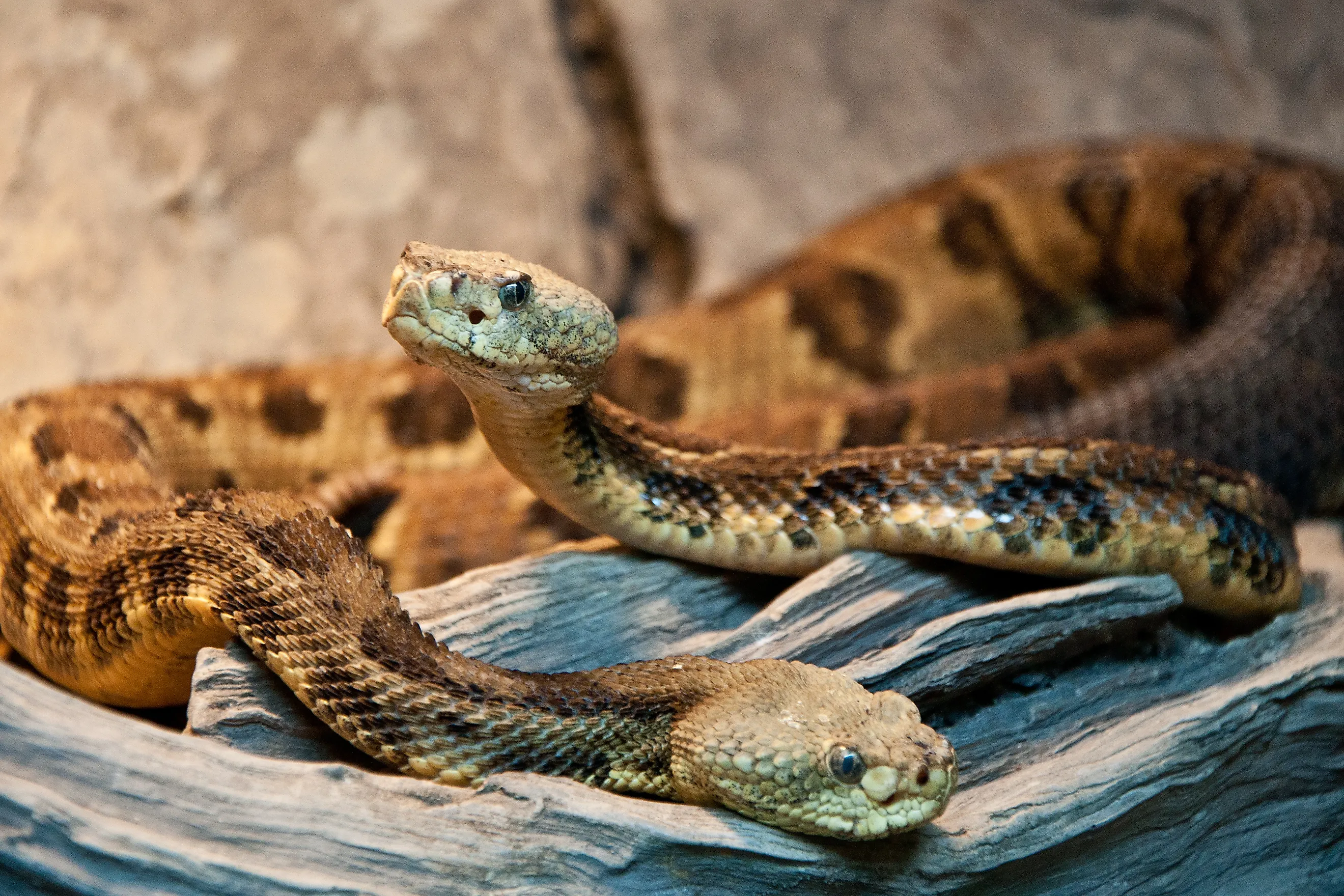
There are several ways to identify rattlesnakes, which are classified as pit vipers. They have triangular-shaped heads, slitted eyes, and a rattle at the end of their tail. They mostly feed on rodents and, despite their reputation, are timid and reclusive. Most cases of rattlesnakes biting humans occur when someone stumbles across them or handles them.
Prairie Rattlesnakes are the least common in Iowa. They’re listed as endangered in the state and are protected by state law, making it illegal to kill or collect them. It’s also illegal to kill or collect Massasaugas. Timber Rattlesnakes can only be harmed or disturbed if they’re within 50 yards of an occupied residence.
Below, we take a look at some of the areas where rattlesnakes are sighted most in Iowa. These beautiful recreation destinations are safe to visit, just be mindful of where you’re stepping and respectful of local wildlife.
Broken Kettle Grasslands Preserve
A swath of pristine prairie in the Loess Hills, the Broken Kettle Grasslands Preserve is unique for several reasons. It’s the largest remaining prairie in Iowa and the Nature Conservancy’s largest preserve in the state. Not only are the grasslands an important bird conservation area, but they’re also home to a herd of around 200 buffalo.
In 1999, researchers from the Nature Conservancy made a surprising discovery on the preserve. They sighted the endangered Prairie Rattlesnake at the grasslands, which remains Iowa’s only known location of the rare rattler. On closer examination, the snake was found to be pregnant, indicating a breeding population on the preserve.
The preserve is open to the public for hiking, birding, and wildlife watching. Other notable species on the prairie include coyotes, badgers, black-billed magpies, upland plovers, bobolinks, and western kingbirds.
Maquoketa Caves State Park

Both the Timber Rattlesnake and the Massasauga Rattlesnake are present in Maquoketa Caves State Park, one of Iowa’s most popular outdoor recreation areas since the 1860s. The park, located in the state’s Driftless Area, contains more caves than any other in the park system as well as towering bluffs, dense forest, and a six-mile trail network. Aside from trails and caves, the park has a museum, a visitor center, picnic facilities, and campsites. Its must-see features include the 1,100 ft “Dancehall Cave”, the 50ft high “Natural Bridge” which straddles Raccoon Creek, and the 17-ton “Balanced Rock” landmark.
The Driftless Area in northeast Iowa has been shaped by centuries of glacial drift, carving out deep valleys, exposed bedrock, and high bluffs. The rocky hillsides and forest are the ideal habitat for rattlesnakes, which look for places with a lot of natural cover, such as rocky crevices and logs, where they can make their dens and hibernate during the colder months.
Shimek State Forest

Shimek State Forest covers almost 10,000 acres of hardwood and conifer forest in southeast Iowa along the Des Moines River. Popular activities in the forest include hiking, hunting, horse riding, fishing, and camping. There are nearly 60 miles of trails winding through the forest and four small lakes. You can pick up a map at the Forest Headquarters, located a mile northeast of Farmington.
Shimek State Forest is also an important conservation area and a habitat for a diverse range of species, including wild turkeys, raccoons, coyotes, waterfowl, and beavers. There are several snake species in the mix, too, including the venomous Copperhead and Timber Rattlesnakes, which have been found in the northern part of the forest’s Farmington area.
Pammel State Park

Pammel State Park is located in Winterset, a known Timber Rattlesnake hotspot. In 2023, a Winterset resident made headlines by finding seven rattlers on his property, which were caught and relocated by the Madison County Conservation Board.
One of Iowa’s first parks, Pammel State Park is known for its picturesque woodlands and its dramatic limestone ridge, known to locals as ‘the backbone’. The 100-foot-high backbone is where you’ll find some of the oldest oak trees in the state, as well as the Backbone Trail, which starts near the Backbone Shelter, a 1930s Civilian Conservation Corps hut made with native timber and limestone. The park also contains a Nature Center, canoe and kayaking on the Middle River, and the historic Pammel Park Lodge. The Nature Center regularly runs educational events focusing on local wildlife, including the area’s rattlesnakes, so check the schedule before your visit to learn more about snakes in the park.
Be Snake Smart
While there are rattlesnakes in Iowa, spotting one in the wild is still an unusual occurrence, and getting bitten is even rarer. There’s no need to fear these reptilian predators, which are typically non-aggressive and will happily slink away if you give them space to do so. They don’t want to waste their energy biting a target that’s much bigger than them! There are a few common-sense rules that can keep you from disturbing rattlers. Keep to marked trails, watch where you’re putting your hands and feet, and, if you do see a snake, give it plenty of room. Snakes are just one of many natural treasures in Iowa, which is full of scenic wonders from its rolling plains and ancient forests to its deep river valleys and glacial bluffs. This is a state that welcomes explorers, nature-lovers, and wilderness warriors. Don’t let snakes stop you from enjoying all that it has to offer.