7 Snake Infested State Parks In Iowa
There's nothing like getting away to a state park to refresh and recharge. Iowa residents commonly flock to state parks alongside rivers, as they often have scenic river bluffs, dense forested trails, and the occasional lake for fishing or boating. These parks have diverse habitats with many types of creatures, including snakes.
There are 28 species of snakes in Iowa, with four of those being venomous: the Massasauga, Prairie Rattlesnake, Timber Rattlesnake, and Copperhead. All of these snakes are protected, meaning it is illegal to harm or harass them. As a result, visitors to Iowa state parks need to be aware of these snakes and keep an eye on their footing so as to avoid stepping on them. If you are bitten, experts recommend removing any tight-fitting clothing and keeping the body part at heart level. Don't put pressure, tourniquets, or ice on it, and seek medical attention as soon as possible. Snake bites are rare in the state, and deaths are even rarer, but it's key to be careful when visiting these 7 snake-infested state parks in Iowa!
Maquoketa Caves State Park

Maquoketa Caves State Park stands out in the state with its towering bluffs and caves. While much of Iowa was flattened by melting glaciers thousands of years ago, this state park sits within the Driftless Region that was missed by the drifting glaciers. Hikers from all around the state visit the hiking trails that connect the caves and overlooks, including a natural bridge that sits 50 feet above Racoon Creek, and of course, the 1,100-foot deep Dancehall Cave.
The caves, forests, and bluffs hide many creatures, from American Toads to Ruby-throated Hummingbirds to snakes. Most of the snakes in this park are nonvenomous, such as the Eastern Garter Snake, Northern Water Snake, Bull Snake, or Black Rat Snake. However, this park does sit within the ranges of the Timber Rattlesnake and Eastern Massasauga Rattlesnake.

The latter snake's name comes from an Ojibwe word meaning great river-mouth, referencing their tendency to hang out around rivers. These creatures are typically rather small at 24 to 30 inches, with heat-sensing pits on each side of their head. They typically prey on smaller animals like birds, lizards, or other smaller snakes. Their venom contains cytotoxins, which can destroy tissue. They are rather elusive creatures, so you are unlikely to see them out and about.
Wildcat Den State Park

Wildcat Den State Park is also located on the Illinois-Iowa border. Its primary attractions are a mix of sandstone bluffs and historic sites. There are several notable rock formations to find, such as the Devil's Punch Bowl, with a waterfall cascading down its rocks, and Steamboat Rock. Travellers also note the Pine Creek Grist Mill as a popular spot, as it was built in 1848, making it one of the oldest structures in the state.

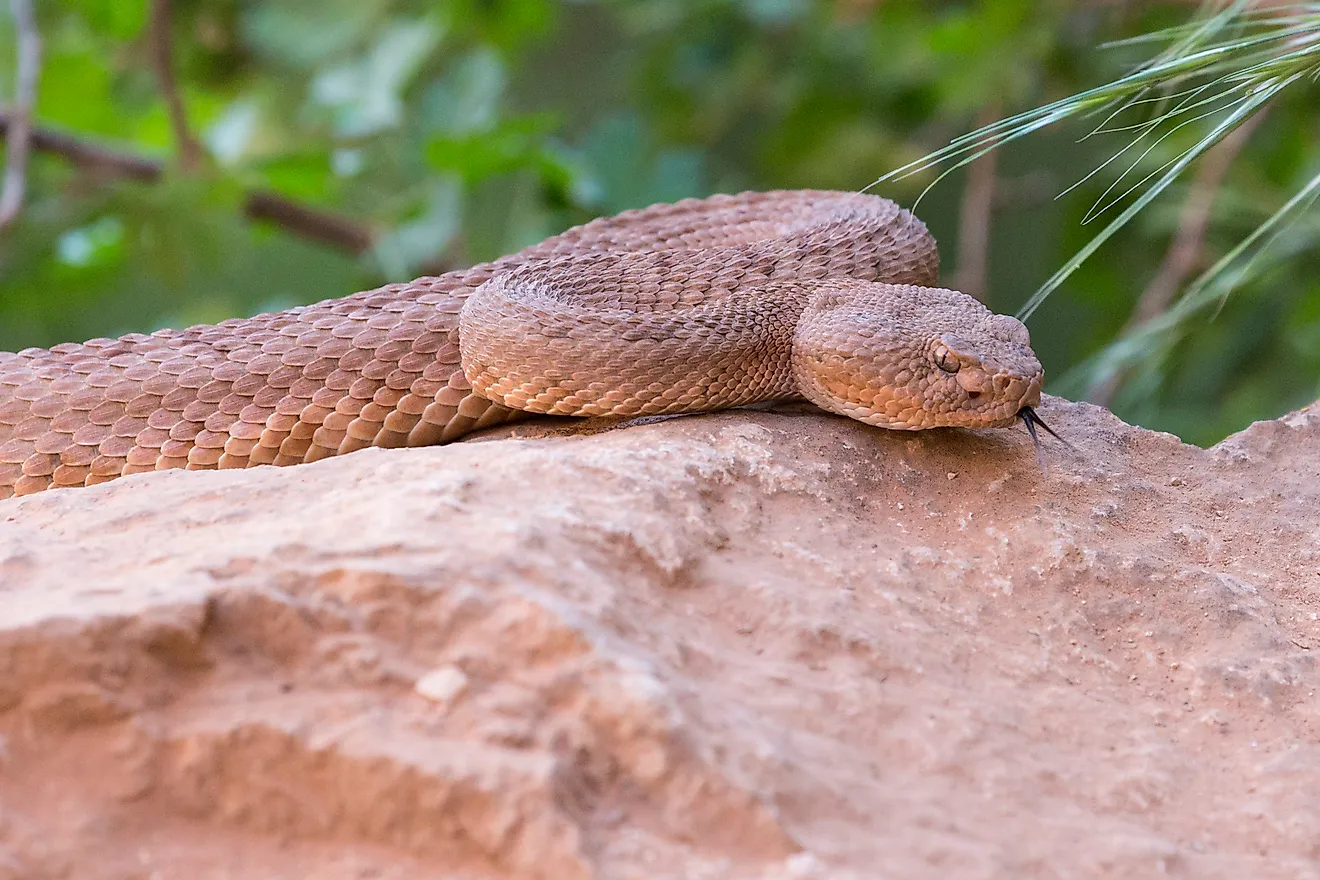
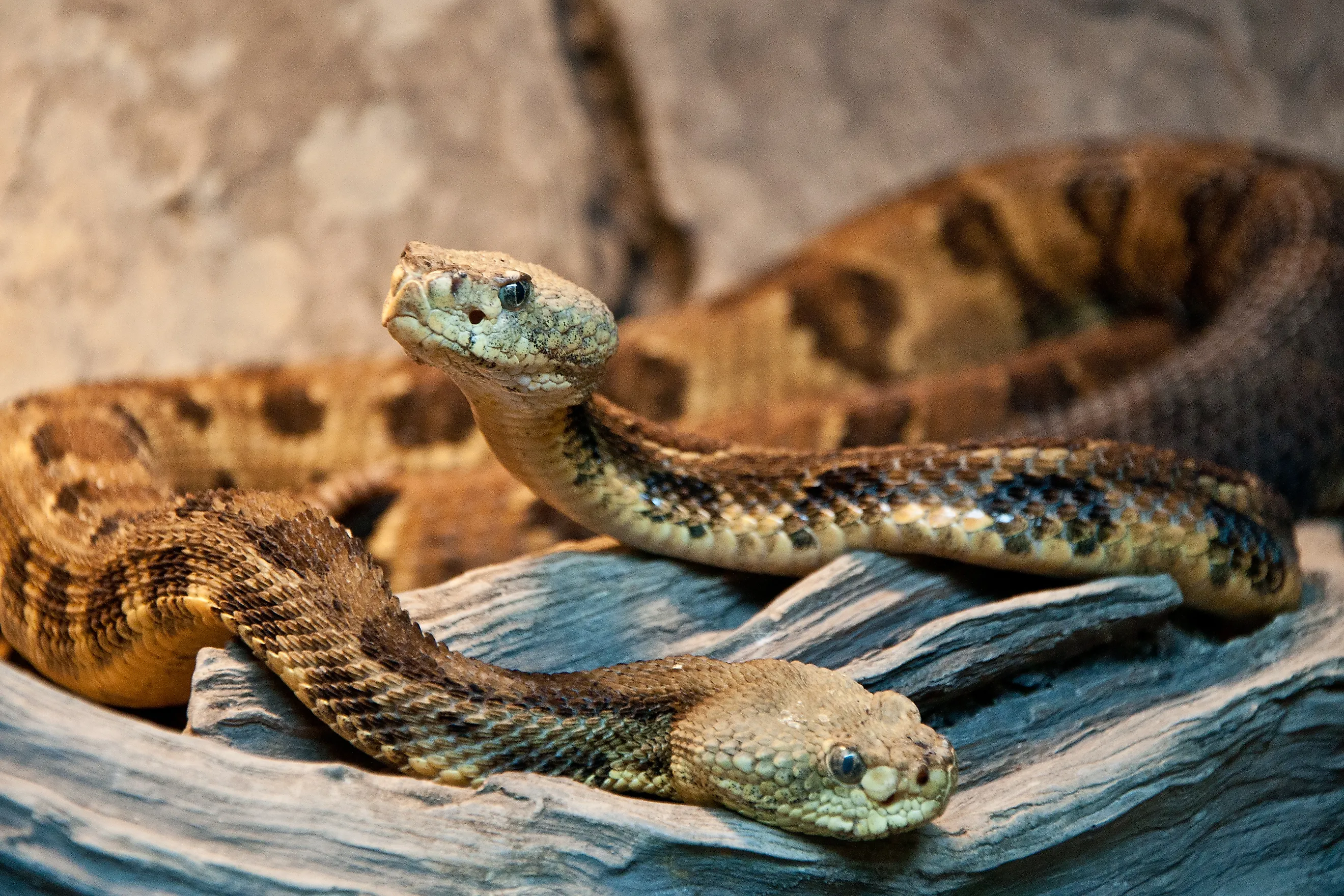
Toads and frogs are common reptiles one will see at the park, along with common watersnakes. Less common, but still sitting within its range, is the Timber Rattlesnake. Their bites are known for being particularly venomous, containing both hemorrhagic and neurotoxic properties. They range in size from 36 to 60 inches and are identifiable by their rattle and dark brown and black crossbands on a yellowish-brown body. When encountering one of these creatures, the best option is to simply give it a wide berth. They don't attack unless they are stepped on, grabbed, or otherwise threatened.
Shimek State Forest

Shimek State Forest straddles Lee and Van Buren Counties in the southeastern section of the state and has five forest units to explore. There are thousands of acres of land in this forest, including camping grounds, hiking trails, fishing lakes, equestrian campgrounds, and much more. Unlike many other state parks in Iowa, Shimek is less developed, providing a more rugged outdoor experience. However, that means it is easier to run into wildlife, including venomous snakes.

There are two venomous snakes you may find here: the Eastern Massasauga Rattlesnake and the Copperhead. The Copperhead is only found in the far southeastern corner of Iowa and is identifiable by its dark brown hourglass markings on its brown or reddish brown body. It will wait for prey to come by its hiding spots before it leaps out and injects their prey with venom. They measure about 20 to 37 inches, and unlike other snakes, they will not flee if threatened but will instead freeze in place.
This presents danger for humans, as it is very easy to step on these frightened snakes, as they blend in well with leaves. Thankfully, these snakes often use a dry bite to warn humans, which contains no venom. Their bites are also rarely fatal, but should of course be treated seriously, especially as some humans may have allergic reactions.
Pikes Peak State Park

Some of the best parks in Iowa sit by the Mississippi River, and Pikes Peak State Park is a great example. This Northeastern park has 11 miles of trails passing over river bluffs, valleys, and Native American sites. One hike will take you up Point Ann, a 500-foot bluff that has views of where the Mississippi and Wisconsin rivers meet, while another will take you by Bridal Veil Falls and Bear Mound, which was constructed by Native Americans. Fossil hunters have found several prehistoric remains of gastropods and cephalopods here on the river bluffs.

Of course, living creatures hang out in Pikes Peak State Park as well. The most common snake in the park is the Black Rat Snake. This snake is pretty easy to identify as it is almost completely black, other than a few faint blotches. Measuring between 48 and 72 inches, this snake is harmless but can be quite frightening for hikers who almost step on it! There have been sightings of Timber Rattlesnakes in larger parts of Clayton County. These snakes commonly share dens with Black Rat Snakes during the winter, so it's possible to see them together.
Palisades-Kepler State Park

The Palisades-Kepler State Park rests on the Cedar River just outside of the city of Cedar Rapids. It was named after Louis H. Kepler, who donated his estate to the existing park. The landscape in it is quite varied, ranging from river bluffs and ravines to hardwood forests. Wildflowers are commonly seen on the trails during the spring, and catfish, bass, and walleye fish can be found in the Cedar River.

There are no known venomous snakes within the park's county: Linn County. However, there is a diverse number of nonvenomous snakes reported here. These include various garter snakes, fox snakes, the smooth green snake, and the Eastern Hognose Snake. This snake varies in color from green to gray and orange or red. Their name comes from the upturned scale on the end of their nose, which looks like a hog's nose. The smooth green snake is pretty easy to spot due to their often bright green color, unless of course, they is hiding in equally green underbrush.
Brushy Creek State Recreation Area

At 6,500 acres, Brushy Creek State Recreation Area is one of the largest parks in Iowa. Featuring Brusky Creek Lake and 45 miles of multi-use trails, the park offers something for horseback riders, skiers, and hikers alike. There are two equestrian campgrounds for campers to store their horses. Hunters also come here to track down pheasant, quail, deer, and wild turkeys.
Due to its location in Northeastern Iowa, there aren't any known venomous snake sightings here, but several types of nonvenomous snakes have been spotted in the larger Webster County. Of note are the Northern Water Snake, the prairie ringneck snake, and the Brown snake. These small snakes are typically brown with a checkered pattern across their bodies. They measure between 9 and 13 inches and are at times mistaken for the Redbelly Snakes, which are of similar size but have a red stripe on their bellies.
Ledges State Park

Located outside of Des Moines in Madrid, Ledges State Park is a popular escape for city residents. Much of it was constructed in the 1930s by the Civilian Conservation Corps. And they left several structures behind, including a stone bridge. There's a four-mile trail system that goes up several sandstone ledges, including one overlooking a small canyon in Pea's Creek. Camping is also popular here, with multiple camping sites and two shelters available for rent.

Hikers have reported running into a variety of snakes here, such as the common watersnake. These snakes can grow quite long, up to 4 feet and 5 inches, and they vary in color from brown to grey and brownish-black. Due to their large size and the fact that they are commonly seen in the water, these snakes can give folks quite a scare. However, they are nonvenomous, so there's nothing to be frightened of. Although less common, it is possible that a timber rattlesnake could make their way to Ledges State Park as well.
Prevention Is the Best Medicine
Snakes are living beings just like us, and want to be left alone to do their business. When going to these state parks, it's important to understand that you are in their territory. Rather than having to take antivenom medicine after a venomous snake bite, you can avoid these bites through preventative measures.
Most of these are pretty simple: avoid underbrush by staying on marked trails. Keep an eye on your surroundings as snakes can wander out onto trails or through waters. If you do see a snake, keep your distance and inform others around you of the snake's presence. By showing a bit of caution, you can ensure both you and the snake stay safe, and you can enjoy your day or weekend outdoors in Iowa's state parks.