Science & Nature

How Much Carbon Dioxide Is In The Atmosphere?
Carbon dioxide is a greenhouse gas that traps heat and keeps our planet warm. Approximately 0.04% of Earth’s atmosphere is made of carbon dioxide.

The Solar System With Four Habitable Planets
The TRAPPIST-1 solar system contains seven known planets, four of which orbit within the habitable zone of the central star.

Is Earth A Planet?
The Earth is one of eight known planets that orbit the sun. Earth’s gravity is strong enough to make it spherical and clear its orbit of debris.

What Are Sunspots?
Sunspots are darker, colder regions on the sun’s surface. They are associated with the formation of both solar flares and coronal mass ejections.
What Is The Biggest Star Ever Found?
The largest star ever found is a hypergiant called UY Scuti. Located 5,219 light years away, it is 1,700 times larger than the sun.
How Old Is The Milky Way?
The Milky Way is estimated to be around 13-billion years old based on the age of subgiant stars within the Milky Way Galaxy.

7 Most Hurricane-Hit States In The United States
Batten down the hatches and head the calls of local authorities if you find yourself in these parts during a swell.
Why Does Uranus Spin On Its Side?
Unlike all the other planets, Uranus spins on its side. The reason for this is likely due to a planetary collision that occurred billions of years ago.


What Is Retrograde Motion?
Real retrograde is when an object moves the opposite direction than expected, while apparent retrograde motion is due to perspective.

Jupiter Is About To Be At Its Closest Approach in 59 Years
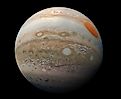
On September 26, 2022, Jupiter will be closer to the Earth than at any point in the last 59 years. Jupiter will be located 365-million miles away.
Why Is Neptune Blue?
Neptune is blue because of the amount of methane within its atmosphere, which absorbs red light and reflects blue light.
The Largest Planet Ever Found
To date, the largest planet found is a gas giant designated ROXs-42Bb. The exoplanet is 9 times the mass of Jupiter and 2.5 times the size of Jupiter.
10 Iconic Animals That Live Only In Africa
From the rhinoceros to the zebra and beyond, Africa's spectacular animals are a testament to the awesomeness of nature.
Is Jupiter A Failed Star?
Jupiter has a similar composition to the sun, leading to it being called a failed star. However, Jupiter would need to be 80 times heavier to become a star.

10 Animals That Live In Antarctica
The freezing deep south of Antarctica is home to many remarkable animals, including numerous record-breakers. These are ten notable species that live and thrive in Antarctica.
James Webb Finds Carbon Dioxide On An Exoplanet
However, scientists are now beginning to study the atmospheres of distant exoplanets in unprecedented detail, and that’s thanks to James Webb.
How Far Can Humans See In Space?
The farthest object we can see with just our eyes is the Andromeda Galaxy, yet telescopes are capable of seeing many billions of light years further.
What Is Gravity?
Gravity was first described by Isaac Newton in 1687, and it was later refined by Albert Einstein in 1915 with his General Theory of Relativity.

How Far Away Is The Sun?
The Earth orbits the sun at an average distance of 93-million miles (150-million kilometres), yet that distance changes due to Earth’s orbital eccentricity.
What Is Renewable Energy?
Renewable energy comes from naturally replenishing sources that do not run out. They are divided into solar energy, hydroelectric energy, wind energy, etc.

The 3 Types Of Rocks
Sedimentary, igneous, and metamorphic rocks are the three different types of rocks that make up all the rocks on Earth.

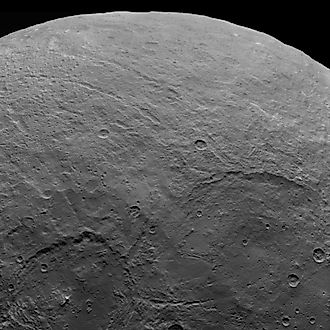
Ceres
Ceres is a dwarf planet that orbits within the Asteroid Belt, located between the orbits of Mars and Jupiter. Ceres was the first dwarf planet discovered.
Saturn’s Moon Iapetus
Saturn has one of the largest, most diverse moon systems in the solar system. One of those moons is Iapetus, and it is one of Saturn’s most unique moons.
The Different Types Of Planets
Planets are defined as either being rocky or gaseous, yet these categories also have subcategories. There are at least six different types of planet.

Gamma Ray Bursts
Gamma ray bursts are among the brightest, most energetic events in the cosmos. They form during the death of a massive star and the formation of a black hole.

The Star Eta Carinae
Other than Earth-sized flares and solar storms, the sun is stable enough for life to evolve and flourish on our world.
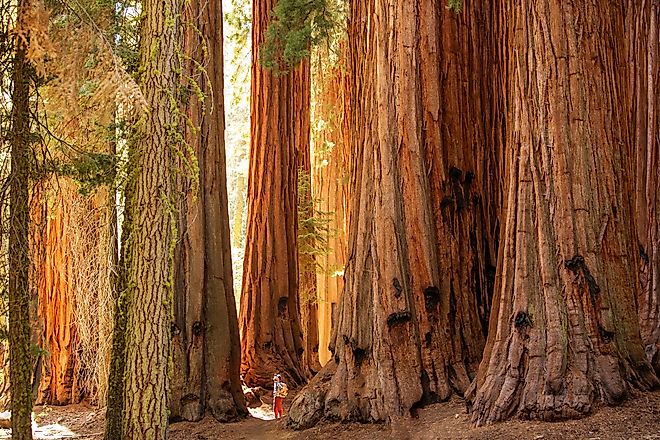
Why California's Mariposa Grove Must Be Saved
A sequoia grove known as Mariposa Grove is found in the southernmost region of Yosemite National Park, close to Wawona, California.
US States Worst Affected By Wildfires
The American West has recently been devastated by wildfires. The states that are most severely impacted by wildfires are listed below.
The World's 10 Greenest Countries
Yale University's EPI is a key indicator of a country's ecosystem vitality and environmental health. The following is a list of the countries with the highest EPI scores:

How Long Would It Take To Travel To Mars?
In order for humans to eventually travel to Mars, they will need to survive in space for extended periods of time, yet just how long would it take to travel to Mars?
10 Coldest States In The United States
The United States is among the countries with a diverse range of climatic conditions. Below are the 10 coldest states based on average annual temperature:
How Planets Produce Magnetic Fields
Magnetic fields are common among the planets in our solar system. Although not every planet has a magnetic field, most of them do.
What Is Spectroscopy?
The science of spectroscopy is one of the most important areas of astronomy. Spectroscopy is the study of an object’s composition by examining the light it emits.
How Much Of A Threat Are Asteroids?
Space agencies from around the world actively track what are called near-Earth asteroids. These are asteroids that are located within Earth’s vicinity.
The Voyager Golden Record
Voyager 1 and 2 launched in 1977, and their journey brought them both to Jupiter and Saturn. Voyager 1 did not continue onto any other planets.


10 Ways Climate Change Will Affect The United States
Here are ten ways that climate change will impact the United States in the decades to come considering the current rate of change.