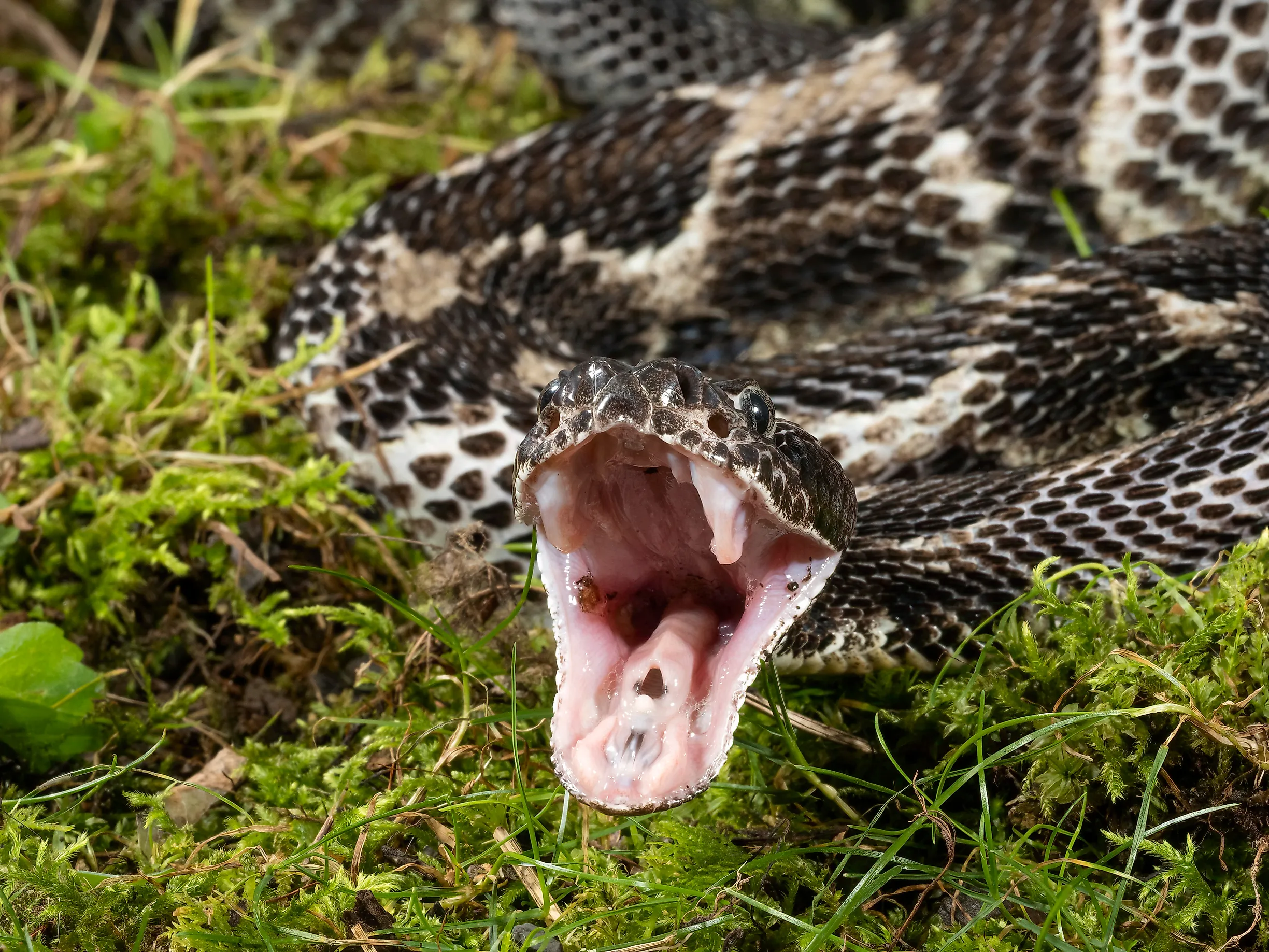
Which State Has More Venomous Snakes: Ohio Or Michigan?
Snow, ice, and venomous snakes seldom share the same mental picture, yet along the shores of the Great Lakes, fangs wait out the frost underground.
Ohio and Michigan both harbor the Eastern Massasauga rattlesnake, a small pit viper that spends much of the year tucked into wetlands and mammal burrows. But Ohio’s rockier hillsides and warmer seasons also support two additional venomous species: timber rattlesnakes and secretive copperheads. Michigan, with its shorter summers and colder north woods, hosts far fewer, but that doesn’t mean encounters are impossible. Comparing these neighboring states reveals how climate, geology, and even abandoned farm junk decide where venomous snakes persist, and which side of the border truly carries the greater bite.
Ohio

Weather in Ohio fluctuates with the changing of the seasons. In the peak of summer, the high can get around 85 degrees Fahrenheit, while in the winter, as low as -20. Ohio suffers severe weather during the winter as cold, dry fronts from Canada and the warmer air from the Gulf of Mexico stream through.
Ohio's geography consists of plains; however, some regions have rolling hills and twisting river valleys. The Till Plains cover Ohio's western half, while the stony Appalachian Plateau covers the eastern half. Rivers within the state include the Cuyahoga River, Great Miami River, Maumee River, Muskingum River, and Scioto River.
Ohio Snakes
With rugged terrain, forests, and rivers, snakes have an abundance of locations to call home. Ohio snake species can be found inside and outside city limits, where food and shelter can be easily acquired. Ohio is home to about thirty-three species of snakes, but only three are venomous.
Timber Rattlesnake

Identifiable features: Timber rattlesnakes can be identified by two color phases, the black and the yellow phase, seen in both males and females. In the black phase, the crossband design is less noticeable against a black background, whereas in the yellow phase, the crossband design is against a yellow background.
Adult Timber rattlesnakes have an average length of three to four feet, but they can also grow up to seven feet long. Due to its size, in addition to being venomous, this species of snake has earned the reputation of being "most dangerous."
Habitat: Timber rattlesnakes have been found in a variety of habitats. They can live in mountainous or hilly forests, hardwood or pine forests, swamps and river floodplains, lowland thickets, and agricultural fields. Timber rattlesnakes are amazing climbers, with some found in trees more than 80 feet high!
Diet: In the wild, timber rattlesnakes eat small to medium-sized rodents, including mice, shrews, chipmunks, and squirrels. Their diet also includes birds, lizards, and amphibians. They are ambush predators who will wait patiently for prey to pass by and then quickly strike, bite, and inject venom before consuming.
Northern Copperhead

Identifiable features: Copperhead markings are usually hourglass-shaped, with the narrower parts crossing the back of the snake over the tailbone. The markings range from brown to orange, which helps them camouflage along forest floors. Copperheads have a pale-colored upper lip which is visible even from a distance away. Juvenile Copperheads have a yellow-tipped tail that fades away around age three or four. This tipped tail is used as a worm-like lure to attract prey. Copperheads can grow to between 24 and 36 inches long, with the largest recorded at 52 inches long.
When encountered, the Copperhead remains motionless, relying on camouflage to remain undetected. Due to their excellent ability to blend in, many bites occur because a person accidentally steps or grabs them while working in their garden. This has earned the species the reputation for "coming out of nowhere."
Habitat: In Ohio, Copperheads reside in the southern counties in the western half of the state. They are also found everywhere, apart from the northern counties in the eastern half. They prefer rocky or wooded slopes where they can blend but have been found to make homes in abandoned building materials such as rotting wood or piles of sawdust.
Diet: Copperheads feed on a wide variety of prey, including mice, amphibians, and insects such as cicadas.
Eastern Massasauga

Identifiable features: The Eastern Massasauga was named for its preference towards wetlands, with Massasauga meaning "Great River Mouth" in the language of the Native American Chippewa Tribe. This species has an average length of around two feet. This small snake is dark-colored with 29 to 50 dark blotches on a gray or brownish-gray body. On either side of the body are three rows of smaller dark spots. Although venomous, people are rarely bitten by the Eastern Massasauga snake due to its elusive and shy behavior, and it is considered non-aggressive.
When threatened, Eastern Massasaugas will remain motionless, depending on their camouflage to blend into their surroundings, hoping to be unseen. Sometimes, they sound their rattle before striking, but they will also strike without rattling, particularly when surprised.
The rattle of the Eastern Massasauga sounds differs from traditional rattlesnake species. The rattle has been described as a buzzing sound, much like the sound of a bee that is trapped in a spider web.
Habitat: The Eastern Massasauga resides in isolated places in the wet prairies of western and northern Ohio. During winter, Eastern Massasaugas use crayfish burrows for protection below the frost line for brumation. Due to an increase in depleting habitat spaces, indiscriminate killing, and illegal collection, the Eastern Massasauga is endangered.
Diet: This snake species feeds almost entirely on small mammals, including voles, moles, jumping mice, and shrews, while occasionally consuming amphibians.
Michigan

Michigan is surrounded by four of the five Great Lakes—Lake Erie, Lake Huron, Lake Michigan, and Lake Superior—and is known as "The Great Lake State." Its southern borders are shared with Ohio and Indiana. The state is divided into two parts: the Upper Peninsula and the Lower Peninsula. The Upper Peninsula, located in the north, features mountainous terrain, while the Lower Peninsula, shaped like a mitten and occupying most of the land area, consists mainly of flat regions and plains. Due to its extensive water bodies, Michigan has a humid climate. The southern and central areas of the Lower Peninsula experience warmer weather, with hot, humid summers and shorter, cold winters. In contrast, the northern part of the Lower Peninsula and the entire Upper Peninsula have a harsher climate, with warm, humid summers that are shorter, and long, very cold winters averaging below freezing from December through February.
Michigan Snakes
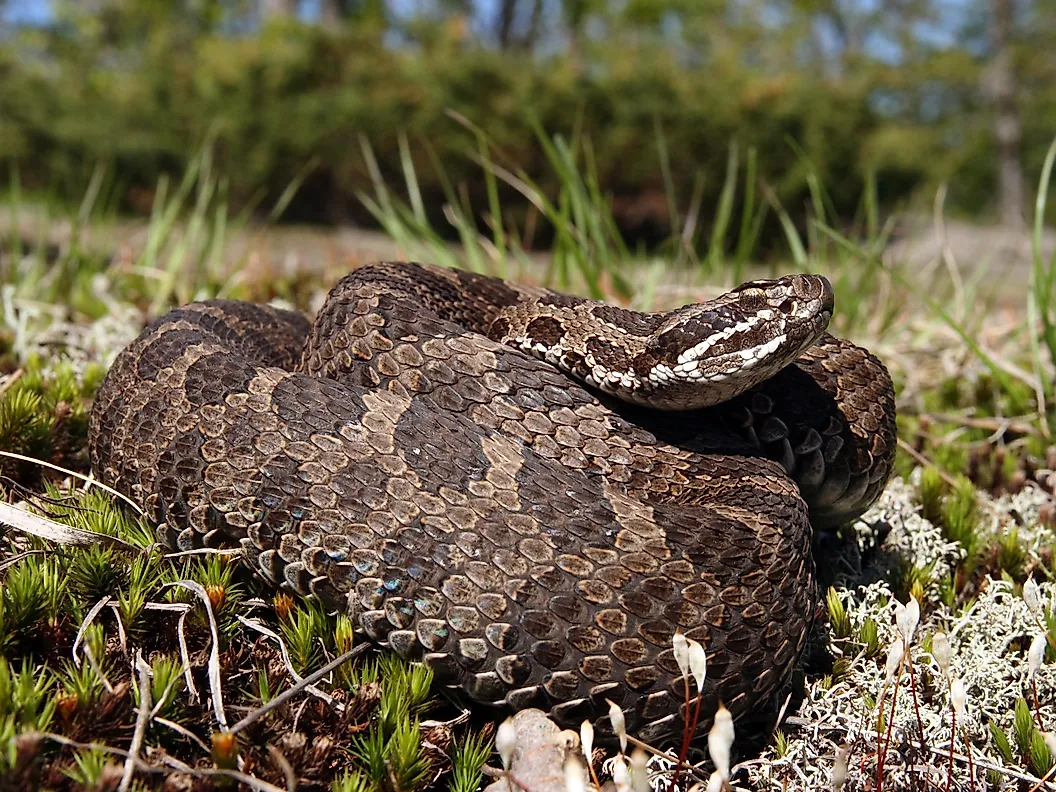
The Upper Peninsula features gentle rolling hills in the east and rugged terrain in the west, while Michigan's Lower Peninsula boasts ridged hills, beaches, and forests. With diverse terrain and climates, Michigan hosts 18 snake species, only one of which is venomous—the Eastern Massasauga. This small rattlesnake typically hides under wooded debris or vegetation in various wetland habitats. Each winter, Eastern Massasaugas return to the same brumation den—often abandoned mammal holes, but also tree roots or rock crevices. Near human settlements, they have been found in submerged trash, barn floors, and basements. The shorter warm season in Michigan causes these snakes to retreat to their dens earlier than in Ohio. In spring, they bask on sunny, elevated spots like beaver lodges to warm up. Once their bodies are sufficiently warm, they migrate briefly—usually less than two miles—to their summer territory. In spring and fall, Eastern Massasaugas are more active during the day, while in summer, activity shifts to mornings and evenings, with their pits aiding precise hunting in the dark.
Ohio Versus Michigan
Both Ohio and Michigan host numerous snake species, including venomous ones. Ohio's rugged landscape, shaped by its climate and geography, offers an ideal environment for these snakes, with rocky terrain that facilitates hiding and hunting. Conversely, Michigan's extensive topography and proximity to the Great Lakes provide diverse habitats, such as wetlands. Ohio has three venomous snake species, while Michigan has only one. Although Eastern Massasaugas are found in both states, Ohio supports a greater variety of venomous snakes.