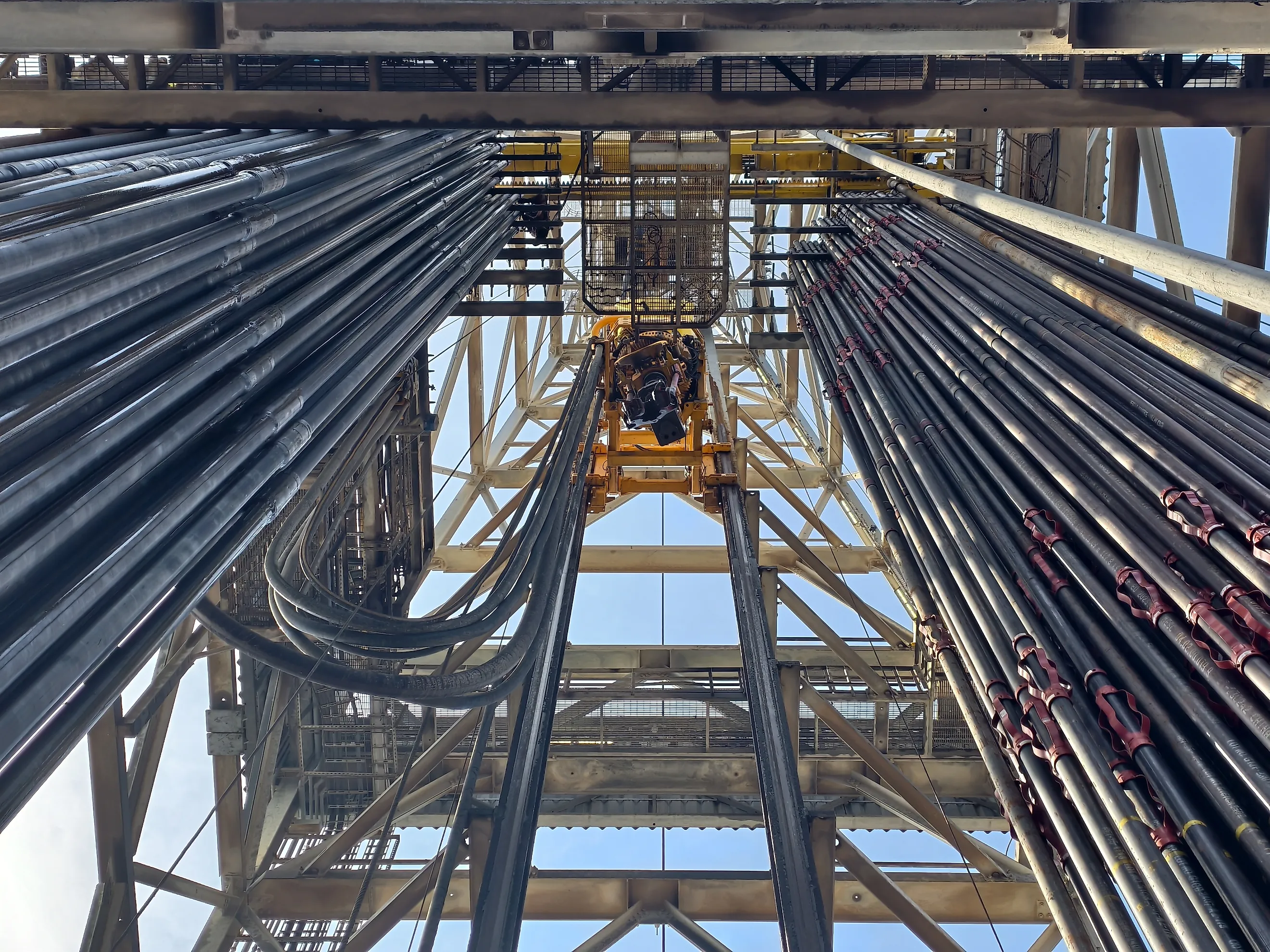
The Deepest Hole Ever Drilled In America
It is a plugged and abandoned gas well in western Oklahoma called Bertha Rogers No. 1, and it goes down 31,441 feet, which is just under six miles. Drilling took 504 days and ended on April 13, 1974 when the bit reached a pocket of molten sulfur that hardened around the drill string, twisted the pipe off and swallowed the bottom-hole assembly. At that depth the rock was 475 degrees Fahrenheit and under 24,850 pounds per square inch of pressure. It was the deepest hole anyone on Earth had ever drilled, it held that title for five years, and after all of it the well found no commercial hydrocarbons at depth whatsoever.
Here is what it took to get down there, what stopped it, and why the record has stood in the United States for more than half a century. The short answer to that last part is that once you know what is at 31,441 feet, nobody wants to go back.
Where It Is

The well sits in the Anadarko Basin of western Oklahoma, near Burns Flat and Elk City, in a landscape that gives away nothing about what is underneath it. Sources disagree on whether it falls in Washita County or Beckham County, which is the sort of ambiguity that attaches to a hole in a field rather than a landmark.
The basin itself extends more than 50,000 square miles across Oklahoma and Texas and is among the most prolific natural gas provinces in the country, which is why anyone was drilling there in the first place. The Bertha Rogers well went through nearly six miles of Paleozoic sediment to find out what was at the bottom of it.
The Rig Was The Biggest In The World
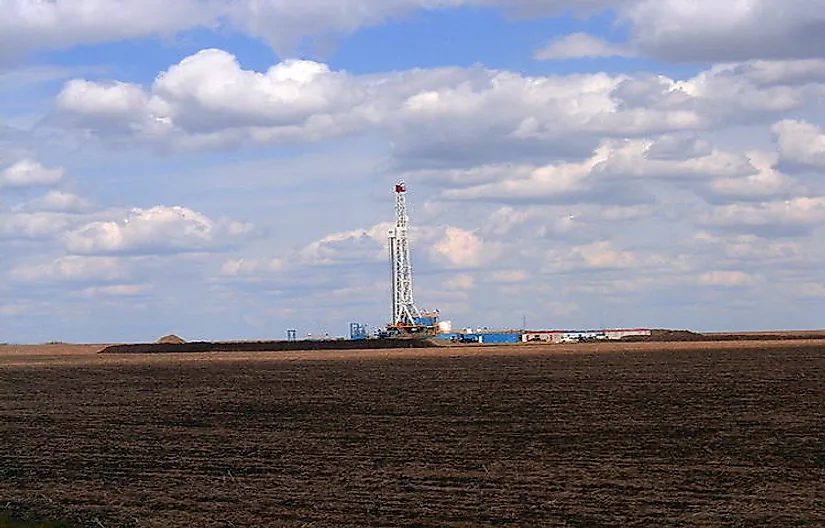
Getting to 31,441 feet required equipment that did not exist in ordinary use. The job went to Loffland Brothers Rig 32 out of Tulsa, recognized as the largest land rig in the world in the early 1970s, with a 3,000-horsepower drawworks, two 1,650-horsepower mud pumps, a crown block rated at 950 tons and a hook load capacity of 750 tons.
What that machinery was holding is the number worth pausing on. At full depth the rig was supporting roughly 1.5 million pounds of steel pipe hanging in the hole, the heaviest string ever run in an American well. Sixteen months into the job the crew had to fish equipment back out of the borehole, which at that depth is a genuinely formidable operation.
Eight Hours For The Cuttings To Come Up
The detail that conveys the scale better than any figure is what happened to the rock. Drilling produces cuttings, chips of formation that circulate up to the surface in the drilling mud, and they are how the geologists on the rig know what the bit is passing through.
At the bottom of Bertha Rogers, cuttings took about eight hours to travel the six miles to daylight. Everything the crew learned about conditions at the bit was eight hours out of date by the time they could look at it, which is a difficult way to operate machinery under 25,000 psi.
What Stopped It
The well did not stop because the rig ran out of capability, and it did not stop because anybody decided the target had been reached. It stopped because of what was waiting at the bottom.
At 31,441 feet the bit entered a deposit of molten sulfur. Sulfur is liquid at those temperatures and solid at cooler ones, so it set around the drill string like a cast, and the pipe twisted off under the strain, abandoning the bottom-hole assembly in the hole. The formation also held pockets of corrosive hydrogen sulfide, which made deeper work unsafe as well as impractical.
Bottom-hole conditions were measured at 475 degrees Fahrenheit and 24,850 psi. For comparison, that is hot enough to melt lead and roughly 1,700 times atmospheric pressure at sea level.
It Was A Failure On Its Own Terms
This is the part usually left out of the record-breaking version of the story. Bertha Rogers was drilled to find gas, and at depth it found none worth producing. The operators plugged the hole back and completed it far shallower, in the Granite Wash formation between about 11,000 and 13,200 feet, where it did produce natural gas.
The economics never worked. The well cost around $7 million in 1970s dollars and produced relatively little, and Oklahoma Corporation Commission records show it stopped producing gas in July 1997. It was plugged and abandoned, and the deepest hole in American history is now a sealed pipe in a field with a small superstructure over it.
Five Years As The Deepest On Earth
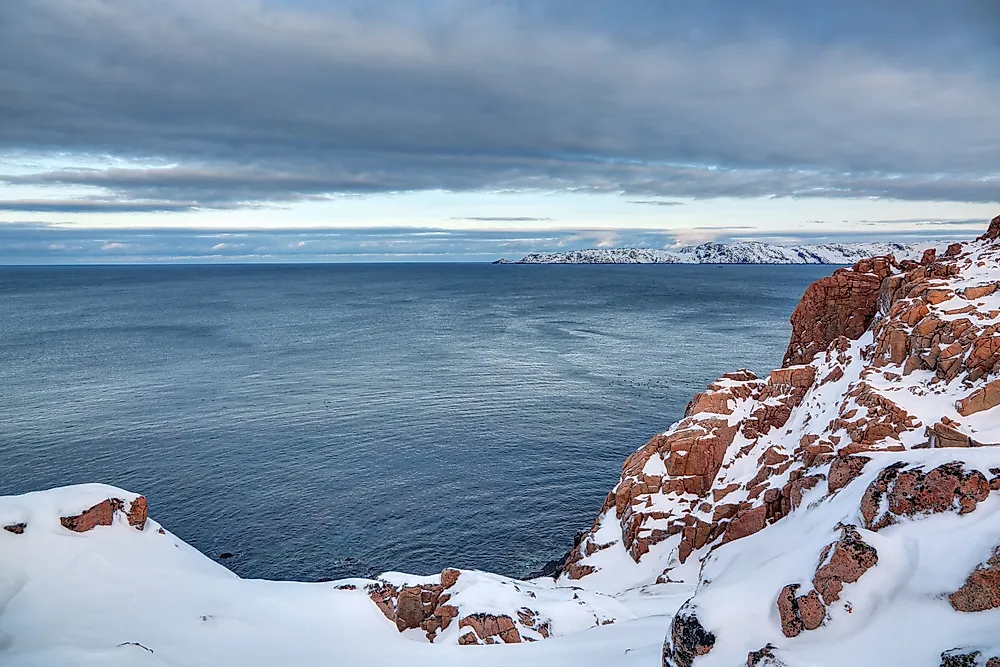
From April 1974 the Bertha Rogers hole was the deepest artificial point on the planet, and it held that distinction until 1979, when the Soviet Union's Kola Superdeep Borehole passed it on the Kola Peninsula north of the Arctic Circle.
Kola eventually reached 40,230 feet, about 12,262 meters, and remains the record. The difference in purpose is worth noting: Bertha Rogers was a commercial well looking for gas, while Kola was a scientific project drilling purely to find out what the crust was made of. The Americans were trying to make money and the Soviets were trying to answer a question, and the Soviets went nearly nine thousand feet deeper.
Why The Record Still Stands
More than fifty years on, nobody in the United States has drilled a deeper vertical hole, and the reason is not that it has become impossible. It is that nobody has had a reason to try.
Bertha Rogers established what happens below 30,000 feet in a sedimentary basin: temperatures and pressures that destroy equipment, and formations that hold sulfur and hydrogen sulfide rather than producible hydrocarbons. Once the industry knew that, the economic case for repeating the experiment evaporated. Deep drilling continued, but toward targets that were known to be worth reaching.
The technology also moved sideways instead of down. Modern wells travel enormous distances, but they do it horizontally through a productive layer rather than vertically through miles of barren rock, which is why measured depth and true vertical depth are two different numbers and why some sources will tell you Bertha Rogers was exceeded in 2004. By measured length of hole, it has been. By straight-down depth, it has not.
How Deep That Actually Is

Six miles sounds manageable because it is a distance most people could drive in ten minutes. Straight down it is a different proposition. Stack twenty-two Empire State Buildings and you are still short of the bottom of Bertha Rogers.
Set against the planet, though, it disappears. The Earth's crust runs roughly 3 to 30 miles thick depending on where you measure, and the center of the planet is about 3,959 miles away. Even Kola, the deepest hole anyone has managed, penetrated a small fraction of the crust and never came close to the mantle.
Which is the honest framing for the whole achievement. The deepest hole ever drilled in America took 504 days, the largest rig on Earth and a million and a half pounds of steel, and it scratched about a sixth of one percent of the way to the middle.