9 Best Attractions To Visit In The United States
The United States is full of beauty, shaped by both natural forces and human hands. You’ll find a mixture of both on this list, with places that are celebrated not just for their spectacle, but also for the stories they carry and the environments that shape them. Spanning more than 3.7 million square miles, the USA contains one of the most geographically diverse travel landscapes on Earth. From a bustling metropolis that thrives on artistic innovation to centuries-old settlements carved into stone, this list highlights destinations that resonate on the deepest levels. Read on to discover nine places that transform a trip into something more meaningful.
The Grand Canyon

Carved over millions of years by the Colorado River, the Grand Canyon stands as one of the most dramatic examples of erosion on Earth. Stretching 277 miles in length and plunging more than a mile deep, the canyon reveals layered bands of geological history that span nearly two billion years. Visitors can explore the park from both the South Rim and North Rim, each offering distinct perspectives. The South Rim is open year-round and provides easier access to viewpoints and trails, while hikers claim that the North Rim is a quieter, more remote experience. Wildlife such as mule deer, bighorn sheep, and gray foxes are frequently spotted along the trails, adding to the canyon’s immersive natural appeal.
Yellowstone National Park

Established in 1872, Yellowstone National Park was the first national park in the world and remains one of the most geologically active regions on the planet. Spanning more than 2.2 million acres across three states (Wyoming, Montana, and Idaho), the park is home to an extraordinary concentration of hydrothermal features. This includes hot springs, fumaroles, and over 500 geysers. Approximately half of the world’s active geysers are located within Yellowstone, including Old Faithful, which erupts at regular 50-127 minute intervals. Travelers share the park's unforgettable ranges and peaks with free-roaming wildlife such as bison, elk, and wolves. All who roam Yellowstone's wild land get to experience the dynamic volcanic landscape as a peek into Earth’s ongoing geological processes.
Walt Disney World Resort

What was once undeveloped swampland in central Florida is now the most visited vacation destination in the world. Spanning approximately 43 square miles, Walt Disney World Resort is a large-scale entertainment complex known for its immersive environments and logistical complexity. The resort consists of four main theme parks: Magic Kingdom, EPCOT, Disney’s Hollywood Studios, and Disney’s Animal Kingdom, along with hotels, shopping districts, and transportation systems. Fifty million visitors travel from around the globe each year to experience its themed attractions and carefully designed storytelling. Beyond rides, the resort is recognized for its technological innovation and ability to create highly controlled, multi-sensory worlds for guests of all ages.
Yosemite National Park

Covering approximately 750,000 acres, Yosemite National Park is renowned for its granite cliffs, towering waterfalls, and ancient tree groves. Iconic formations such as El Capitan and Half Dome dominate the land, attracting climbers and photographers from around the world. The park also features long stretches of meadows, winding rivers, and groves of giant sequoias, some of the largest living organisms on Earth. Yosemite is largely preserved wilderness, with the majority of its land protected from development. Visitors can hike, camp, or simply explore the valley floor, becoming one with a landscape that has long inspired conservation movements and artistic expression. Along with day hikers, many visitors choose to camp overnight at one of the 1,445 individual campsites park-wide.
Antelope Canyon

Antelope Canyon is a narrow sandstone slot canyon located on the Navajo Nation land near Page, Arizona. Shaped by flash flooding over thousands of years, its smooth, wave-like walls display striking patterns formed through water erosion and soft rock deposition. The canyon is divided into two main sections: Upper Antelope Canyon, known for its flat pathways and dramatic beams of sunlight, and Lower Antelope Canyon, which features steeper descents, ladders, and tighter passageways. Due to its cultural and spiritual significance to the Navajo people, visitors are required to explore the canyon through guided tours. This controlled access preserves both the canyon’s fragile structure and its deep cultural importance.
Niagara Falls

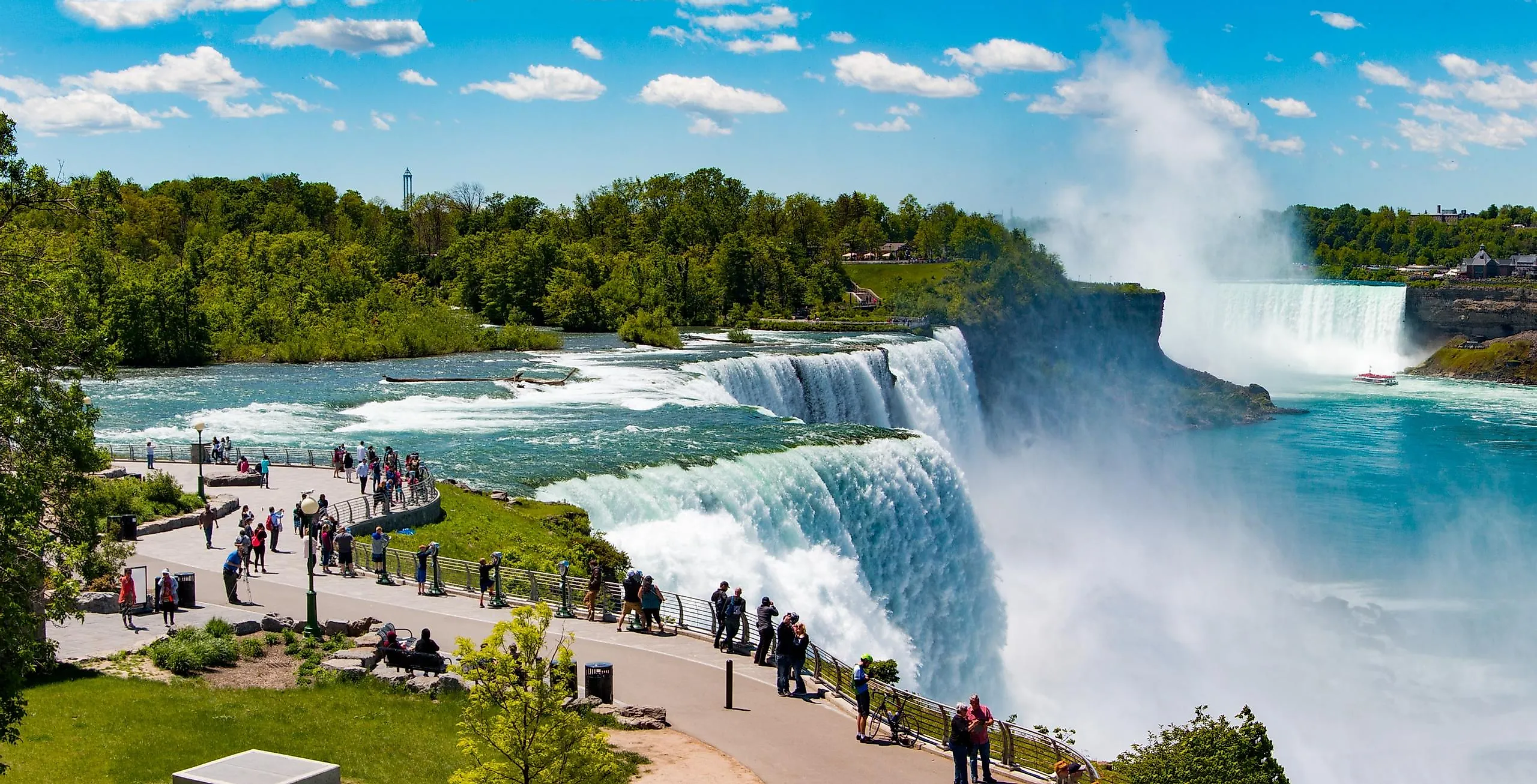
Niagara Falls is one of the most powerful and well-known waterfall systems in the world. Located along the U.S.-Canada border, the falls consist of three separate waterfalls: Horseshoe Falls, American Falls, and Bridal Veil Falls. Fed by water flowing from four of the five great lakes (Superior, Michigan, Huron, and Erie) into the Niagara River, the system moves hundreds of thousands of gallons of water per second. The surrounding parkland spans more than 400 acres, with 140 acres lying beneath the river’s surface. Tourists can experience the falls up close via observation platforms and boat tours, including the iconic Maid of the Mist, which brings passengers into the mist and roar of the cascading water in catamaran-style boats.
Mesa Verde National Park

Mesa Verde National Park preserves some of the most significant archaeological sites in North America. Built between 1190 and 1280 CE, the cliff dwellings constructed by the Ancestral Pueblo people are embedded within sandstone alcoves along canyon walls. These structures housed thriving communities for centuries and remain remarkably intact. Unlike many historic sites, the dwellings are inseparable from the Earth, highlighting the builders’ deep love and understanding of the terrain that shaped their homes. Visitors can explore the park through ranger-led tours that involve climbing ladders, navigating narrow passageways, and traversing uneven stone surfaces. Mesa Verde is recognized as a UNESCO World Heritage Site for its cultural and historical importance.
The Las Vegas Strip

The Las Vegas Strip is a concentrated stretch of resorts and entertainment venues within Nevada, designed to operate on a grand scale. Often described as the Entertainment Capital of the World, Vegas is known as a shining jewel in the desert. The Strip's neon-lit corridor is beloved for its themed architecture, luxury hotels, live performances, and constant buzz of activity. Unlike traditional city centers, the Strip functions as a purpose-built tourism environment where spectacle and indulgence are central to its identity. From downtown’s Fremont Street Experience to the Strip’s iconic resorts, Gondola Rides in the Venetian Hotel, to the famous Bellagio Resort and Fountain Show, walking down the lively strip feels more like falling into different dimensions than strolling a city street. The Strip’s ability to continuously adapt and reimagine itself has made it one of the most visited and distinctive attractions in the country.
Mount Rushmore

Carved into the granite face of South Dakota’s Black Hills, Mount Rushmore is one of the most recognizable monuments in the United States. Sculpted by Gutzon Borglum and completed in 1941 after 14 years of work, the monument features the faces of four U.S. presidents: George Washington, Thomas Jefferson, Abraham Lincoln, and Theodore Roosevelt. Each figure represents a key chapter in American history, including the nation’s founding, expansion, preservation, and development. The site draws millions of visitors annually and continues to spark discussion about leadership, national identity, and the complex history of the land on which it stands, as the Black Hills are considered a sacred site for the Lakota Sioux, who are the original occupants of the land.
Travel is often measured by photographs, but its true value lies in the understanding we gain along the way. These attractions demonstrate the depth and diversity of travel experiences available across the United States, as well as the rare opportunity to walk paths shaped by centuries of human history. The deserts, forests, cities, and stone-built landmarks reflect the breadth of the American landscape and the many narratives embedded within it, offering travelers experiences that extend well beyond a standard sightseeing checklist.