6 Charming Old Railroad Towns In Kansas
The state of the "yellow brick road" grew alongside the railroad. In the late 1800s, rail lines stretched across the Kansas prairie, transforming small settlements into real, busy towns seemingly overnight. Small nondescript depots suddenly drew crowds. Cattle and crops could move across the country. Visitors could step off trains and make themselves at home in brand-new communities. In 2026, you can still visit some of these old railway towns. Most still have their historic character intact and are proud of their railway history. Dodge City, for instance, features Wild West history and frontier museums, while Atchison offers riverside charm. Newton is home to a preserved depot and several railroad exhibits. And, beyond the railroad attractions, you will also find plenty of other things to see, do, and experience in these Kansas towns.
Dodge City

Dodge City was established in 1872, just as the Atchison, Topeka, and Santa Fe Railroad arrived. Almost immediately, car after car was loaded with flour, grain, hides, and meat. The supplies kept coming, and Dodge City became a prominent town for cattle trading. Between 1872 and 1874, more than 850,000 hides were shipped from town, and in 1873, more than one and a half million pounds of buffalo meat were transported to the East. This quickly devastated buffalo herds, and they largely disappeared by 1875. Today, there are around 10,000 buffalo (American bison) in Kansas, with several preserves trying to maintain and increase their numbers.

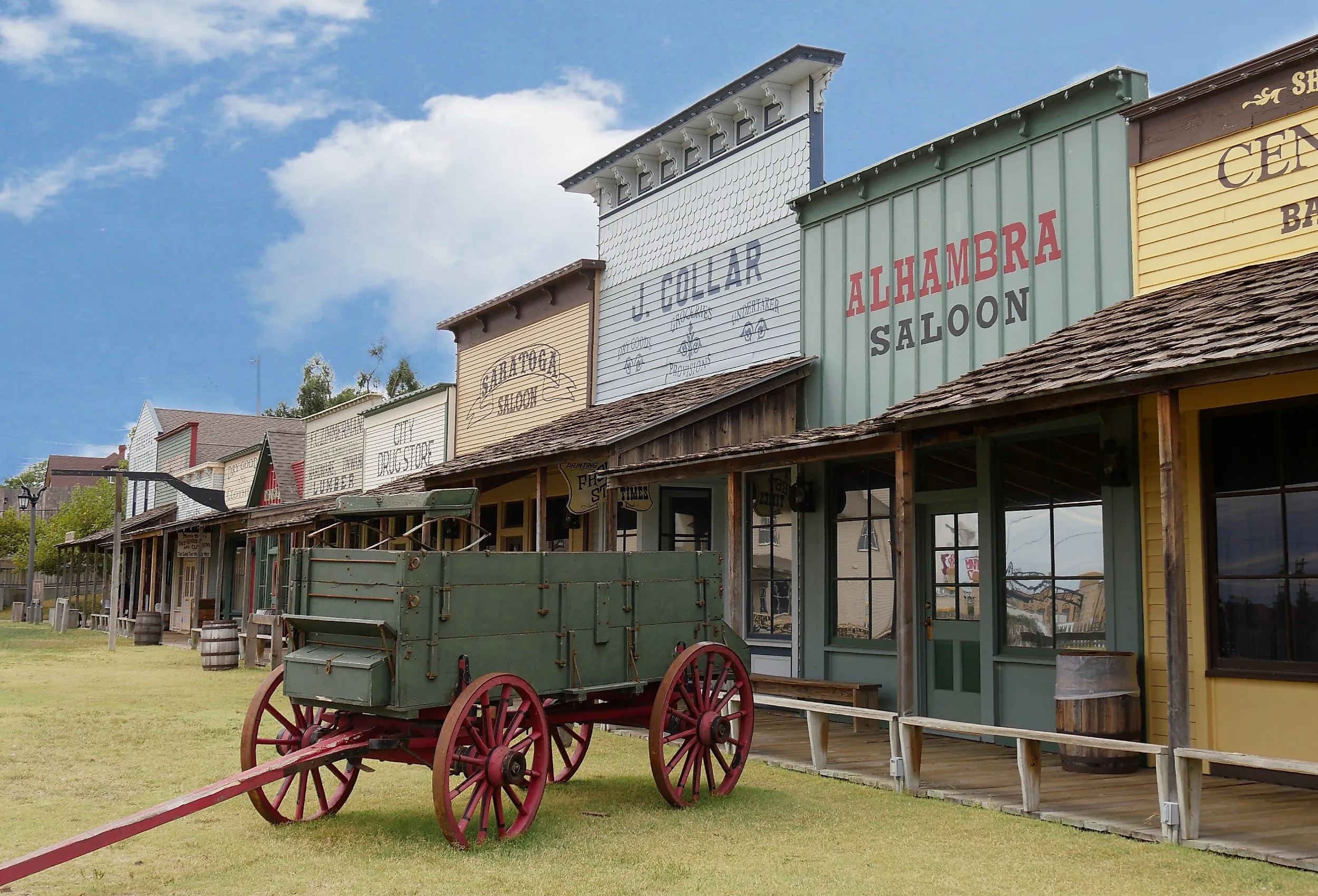
If you visit Dodge City today, you can still see the wagon tracks on the Santa Fe Trail, which was the main mode of transportation for the pioneers. Or you can take a step back into the Wild West and watch the reenactment of a high noon gunfight at the Boot Hill Museum. At the Wild West Heritage Foundation Live Buffalo and Longhorn Exhibit, you can get ‘up close’ to longhorn steers and buffalo. Or, you can attend a traditional rodeo featuring broncos and bull riding.
Atchison

Atchison was founded along the Missouri River in 1854 and incorporated as a town in 1855. It developed as a river port first and then expanded rapidly as the railways came. Soon, the town became closely connected to the Atchison and Topeka Railroad Company, which was chartered in the 1850s. This later expanded into the famous Atchison, Topeka and Santa Fe Railway system. Atchison continued to offer both river and rail access, making it an important transfer point for passengers and freight moving between steamboats and trains. It was not long before depots, warehouses, and even hotels popped up around this transport trade.
Atchison is also the hometown of Amelia Earhart, and when you visit the town, you can see a massive likeness of her carved into stone, earth, and vegetation on the hillside below Mount Vernon Cemetery. There are dozens of Earhart attractions throughout Atchison, including the Amelia Earhart Memorial Bridge and three life-sized statues of her. You can also join the Amelia Earhart Festival in July and enjoy airplane shows, fireworks, and live music. If you want to pack some other history into your Atchison visit, book your spot on the Atchison Ghost Tour, which explores the downtown area. Some of the places you will see include the RavenHearse Manor, Santa Fe Depot, and the Amelia Earhart Birthplace Museum.
Newton

Newton was established within the rolling plains that once formed part of the Chisholm Trail. The trail came through the Newton area in 1869, carrying hundreds of thousands of cattle on trains heading north. The railway ensured that Newton grew quickly and prospered, as it was a predominantly cattle route. The first passenger train ran through the town in 1871, and Newton was officially founded in 1872.
Now, Newton’s history is well preserved in its historic buildings and museums. The local history museum is located in the Carnegie Library building, south of the downtown railroad tracks. At the Harvey County Historical Museum, you will see displays on the history of Native Americans in the Old West and on the arrival of the railroad in 1871. The hall display also covers the arrival of the Chisholm Trail and the history of the Harvey County Courthouse. At the Warkentin House, you will learn more about Bernhard Warkentin’s efforts to encourage his fellow immigrants to bring Turkey Red hard winter wheat to the area. Warkentin’s house was built in 1886 and is now a historic museum. If you want to stretch your legs a bit after visiting these museums, head to Centennial Park, which is also accessible by the Sand Creek Bike Path. There are several amenities here, including a flag football and soccer field. You can also view the Blue Sky Sculpture on the west side of the park.
Emporia

Emporia was once a business venture thanks to G.W. Brown, who wanted to help emigrants find their own place to settle. The town was founded in 1857, just six miles away from the junction of the Neosho and Cottonwood rivers. By 1858, the town really needed railroads and water, but it would take twelve more years for a rail line to service the Neosho Valley and another one to come from Topeka to Santa Fe.
Today, there is a lot to do and experience in Emporia, including history and outdoor activities. Along historic Commercial Street, you can see classic storefronts and architectural features. These include the Emporia Granada Theatre, built in 1929, and the Emporia Arts Center next to the theater. The downtown area is incredibly charming, and the place to join the First Friday Art Walk or any block party happening. You can also visit the Red Rocks State Historic Site, which is home to the William Allen White House. There are several preserved rooms throughout the house that once hosted President Roosevelt.
Concordia

In its earliest days, the charming town of Concordia attracted several entertainers and traveling shows. These included Buffalo Bill, Wild Bill Hickok, and the Ringling Brothers circus. By 1887, the Atchison, Topeka and Santa Fe Railway ensured a train line was built through the town, and today the railroad forms part of the BNSF Railway. One of the strangest moments of Concordia’s railroad history happened when a blizzard struck in 1912, and the snow piled up so high that a train got stuck. The snow on the main street was piled higher than most people’s heads.
In 2026, you might still catch a bit of snow, but probably nothing like that blizzard. If it is cold outside when you visit, you can warm up inside the Cloud County Historical Museum. There are several collections here that depict life in Cloud County as well as the Lincoln-Page biplane. A must-see is the National Orphan Train Complex, which sits in a 1917 Union Pacific train depot. This museum displays exhibits that tell the story of the more than 250,000 orphaned and abandoned children who were put on trains and sent west from New York. You will also see several orphan statues in the complex and throughout the town. Remember to stop by the Brown Grand Theater, where you can see 27 original playbills dating back to 1908. Or, you can join a ghost tour of the theater at night to see if you can spot the specter of Earl Brown.
Hiawatha

Hiawatha’s name is said to have been inspired by a Longfellow poem called The Song of Hiawatha. The town sits near where the Ioway-Sac reservation was and is close to the home of the current tribe of Kansas and Nebraska. The town was founded in 1857, making it one of the oldest towns in Kansas. The first railroad reached Hiawatha in 1871, called the St. Joseph and Denver City Railroad. It later became known as the St. Joseph and Grand Island. This was a major boost for the town, allowing it to expand its agricultural economy to St. Joseph, Missouri, and later the Union Pacific mainline in Nebraska.
When you drive into Hiawatha, the first building that stands out is likely the Clock Tower Building. The building was constructed in the Richardsonian Romanesque style and houses several businesses. You will also see the Hiawatha National Guard Armory, one of the most prominent military landmarks in the state. Remember to stop by the imposing Davis Memorial at the Mount Hope Cemetery to see the granite and marble statues and elaborate structure erected by John Milburn Davis in memory of his late wife.
Rail-Boosted Kansas Towns That Will Always Be Worth The Visit
Each Kansas railroad town tells the story of how rail transport helped build settlements into something more across the Great Plains. Some of them, like Dodge City, exploded thanks to cattle railheads. Others were created as a direct result of rail expansion. Some also combined their transport networks, while a handful grew as service hubs. It is easy to explore the history of these charming towns today. You can walk through restored depots, visit rail museums, and admire railway-era theaters. Plus, you can enjoy everything else these towns have to offer today, making them well worth a visit.