This Hawaii Scenic Byway Is The Road Trip Of A Lifetime
At nearly 19 miles long, the Chain of Craters Road makes for a perfect afternoon road trip through the heart of one of Hawai'i's most significant natural attractions: Hawai'i Volcanoes National Park. Extending from the ocean up toward the summit region of Kīlauea, the drive passes an ever-changing mix of Big Island landscapes, including stark coastal lava fields and pockets of lush rainforest. Along the way, you’ll encounter memorable stops like the dramatic Hōlei Sea Arch, ancient Hawaiian petroglyphs carved into hardened lava, walkable lava tubes, and crater trails shaped by recent eruptions. Drivable year-round, this road trip is just one of many unforgettable experiences you can build into your next Hawai‘i getaway.
A Highway Shaped by Earth's Most Powerful Geologic Forces
This spectacularly scenic roadway traces the dynamic history of Hawai'i Volcanoes National Park and Kīlauea, one of the world’s most active volcanoes. The route began as a simple access road over a century ago, built to connect visitors with the eruptive landscapes that had been shaping the island chain for eons.
Officially constructed as a road in 1928, over time, repeated lava flows buried sections, forcing reroutes and reinforcing its reputation as a roadway constantly rewritten by the state's hectic geology. Major realignments followed a number of significant eruptions throughout the early-mid 20th century, and in later decades, engineers simply rebuilt the road atop hardened lava. The current alignment descends from the summit of Kīlauea to the coast, crossing multiple lava flows of different ages and compositions, as well as several other significant landmarks we will highlight next.
Hōlei Sea Arch

Hōlei Sea Arch, Hawaii.
At the Route's southern terminus by the sea, a turnaround (which features parking and bathrooms on the highway's shoulder) is also within walking distance from the Hōlei Sea Arch. This eye-catching arch formed as relentless wave action eroded a coastal lava tube created by past eruptions of Kīlauea.
Standing roughly 90 feet high, it frames the Pacific Ocean through jagged black basalt, offering a clear view of how quickly volcanic landscapes can be reshaped by water. The surrounding shoreline is composed of relatively younger lava flows, some less than a few hundred years old. Although the arch remains intact for now, its future is unfortunately uncertain, as continued erosion will eventually cause a collapse.
Pu‘uloa Petroglyphs

For history buffs, this is an essential pull-off, as the Pu‘uloa Petroglyphs preserve one of the largest concentrations of Native Hawaiian rock carvings on the Big Island. Located just off the road as it begins to delve inland, the site features more than 23,000 petroglyphs etched into hardened, over 500-year-old lava flows.
A short, clearly marked trail will lead you across the lava field to the main viewing area, offering more insight into Hawaiian history with its interpretive signage. Many carvings depict human figures, circles, and symbolic designs, with some believed to record births or mark important life events for natives.
Alanui Kahiko

Alanui Kahiko is an ancient footpath that predates modern roads and reflects early travel across Hawai'i Island’s volcanic terrain. The trail once connected coastal settlements with inland communities, allowing Native Hawaiians to move between fishing areas, agricultural zones, and ceremonial sites.
Built across multiple types of hardened lava flows, today, a short segment is preserved along Chain of Craters Road, marked by educational signs that explain its historical function. It's a cool example of how nature can, and almost always will, overtake anything man-made, regardless of where you are in the world.
Keauhou Trail

Keauhou Trail is yet another historic path that winds through a lava field, but also touches upon the forested slopes of Hawai‘i Volcanoes National Park, too. The trail crosses rugged terrain, including relatively recent lava flows, giving you a truly up-close window into the island’s volcanic activity and the challenges it posed for early travelers of the region.
At roughly 8 to 9 miles round trip, it isn’t a particularly easy hike, but you will quickly find out why it is so lauded by landscape photographers and geologists alike. Just be sure to bring lots of water, sun protection, and sturdy footwear before embarking.
Kīlauea Iki Trail

Kīlauea Iki Trail is another sure highlight for anyone exploring Hawai'i Volcanoes National Park. At roughly 3.5 miles in length, it offers a dramatic view of the park's main volcano and everything in its wake, even descending into Kīlauea Iki Crater itself, formed during a massive eruption in 1959, and where molten lava once surged across its floor.
At one point, you will walk across a solidified lava lake, marked by steam vents, craters, and newly growing vegetation, providing a clear record of recent volcanic activity. On the other hand, the surrounding rainforest skirting much of the lower half contrasts sharply with the barren crater floor, showing off the kinds of flora that thrive in the area's nutrient-rich soils.
Nāhuku Lava Tube

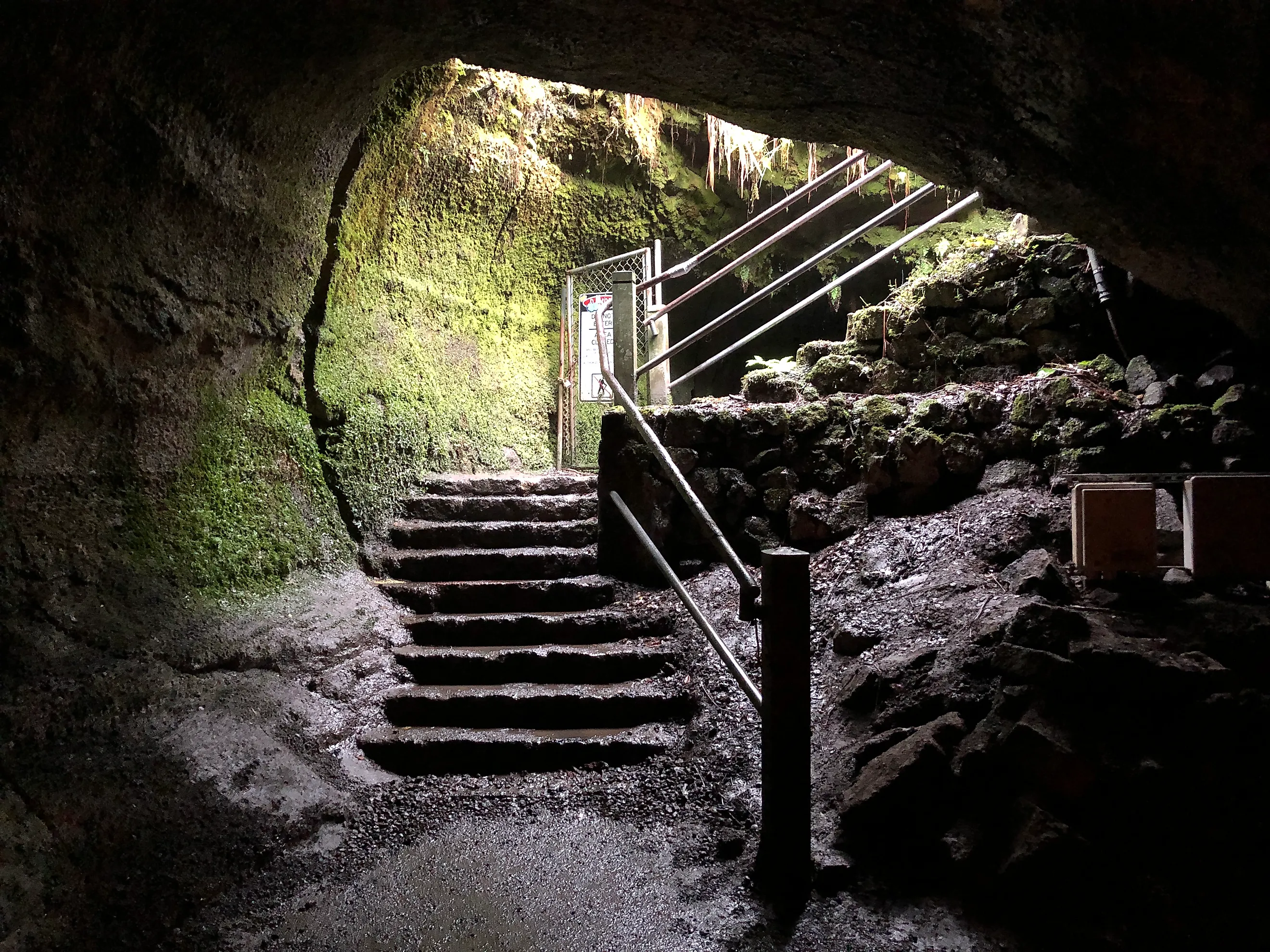
Right across the road from the Kīlauea Iki Trail, Nāhuku Lava Tube, also known as the Thurston Lava Tube, is a natural tunnel formed by flowing lava that cooled on the surface while molten rock continued to move beneath. Extending several hundred feet, it provides you with a unique chance to walk through a fully formed lava conduit.
The interior features smooth walls, stalactite-like formations, and scattered ferns, illustrating how life on the island can begin reclaiming formerly deveastated volcanic landscapes. Better yet, this popular tourist draw boasts well-lit paths and handrails that make exploration safe and accessible for all ages.
Before You Go

Understand that, although fairly short in length, the Chain of Craters Road features next to no modern amenities. That means barely any bathrooms, gas stops, shops, outfitters, or whatever else you may need to prep for an outdoor adventure along the way. So come prepared as if you were hiking the wilderness.
At its northern end, the aptly named village of Volcano hosts a number of overnight accommodations and eateries, while at its southern coastal terminus, the closest real town is Kalapana, which is quite a barebones settlement, too.
A better option for vacationers in the area is Hilo, which sits about an hour's drive east of the byway's north entrance. It is a much more full-orbed city, with a full array of restaurants, resorts, hotels, and other urban comforts, that can be your base for day trips exploring the park via the memorable Chain of Craters Road.