8 Most Scenic Drives in North Dakota
North Dakota’s landscape holds dramatic contrasts few expect: deeply incised river valleys in the east, expansive prairie in the center, and rugged badlands in the west. Like anywhere, oftentimes a place is best showcased by hitting the open road and experiencing the natural terrain transitions and cultural landmarks. On the Sheyenne River Valley Scenic Byway, the road drops from open farmland into one of eastern North Dakota’s deepest river valleys near Fort Ransom. Farther west, the scenic drives in Theodore Roosevelt National Park pass layered badlands, steep bluffs, and frequent wildlife sightings near Medora and Watford City. The eight routes below were chosen for their breathtaking views visible from the road and concentration of designated scenic corridors.
Sheyenne River Valley Scenic Byway

The Sheyenne River Valley Scenic Byway follows North Dakota Highway 21 from Valley City south to Lisbon, then connects toward Fort Ransom State Park. The byway closely parallels the Sheyenne River, which has carved one of the deepest river valleys in eastern North Dakota. Drivers descend from open farmland into tree‑lined reaches of the river, with steep valley walls rising directly from the highway. The Hi‑Line Railroad Bridge looms above the valley near the northern end.
Continuing southwest, the route hugs the Sheyenne River bends with frequent overlooks that frame water views and wooded banks. Fort Ransom State Park provides high vantage points overlooking tight river meanders. The transition from open plains to valley confines is unique in the region and makes this drive distinct from other prairie routes.
Native American Scenic Byway

The Native American Scenic Byway follows North Dakota Highway 1806 from Mandan south to the South Dakota border, tracing the west bank of the Missouri River. This official byway remains close to riverside breaks, offering repeated views of broad water meanders and wooded shoreline segments. From Mandan southward, the road alternates between bluff‑top stretches and lower reaches near the river, where tree lines and distant ridges provide layered vistas.
Cultural markers along the corridor commemorate tribal heritage and early encounters between Native tribes and European explorers. Pull‑outs along Highway 1806 provide clear frames of the Missouri River valley, while long, open sightlines highlight the scale of river‑shaped terrain unique to this part of North Dakota.
Sakakawea Scenic Byway

The Sakakawea Scenic Byway follows North Dakota Highway 200A between Washburn and Stanton, atop bluffs overlooking Lake Sakakawea, one of the largest reservoirs in the United States by volume. From Washburn near the North Dakota Lewis & Clark Interpretive Center, the road maintains elevated views of the reservoir’s open water and wooded coulees that drop toward the shore.
Traveling west, marked pull‑offs frame uninterrupted lake views and wildlife habitat along reservoir edges. Roadsides open onto distant hills and water expanses, while feeder roads near Stanton lead to the Knife River Indian Villages National Historic Site along the Knife River, adding rich historical context to the natural scenery.
Killdeer Mountain Four Bears Scenic Byway

The Killdeer Mountain Four Bears Scenic Byway begins on North Dakota Highway 22 near Manning, ascends rolling uplands of the Killdeer Mountains, then continues east on North Dakota Highway 23 to New Town. Early sections rise from open prairie into hills where the Killdeer Mountain Battlefield State Historic Site overlooks sweeping grassland plains.
Further east, the route skirts wetland pockets around Lake Ilo National Wildlife Refuge, where calm waters reflect prairie skies. Approaching Lake Sakakawea, elevated pull‑offs at Crow Flies High State Recreation Area provide high bluff overlooks above the reservoir and the Four Bears Bridge. This drive combines upland terrain, water views, and cultural points in one corridor.
Chan SanSan Scenic Backway

The Chan SanSan Scenic Backway is an officially designated rural scenic route following a network of county paved and gravel roads between Lisbon and the Fort Ransom region. Starting near Lisbon, the road courses through low rolling prairie and shallow glacial valleys. Short ridges and creek draws create a repeating pattern of grassland and tree‑lined terrain.
Because parts of the backway are gravel, dry weather offers the smoothest drive. Wildlife sightings are common along grassland edges, and shaded draws near Fort Ransom State Park open into broad farmland views. The drive’s character is defined by subtle terrain changes rather than dramatic elevation shifts.
Des Lacs National Wildlife Refuge Scenic Backway
The Des Lacs National Wildlife Refuge Scenic Backway follows the auto tour route within Des Lacs National Wildlife Refuge, near Kenmare, through a shallow glacial lake basin formed by the Des Lacs River. The roadway curves along low ridges above open water and cattail marshes, which reflect sky and distant ridgelines.
Pull‑offs positioned where ridgelines recede allow extended observation of waterfowl, herons, and migrating birds. Water levels and vegetation density shift dramatically by season, offering contrasting views through spring, summer, fall, and winter. Gravel segments may close when conditions are very wet.
Theodore Roosevelt National Park Scenic Drives

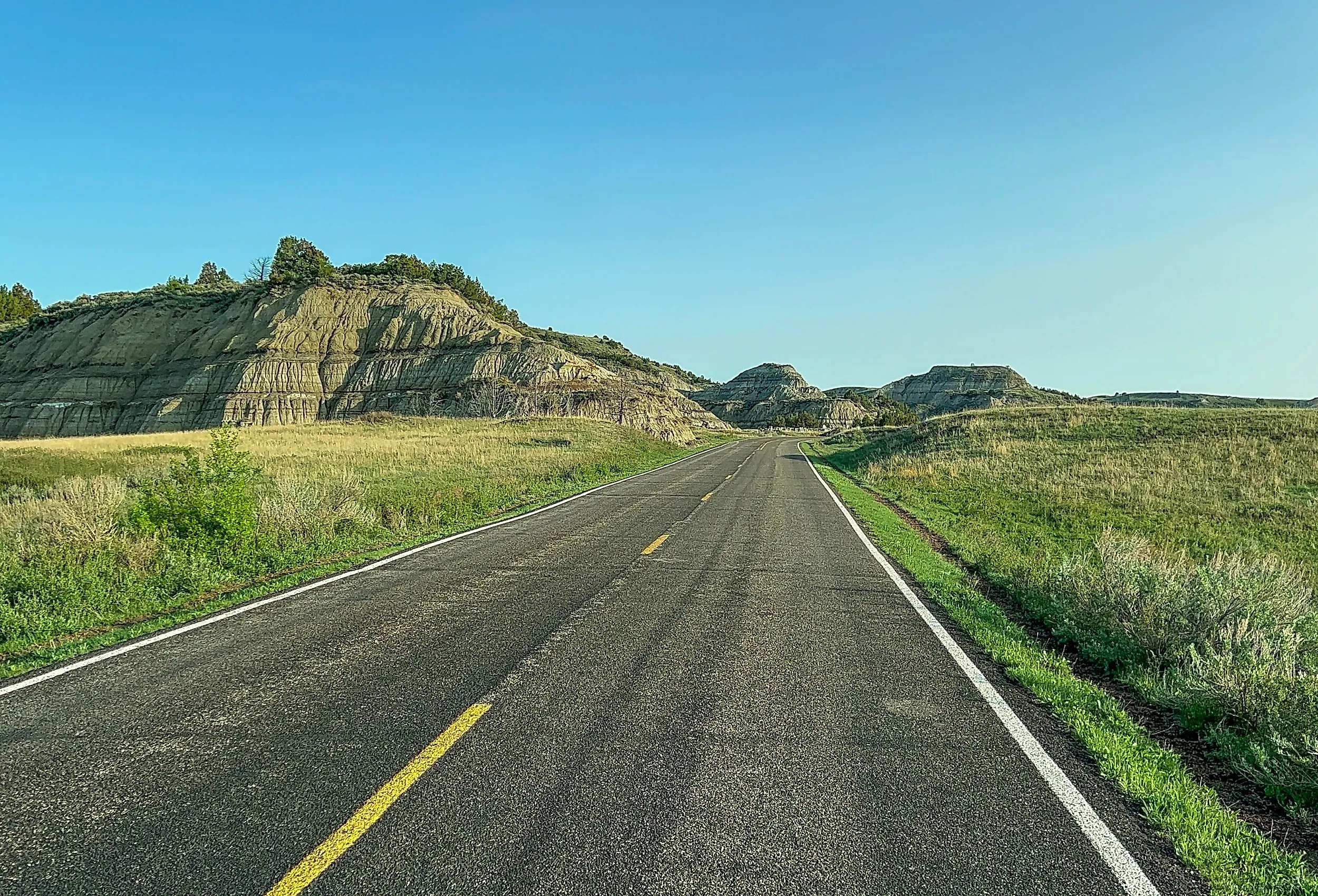
The scenic drives within Theodore Roosevelt National Park include the South Unit Scenic Loop Drive near Medora and the North Unit Scenic Drive near Watford City. The South Unit loop is a 36‑mile paved circuit through badlands terrain shaped by the Little Missouri River, with overlooks such as Painted Canyon placed where layered ridges rise near the pavement.
The North Unit drive climbs steep bluffs above river breaks, offering repeated outlooks into narrow valleys. Exposed claystone hills and coulees frame prolonged vistas. Bison, wild horses, and prairie dogs are frequently visible within sight of the roadway. Both drives involve clear elevation changes and matrixed geological detail unique to this park.
Old Red Old Ten Scenic Byway

The Old Red Old Ten Scenic Byway follows preserved segments of historic United States Highway 10 between Dickinson and Mandan, running parallel to Interstate 94 across rolling farmland and grassland. The alignment preserves early highway design and crosses gentle rises and hollows that define central North Dakota’s agricultural landscape.
Roadside historical markers indicate original highway alignments. Pull‑offs provide views of open fields, shelterbelt trees, and distant low hills. Wide sightlines across the Northern Plains characterize this drive, with seasonal planting and harvest patterns adding changing texture to the route.
North Dakota’s scenic drives reveal a side of the state few travelers experience from the interstate. From the winding corridors of the Missouri River and Sheyenne River to rolling uplands, tranquil wildlife refuges, and the layered textures of the badlands, each route offers a unique panorama. Along the way, the road itself becomes the stage for diverse terrain, historic landmarks, and cultural stories. Whether tracing bluffs above Lake Sakakawea, descending glacial valleys, or following century-old highways, these drives capture the state’s remarkable variety and outdoor heritage in every mile.