7 Old-Timey General Stores In South Carolina
At Cooper's Country Store in Salters, the pitmaster still cooks whole hogs over wood coals until the meat pulls apart with tongs. In Horatio, the Lenoir family has kept a store running on the same ground since before 1808, the oldest business in Sumter County. Up in the Pickens County foothills, the Pumpkintown store has fed its crossroads since 1938, and down in Port Royal the old Scheper building has anchored the same street corner since 1885. These are not museum recreations. They are the real thing, run or preserved by people who never quite let the counter close, and seven of them still stand across South Carolina.
Cooper's Country Store (Salters)
When US-521 was paved between Manning and Georgetown in 1937, cotton farmer Theron Burrows put up a two-story building beside the new road and opened a combination store and Esso station. He sold staples, fresh meat, produce, clothing, hardware, feed, and car parts, and lived with his family in the apartment upstairs. After Burrows died in 1973, his son-in-law George Cooper took over, renamed the place, and built a pit for smoking chickens and hogs. Today George's nephew Russell Cooper runs the third-generation business, and you can still buy gas, groceries, hardware, and hunting supplies under one roof. The meat counter is the real draw: vinegar-based whole-hog barbecue that Russell warns is spicy enough to pull the sweat out from under your eyes, along with hash over rice, salt-cured country hams hanging in the ham safe, and boiled peanuts by the bag all summer. Worn pine benches and a rocking chair on the front porch still catch the regulars. Russell has turned down offers for the old farm equipment he keeps on display, and his customers would not have it any other way.
The Lenoir Store (Horatio)

The Lenoir Store at 3240 Horatio Road, in the High Hills of Santee, has a claim almost no other business in the state can match. The Lenoir family has run a store on this ground since before 1808, when it turned up in Isaac Lenoir's will, which makes it the oldest business in Sumter County. The clapboard building you see today went up in the late 1800s, a one-story frame structure on a brick foundation with a plain false front. It joined the National Register of Historic Places in 1997. Step inside and the fixtures give away its age: an old cheese cutter, a tobacco cutter, ice tongs, penny scales, and turn-of-the-century postal equipment still bolted in place, since the store has doubled as the Horatio post office since 1900. The shelves mix everyday staples with throwbacks, bottled sodas, bread, fresh fruit, chips, old-fashioned candy, and a few practical remedies and hardware odds and ends. Carrie LeNoir worked the counter for more than 70 years, and her descendants keep it going as a rare survivor of the days before supermarkets.
Pumpkintown General Store (Pickens County)
Up in the Pickens County foothills, near Table Rock State Park and the Cherokee Foothills Scenic Byway, the Burgess family opened a grocery in 1938 and hung a sign that read Pumpkintown Grocery, Burgess & Son. Esso pumps stood out front and a porcelain Coca-Cola sign sat at the roofline. For decades it was where the community bought its sundries and caught up on gossip. A larger building replaced the original clapboard store, and in 2017 longtime regular Bill Alexander bought the business and turned most of it into an 80-seat café while keeping a shelf or two of general-store goods. Breakfast leans on country ham and stone-ground grits; lunch is built around a hamburger many locals will tell you is the best in the Upstate, ground from beef aged 28 days and served with hand-cut fries. A rack of bread, bottled drinks, and a few basics still sits by the door for anyone who just needs one thing.
Hester General Store (Easley / Dacusville)
Michael Washington Hester built his store in 1893 at the corner of Hester Store Road and Thomas Mill Road, in the Dacusville community near Easley, and ran it as the one-stop shop and gathering place for the surrounding farms. His family held onto it until 1983. The two-story, gable-front building wears an ashlar granite facade added in 1933, and it joined the National Register of Historic Places in 2013. After decades sitting empty, baker Katie Chaney bought it in 2021, renovated it, and reopened it as a bakery, coffee shop, and mercantile before stepping away at the end of 2023. Dacusville natives Tasha Carpenter and her brother Cody Rathbone, both Coast Guard veterans, took it over next and reopened the doors, and today the store pours coffee, scoops hand-dipped ice cream, and serves breakfast biscuits, with local goods and produce stocked alongside. The address is 1735 Hester Store Road, Easley.
Mast General Store (Columbia)

The building at 1601 Main Street in Columbia has been in the retail business since about 1870, when German-born grocer George Diercks put up a two-story brick structure and ran a grocery, wine shop, restaurant, and saloon out of it during Reconstruction. Over the years the same walls held an undertaker's parlor and a bar, then two of Columbia's best-known department stores, Efird's and Lourie's, each for more than 40 years. Mast General Store, the North Carolina chain that specializes in reviving old downtown buildings, restored the space and opened here in 2011. Inside you will find a little of everything, from food and clothing to outdoor gear, vintage-style toys, candy, pet supplies, books, and games. At the back, kids still scoop candy out of open barrels, the same way children did in a store like this a hundred years ago.
F.W. Scheper Store (Port Royal)

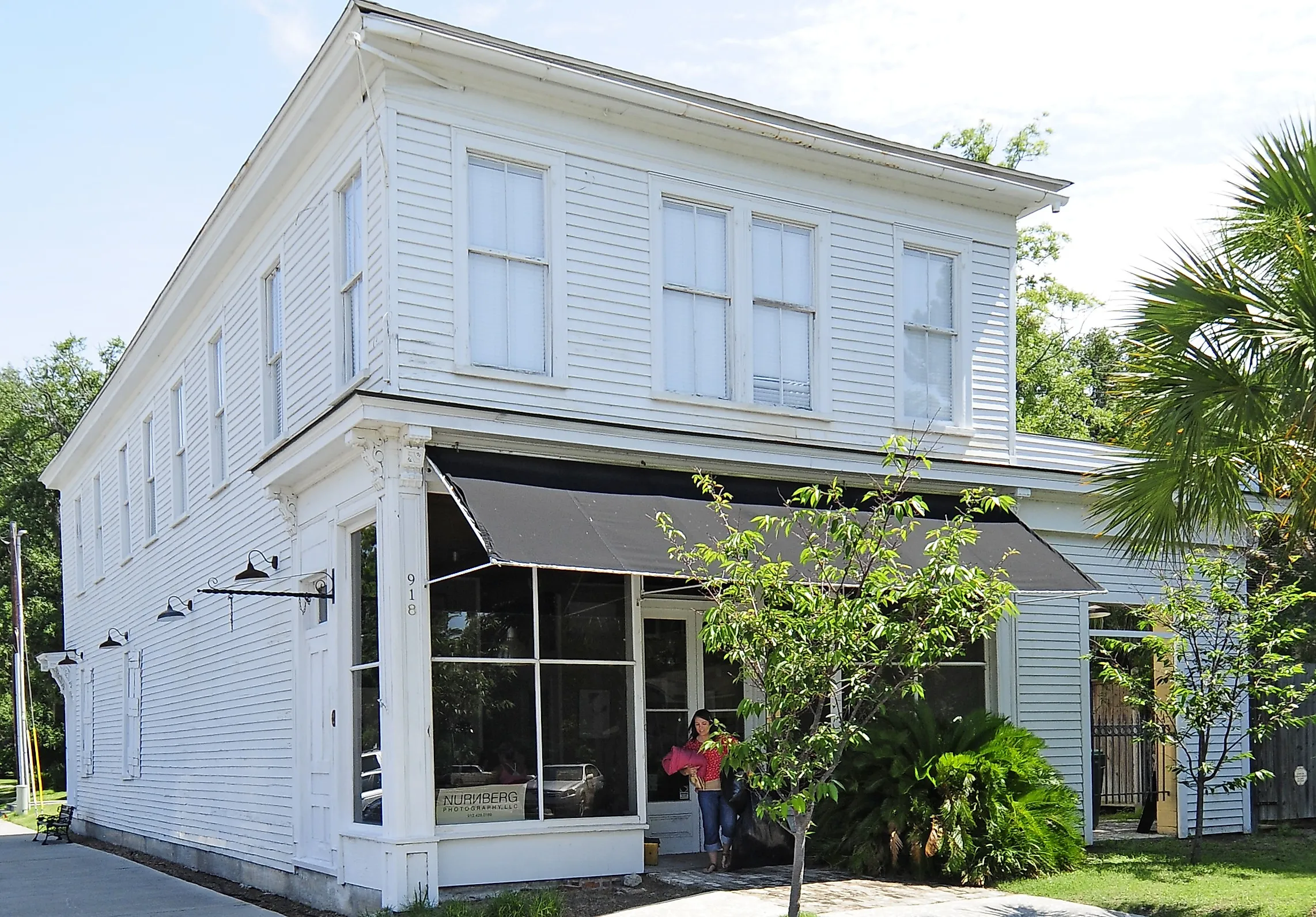
The largest historic commercial building still standing in Port Royal is the F.W. Scheper Store at 918 8th Street. German immigrant F.W. Scheper built the two-story frame building in 1885 and ran it as a ship chandlery and a wholesale and retail grocery, also dealing in hay and grain. Its location mattered as much as its stock. The store stood near the railroad terminus where marines got off the train on their way to the growing base at Parris Island, and a one-story addition built between 1905 and 1912 housed the town post office. The business ran without a break until it closed in 1950, and Scheper's daughter later used the building as a private art studio. By 2023 the ground floor held a boutique and a photography studio. The store joined the National Register of Historic Places on June 22, 2004.
E. W. Cannon House and Store (Hartsville)

The E. W. Cannon House and Store at 612 West Home Avenue traces Hartsville's growth across most of the 19th century. It began as a small one-story house built around 1840 for Isham Linton. Elihu W. Cannon, a farmer, postmaster, and Darlington County politician who lived from 1841 to 1911, bought the property in 1864 and put up a country store behind the house around 1870. That hand-hewn timber-frame store did double duty as the Hartsville post office from 1873 to 1878, while Cannon held the postmaster's job. Around 1880 he enlarged and reworked the original dwelling into the two-story weatherboard home with a full-width porch that still stands, and the grounds also hold a frame garage from about 1930 and a late-19th-century smokehouse. The property joined the National Register of Historic Places on May 3, 1991, honored both for its architecture and for Cannon's hand in shaping early Hartsville.
Where South Carolina Keeps Its Counter Open
What ties these seven places together is not nostalgia so much as stubbornness. Each one sits where a road, a rail line, or a family farm once made a store necessary, and each survived by refusing to become only one thing. Cooper's kept the gas pumps and added a smoke pit; Pumpkintown and Hester traded shelves of canned goods for griddles and coffee; Mast filled an old department-store shell with barrels of candy. A few, like the Lenoir and Scheper stores, matter now mostly as buildings that outlasted the world they served. Together they show how rural commerce actually endures in South Carolina, not frozen in place but handed down, adjusted, and kept open one more year.