7 Incredible Vacation Spots In Florida
Florida's tourism economy runs on theme parks and resort strips, but the seven spots below are where the state's actual variety shows. Hundreds of manatees winter in a clear-water spring 40 minutes from Orlando. A two-hour ferry from Key West reaches a 19th-century brick fort sitting on a coral archipelago in the Gulf. The Dunedin Causeway connects a working downtown to a four-mile barrier-island state park with one of the state's last virgin slash-pine forests. Marathon serves as a base for the southern Keys with snorkeling at the western edge of the Florida Reef Tract. Naples, St. Petersburg, and the Jupiter-Juno Beach corridor cover the east-coast urban side, the Gulf Coast urban side, and the upscale residential side, respectively. Below are seven Florida destinations that work for a long weekend or a full week, plus the windows when each one is best.
Blue Spring State Park, Orange City

Under 40 minutes from Orlando on the western edge of Orange City, Blue Spring State Park works year-round but earns the trip in winter. Hundreds of manatees congregate in the spring run from November through March, when water temperatures in the broader St. Johns River drop and the year-round 73°F spring water becomes a refuge. The boardwalk and overlooks give clear views of the manatees from the surface. Outside the manatee season the St. Johns River takes over as the draw for swimming, paddling, and tubing.
The park is open daily from 8 a.m. to sundown with a $6 vehicle entry fee. The 2,600 acres include camping, walking and cycling trails, and varied flora along the riverbanks. The spring run closes to water activities roughly mid-November through March, and swimming or diving with manatees is never permitted at any time. The St. Johns River Nature Cruise by Blue Spring Adventures runs sightings of manatees, alligators, turtles, and birds along the river.
Dry Tortugas National Park

Dry Tortugas National Park covers 64,700 acres but is around 99 percent water, with coral reefs and sea-turtle sightings as the main draws. Spanish explorer Juan Ponce de León named the islands "Las Tortugas" for the sea turtles in 1513, and "Dry" was added later for the lack of fresh water. The park is accessible only by high-speed ferry from Key West (about two hours each way) or seaplane (about 40 minutes). Garden Key holds the 19th-century Fort Jefferson along with the ferry dock, campground, and visitors' center. Garden Key campsites are first-come, first-served, but campers must arrange transportation in advance because the seaplane does not carry overnight gear. Snorkeling around the massive coral heads is the headline activity, and rental gear is included in the ferry ticket.

Designated a national park in 1992, the protected area covers a seven-key archipelago off Florida's southern tip. Travel beyond Garden Key requires a charter or personal boat with a permit. The waters hold parrotfish, angelfish, moray eels, reef squid, and nurse sharks alongside cultural artifacts. The fort is open for self-guided or ranger-led tours, although the moat wall is closed for repairs until Fall 2026 and swimming inside the moat is prohibited. Day visitors share the ferry restrooms during the dock window, campers use composting toilets after the ferry leaves, and everyone packs in their own food and water. Around 200 bird species pass through each spring, and sea turtles nest along the white-sand beaches in summer (when Bush Key is often closed to visitors).
Dunedin and Honeymoon Island State Park

At the western end of the Dunedin Causeway, the pairing of Dunedin and Honeymoon Island State Park covers an easy day trip. Honeymoon Island runs roughly four miles of beach with a pet-friendly section, plus swimming, paddling, fishing, and shelling. The two snack bars rent beach umbrellas, chairs, kayaks, and bicycles. The three-mile Osprey Trail crosses one of the state's last remaining virgin slash-pine forests, with horned owls, osprey, and nesting eagles overhead.
The Rotary Centennial Nature Center offers exhibits on Honeymoon and Caladesi Islands, and the park's concessions rent beach gear, kayaks, and bicycles. The 38-mile Pinellas Trail runs north toward Tarpon Springs or south toward St. Petersburg from the causeway approach.

The compact downtown packs in historic buildings, boutiques, restaurants, and a strong brewery scene. The Dunedin Downtown Market draws a crowd for picnic-ready goods before heading to the waterfront Bon Appétit Restaurant & Marina Bar. The Dunedin Fine Art Center adds galleries, a gift shop, and a cafe.
Jupiter and Juno Beach Area

Jupiter is a small beachside town on Florida's east coast lined with beaches, golf courses, and nature reserves. Five miles south sits Juno Beach. The whole area is fronted by oceanfront parks. Blowing Rocks Preserve is a beachfront outcrop of Anastasia limestone, while the sandy Jupiter Inlet is good for a swim, a walk, or lounging. The Maltz Jupiter Theatre runs live productions, and Juno Beach Park has picnic tables and amenities. The 990-foot Juno Beach Pier extends out into the ocean and is open for saltwater fishing. Guanabanas Restaurant serves seafood with a tiki bar over the Loxahatchee River.

Across the Intracoastal Waterway, the rust-colored 1860 Jupiter Inlet Lighthouse runs a small museum. The 12-acre Pelican Lake draws picnickers. Heading south, John D. MacArthur Beach State Park offers soft sand and ocean views, while the 569-acre Juno Dunes Natural Area covers one of the higher natural points in Palm Beach County. Trails, floating docks, and an observation platform reach those views. The Loggerhead Marinelife Center runs sea turtle rehabilitation and release programs along with seasonal guided turtle walks and hatchling-release programs in summer.
Marathon

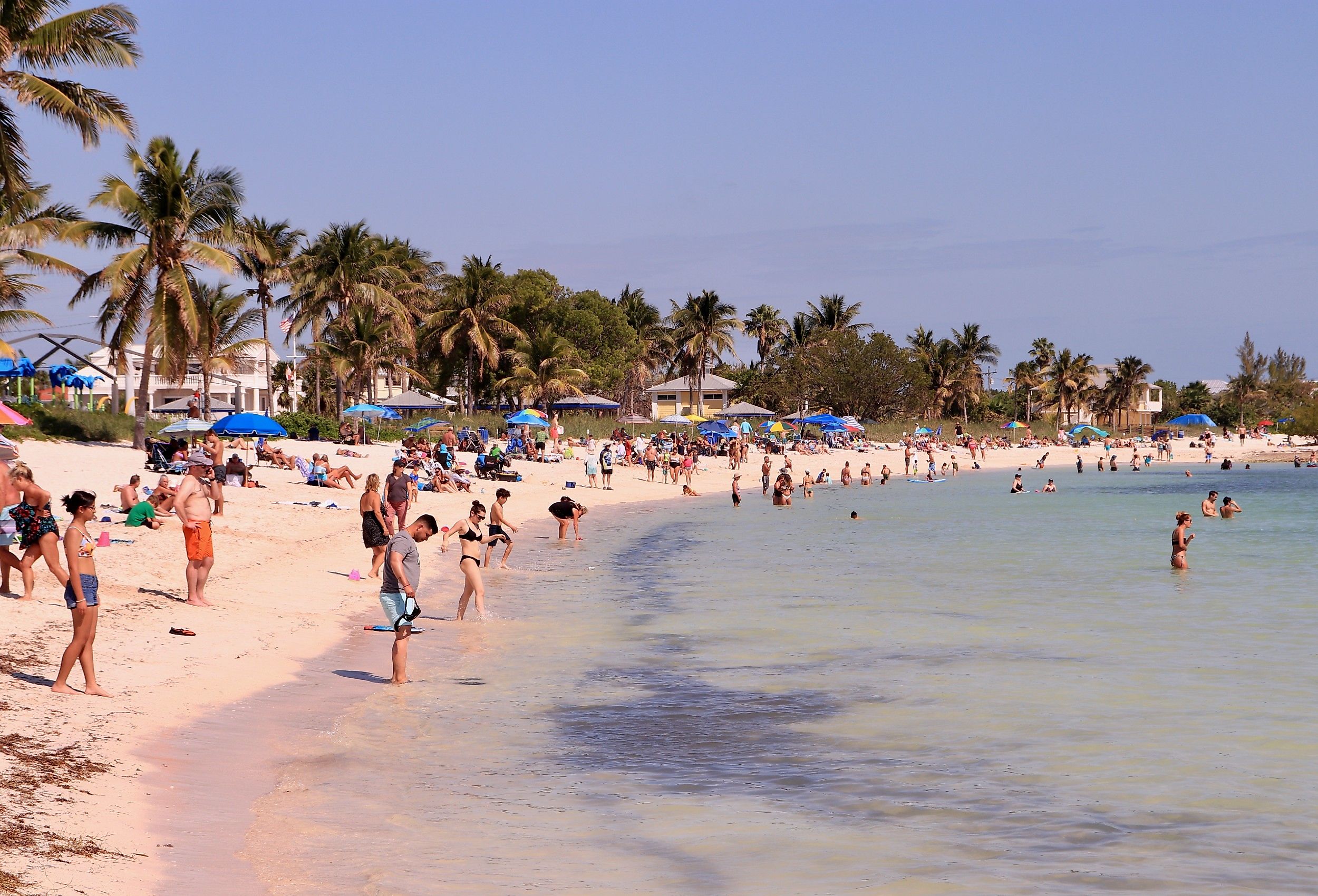
Marathon sits in "the heart of the Florida Keys" and runs as a base camp for the southern keys. The town packages well for families, couples, and dog owners alike. Snorkeling and diving sites surround the area, with bike rentals and kayak launches throughout town. Sombrero Beach offers swimming, picnics, and volleyball, with sea-turtle nesting areas posted between April 15 and October 31. Glass-bottom kayak tours run for those who want to see the marine life without going underwater.

For a budget option, Curry Hammock State Park east of town has fishing, kayaking, wetlands, and hiking trails. The Dolphin Research Center runs swim-with-dolphin sessions. The Turtle Hospital, in a converted 1950s motel, treats injured sea turtles for release back into the sea and is one of the area's stronger family stops. Castaway Waterfront Restaurant & Sushi Bar handles the meal afterward. The 50th Annual Original Marathon Seafood Festival is scheduled for March 14-15, 2026, with live music, family activities, and a tribute to the local fishing industry.
Naples

Naples is the high-end stop on this list. The Gulf Coast city has under 20,000 residents inside city limits but anchors a Collier County metro of more than 400,000. The Old Florida architecture and the surrounding Paradise Coast white-sand beaches give the city its visual signature. Sprawling golf courses, upscale shopping, and seasonal dining anchor the scene. Fifth Avenue South and Third Street South handle the shopping and the window-shopping over a long weekend or longer.

Naples Zoo at Caribbean Gardens covers the family-friendly side, and Artis houses the Baker Museum and the Naples Philharmonic. The Naples Botanical Garden runs about 170 acres of cultivated and natural ecosystems, and Clam Pass Park hands you a beach boardwalk for sunset. Lowdermilk Park is the public alternative with beach access, outdoor showers, a concession stand, volleyball courts, and a gazebo.
St. Petersburg

St. Petersburg sits across Tampa Bay on the Pinellas Peninsula and earned the nickname "the Sunshine City" from a long-running streak of sunny days (768 consecutive days, recorded between 1967 and 1969 and once held by the local newspaper). The dining scene pulls a national audience, and the Dalí Museum holds over 2,400 pieces by surrealist Salvador Dalí, the largest collection of his work outside Spain. The Museum of Fine Arts, St. Petersburg, adds a global collection that includes works by Claude Monet and other major artists. Walkable neighborhoods are stitched with murals across the downtown core. The Sunken Gardens, the city's oldest living museum, is a strong stop for families.

South of the city, St. Pete Beach spreads along a barrier island connected by a bridge. Seven miles of waterfront parks line the route, with options that include snorkeling trips, the Island Ferry Eco Tour, and Maximo Park, where playgrounds and trails sit beside traces of the area's long Indigenous history. Fort De Soto Park is a short drive from downtown St. Petersburg across five interconnected islands with dog-friendly beaches, camping, trails, and a historic fort. With over 260,000 residents and a large LGBTQ+ community, the city hosts Florida's biggest Pride celebration, with St Pete Pride Weekend scheduled for June 26-28, 2026.
The seven spots above cover a lot of ground from Orlando-adjacent springs to a coral archipelago two hours by ferry from Key West. Naples handles the high-end weekend, St. Petersburg covers the urban side, and Dry Tortugas runs the most remote corner of the National Park System in the lower 48. The rest fill in the gaps. Pick the one that fits the trip you actually want.