7 Best Places To Live On The Atlantic Coast
The seven towns below run from a mid-coast Maine harbor framed by 1,500-foot mountains down to the oldest continuously inhabited European settlement in the country, in northeastern Florida. Each one keeps a working downtown within walking distance of either a deep-water port, a barrier-island beach, or both. Portsmouth, New Hampshire, hosted the 1905 Treaty of Portsmouth that ended the Russo-Japanese War and now runs a working biotech corridor next to a 1763 mansion district. Bar Harbor sits at the entrance to Acadia National Park on Mount Desert Island. Beaufort, South Carolina, is the second-oldest city in its state and a designated National Historic Landmark district. St. Augustine, founded by the Spanish in 1565, predates Jamestown by 42 years. Below are seven Atlantic Coast towns that hold full-time populations under 50,000 and downtowns walkable enough to live in.
Portsmouth, New Hampshire

Portsmouth occupies the last mile of the Piscataqua River before it reaches the Atlantic, framing New Hampshire's only deep-water harbor. Settled in 1623 as Strawbery Banke, the town exported mast timber to the Royal Navy through the colonial period and later hosted the 1905 Treaty of Portsmouth that ended the Russo-Japanese War. Brick Federal mansions like the 1763 Moffatt-Ladd House line the streets surveyed before the Revolution. Pease International Tradeport, carved from the former Pease Air Force Base after its 1991 closure, now houses Lonza Biologics, Sig Sauer's headquarters, and a regional Amazon air hub, keeping unemployment well below state averages.

The Strawbery Banke Museum runs 32 interpreted dwellings on the original settlement site. Cross Marcy Street into Prescott Park for the July-August Arts Festival each summer. The Music Hall (an 1878 vaudeville theater restored in the 1990s) screens independent cinema and hosts the "Writers on a New England Stage" interview series. 3S Artspace next door covers experimental galleries and an all-ages performance lab. The Gundalow "Piscataqua" runs tidal-history sails through the harbor. The Black Trumpet Bistro on Ceres Street and Cure on State Street cover the standing dinner picks; Caffe Kilim handles the morning espresso. Weekend rituals include the Saturday Farmers' Market, Isles of Shoals cruises, and pickleball on the South Mill Pond courts.
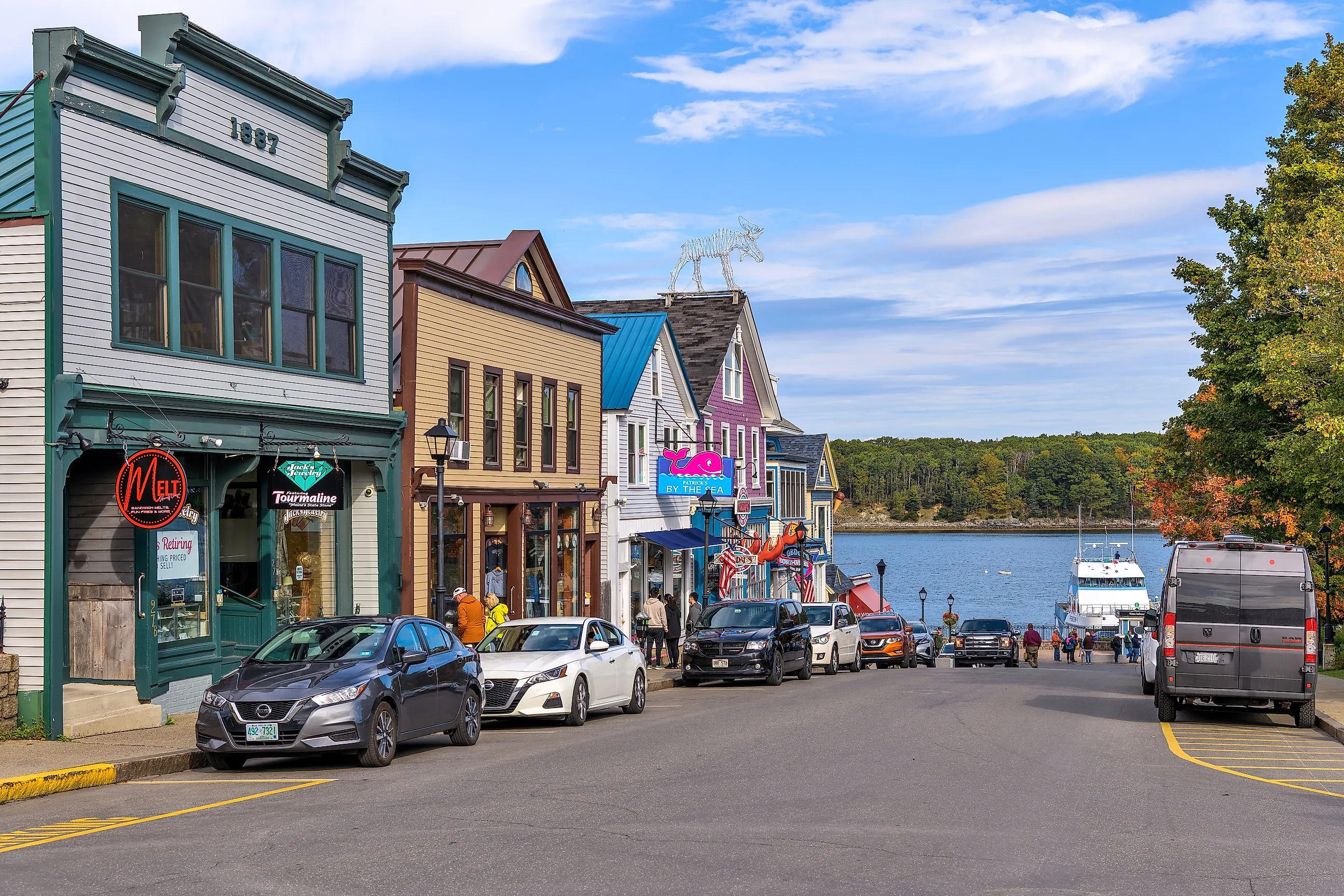
Bar Harbor, Maine

Bar Harbor sits on Mount Desert Island as the gateway to Acadia National Park, which covers about 49,000 acres of granite shoreline, mountain summits including 1,530-foot Cadillac Mountain (the highest point on the US Atlantic coast), and 158 miles of hiking trails. The town emerged as a 19th-century summer colony for Rockefeller, Vanderbilt, and Astor families before the 1947 Bar Harbor Fire destroyed many of the original cottages. The Abbe Museum is the only Smithsonian-affiliated museum in Maine and runs exhibits on the four Wabanaki Nations (Maliseet, Micmac, Passamaquoddy, and Penobscot) whose territory includes the island.
The Thirsty Whale Tavern handles fresh local seafood; Reel Pizza Cinerama runs a movie-theater pizzeria where you order from the marquee menu before the show. The Argosy Gallery covers landscape and marine art on Main Street. The Village Green is the central downtown square, and the 4-mile Shore Path runs from there along the harbor with views of the Porcupine Islands offshore. Sea kayaking tours leave from the town pier; trail access into Acadia is direct from town.
Southport, North Carolina

Southport sits at the mouth of the Cape Fear River in Brunswick County, where the river meets the Atlantic. The town was founded in 1792 as Smithville and renamed Southport in 1887 in a bid to attract shipping. Coastal Living named it "America's Happiest Seaside Town" in 2015. Films shot here include Safe Haven, A Walk to Remember, and Crimes of the Heart. Fort Johnston, with construction beginning in the late 1740s, is one of the oldest forts in North Carolina, and its visitor center anchors the historic district along with the NC Maritime Museum at Southport.

The nine-acre Waterfront Park runs along the river with a public fishing pier, picnic shelters, and benches. Old Smithville Burying Ground and the Old Brunswick County Jail sit within walking distance of the historic core. The public launches around the Yacht Basin handle anglers, kayakers, and small-boat sailors, and the Southport-Fort Fisher ferry crosses the river to the Fort Fisher peninsula. The 1958 Oak Island Lighthouse stands across the water and is visible from the Riverwalk, especially at night when the beacon catches your eye. The North Carolina Fourth of July Festival has roots going back to 1795 and remains the town's biggest annual event.
Hilton Head Island, South Carolina

Hilton Head Island, in South Carolina, traces its English name to Captain William Hilton, who explored these waters in 1663. The island ran as sea-island cotton and rice plantations through the 19th century before reinventing as a planned resort destination in the mid-20th century under developer Charles Fraser, whose Sea Pines plantation set strict design standards that have preserved the live oak canopy across most of the island. The Coastal Discovery Museum runs exhibits on the island's natural and cultural history, including the Gullah community whose ancestors were enslaved Africans brought to the island for their rice-cultivation expertise.
The Arts Center of Coastal Carolina runs theater, music, and visual arts year-round. The Skull Creek Boathouse covers Lowcountry seafood with a working waterfront view. The island has more than 60 miles of multi-use paths and several public beach accesses, with Coligny Beach Park being the standard choice. Harbour Town Golf Links, in Sea Pines, hosts the RBC Heritage PGA Tour event each spring, with the iconic candy-striped lighthouse marking the 18th hole. The Sea Pines Forest Preserve runs walking and boat tours.
Beaufort, South Carolina

Beaufort, established in 1711, is the second-oldest city in South Carolina. Its antebellum architecture and 304-acre historic district are designated a National Historic Landmark. Beaufort's history is deeply tied to both the Civil War and the Reconstruction era, with sites like the Penn Center on St. Helena Island, one of the country's first schools for formerly enslaved people, founded in 1862. The city sits on Port Royal Island in the heart of the Sea Islands and Lowcountry.
The Beaufort History Museum runs the local interpretation, while the annual Beaufort International Film Festival takes place each February. Saltus River Grill on Bay Street is the standing waterfront restaurant. Henry C. Chambers Waterfront Park runs a 7-acre stretch along the Beaufort River for picnics and walks. The Thibault Gallery covers local and regional artists. The Kazoobie Kazoos Factory runs tours through one of the few American kazoo manufacturers still in operation.
Rehoboth Beach, Delaware

Rehoboth Beach, established in 1873 as a Methodist camp meeting site, has become a coastal town anchored by a mile-long boardwalk and the unofficial title "Nation's Summer Capital" (the nickname comes from its long history as a vacation destination for Washington, D.C., residents and US presidents). The town has a long-running tradition as one of the East Coast's most welcoming destinations for the LGBTQ+ community. The Rehoboth Beach Historical Society and Museum traces the town's evolution from religious retreat to year-round resort.

The Boardwalk Plaza Hotel runs Victorian-era ocean-front rooms with the boardwalk at the front door. Blue Moon and Salt Air Kitchen anchor the local-seafood and farm-to-table sides of the dining scene. The Rehoboth Art League covers exhibitions and classes on a 3.5-acre campus in historic Henlopen Acres. Clear Space Theatre runs professional theater year-round. Cape Henlopen State Park, just north of town, holds beaches, hiking, and biking trails on the southern flank of Delaware Bay. The Rehoboth Beach Independent Film Festival in November and the Sea Witch Festival each Halloween are the two anchor events on the local calendar.
St. Augustine, Florida

St. Augustine, founded in 1565 by the Spanish admiral Pedro Menéndez de Avilés, is the oldest continuously inhabited European-established settlement in the United States. The city has been under Spanish, British, Confederate, and American rule. The Castillo de San Marcos, completed in 1695 with coquina stone walls 19 feet thick, overlooks Matanzas Bay and is the oldest masonry fortification in the United States. The colonial quarter holds the cobblestone streets and adobe-and-coquina buildings of the original Spanish town.
The Lightner Museum, housed in the former Alcazar Hotel built by Henry Flagler in 1888, holds collections of fine and decorative 19th-century art. O.C. White's covers seafood with views of Matanzas Bay. Anastasia State Park runs four miles of beach and dunes just minutes from downtown. The St. Augustine Art Association and the Aviles Street galleries handle the local art scene. The annual Nights of Lights festival each November-January covers the historic district in three million white lights.