7 Cute Small Town Drives In California
Many picture California as a land of giant cities and heavy traffic, but there is real magic to be found in the state's smaller settlements. Beyond the busy interstates, you can find peaceful roads that twist through green vineyards, deep forests, and old gold mining settlements. The state actually promised to protect these exceptional views as far back as 1963, when it initiated the State Scenic Highway Program. For those who want to swap skyscrapers for open skies, here are seven trips that connect you with charming communities and the friendly side of the West Coast.
Highway 1 on the Mendocino Coast

This 15-mile section of the Pacific Coast Highway, taking roughly 30 minutes to traverse, offers a wilder alternative to the sandy southern beaches. The journey begins in the tiny hamlet of Little River, home to Van Damme State Park. Here, visitors can explore a rare pygmy forest where nutrient-poor soil has kept century-old trees only a few feet tall. Just a few minutes north lies the village of Mendocino, which resembles a 19th-century Maine settlement with its Victorian saltbox cottages. In fact, the TV show Murder, She Wrote used this location to represent the East Coast for many years. The road continues to Fort Bragg, a working seaport famous for Glass Beach, where decades of crashing waves have turned discarded glass into smooth, colorful treasures.
The Gold Rush Trail (Highway 49)

Travel back to 1849 on Highway 49, a winding path through the Sierra Nevada foothills that connects the past with the present. This trip covers approximately 45 miles and takes about one hour, travelling from Sutter Creek to Nevada City. The route cuts through golden hills and oak trees, linking communities born during the famous mining boom.

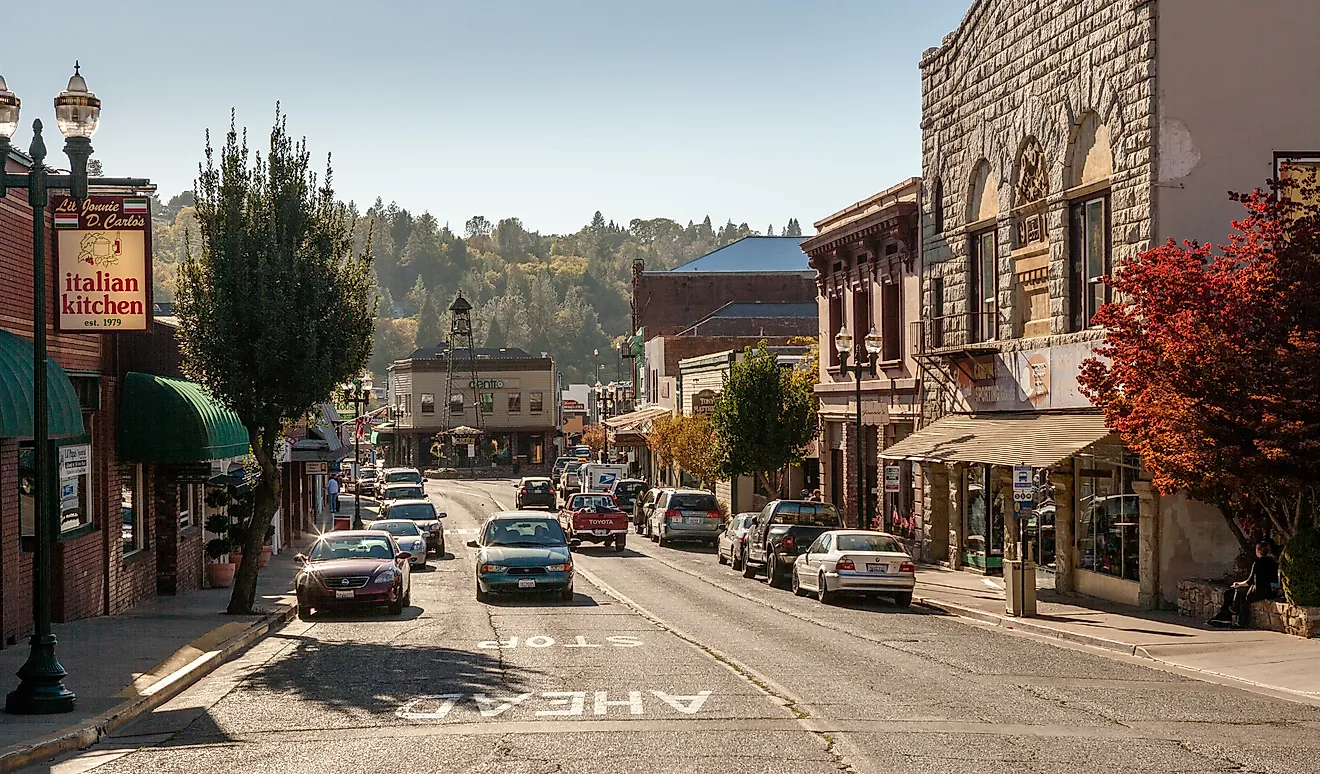
Begin in Sutter Creek, often known as the "Jewel of the Mother Lode." The Main Street here showcases 19th-century balconies that hang over the sidewalks, a design style brought by early immigrants. It feels like walking onto a Western movie set. Heading north brings travellers to Grass Valley, once the wealthiest mining district in the state. A major highlight is the Empire Mine State Historic Park, the site of one of the deepest and longest gold mines in California. Just a few miles away sits Nevada City. This destination features a downtown district listed on the National Register of Historic Places, where old brick buildings now host art galleries and theaters.
Santa Ynez Valley Loop

Located just north of Santa Barbara, this 30-mile circle takes roughly 45 minutes to drive. The route connects three very different communities in a short time. The journey begins in Solvang. Danish immigrants founded this place in 1911, filling the streets with Danish Windmills and timber-framed buildings that look like they belong in Northern Europe. Just outside the center stands Old Mission Santa Inés, a landmark established in 1804 that preserves early California history.
Heading east, the road enters Santa Ynez. The atmosphere changes here, featuring buildings with Old West fronts that recall the days of cowboys and ranches. Completing the triangle is Los Olivos, a collection of Victorian houses and tasting rooms. The movie Sideways made this area famous for its rolling hills and local wine culture.
The Bohemian Highway

This 10-mile path through Sonoma County takes only about 20 minutes, yet it packs immense character into a short distance. The road links Freestone to Monte Rio, cutting through towering redwoods and fern-filled canyons.
Start in Freestone, a tiny settlement established in 1853. Today, people come for Wild Flour Bread, a bakery that draws lines out the door for its brick-oven loaves. Across the street sits Osmosis Day Spa, famous for being the only place in the country offering cedar enzyme baths, a Japanese heat treatment.
The route climbs to Occidental, a hillside community with a strong Italian heritage. Two famous restaurants, The Union Hotel and Negri's, serve massive family-style Italian dinners that have been staples for decades. Finally, the pavement descends to Monte Rio on the banks of the Russian River. A neon sign welcomes arrivals to "Vacation Wonderland," a nod to the 1930s when big bands played at the Quonset hut-style Rio Theater.
Julian Backcountry Drive (Highway 78 & 79)

San Diego is famous for beaches, but the Cuyamaca Mountains to the east offer a completely different setting. Travelling along Highway 78 and 79 covers roughly 25 miles and takes about 45 minutes to drive. The route climbs steadily from the foothills, offering expansive views of the valleys below. The first major destination is Santa Ysabel. This small agricultural crossroads is legendary for Dudley’s Famous Bakery, which has served fresh breads since 1963. Nearby stands the Mission Santa Ysabel, a reconstructed 1818 chapel that marks a significant piece of local Spanish heritage.

Continuing upward brings travellers to Julian. This historic community started during a gold rush in 1869. Today, Main Street retains its 1870s appearance with wooden storefronts. While gold put the area on the map, apples keep it famous. The crisp mountain air allows orchards to thrive, and local kitchens like the Julian Pie Company produce thousands of pies annually. It is one of the few places in the county to see snow in winter, making it a popular seasonal destination.
The Silverado Trail

While Highway 29 handles the heavy traffic, the Silverado Trail provides a peaceful escape along the eastern edge of Napa Valley. This 29-mile route takes about 45 minutes to travel, winding past ancient oak trees and endless rows of grapevines. The road links the upscale community of St. Helena with the rustic Calistoga, offering a quieter way to see the famous wine region.
In St. Helena, the streets are lined with boutique shops and the massive stone Culinary Institute of America, situated within a building that resembles a castle. Further north, the setting changes in Calistoga. People come here to relax in volcanic mud baths or watch the Old Faithful Geyser, which shoots boiling water into the air on a dependable schedule.
Avenue of the Giants & Ferndale

This journey into the past spans approximately 45 miles and takes about 90 minutes to complete, primarily due to the winding road's slow pace. The route begins on the Avenue of the Giants, where the pavement weaves through the Humboldt Redwoods State Park. The trees here are so tall that they often block out the sun. A popular stop is Myers Flat, home to the Shrine Drive-Thru Tree, a hollow redwood that visitors can actually drive through.
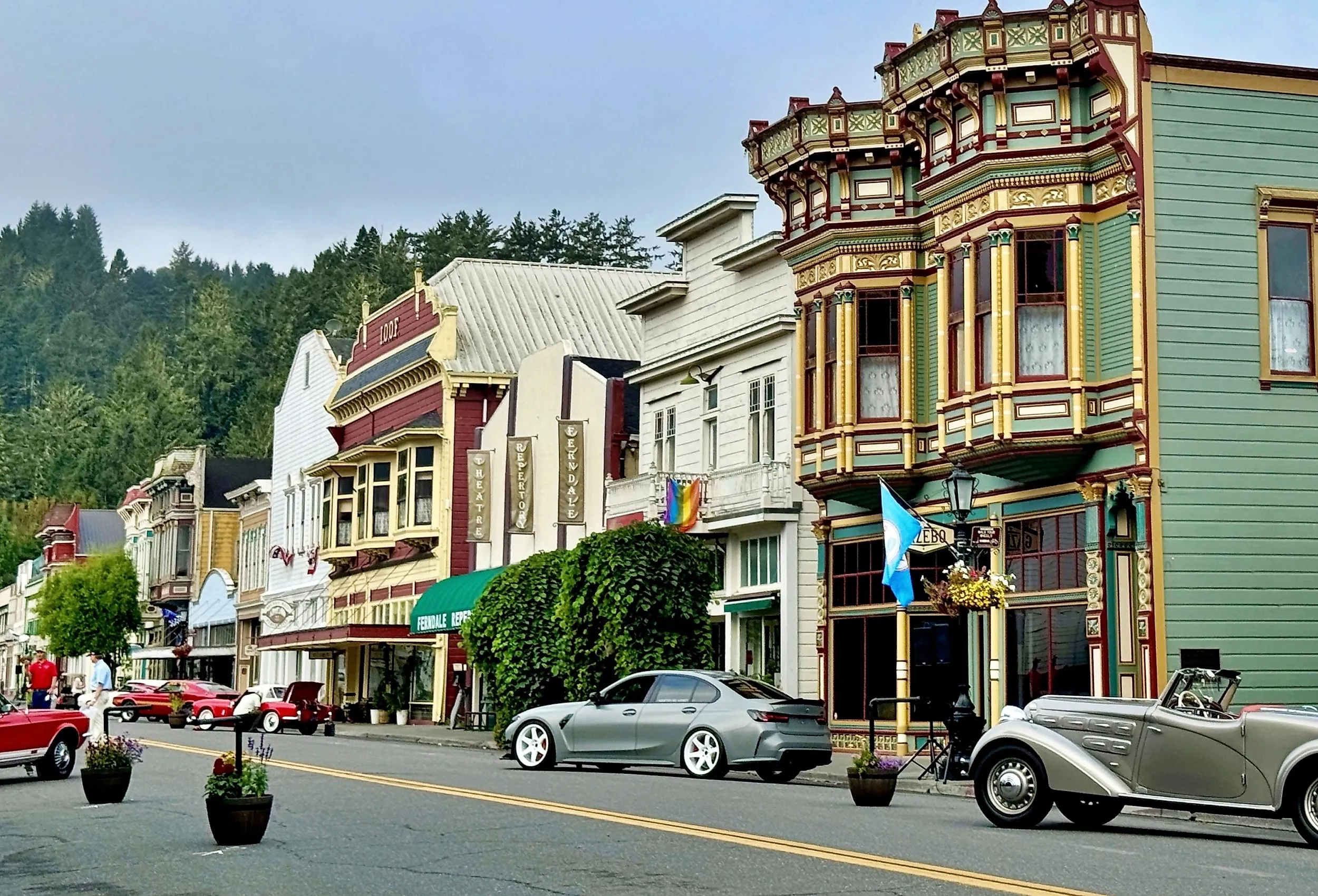
Heading north, the route passes Scotia, one of the last remaining company-owned lumber communities in the country. The trip ends near the ocean in Ferndale. This village appears to be frozen in time, retaining its appearance from the late 19th century. Main Street is lined with ornate Victorian homes known as "Butterfat Palaces," which were built by wealthy dairy farmers in the 1800s.
California offers far more than just famous cities and busy freeways. From the misty cliffs of Mendocino to the warm apple orchards of Julian, the true character of the state lives on its back roads. These seven routes provide a perfect excuse to escape the crowds and explore the countryside. Whether searching for gold rush history, towering redwoods, or a quiet vineyard, a memorable adventure is just a car ride away. Pack a bag, fill the gas tank, and get ready to discover the hidden charm of the West Coast.