6 Most Rattlesnake Infested Areas on the Pacific Coast
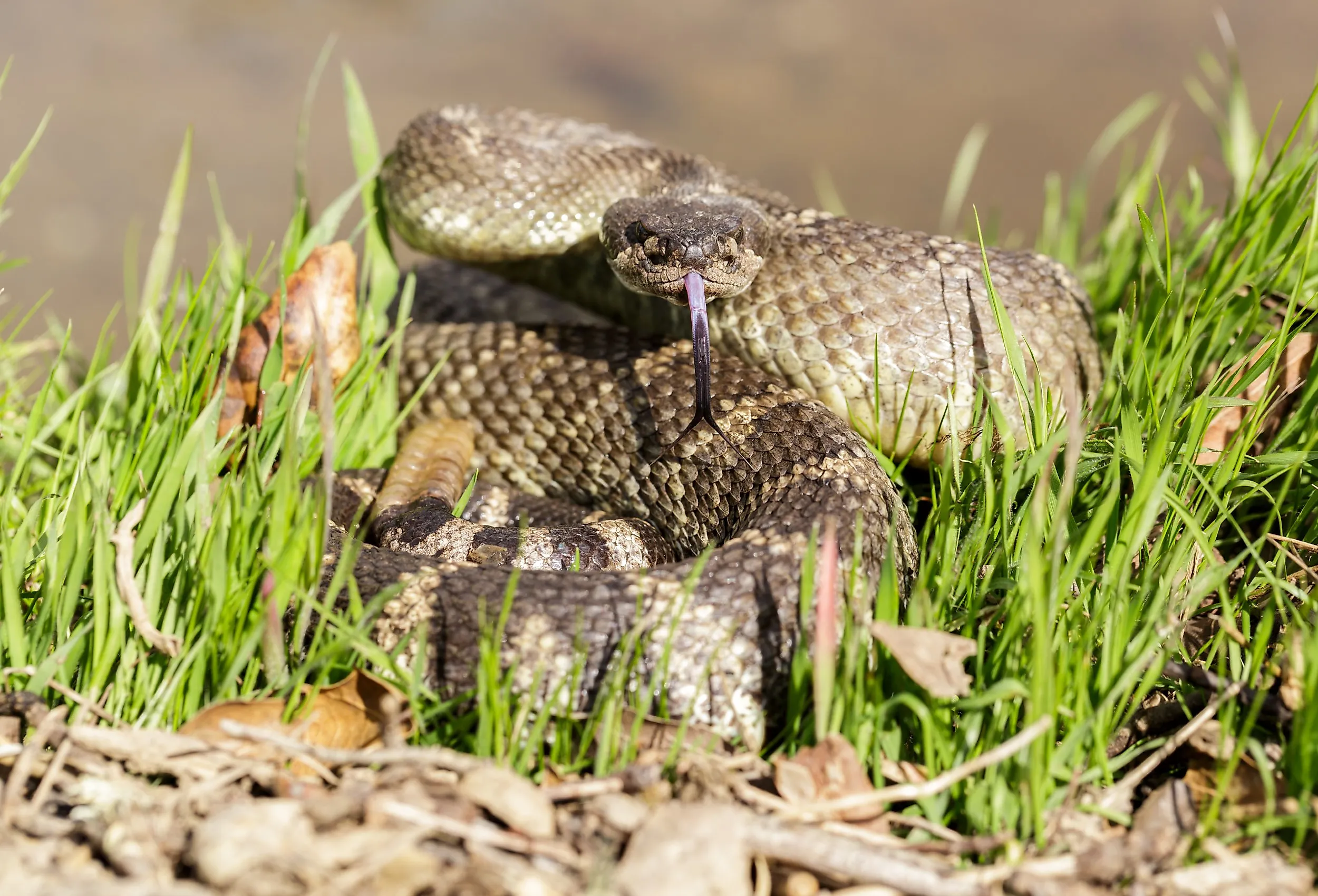
The Pacific Coast is home to many rattlesnakes, specifically in California, where they can hide along its coastal mountain trails and even by the roots of giant redwood trees. On the coast, there are two types of rattlesnakes you can find: red diamond rattlesnake (Crotalus ruber) and the western rattlesnake (Crotalus oreganus), of which there are two subspecies. The northern (Crotalus oreganus oreganus) and southern Pacific rattlesnakes (Crotalus oreganus helleri) inhabit the coastal parks and beaches here and are the most common varieties you will find. You may even spot one swimming through the Pacific Ocean waters of Crystal Cove State Park, or slithering through the ground leaves from redwood trees in the Big Basin Redwoods State Park.
Rattlesnakes aren't known to be aggressive, as they prefer to hide and wait for prey; however, they may still bite humans if stepped on or handled. So anyone hiking through the most rattlesnake-infested areas of the Pacific Coast should stay alert to their surroundings.
Big Basin Redwoods State Park

Big Basin Redwoods State Park was established in 1902, making it the oldest state park by far in California. It sits just to the north of the coastal town of Santa Cruz, and is named after its native redwood trees. These trees are the largest in the world, growing from 165 feet to over 300 feet tall. These trees live a long time, up to several thousand years if they are not destroyed by a fire.

A fire in 2020 devastated the park, including all of its historic buildings. The redwoods were largely spared, and park officials worked diligently to revitalize the park and have reopened some of its hiking trails to the public. Today, visitors come for the Redwood Loop Trail, which goes by the oldest trees. Through this work, some of the animals have also returned to the park, including the only venomous snake in the park: the northern Pacific rattlesnake. They tend to frequent the dryer sections of the park, though they can be seen in creeks on hot days. Although they are feared by many, park officials remind visitors that these snakes help control the rodent population and are a critical part of the ecosystem of this coastal redwood forest.
King Range National Conservation Area

The King Range National Conservation Area is on California's Lost Coast, accessible only by a few roads. Its mountain peaks are only a few miles from the Pacific Ocean, making it a popular place to visit for hiking, surfing, fishing, and other activities.
Its highest point is the 4,088-foot King Peak, sitting 3 miles away from the Pacific Ocean. Hikers come here to tackle the 80 miles of hiking trails, including the background Rattlesnake Ridge. Many of these trails are overgrown, meaning you need to be especially careful not to step on northern Pacific rattlesnakes on these trails.

These snakes vary in size based on their diet. For example, if they primarily eat other lizards and snakes, they tend to be smaller than those that prey on birds and mammals.
Crystal Cove State Park

Crystal Cove State Park sits firmly within Orange County, just outside of the Los Angeles metropolitan area, and makes for a popular nature retreat for LA residents. There are 3.2 miles of Pacific coastline here, featuring beaches and scuba diving. Just offshore is a 1,140-acre underwater park for scuba divers to check out the coves and wildlife.
Other than water activities, there are 18 miles of hiking trails in diverse environments, including a canyon, up through mountains, and through a coastal sage scrub ecosystem. Rattlesnakes also frequent the trails, coastal bluff, and even the beach from time to time. The southern Pacific rattlesnake can be found throughout Orange County, and typically feeds on rodents, birds, amphibians, squirrels, and other small animals. Measuring between 24 and 55 inches, they are typically a brown color with several dark dorsal blotches shaped like diamonds. Like most American rattlesnakes, it's not particularly aggressive, but will strike if threatened.

Another common rattlesnake species here is the red diamond rattlesnake, which lives only in the southwestern corner of California. These snakes tend to grow between 40 and 55 inches and are reddish-brown with diamond-shaped blotches. Its venom has been used for several drugs, and is being researched for cancer treatments.
Malibu Creek State Park

Nestled in the Malibu Creek Canyon in the Santa Monica Mountains, the land here was so beautiful that it was used for TV shows before it was established as a state park in 1974. Several of those filming sites, such as for M*A*S*H, are accessible to hikers.
Its hiking trails go through gentle valleys and up 2,802 feet to Saddle Peak, or through the walls of Malibu Canyon. The Mesa Peak Motorway trail, in particular, connects up to the Backbone Trail in the Santa Monica Mountains.

Throughout the park, you might find warnings for rattlesnakes, as there is a large population of southern Pacific rattlesnakes that slither through here. They are active all year, but are most likely to be seen from March to October. Snake bites are rare throughout the United States, with only about 7,000 to 8,000 reported venomous bites annually. Deaths are even rarer, but one cyclist did pass away in 2026 after being bitten by a rattlesnake in Irvine, California.
Santa Monica Mountains National Recreation Area

The Santa Monica Mountains National Recreation Area is one of the most well-traveled parks on the California coast. The Backbone Trail has a Mediterranean-style ecosystem home to meadows, oak woodlands, sage scrub, and views of the Channel Islands and LA.
There are many other trails and cliffs to explore in the area, from the Echo Cliffs climbing trail to the Mishe Mokwa Trail to Split Rock, offering scenic views of the Carlisle Canyon. Visitors during the spring rave about the beautiful fields of wildflowers that bloom throughout the area.
Much like the Malibu Creek State Park, you can also find southern Pacific rattlesnakes throughout the recreational area. It is the only venomous snake out of the 14 other snakes you might find here. The best way to identify it is to look at the head. Most nonvenomous snakes have rounded heads, but this rattlesnake has a flat diamond-shaped head.
San Diego Bay National Wildlife Refuge

This wildlife refuge is firmly within an urban setting in San Diego County. It was established in 1988 to protect the last remaining wetlands in San Diego, which had mostly been filled in. Its 2,620 acres are divided between the Sweetwater Marsh and South San Diego Bay.
The areas are connected by the Bayshore Bikeway, which makes it easy for cyclists to traverse through and view the wildlife here, including more than 200 species of birds like the light-footed rail or California least tern. Some of the plants here are very rare, such as yerba reuma.
Throughout this bay, you might also run into a southern Pacific rattlesnake. They primarily feed on ground squirrels, which have developed their own techniques to confuse the snake. They may kick sand or debris, or try to get their tails as hot as possible to confuse the snake's heat sensors. Rattlesnakes don't have good eyesight, so they rely on heat-sensing pits on the sides of their head to detect prey.
Rattlesnakes Are the Real Stars Out Here
The Pacific coast is known for producing movie stars, and its beautiful mountains and valleys are commonly used for movie and TV sets, as seen at the Malibu Creek State Park. Rattlesnakes, however, are some of the real masters of the land out here, as they slither unseen through the underbrush, looking for their next meal. They are skilled at camouflage, so it is unlikely you will see one of these creatures. That's why it is important to take proper precautions when hiking through any of these parks or mountains, such as wearing proper footwear, avoiding putting your hands under rocks or logs, and never hiking alone. If you are bitten, you will need someone else to go for help. A rattlesnake's bite can be very painful and, if left untreated, could kill you.