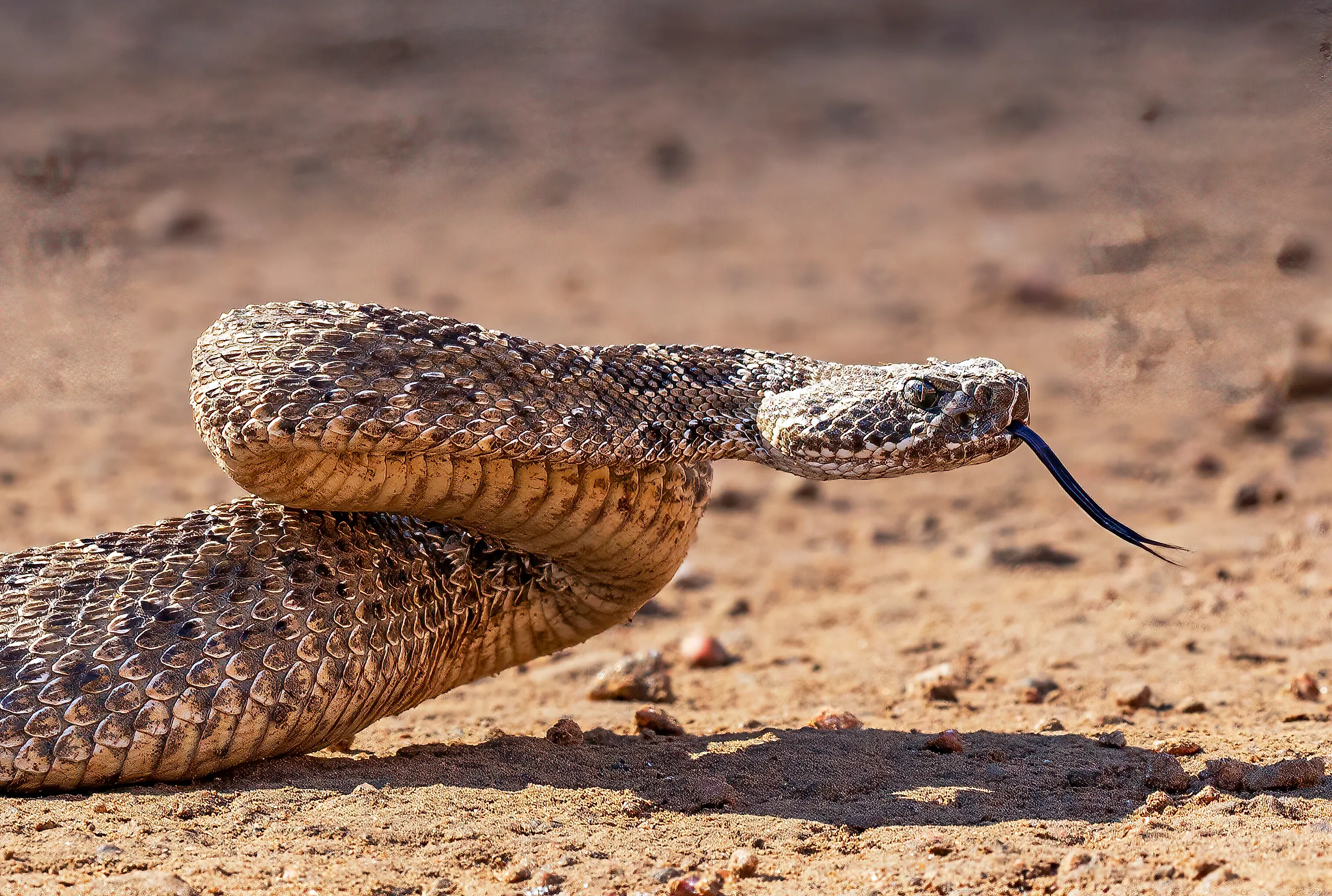
6 Most Rattlesnake Infested Areas in The Pacific Northwest
The Pacific Northwest is home to various rattlesnake species, such as the western rattlesnake (Crotalus oreganus) and its subspecies, like the Great Basin rattlesnake, which live in the region’s dry slopes and grasslands. While encounters remain relatively uncommon, some areas across Washington, Oregon, and Idaho are known to support higher populations than others. Rattlesnakes favor the rocky terrain of Smith Rock State Park and the remote areas of the Columbia River Gorge, where they live unnoticed and undisturbed. This list highlights the six most rattlesnake-infested areas that hikers, campers, and outdoor enthusiasts should know about before heading out to enjoy the Pacific Northwest.
Okanogan-Wenatchee National Forest

Okanogan-Wenatchee National Forest comprises 3.8 million acres on the eastern slopes of the Cascade Range in Washington, stretching 180 miles from the border with Canada to the Goat Rocks Wilderness, one of eight Wilderness Areas inside the forest’s boundaries. Its sprawling size makes it the largest forest in the Pacific Northwest. It is also home to one of the northernmost rattlesnake species in the United States, the western rattlesnake (Crotalus oreganus), which typically grows between 3 and 4.5 feet (91 to 137 cm) long with a heavy body and a dark blotched pattern along its back.
Due to its sheer size, the Okanogan-Wenatchee National Forest has a diverse landscape, from glaciated high-alpine peaks that receive over 70 inches of rainfall to its dry, rugged eastern edge, which receives less than 10 inches of rainfall annually. As these rattlesnakes live in the mountains this far north, they need to den communally to survive the long, cold winters. Western rattlesnakes often den in groups, returning to the same den year after year. Sometimes, even with other species. Rattlesnakes emerge from their dens between February and April, with the main seasons when hikers need to be on alert being spring and fall.
Smith Rock State Park

Rattlesnakes are widespread across Oregon, usually at elevations below 8,000 feet. In Central Oregon, a subspecies of western rattlesnake, known as the Great Basin rattlesnake (Crotalus lutosus), is commonly found in places like Smith Rock State Park. This species generally reaches 3 to 4 feet (91 to 122 cm) in length and is recognized by its lighter tan or gray body with sharply defined dark blotches that blend well into rocky terrain. The park sits at around 3,000 feet in elevation, and its major rock faces of welded tuff, or compressed volcanic ash, formed 30 million years ago, making for premier rock climbing and scenic hiking trails.
However, the trails are also frequented by rattlesnakes. In 2017, park management was notified of the presence of two rattlesnakes beginning to gather on a bridge connecting the River and Wolf Tree Trails. For public safety purposes, the rattlesnakes were relocated. Rattlesnakes inhabit sagebrush, juniper, fir, and spruce forests, as well as riparian areas, so it is advised to remain on trails to limit potential interactions.
John Day Fossil Beds National Monument

John Day Fossil Beds National Monument is home to two different species of rattlesnake, the western rattlesnake and the prairie rattlesnake (Crotalus viridis). The prairie rattlesnake typically grows between 3 and 5 feet (91 to 152 cm) long and has a greenish-gray or light brown body with darker oval blotches that fade toward the tail. John Day Fossil Beds National Monument preserves fossil records of plants and animals spanning 40 to 65 million years. The park covers 14,000 acres and is divided into three units: Sheep Rock, Painted Hills, and Clarno.
While visitors to the park are more likely to encounter nonvenomous bull snakes and garter snakes, it is important to remain aware of the potential presence of rattlesnakes. If given the chance, rattlesnakes will either slither away from people or remain still to avoid detection. During hot spells in the summer, rattlesnakes will seek shade under rocks and debris, so it is important to keep your hands and feet out of areas you cannot see to reduce the risk of bites.
Columbia River Gorge

The Columbia River Gorge is a canyon of the Columbia River that stretches 80 miles long and 4,000 feet deep. The gorge is characterized by conifer forests in the west, grasslands in the east, and cliffs and ridges in between. The western rattlesnake is the only venomous snake found in the Columbia River Gorge, typically showing a brown or olive body with darker crossbands that help it blend into rocky slopes and dry grasslands. The Columbia River Gorge marks one of the westernmost strongholds of western rattlesnakes, which are largely absent from Oregon’s coastal regions.
Western rattlesnakes are largely elusive, living their lives unseen from hikers in the gorge. However, they play an important role in the ecosystem by managing rodent populations. Western rattlesnakes emerge from their dens in April and will stay close to these sites for two to three weeks before they venture out to forage for food. While encounters are uncommon, the western rattlesnake’s venom is hemotoxic, causing localized pain and swelling, and bites require prompt medical attention as a precaution.
Willamette Valley

The Willamette Valley is between 20 and 40 miles wide and stretches 120 miles from Eugene to Portland. Elevation in the southern end near Eugene is around 400 feet, whereas elevation is closer to sea level where the valley terminates in Portland. The valley's climate is known for mild, wet winters and warm, dry summers.
The western rattlesnake is an Oregon Conservation Strategy Species in the Willamette Valley, equipped with heat-sensing pits that allow it to detect warm-blooded prey even in low light. The Willamette Valley is the fastest-growing ecoregion in Oregon. Factors such as population growth and land-use conversion affect local ecosystems. The presence of rocks, cliffs, and downed logs in the valley creates a favorable habitat for rattlesnakes. They are known to eat a varied diet of mice, squirrels, birds, and lizards.
Morley Nelson Snake River Birds of Prey National Conservation Area

Rattlesnakes have been in the spotlight in Morley Nelson Snake River Birds of Prey National Conservation Area in recent years. The Great Basin rattlesnake (Crotalus lutosus) is the primary species in this region, characterized by a tan or gray body with well-defined dark blotches that provide excellent camouflage in the rocky desert terrain. This species is well adapted to the dry canyonlands of southern Idaho, where it inhabits basalt cliffs, talus slopes, and sagebrush flats, often ambushing small mammals such as ground squirrels and mice that are abundant in the area.
In 2019, a study by a Boise State University Master’s student captured 11 rattlesnakes on a single day in the conservation area. Each snake was swabbed for a fungal disease, had blood samples collected for RNA analysis, and was tagged with a Passive Integrated Transponder to track its movement. Beyond snakes, the conservation area is home to more than 700 pairs of raptors and hundreds of other bird species.
Rattlesnakes Of The Pacific Northwest
While rattlesnakes are a natural part of the Pacific Northwest’s ecosystems, encounters with them are still relatively uncommon. Species like the western rattlesnake tend to avoid people and are most often found in quiet, sunlit habitats across parts of Washington, Oregon, and Idaho. By being mindful of where you put your hands and feet, staying on marked trails, and giving wildlife plenty of space, you can safely explore these landscapes. Understanding where rattlesnakes are most common not only helps prevent encounters but also highlights their important role in maintaining balanced, healthy ecosystems.