6 Most Charming Towns In Chesapeake Bay
Charm along Chesapeake Bay looks different in each of these six towns. Annapolis has the 1779 Maryland State House at the top of its colonial-era hill with the working harbor at the bottom. Oxford runs an 1683-vintage ferry across the Tred Avon River that has been operating in some form for over 340 years. Chestertown holds Washington College, chartered in 1782, on a riverfront campus and reenacts its own 1774 tea party every year. Cape Charles preserves a long block of Victorian-era houses left over from its railroad-and-ferry-terminal days. The six towns ahead each work the bay differently. Each holds a specific colonial-era anchor that the rest of the country has mostly lost.
Annapolis, Maryland

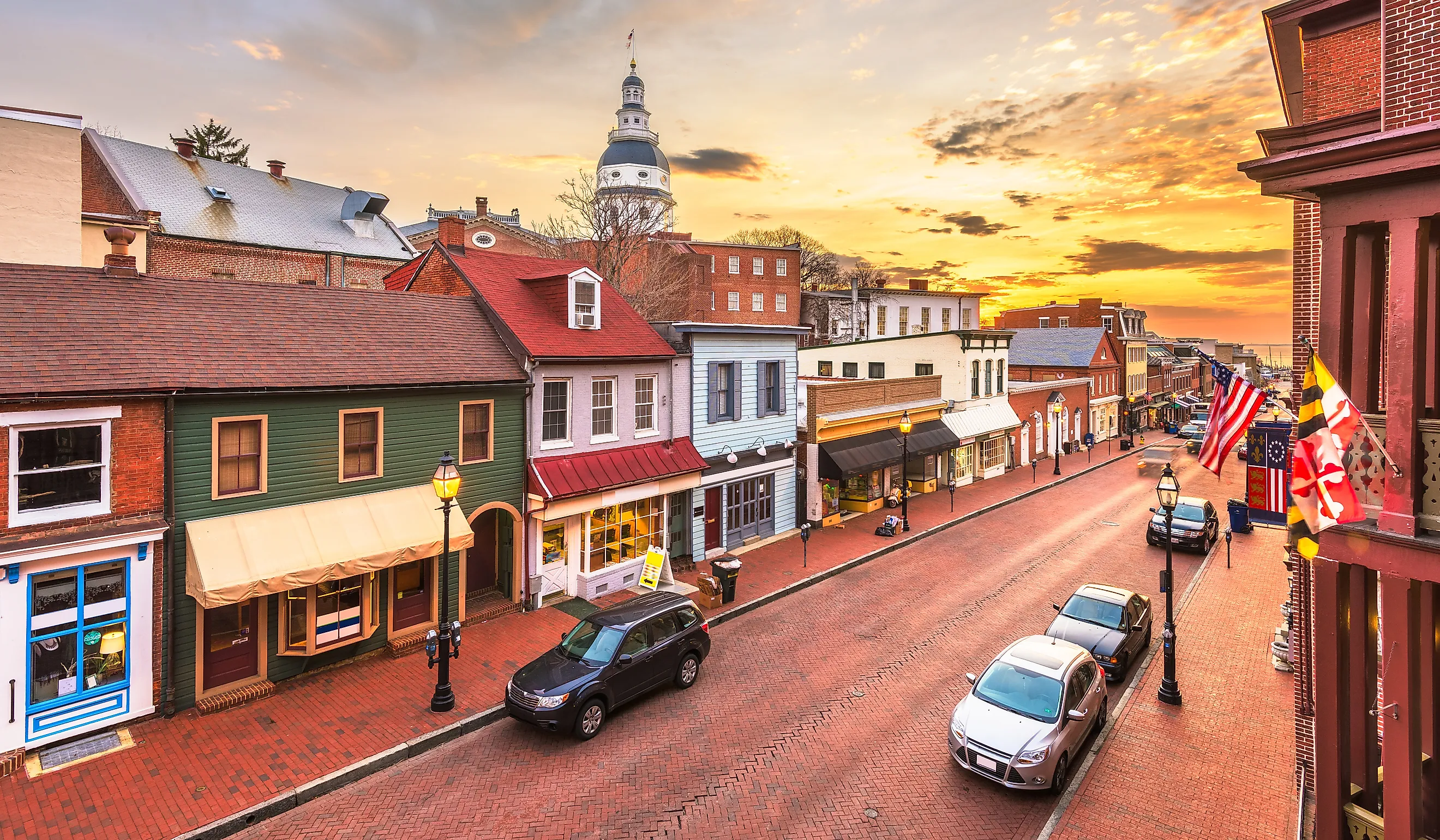
With a population under 40,000 and a bayfront location, Annapolis ranks as one of the most architecturally intact state capitals in the country. The city was established in 1649 and named state capital in 1694. It sits at the mouth of the Severn River with both Baltimore and Washington, D.C. less than 35 miles away. The United States Naval Academy has been based here since 1845.
The 1779 Maryland State House remains in use as the working seat of state government and is the oldest US state capitol in continuous legislative use. It anchors the top of the colonial-era streetscape. From there, the slope down to City Dock runs past shops, galleries, pubs, and waterfront restaurants. Throughout the Historic District, Annapolis preserves multiple homes, buildings, and markers tied to the African American history of the area, including the Banneker-Douglass Museum on Franklin Street.
Cambridge, Maryland

Cambridge was established in 1684 as a seaport town at the mouth of the Choptank River. The town serves as the seat of Dorchester County with around 13,000 residents. Harriet Tubman, who guided enslaved African Americans to freedom on the Underground Railroad, was born nearby around 1822 and is honored at the Harriet Tubman Museum and Educational Center on Race Street. The Harriet Tubman Underground Railroad State Park and Visitor Center 15 miles south covers the broader regional story.
Cambridge has reinvented itself through the 20th and 21st centuries while keeping the maritime past visible through museums, historical markers, and guided walking tours. In recent years the revitalized downtown around Race Street and Poplar Street has built up a working calendar of shops, restaurants, festivals, and farmers' markets. Sailwinds Park East along the waterfront hosts seasonal community events and concerts.
Cape Charles, Virginia

Cape Charles runs a population of around 1,000 just shy of the southern tip of the Delmarva Peninsula. The town is the first stop drivers reach after crossing northward over the Chesapeake Bay Bridge-Tunnel, which opened in 1964 and spans more than 17 miles across the mouth of the bay. The crossing itself counts as a regional landmark.
Cape Charles holds a concentration of well-preserved Victorian-era houses, holdovers from its days as a railroad and ferry terminal for the Pennsylvania Railroad. The walkable downtown handles boutiques, galleries, and dining options on Mason Avenue. Beyond the commercial blocks, the town beach handles the daily swim and the surrounding waters open the door to kayaking, paddleboarding, and small-craft sailing.
Chestertown, Maryland

Chestertown was founded in 1706 on the Chester River, which feeds into Chesapeake Bay about ten miles downstream. The town serves as the seat of Kent County with a population around 5,000. Washington College, chartered in 1782 as the tenth college in the country and the first chartered in the new United States, still operates here on a riverfront campus and retains personal authorization from George Washington himself to use his name.
The downtown retains a long stretch of colonial-era buildings and houses an active arts scene around High Street. Each year the waterfront hosts the Downrigging Weekend Tall Ship and Wooden Boat Festival, and the town runs an annual reenactment of its own 1774 "tea party" protest against British rule. A working reproduction of the 1768 schooner Sultana is docked year-round as an on-the-water museum and runs sailing programs in season.
Urbanna, Virginia

Located just up the Rappahannock River near its entry into Chesapeake Bay, Urbanna runs about 500 residents and is best known these days for the annual Virginia Oyster Festival each November, which brings around 75,000 visitors into the village for the weekend. The rest of the year the town runs at a far quieter pace.
Established in 1680, Urbanna was one of Virginia's primary tobacco ports in the colonial era. The downtown still carries a working set of historic homes and businesses, which makes the area a popular guided-walking-tour stop. The town's marina remains active, now with pleasure boats instead of tobacco hogsheads. A monthly farmers' market and an annual arts festival cover the year-round community calendar.
Oxford, Maryland

Oxford runs a year-round population of under 1,000 on Maryland's Eastern Shore. The waterfront stays active despite the small size with fishing boats unloading at one end and sailboats letting off restaurant patrons at the other. Oxford was founded in 1683 as one of Maryland's first two ports alongside Annapolis and maintains a restored colonial-era customs house plus several other surviving historic buildings.
The Oxford-Bellevue Ferry has operated across the Tred Avon River in some form since 1683, making it among the oldest continuously running ferry routes in the country. The crossing to Bellevue takes only a few minutes but adds a memorable transit option to any visit. The Robert Morris Inn, dating to around 1710 and tied to a co-signer of the Declaration of Independence, is the working historic anchor of the dining and lodging scene downtown.
The Working Bayside Towns
The bay was heavily polluted by surrounding industry for most of the 20th century and has come back substantially through decades of regional cleanup work. The bayside towns came along for the ride. The colonial-era tobacco ports, fishing centers, and rail-and-ferry hubs that once worked the water for commerce now work it for tourism. Visitors get the colonial architecture and historic sites along with modern dining, shopping, and live programming. Visit any one of the six for a full weekend on the bay or string several together for a longer loop.