6 Most Rattlesnake Infested Areas in Pennsylvania
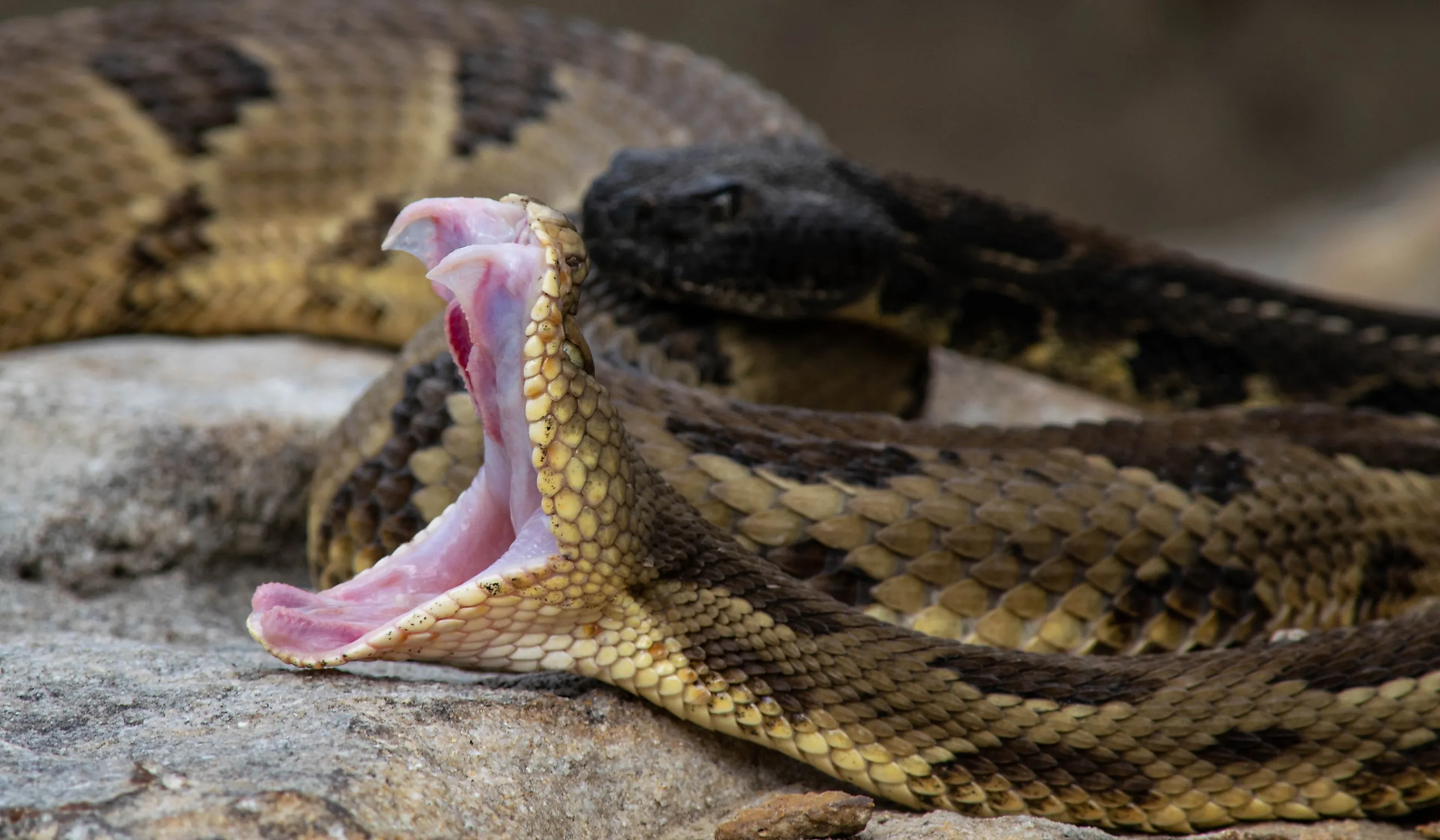
Although at one point, rattlesnakes were considered nearly extinct in the state of Pennsylvania, recent conservation efforts have helped the species make a bit of a comeback. More specifically, this refers to timber rattlesnakes and, to a lesser extent, massasauga rattlesnakes. For example, Hawk Mountain Sanctuary has reported sightings of timber rattlesnakes soaking up the sun along trails and lookouts. Today, we will be shining light on 6 of these snake hotspots in P.A., and better explaining rattlesnake behaviour, along with other useful information about each region.
The Appalachian Ridges

Within Pennsylvania, large portions of the Appalachian ridges and their surrounding rocky slopes in the central and southeastern corners host what is perhaps the most populous region in terms of rattlesnakes, particularly the timber rattlesnake. These hardy snakes favor sun-facing ridges with open rock outcrops for basking, adjacent to mixed hardwood forests that also provide plenty of cover and hunting grounds.

Timber rattlesnakes here are most active from mid-spring through to October, often moving between hibernacula and forested meadows. Conservation efforts in areas like Ricketts Glen State Park and the Appalachian Trail corridor focus on protecting these hibernation sites, as timber rattlesnakes are listed as a species of special concern in Pennsylvania due to habitat loss and past persecution.
Human encounters, though rare, are most likely in late summer when snakes are seeking mates or warming themselves on sun-exposed rocks. Key prey includes small mammals such as chipmunks, mice, and squirrels, which are abundant in these spaces.
Lancaster and Berks Counties

Neighboring Lancaster and Berks counties are notable rattlesnake hotspots, historically home to dense timber rattlesnake populations. They like to concentrate in the counties' forest-covered hillsides, rocky ridges, and old stone walls (originally part of various farms and old-timey dwellings), which provide both cover and sunning spots.

Populations are particularly stable in areas with contiguous forest and minimal development, where den sites in rolling hillsides or ledge crevices remain undisturbed. Timbers here prey on small mammals and occasionally amphibians, regulating rodent populations and benefiting nearby farmsteads, of which there are many in this highly rural region of the state.
Although dangerous human encounters are uncommon, hikers and hunters may stumble upon basking snakes along local trails. Moreover, conservation groups in southeastern Pennsylvania consistently monitor these populations, often emphasizing the importance of leaving den areas untouched.
Hawk Mountain Sanctuary

The Hawk Mountain Sanctuary is not a surprising home for timber rattlesnakes. As we have previously discussed, they use the area's steep, sun-exposed talus slopes and rock-covered outcrops along the ridge for basking and denning, often emerging later on in the spring after a long winter. These spaces usually intersect with mixed hardwood/pine forests, giving these snakes ample cover while they hunt small mammals like chipmunks and mice.

Visitors occasionally encounter rattlesnakes along narrow cliffside trails, particularly in late summer when they move to mating areas or new dens. Unlike other regions, the sanctuary’s protected status has also allowed its snake populations to remain stable despite heavy seasonal visitation from tourists and outdoor adventurers.
Delaware Water Gap National Recreation Area

The Delaware Water Gap National Recreation Area is probably the most famous outdoor retreat in Pennsylvania, and hosts a large number of timber rattlesnakes alongside its human visitors. Most are often found on south-facing ledges where sunlight penetrates the forest canopy. Resident rattlesnakes also rely heavily on the park's abundant small mammals for sustenance in its floodplain forests.

Unlike more developed areas nearby, this stretch of the Appalachians remains largely protected, allowing den sites to persist sometimes for decades! On the other hand, seasonal flooding occasionally reshapes their habitat, forcing snakes to relocate temporarily, which in turn increases the chance of human encounters in and around water-based recreation areas.
Ricketts Glen State Park

The Ricketts Glen State Park area, particularly around the Falls Trail and surrounding its gorges, houses a healthy number of timber rattlesnakes in its rock-strewn yet lush, forested terrain. Its blend of steep cliffs, old-growth forest, and minimal disturbance has allowed several localized populations to persist, making it one of the few accessible areas where Pennsylvania timber rattlesnakes can still be observed in a truly natural setting.

Dens here are typically tucked into crevices in sandstone cliffs, with snakes emerging as usual in spring and staying active into late summer for mating and feeding. Rattlesnakes here tend to slither along streams, too, often preying on mice, voles, and small amphibians on the damp forest floor.
Swatara State Park

The Swatara State Park's rocky ridges near the Appalachian Trail are home to timber rattlesnakes, as well as other snake species such as the Black Rat snake and the Eastern Rat Snake, each of which utilizes the region's craggy outcrops for a variety of purposes. Swatara State Park itself is a beautiful space that is over 3,000 acres, featuring woodland trails, fishing opportunities, and even horseback riding.

Trails cutting through these zones sometimes bring hikers near basking snakes, though encounters remain uncommon due to the rattlesnakes’ typically cryptic behavior. When you consider the area's overall unique geography and the fact that urban development is almost non-existent, Swatara perfectly illustrates how conservation in Pennsylvania continues to sustain stable rattlesnake colonies, as well as a variety of other flora and fauna.
Pennsylvania’s few rattlesnake strongholds are concentrated mainly on high-elevation points where long-established den sites persist, and wild prey is abundant. Most encounters occur during seasonal movements in spring and late summer, coinciding with when most hikers and campers tend to use these spaces, too.
These areas are far from being overrun by rattlers, but they do support relatively stable, localized populations that are essential for the overall health of the environment. Staying on marked trails and watching footing is usually sufficient to avoid conflict in these habitats, as well as keeping them in a pristine state.