9 Most Welcoming Small Towns in Sweden
Nine Swedish small towns below, spread the length of the country. Visby holds the best-preserved medieval Hanseatic town wall in Northern Europe. Sigtuna was founded around 970 CE and is still standing. Kiruna is currently in the middle of being physically relocated three kilometers east because the iron ore mine underneath it is undermining the city. Vadstena was the founding site of the Bridgettine Order in 1346, from which the order spread across Europe. Each of the nine runs on a specific anchor strong enough to support a multi-day visit on its own.
Visby

Visby sits on the Swedish island of Gotland in the Baltic Sea, the largest island in Sweden. The city's 3.4-kilometer ring wall, built between the 13th and 14th centuries during Visby's peak as a Hanseatic League trading port, still stands almost intact and is the most complete medieval town wall in Northern Europe. UNESCO designated the entire town a World Heritage Site in 1995.
Inside the walls, around 200 medieval merchant houses still stand, along with the ruins of more than ten medieval churches (the Hanseatic city had wealth enough to support that many, and the abandoned ruins of St. Nicolai, St. Clemens, and Drotten remain visible today). The Gotland Museum on Strandgatan holds the largest collection of Viking-era picture stones anywhere. Medieval Week each August fills the city with costumed reenactors and period markets. Tofta Beach 20 kilometers south and the Högklint sea cliffs run the outdoor side.
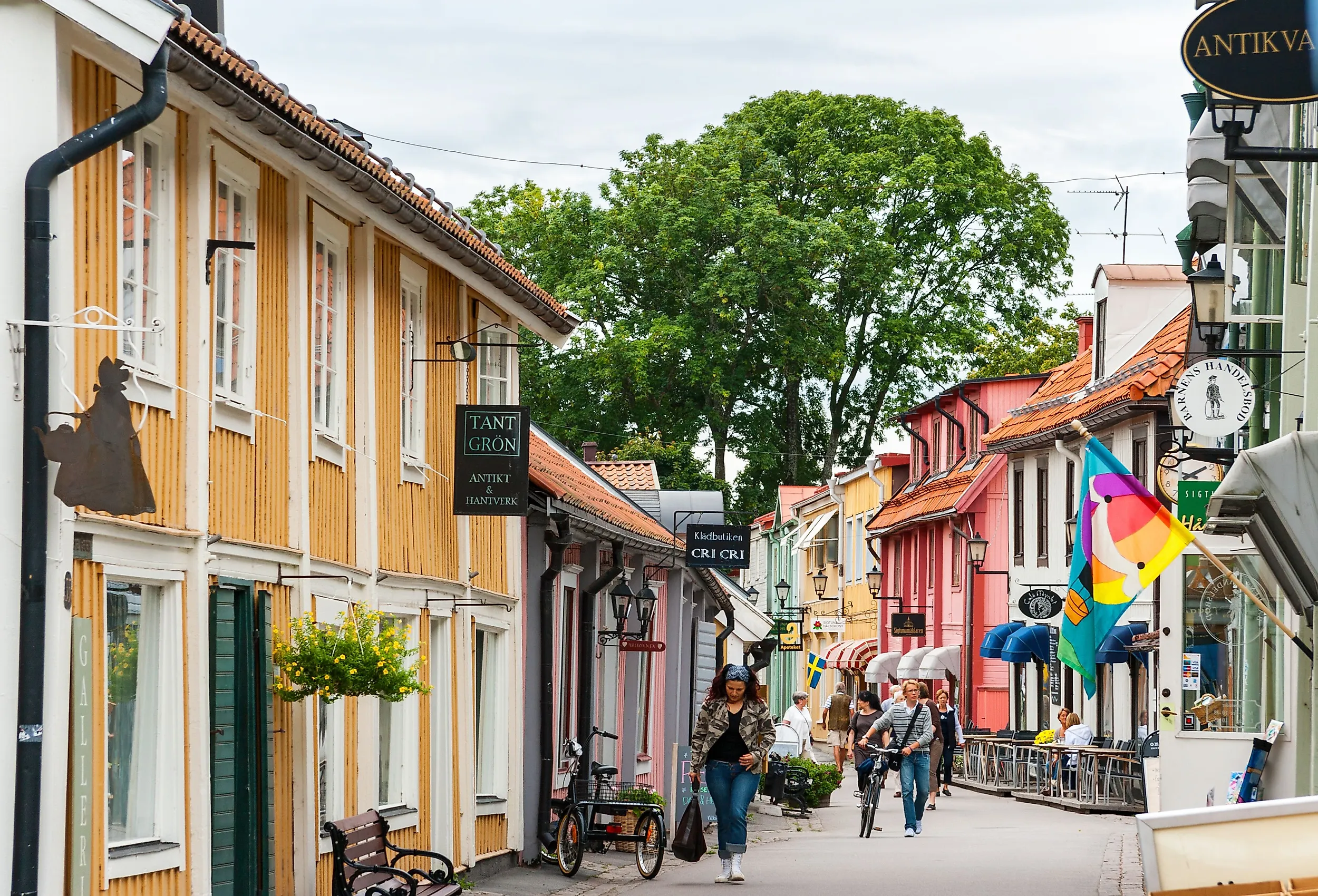
Sigtuna

Sigtuna was founded around 970 CE on the shore of Lake Mälaren and is generally considered Sweden's oldest still-functioning town. The first runic inscriptions referencing the town by name date to the late 10th century. Population today sits around 9,000. The town hall on Stora Torget, built in 1744, is the smallest town hall in Sweden and the oldest one still in regular ceremonial use.
Mariakyrkan, the 13th-century brick Gothic church on the main street, is the oldest preserved building in the town. The Sigtuna Museum covers Viking-era archaeology and the medieval town layout. Three significant nearby palaces date to the 17th and early 18th centuries: Skokloster Castle (1654-1676, baroque), Steninge Palace (1694-1705, Tessin design), and Rosersberg Palace (1634, royal palace). All three were built well after the medieval town was already centuries old. Stockholm sits about an hour southeast by car, with Arlanda Airport just 15 minutes south.
Rättvik

Lake Siljan, on whose eastern shore Rättvik sits, was formed in large part by a 377-million-year-old meteorite impact, one of the largest confirmed impact craters in Europe at about 52 kilometers across. The lake holds about 290 square kilometers of water inside the ring structure today. Rättvik itself (population about 4,700) functions as the main town in the Dalarna folk-culture region.
Dalhalla, a former limestone quarry 7 kilometers north of town, was converted to an open-air amphitheater in 1995 and now seats about 4,000 for opera, jazz, and rock summer performances. Classic Car Week each July, run since 1989, is Sweden's largest classic car gathering. Långbryggan, the 628-meter wooden pier into Lake Siljan first built in 1895, is the longest wooden pier in Sweden. The Enåleden walking trail (4.5 km / 2.8 mi) runs the lakeshore.
Kiruna

Kiruna sits 145 kilometers north of the Arctic Circle in Swedish Lapland and was founded in 1900 around the LKAB iron ore mine, still the largest underground iron ore operation in the world. The mine has gone deep enough over the past century that ground subsidence is now expanding under the original city center. The Swedish government and LKAB began moving Kiruna three kilometers east in 2017. The new city hall (Kristallen, designed by Henning Larsen Architects) opened in 2018. The 1912 wooden Kiruna Church, voted Sweden's most beautiful pre-1950 building in a 2001 poll, was moved on giant transporters in 2025. The relocation is scheduled to continue into the 2030s.
Kebnekaise, Sweden's highest mountain, sits about 70 kilometers west. The north peak now measures about 2,097 meters (6,879 feet), taller than the south peak since around 2018 because the south peak's glacier cap has melted. Kungsleden, the long-distance hiking trail between Abisko and Hemavan, runs about 440 kilometers (273 miles) through the surrounding fells. The ICEHOTEL at Jukkasjärvi 17 kilometers east has rebuilt itself each winter since 1989. Esrange Space Center 40 kilometers east runs European rocket and balloon launches. Kiruna sits in Sápmi, the homeland of the Indigenous Sámi people.
Ystad

Henning Mankell set the Wallander detective novels in Ystad and Skåne's surrounding countryside, and BBC and Swedish-language television adaptations have been filmed in the town since the late 1990s. The result is one of the strongest crime-fiction tourism economies in Europe. Ystad Studios on the former military regiment grounds is one of the largest film production facilities in the Nordic region. The town itself (population about 19,000) sits on Sweden's south coast in Skåne.
The medieval pastel-colored merchant houses along Stora Östergatan and the adjoining lanes date to the Hanseatic period. Sankt Petri Church (built around 1240) and Greyfriars Abbey (Gråbrödraklostret, founded in 1267) anchor the historic core. Per Helsas Gård preserves a complete 18th-century half-timbered courtyard complex. The Ystad Saltsjöbad spa hotel on the beach east of town has run since 1897.
Kalmar

The Kalmar Union, formed in Kalmar in 1397, joined Denmark, Norway, and Sweden under a single monarch and held the three crowns together until Sweden's withdrawal in 1523. The union meetings happened at Kalmar Castle, then a 12th-century defensive tower that Gustav Vasa and his sons converted to a Renaissance palace in the 1500s. The castle still stands as one of the best-preserved Renaissance castles in Northern Europe.
The city sits on the southeast Baltic coast at the Kalmar Strait, opposite the long thin island of Öland. The Öland Bridge (6,072 meters, opened 1972) connects the two. Kalmar County Museum holds the recovered artifacts from the Royal Ship Kronan, a Swedish warship that sank in the Battle of Öland in 1676 with about 800 crew on board. The medieval old town (Gamla stan) immediately around the castle preserves wooden houses from the 17th and 18th centuries. Kalmar runs about 41,000 residents and serves as the regional educational center with Linnaeus University.
Vadstena

St. Bridget of Sweden founded the Bridgettine Order in Vadstena in 1346, and the resulting Vadstena Abbey was the order's mother house and the spiritual center from which Bridgettine communities spread across medieval Europe. The Abbey Church (Vadstena klosterkyrka, called Blåkyrkan or the Blue Church for its limestone exterior) was consecrated in 1430 and holds St. Bridget's relics in a reliquary above the main altar. The medieval pilgrimage drew visitors from across Northern Europe through the 15th and 16th centuries until the Reformation closed the monastery in 1595.
Vadstena Castle, a separate site at the south end of town, was built by Gustav Vasa starting in 1545 as a defensive fortress against Danish forces and was later converted to Renaissance style. A water-filled moat still surrounds the walls. The town sits on the east shore of Lake Vättern (Sweden's second-largest lake at about 1,893 square kilometers). The Wadstena-Fogelsta heritage narrow-gauge railway, originally built in 1874, runs summer excursion trains from the old station.
Trosa

Trosa sits on the Baltic coast about 70 kilometers southwest of Stockholm at the mouth of the Trosaån river. Red-painted wooden warehouses line the river's lower reach where 18th- and 19th-century trading sloops once loaded. The town (population about 5,500) has functioned as a summer-house destination for Stockholm residents since the railway reached it in 1895, and many of the historic central streets keep their original cobblestone surfaces.
Stendörren Nature Reserve 15 kilometers east covers a stretch of the Södermanland archipelago with suspension footbridges connecting forested islands. The Trosa Heritage Trail through town passes the 1719 wooden bridge, the 1709 town hall, and the old schoolhouse. KonstTriangeln (Art Triangle) over Easter and the Midsummer celebrations in June are the major annual events. Galleri Nordostpassagen and several smaller galleries run year-round.
Simrishamn

Simrishamn sits on the southeast coast of Skåne and serves as the main town for the Österlen region, the part of southern Sweden that runs apple orchards, summer houses, and one of Sweden's strongest concentrations of working artists and ceramicists. The fishing harbor still operates with a small commercial fleet. The town runs about 6,500 residents year-round and several times that during the July-August summer-house season.
Sankt Nikolai Church in the town center holds bronze doors by Carl Milles, the early 20th-century Swedish sculptor whose work is also in Stockholm's Millesgården and Detroit and St. Louis fountain projects. Stenshuvud National Park 10 kilometers north covers an unusual stretch of Baltic coastal forest with Bronze Age burial cairns on the ridge. Kivik immediately north is the center of the Skåne apple-growing region, with Sweden's Apple Day each September drawing thousands. Ystad is about 45 minutes west by car.
What These Nine Have in Common
Each runs on a specific historical or natural anchor. Visby has the Hanseatic ring wall and the Medieval Week. Sigtuna has the 970 CE founding date and the 1744 town hall. Rättvik has the Lake Siljan impact crater and Dalhalla amphitheater. Kiruna has the LKAB mine and the active city relocation. Ystad has the Wallander tourism economy and the Hanseatic merchant streetscape. Kalmar has the 1397 Kalmar Union and the Renaissance castle. Vadstena has the Bridgettine Order founding site. Trosa has the wooden warehouses on the Trosaån and the Stendörren archipelago. Simrishamn has the Österlen artist community and the working fishing harbor. Geographic spread from the Arctic Circle to the south Baltic coast covers most of the country.