11 Best Natural Wonders To Visit In Tasmania This Year
Tasmania may be small, but its natural scenery is anything but ordinary. The island packs an incredible amount of wilderness into one place, where sandy beaches give way to mountain rainforests. Some sights, like Wineglass Bay and Cradle Mountain, are instantly recognisable, while others take you a little farther off the beaten path. Along the way, glacial lakes and wild rivers form landscapes that seem almost too beautiful to be real. If you want to experience the side of Tasmania that makes the island so special, these 11 natural wonders are a great place to start.
Wineglass Bay & Freycinet National Park

Wineglass Bay is probably one of Tasmania's most recognisable natural wonders, and it's easy to see why once visitors reach the lookout. The beach curves around a bright blue bay, backed by the pink granite peaks of the Hazards. From above, the whole scene looks almost too perfectly arranged.
Reaching that famous view requires a walk, but it's a manageable one. The Wineglass Bay Lookout is about 1.3 kilometres each way from the trailhead, with a climb through coastal woodland before the bay comes into view. Visitors who continue down to the beach can walk along the sand and see the landscape from another perspective.
The bay is just one part of Freycinet National Park, which is filled with coastal trails, beaches, wildlife, and other scenic spots. That makes it tempting to spend more than a few hours exploring the area rather than simply stopping for the famous photograph.
December through February is ideal for a visit because of good beach weather and longer days. March and April are also good options for cooler temperatures.
What makes Wineglass Bay one of Tasmania's best natural wonders is how everything comes together. The beach, pink granite mountains, and clear blue water create a landscape that looks just as impressive in person as it does in photographs.
Cradle Mountain & Dove Lake

Cradle Mountain is one of those Tasmanian sights that seems to change every time you see it. Jagged dolerite peaks rise behind Dove Lake, but clouds can roll across the mountain quickly, giving visitors a clear view one minute and hiding the peaks the next.
One of the most accessible ways to experience the area is the Dove Lake Circuit, a loop that follows the shoreline and passes through rainforest beneath the mountain. Visitors looking for more of a challenge can opt for Marion's Lookout or tackle the Cradle Mountain summit.
The park brings together ancient rainforest, alpine moorland, glacial lakes, and abundant wildlife. Wombats are common, and echidnas, quolls, and Tasmanian devils also live in the area.
Parks and Wildlife emphasizes that Cradle Mountain is a four-season destination, so planning around the weather isn't necessary. Autumn brings colourful fagus, while winter can turn the park into a snowy alpine landscape.
Cradle Mountain earns its place because visitors get far more than one famous viewpoint. The mountain, lake, wildlife, and surrounding wilderness create one of Tasmania's most unforgettable landscapes.
Bay of Fires

The Bay of Fires is known for a striking combination of bright white beaches, clear blue water, and granite boulders covered in vivid orange lichen. The colours are so dramatic that the coastline can almost look edited in photographs. They're real, though, and even more impressive in person.
What makes the Bay of Fires one of Tasmania's best natural wonders is its colour and character. The contrast between orange rocks, white sand, and blue water gives this coastline a personality all its own.
The area stretches along Tasmania's northeast coast from Binalong Bay toward Eddystone Point, with beaches and rocky coves to explore along the way. Visitors can swim, kayak, snorkel, fish, or simply walk along the sand. The Gardens and Eddystone Point are also worth adding for those who want to see more of the coastline.
Summer is an especially good time to visit if beach days and swimming are part of the plan. December through February brings warmer weather and long daylight hours, while March and April can be more comfortable for walking and exploring.
Gordon River & Franklin-Gordon Wilderness

The Gordon River takes visitors into one of Tasmania's wildest corners, where dense rainforest meets dark, tannin-stained water. Many visitors start in Strahan, where cruises cross Macquarie Harbour before heading into the Gordon River. As the mountains and forest close in around the water, the landscape begins to feel pleasantly remote.
The Gordon River stands out because the experience goes beyond a scenic viewpoint. Visitors can travel deep into an ancient wilderness and walk through rainforest without taking on a demanding multi-day hike. The rainforest is a huge part of the experience. At Heritage Landing, visitors can step off the boat and follow a short boardwalk through ancient forest, including stands of huon pine. Some cruises also visit Sarah Island, a former convict settlement that adds an interesting piece of history to the journey.
Beyond the river, Franklin-Gordon Wild Rivers National Park protects rugged mountains, deep gorges, rainforest, and wild rivers. Together, these landscapes form part of Tasmania's World Heritage wilderness.
December through March is a good time to visit for longer days and comfortable conditions. Autumn suits visitors who prefer cooler weather.
Tasman Peninsula & Tasman Arch

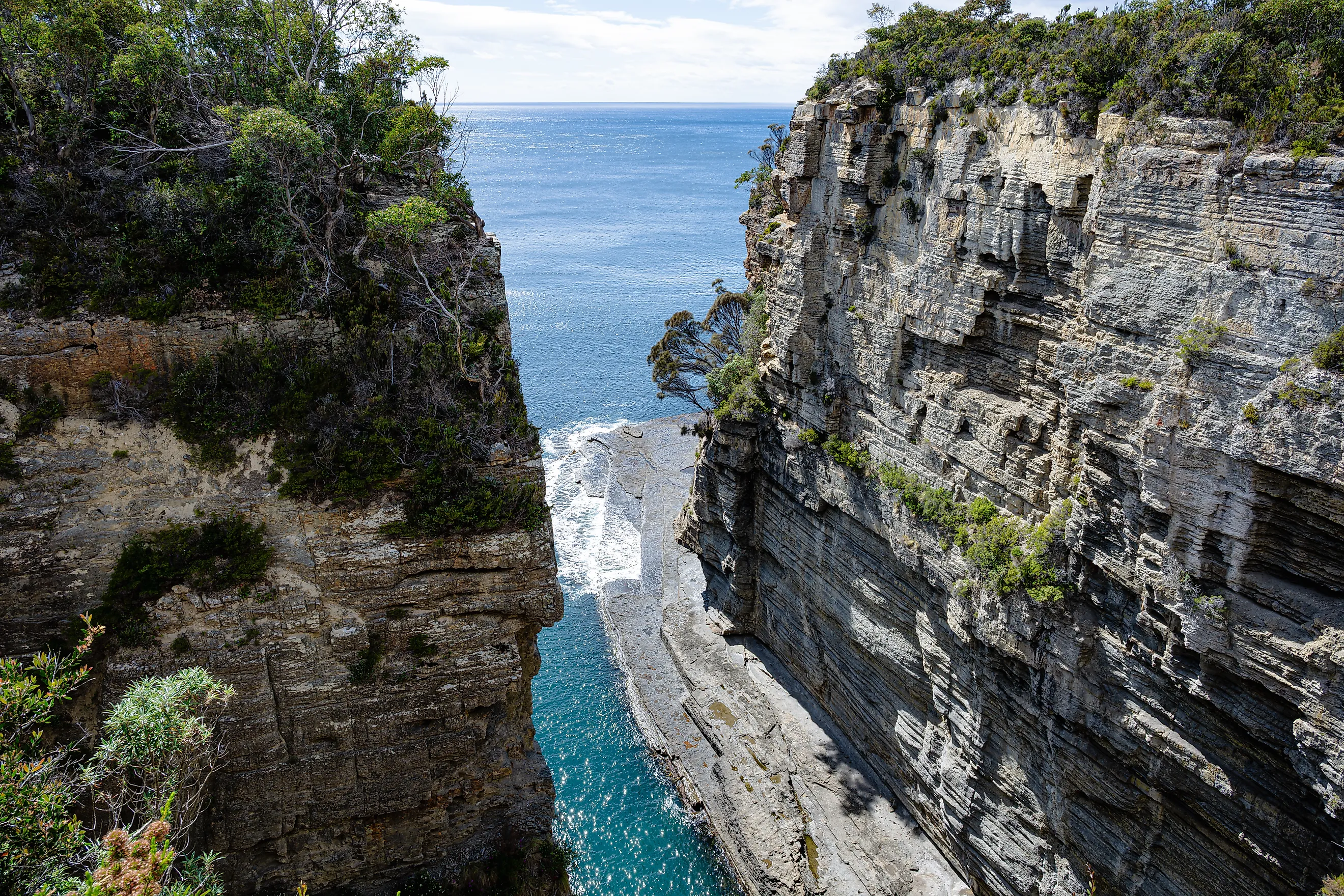
The Tasman Peninsula packs an impressive amount of scenery into a relatively small area, but the coastline around Tasman Arch is hard to miss. Over thousands of years, waves have carved through the rock, creating natural arches, towering cliffs, and other unusual formations. With Port Arthur Historic Site nearby, it's easy to pair the coastline with one of Tasmania's important historic destinations.
What makes this one of Tasmania's best natural wonders is the geology. Thousands of years of waves and wave action have shaped the coastline into formations that are both dramatic and genuinely fun to explore.
Visitors can easily combine Tasman Arch with nearby coastal sights such as Devil's Kitchen and Waterfall Bay. Shorter walks connect many of the viewpoints, making this a good option for visitors who want dramatic scenery without spending an entire day on a difficult trail.
Spring and autumn are particularly comfortable for walking. Visitors planning a 2026 trip should check current access information. Tasman Arch and Devil's Kitchen are currently closed through September 29, 2026.
Russell Falls & Mount Field
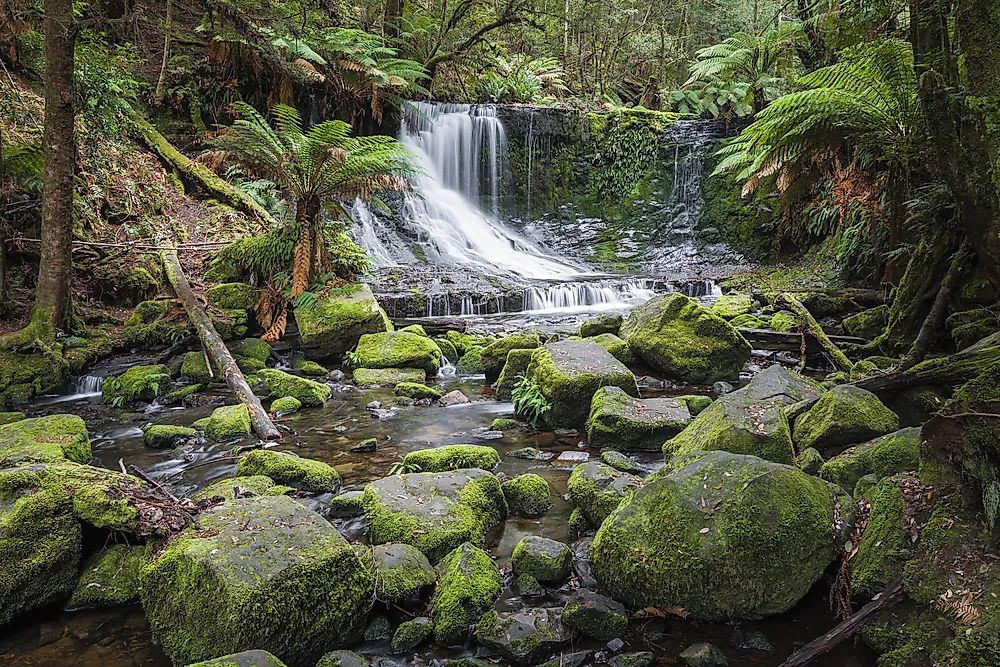
If you want to see one of Tasmania's best known waterfalls without taking on a serious hike, Russell Falls is an easy pick. A short walk takes visitors through lush forest before reaching the falls. It's a beautiful payoff for an easy walk.
Russell Falls is part of Mount Field National Park, and there's plenty more to see once you're there. Lower down, the park is filled with towering swamp gums, ferns, and cool temperate rainforest. Follow the roads and trails higher into the park, and the scenery gradually shifts into alpine country. Keep an eye out for wildlife along the trails, and if you're around after dark, you may even spot glow worms near the falls.
Spring is a particularly nice time to visit, and summer has longer days good for exploring the park's other trails. Winter can be chilly, but snow sometimes adds another layer to the higher parts of the park.
Russell Falls earns its spot because visitors get a lot without a huge commitment. A beautiful waterfall, old-growth forest, wildlife, and access to longer walks all come together in one easy-to-explore national park.
Mole Creek Karst National Park

Mole Creek Karst National Park gives Tasmania's natural wonders list something completely different, an underground world. Instead of another beach or mountain, visitors can head below the surface into limestone and dolomite caves filled with unusual rock formations, underground streams, and glow worms. The park is one of the best natural wonders in Tasmania because it reveals a side of the state visitors can't see from the road.
The two main tourist caves are Marakoopa Cave and King Solomons Cave, each offering a different experience. Marakoopa is impressive with its large chambers, flowstone formations, an underground stream, and what Parks and Wildlife describes as the best glow worm display of any tourist cave in Australia.
King Solomons Cave is smaller but packed with sparkling calcite formations. Both caves are explored on guided tours, so visitors get to learn about the geology while making their way through. The caves are also useful when the weather isn't cooperating. Tours take place underground, so the experience doesn't depend on sunshine.
Summer and autumn are good times to visit Mole Creek, especially for visitors who want to combine the caves with walks through the surrounding bushland.
Lake St Clair

Lake St Clair sits at the southern end of the famous Overland Track and happens to be Australia's deepest freshwater lake. The lake was carved by glaciers over millions of years, leaving behind a beautiful mix of mountains, forest, and clear water.
Visitors don't have to hike the entire Overland Track to experience the lake. Several shorter walks begin around the lake, and a passenger ferry takes visitors farther into the wilderness for a different view of the surrounding mountains. As for wildlife, Bennett's wallabies and pademelons are easily spotted, and wombats, echidnas, quolls, and platypus also live in the area.
For easier hiking, late spring and summer are the best times to visit. Autumn is a nice alternative for cooler weather, while winter is better suited to visitors prepared for snow and changing conditions.
Lake St Clair stands out because it combines a remarkable natural fact with an incredible setting. Being Australia's deepest lake would make it interesting on its own, but the surrounding wilderness, wildlife, and walking trails make it one of Tasmania's most memorable natural stops.
Frenchmans Cap

Frenchmans Cap is one of western Tasmania's most recognisable mountains. Its pale quartzite summit rises to 1,446 metres above rainforest, mountain lakes, and rugged wilderness. Even from the Lyell Highway, the mountain is impressive, but getting close to it is a much bigger adventure.
The return hike usually takes three to four days and passes through forests, rainforest, open country, and high-mountain vegetation. Along the way, visitors may spot wallabies, wombats, possums, echidnas, platypus, and plenty of native birds.
From the summit, there are expansive views across the surrounding Tasmanian Wilderness World Heritage Area and toward the Franklin River. Reaching those views takes effort, though, with steep sections, rocks, roots, boardwalks, and ladders along the route.
Summer and early autumn can provide longer daylight hours, but conditions can change quickly at any time of year. Visitors need to be prepared for cold, wet, and windy conditions.
Frenchmans Cap represents Tasmania's serious wilderness side. It isn't a quick viewpoint stop, it's a multi-day journey into a landscape that feels genuinely remote.
Hastings Caves & Thermal Springs

Hastings Caves offers a completely different natural experience from Tasmania's mountains and beaches. Deep underground, Newdegate Cave is filled with unique dolomite formations. Above ground is all about vegetation and rainforest.
Newdegate Cave is the only tourist cave in Tasmania formed in dolomite rather than limestone. Inside are formations that began forming more than 40 million years ago. On a guided tour, visitors can take a closer look at its geology and formations.
The Thermal Springs make this stop even more unusual. Natural thermal spring water keeps the pool at around 28°C, giving visitors a chance to relax in warm water surrounded by Tasmanian bushland.
Many people choose to visit in the summer, as the thermal pool is a welcome addition to a day exploring the reserve, but spring and autumn can also be good choices. Between exploring the underground cave system and finishing the day in naturally heated water, Hastings Cave is one of Tasmania's most unusual stops.
Liffey Falls

Liffey Falls is a great reminder that some of Tasmania's best natural wonders don't require a huge hike or a multi-day adventure. Tucked into the cool rainforest of northern Tasmania, the falls flow around tall trees and a thick rainforest. Liffey Falls' combination of cool temperate rainforest and beautiful waterfalls makes it one of the best natural wonders in Tasmania for 2026.
Several cascades can be found along the Liffey River, with walking tracks leading through the forest to different viewpoints. The lush rainforest and the sound of rushing water turn the short walks into a chance to slow down and enjoy one of Tasmania's classic landscapes. Liffey Falls is a popular destination for both Tasmanians and visitors, and it's easy to understand the appeal. The falls are also an easy addition to a northern Tasmania road trip.
For comfortable walking conditions, visiting between late spring and summer is a good option. Wetter months can make the falls more impressive. Autumn is also pleasant with its cooler weather and quieter feel.
Tasmania's Natural Wonders Leave a Lasting Impression
Tasmania's natural wonders show just how much beauty can exist on one island. Whether the turquoise waters and pink granite of Wineglass Bay or the rugged peaks of Cradle Mountain, every landscape has something different to offer. Some of these places can be reached with a short walk, while others require a few days of hiking through the wilderness. Together, they reveal why Tasmania is such a special destination for nature lovers. For visitors looking to experience the island at its most wild, dramatic, and unforgettable, these natural wonders are the places worth seeking out.