Largest City Parks In The United States
Here is a fact to ruin a trivia night: the largest city park in the United States is bigger than the state of Rhode Island, and it is not in New York, or Chicago, or any city you would guess. It sits inside Anchorage, Alaska, a "city" that sprawls across more land than Delaware, which is how a half-million-acre mountain wilderness full of bears and glaciers ends up counting as a municipal park. It tops this list by a margin that makes the other nine look like flower beds, but every entry here pulls the same trick to a smaller degree: a city boundary drawn wide enough to swallow real wilderness. These are the ten biggest parks in the country that fit entirely inside a single city's limits, ranked by the acreage that falls within the boundary, running from the continent-sized champion down to a Louisiana swamp and a Florida marsh.
1. Chugach State Park, Anchorage - Roughly 464,000 Acres

The champion wins by a margin that turns the contest into a rounding error. Chugach State Park covers roughly 495,000 acres total, of which something like 464,000 fall inside the Municipality of Anchorage, and that single figure is more than fifteen times the size of second-place Scottsdale. The trick is that Anchorage is not a city in the way most people picture one. Its municipal boundary swallows nearly 2,000 square miles of land, larger than Rhode Island, so an entire mountain range full of glaciers, Dall sheep, moose, and the occasional bear technically counts as a city park. Established in 1970, Chugach offers 280 miles of trails reachable from 16 trailheads, and the western edge of all that wilderness sits about seven miles from downtown. It is the only park on this list where the recommended safety gear includes bear spray, and the only one where "I went to the park" can legitimately mean a multi-day expedition across a glacier. Anchorage did not so much build a great park as draw its city limits around one.
2. McDowell Sonoran Preserve, Scottsdale - 30,394 Acres
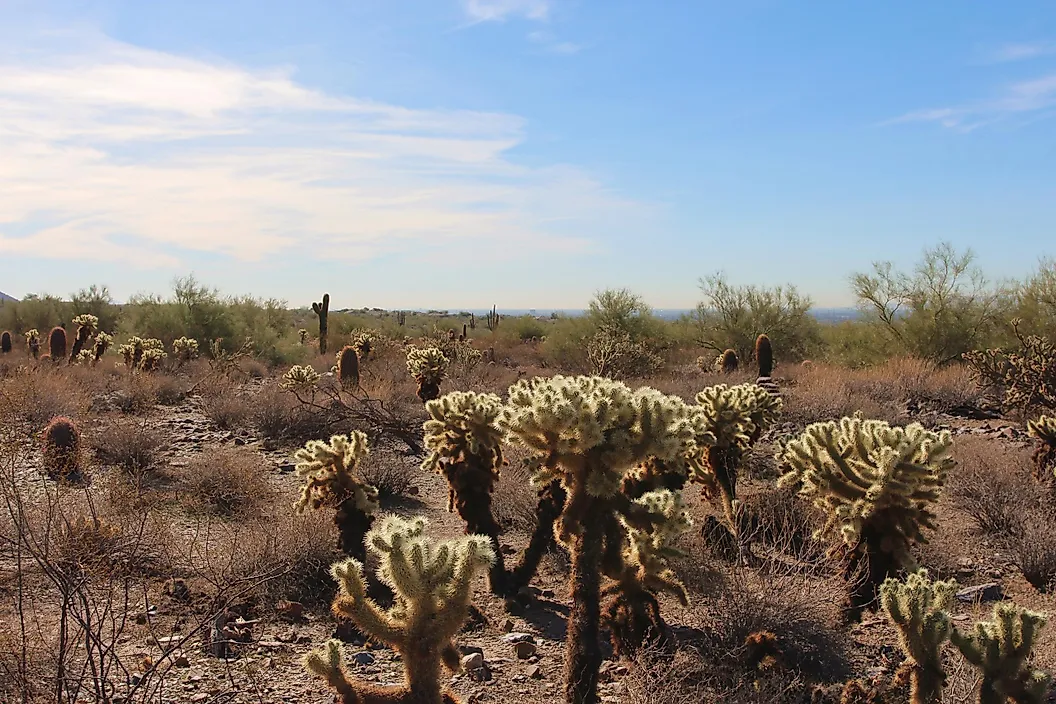
For most of the country, 30,000 acres of permanently protected desert would be the largest city park imaginable. In Scottsdale, it is merely the runner-up. The McDowell Sonoran Preserve is a hiker's playground of boulder fields, saguaro forest, and more than 200 miles of trail threading out from a string of trailheads, and the city has spent decades and serious money buying up the land to keep it wild. It would top this list comfortably in any state but one. Unfortunately for Scottsdale's bragging rights, that one state is Alaska.
3. Franklin Mountains State Park, El Paso - 24,246 Acres

Franklin Mountains State Park holds the title of the largest state park entirely within a city's limits in the United States, more than 24,000 acres of rugged desert mountains sitting squarely inside El Paso. The range rises right out of the urban grid, topping out at North Franklin Peak at 7,192 feet, and the park keeps over 100 miles of trails for hikers, climbers, and mountain bikers. It is the rare place where a resident can leave a downtown office and be scrambling up a genuine mountain within the same city limits before the workday's afterglow fades.
4. Bayou Sauvage, New Orleans - 22,758 Acres

Bayou Sauvage is the largest urban national wildlife refuge in the country, and nearly all of its 22,000-plus acres of marsh and lagoon sit inside the New Orleans city limits, behind the levees in the eastern part of town. Established in 1990, it is alligator country, pelican country, and a critical stopover on the Mississippi Flyway for migrating birds. The remarkable part is the address: this is genuine Gulf Coast wetland wilderness reachable without ever leaving the city, which is either a miracle of conservation or a reminder of how much swamp New Orleans was built next to. Both, really.
5. South Mountain Park, Phoenix - 16,282 Acres

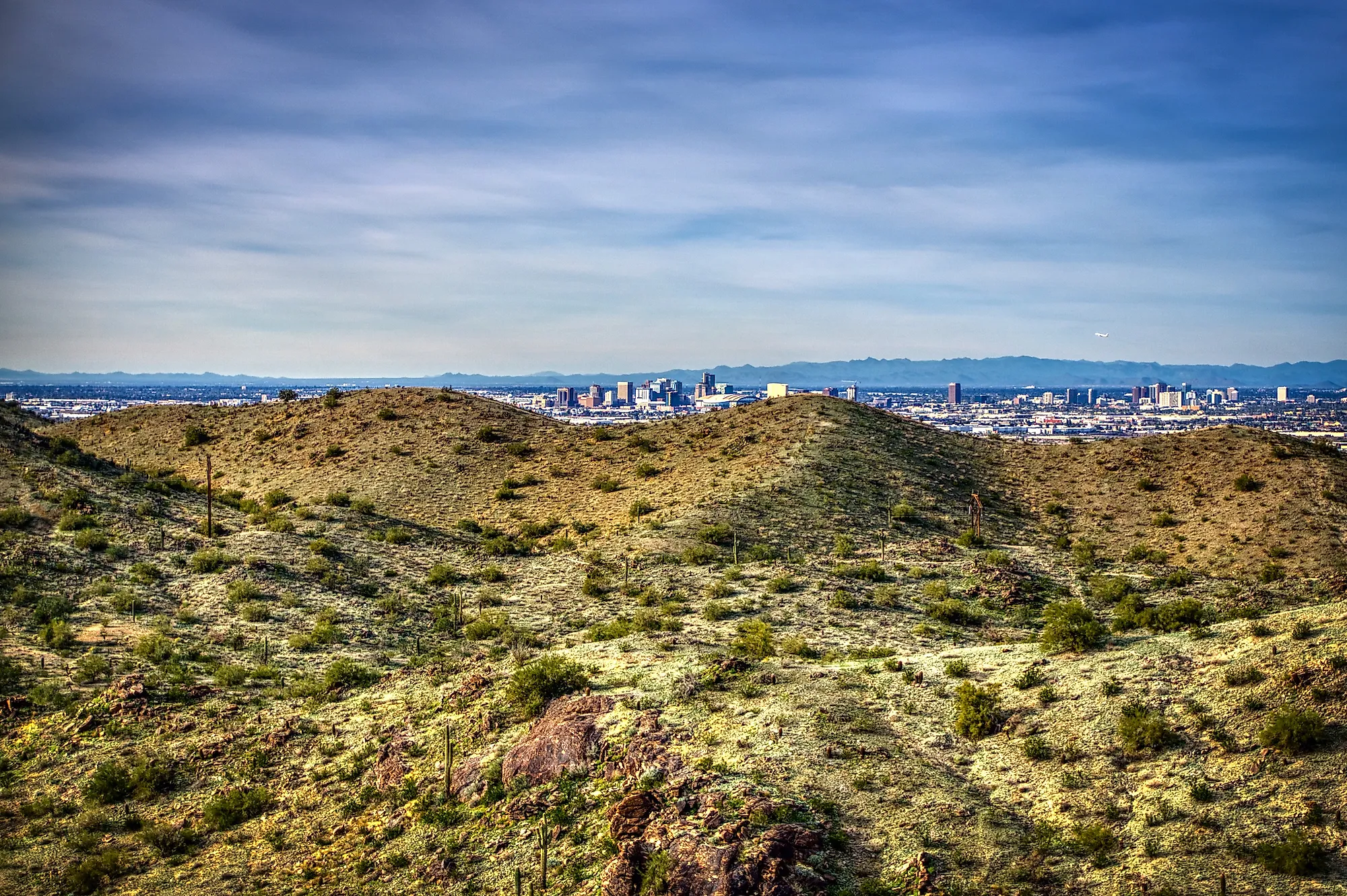
Phoenix arrives with one of the largest municipal parks in the entire country, and it is not the last time the city turns up here. South Mountain Park spreads more than 16,000 acres across the desert just south of downtown, with 58 miles of trails open to hikers, mountain bikers, and horseback riders. The high point, Dobbins Lookout, delivers the full city panorama, and it is at its best after dark when the grid of Phoenix lights up below. Guided horseback rides handle the desert scenery for anyone who would rather not provide their own legs.
6. Government Canyon, San Antonio - 12,244 Acres
Government Canyon State Natural Area guards more than 12,000 acres of Texas Hill Country on San Antonio's northwest edge, and it sits on top of the Edwards Aquifer recharge zone, which means protecting it is also protecting the city's drinking water. The trails run through limestone canyons and oak savanna, but the headline attraction is older than the city by roughly 110 million years: a set of dinosaur tracks pressed into ancient rock, reachable by a multi-mile hike for anyone willing to earn their prehistory.
7. Phoenix Sonoran Preserve, Phoenix - 9,612 Acres

Here is Phoenix again, because the city treats desert preservation as a competitive sport. The Phoenix Sonoran Preserve covers the desert on the city's northern edge, a protected stretch of saguaro, ridgeline, and trail that the city has been steadily expanding for decades. The hiking ranges from gentle to genuinely punishing, the latter usually involving a steep climb and a view that makes the suffering feel intentional. Bring more water than you think you need; the desert has opinions about overconfidence.
8. Cullen Park, Houston - 9,270 Acres
Cullen Park is enormous, and it is enormous for a very Houston reason: most of it sits inside the Addicks Reservoir, a flood-control basin that stays dry except when it very much does not. On a normal day the western Houston park offers trails, ballfields, picnic shelters with barbecue pits, and a velodrome, of all things, for competitive cyclists. When a hurricane parks over the Gulf Coast, the same acreage does its other job and fills with stormwater. It is a park that moonlights as civic infrastructure, which is a more useful resume than most parks can claim.
9. Topanga State Park, Los Angeles - 8,960 Acres

Los Angeles likes to claim it has wilderness inside the city, and for once the claim holds up. Topanga State Park spreads nearly 9,000 acres across the Santa Monica Mountains, entirely within LA city limits, which the park is happy to advertise as the largest wildland within the boundaries of a major American city. The trails climb through chaparral and oak to ridgelines with the Pacific on one side and the San Fernando Valley on the other. It is the kind of place where a hiker can lose cell signal twenty minutes from a freeway, which in Los Angeles qualifies as a spiritual experience.
10. Timucuan Preserve, Jacksonville - 7,870 Acres

Rounding out the list, Jacksonville is the largest city by land area in the lower 48, so it makes sense that it hides a federal preserve inside its sprawl. The Timucuan Ecological and Historic Preserve protects nearly 8,000 acres of salt marsh, coastal wetland, and tidal creek where the St. Johns and Nassau rivers meet the Atlantic. Run by the National Park Service, it doubles as a history lesson: the grounds hold Fort Caroline, site of a doomed 1560s French colony, and the Kingsley Plantation, the oldest plantation house still standing in Florida. You can paddle most of it, which is the honest way to see a marsh anyway.
How A Mountain Range Counts As A City Park
The pattern across this list is that "city park" is a phrase doing an enormous amount of quiet work. Stretch a municipal boundary far enough, as Anchorage, Jacksonville, and El Paso all have, and a mountain range, a swamp, or a desert wilderness suddenly qualifies. What unites these ten is not manicured lawns or playgrounds but sheer protected acreage that residents can reach without leaving home, whether that means a velodrome inside a Houston flood basin or a glacier seven miles from an Anchorage coffee shop. The takeaway is encouraging either way: some of the wildest land in America sits closer to a city limit sign than you would ever guess.