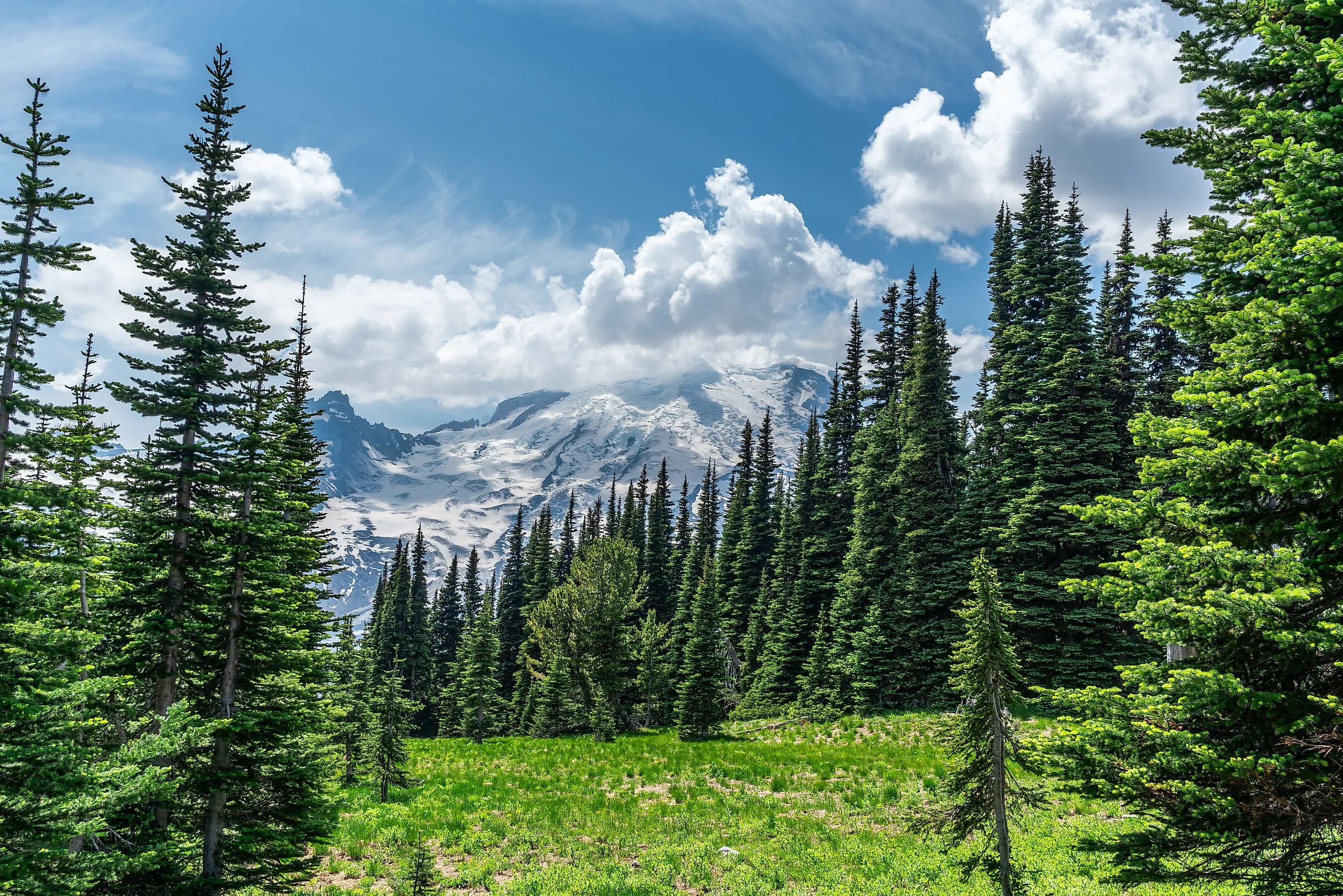
Why Evergreens Keep Their Needles All Winter
Usually by December, the trees are bare, the branches rattle in the wind, and the forest floor is carpeted in a dense layer of brown leaves. Then there are the evergreen trees. Known for their year-round greenery, evergreens form one of the most iconic winter decorations. But how do they keep their leaves when many trees don't?
Types of evergreens

Mention evergreens, and most people picture conifer trees—pines, firs, hemlocks, and most types of cypress. But there are some surprising trees (and shrubs) out there that are part of the evergreen family, including eucalyptus, mahogany, tamarind, ironwood, live oaks, holly, and rhododendron! In fact, the majority of tropical plants are considered evergreens.
Their main connecting trait? Year-round leaves.
Needles are leaves, too

You may not think of evergreen trees as having "leaves", but that's exactly what their needles are. Evergreen needles share the same components as other leaves (epidermis, mesophyll cells, green chlorophyl pigment, xylem, stomata, etc.), hence being considered a "leaf." But unlike their flatter counterparts, their unique, spear-like structure enables the needles to conserve water, resist extreme temperatures, and maintain their green appearance.
This isn't to say that evergreens never lose their leaves, they constantly lose old needles and replace with new ones. With their increased resilience to droughts and changing temperatures, the needles live a full life-span, taking an average of 2-5 years to fall off.
Evergreen trees form new buds at the tips of their branches during the late summer, which burst open into fresh needles the following spring. Meanwhile, the oldest needles closest to the trunk brown and detach.
Wax-coated, water-saving needles

Evergreen needles have a smaller exposed surface area, a waxy coating that prevents water loss. These elements lower the tree's risk of dehydration, even after the ground water freezes. This allows the tree to retain its leaves year-round, even through droughts and cold winter months.
And it's a good thing, too, considering farmed Christmas trees cover nearly 350,000 of the United States. In addition, many nurseries have started selling Christmas trees in tubs so they can be replanted after the holiday season, reducing the public's reliance on fake plastic ones that take hundreds of years to decompose.
Antifreeze sap

It's not just the needles that make evergreens so resilient. When the weather gets chilly, the rest of the tree produces an antifreeze-like protein. When temperatures drop, evergreens pull water out of their cells and pack them with sugars, so ice forms between cells instead of inside them. The sap has other uses, too.
For example, Survivalists are typically quite familiar with pine sap. Not only is it a great fire starter, pine sap is also a natural antiseptic and the needles can be a source of vitamin C, while the needles are a featured ingredient in many anti-inflammatory teas.
However, not all evergreens are edible — some are poisonous (including yew and holly). As always, do your research first!
Evergreens are more than just trees
Not all evergreens have needles — hollies and rhododendrons are evergreens, too! These shrubs have broad leaves that maintain their lush appearance all year. If it gets too cold, or too windy, rhododendrons will roll their leaves up into a tube-like structure (basically, a giant evergreen needle) to protect themselves.
And the next time your among the Giant Sequoias, check out their needle-like structure because, you guessed it, they're evergreens, too.