The Mountain That Lost 1,300 Feet In A Single Morning
Mountains are supposed to be the most permanent things on Earth, rising and eroding over millions of years. But one American mountain broke that rule in the most violent way imaginable, shedding roughly 1,300 feet of its summit in a matter of minutes. On a single spring morning in 1980, Mount St. Helens in Washington State blew itself apart, and when the dust settled, it stood more than a quarter-mile shorter than the day before. How does a mountain shrink that fast? Here is the story of the mountain that lost 1,300 feet in a single morning.
The Mountain: Mount St. Helens

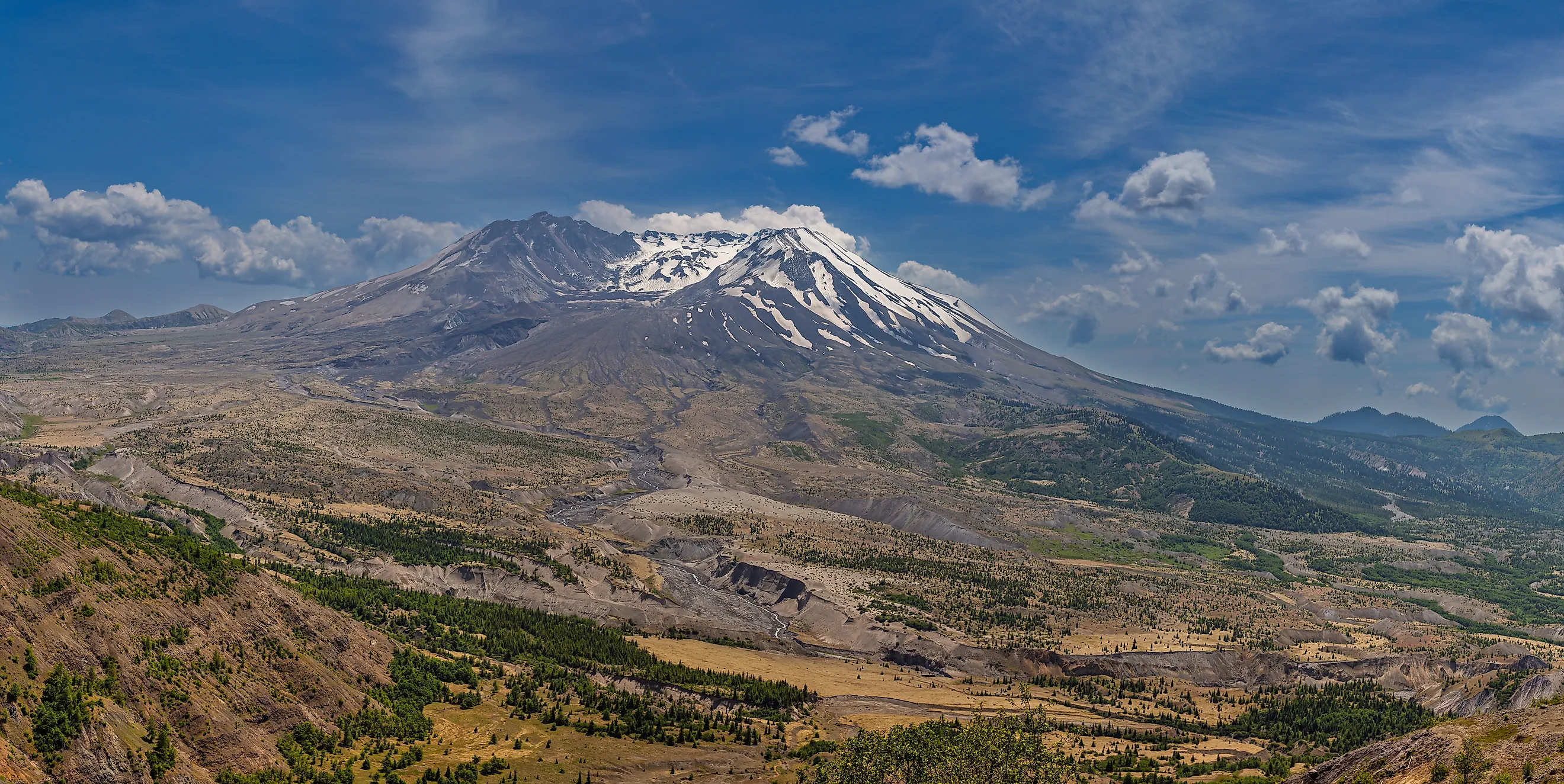
Mount St. Helens is a volcano in southwestern Washington, part of the Cascade Range and the Pacific Ring of Fire. Before 1980, it was a graceful, symmetrical, snow-capped cone, sometimes called the "Fuji of America" for its near-perfect shape. It had been quiet for well over a century, dormant since the 1850s, and most people simply assumed it would stay that way. That assumption would turn out to be catastrophically wrong.
9,677 Feet, Then 8,363


The raw numbers are staggering. Before the eruption, Mount St. Helens stood 9,677 feet tall. Afterward, its new summit measured just 8,363 feet, which means the mountain had lost exactly 1,314 feet of elevation. In place of the old peak was a gaping, horseshoe-shaped crater nearly two miles across and about 2,000 feet deep, as if a giant had taken a single bite out of the top of the mountain.
It Happened at 8:32 in the Morning

All of this unfolded with terrifying speed. At exactly 8:32 a.m. on May 18, 1980, a magnitude 5.1 earthquake struck directly beneath the volcano. That single jolt was all it took to set off a chain reaction that, within seconds, began tearing the mountain apart. By late that same morning the worst was already over, but in that short window Mount St. Helens had rewritten itself, and the surrounding landscape, forever.
The Largest Landslide in Recorded History

The first thing to go was the entire north face of the mountain. The earthquake shook loose a massive, unstable bulge that had been swelling on that flank, and in just 15 to 20 seconds the whole northern slope and summit slid away. This collapse was the largest landslide in recorded history, around 2.5 cubic kilometers of rock and ice racing downhill at tremendous speed. A wall of debris roared 14 miles down the valley below, burying everything in its path.
Then It Blew Sideways

Removing the north face suddenly uncorked the pressurized magma trapped inside, and the mountain did something very few volcanoes do: it exploded sideways. This lateral blast shot outward to the north at speeds of up to 670 miles per hour, hotter than 500 degrees, obliterating nearly everything in its reach. It flattened some 230 square miles of forest, snapping ancient trees like matchsticks, and sent a towering column of ash 15 miles into the sky. Ash rained down across the region, darkening skies over cities like Portland, drifting south into Oregon, and eventually dusting eleven states.
The Bulge That Gave It Away

The disaster did not come entirely without warning. For two months beforehand, the reawakened volcano had rumbled with more than 10,000 earthquakes, and magma pushing up inside it had shoved the north flank outward by over 400 feet, forming an ominous "bulge." Scientists knew something big was coming and had been monitoring the mountain closely. What nobody predicted was that the eruption would go sideways rather than straight up, which is precisely what made it so deadly.
A Changed Landscape

When it was over, the land around Mount St. Helens was unrecognizable. The blast and landslide choked rivers with debris, created entirely new lakes like Coldwater Lake, and buried the famous Spirit Lake beneath a raft of floating logs. Mudflows called lahars, made of melted glacier ice mixed with ash and rock, poured down the river valleys for miles on end. A lush, green landscape had been turned, in one morning, into a gray moonscape.
57 Lives Lost

Tragically, the eruption killed 57 people, making it the deadliest volcanic event in US history. Among them was volcanologist David Johnston, who was monitoring the mountain from a ridge to the north and radioed the now-famous words "Vancouver! Vancouver! This is it!" moments before the blast reached him. Another victim was Harry Truman, an elderly lodge owner who had stubbornly refused to leave his home on Spirit Lake. The ridge where Johnston died now bears his name and is home to an observatory overlooking the crater.
It Could Happen Again

Mount St. Helens is far from the only dangerous volcano in the neighborhood. The Cascade Range is dotted with active and potentially active volcanoes, including looming Mount Rainier near Seattle and California's Mount Shasta. Any one of them could someday reshape itself the way St. Helens did, which is exactly why the whole range is now so carefully monitored. St. Helens itself remains very much active, having rumbled and built new lava domes several times since 1980.
Why That Morning Still Matters

More than four decades later, the 1980 eruption remains one of the most important natural events in modern American history. It rewrote the textbooks on how volcanoes can erupt, taught scientists that a whole mountain can collapse sideways, and transformed how such hazards are watched for worldwide. It is also a humbling reminder that even something as solid and eternal-seeming as a mountain can be undone in a single morning. Mount St. Helens lost 1,300 feet before lunch, and the world has never looked at volcanoes quite the same way since.