5 Most Beautiful Gothic Churches In Mississippi
Daring. Imposing. Captivating. These are words that come to mind when one looks at Gothic architecture. No, the style was not made by an ancestor of Batman (but who would be surprised). The style originated in Europe and defined European architecture from the late 12th to the 16th century. These weren’t just there to look cool, but they served to carry water from the roof and away from the side of a building. In addition, the high ceilings and stained glass that characterize Gothic churches give them even more of an ethereal feel.
What many people don’t realize is that Mississippi holds some of the South’s most striking Gothic and Gothic Revival churches, quietly woven into river towns, rural landscapes, and historic downtowns. Here are five of the most beautiful Gothic churches in Mississippi.
St. Mary Basilica: Natchez

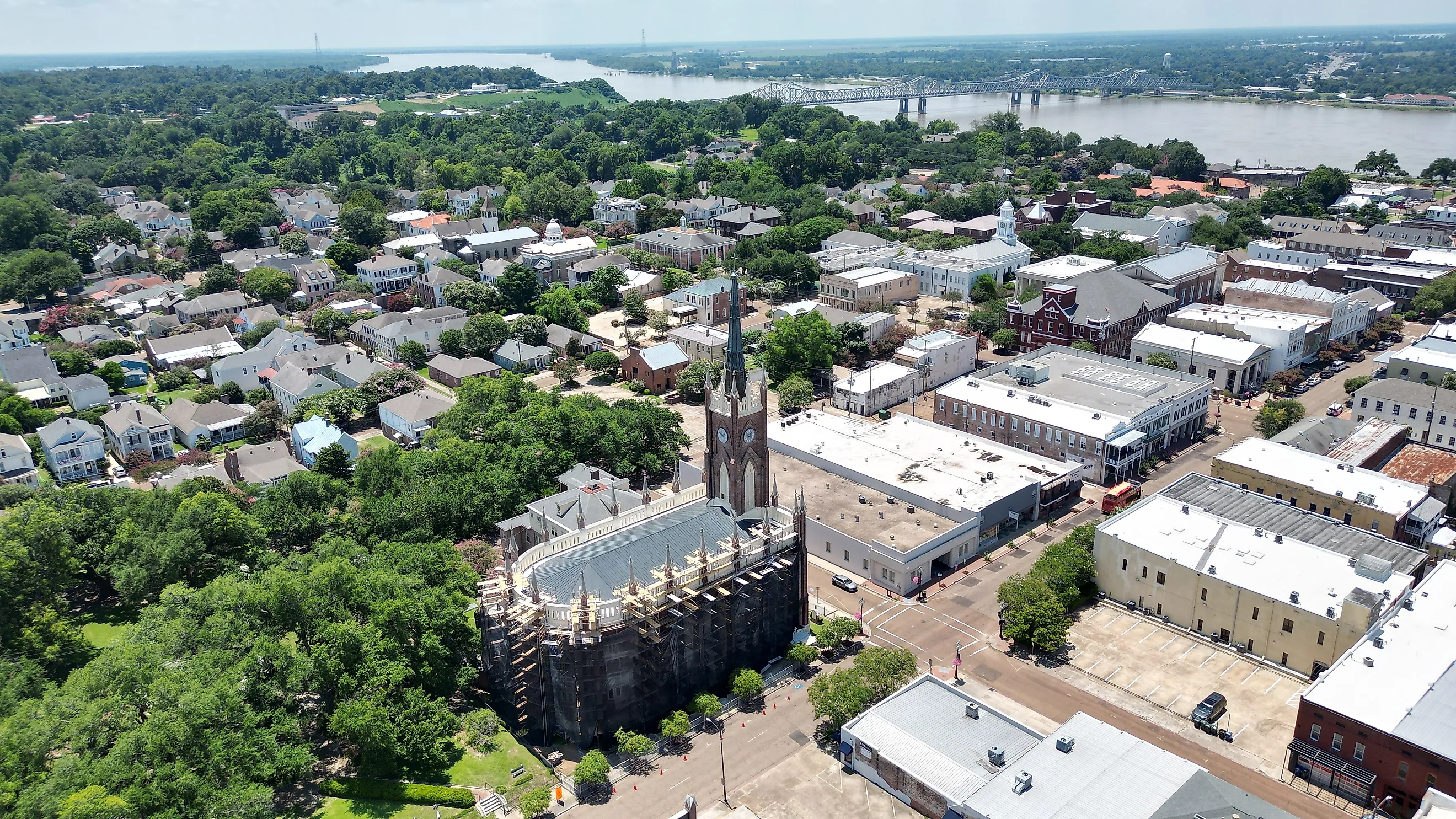
St. Mary Basilica is the oldest Catholic building still in use in Mississippi. It stands as one of the state’s most commanding examples of Gothic Revival architecture and is a defining landmark in Natchez. It rises above the historic downtown, standing like a strong and silent guardian. The basilica’s pointed arches, vertical lines, and prominent spire reflect the European Gothic influence that shaped many 19th-century American churches. It was constructed over several decades beginning in the 1840s, and the building speaks to both the ambition and artisanship of its era. Inside, visitors encounter stained-glass windows, decorative vaulting, and a sense of scale that feels more urban cathedral than small-town parish. Its designation as a minor basilica further underscores its architectural and religious importance, making it a cornerstone of Mississippi’s ecclesiastical heritage.
St. Joseph Catholic Church: Port Gibson

St. Joseph Catholic Church contributes to Port Gibson’s reputation as one of Mississippi’s most architecturally distinctive and overlooked towns. The church was built in the Gothic Revival tradition, and features pointed windows, a traditional brick façade, and a slender spire that fits comfortably among the town’s collection of historic churches. It was dedicated on April 26, 1863, on the Feast of St. Joseph. While structurally it is more modest than some of its counterparts, St. Joseph’s elegance lies in its proportions and restrained ornamentation. The interior reflects 19th-century craftsmanship, with period details that emphasize symmetry and reverence rather than grandeur. Its location along Port Gibson’s famed Church Street places it within walking distance of other historic sanctuaries, reinforcing the town’s identity as a living showcase of Mississippi’s religious and architectural past.
The Little Church (Church of Our Saviour): Iuka

The Little Church in Iuka, formally known as the Church of Our Saviour, is a well-preserved example of Carpenter Gothic architecture in Mississippi. Located on Eastport Street between Main and Fulton streets, the Episcopal church was designed by architect James B. Cook and completed in 1873. Its wooden construction reflects the adaptation of Gothic design principles to rural American settings, where stone was scarce but craftsmanship remained strong.
Architectural details such as board and batten siding, steeply pitched roofs, and narrow lancet windows define the structure and clearly align it with the Carpenter Gothic tradition. In 1985, when the building faced removal, local citizens stepped in and purchased it from the Episcopal Diocese of Mississippi, ensuring its survival. The church was listed on the National Register of Historic Places in 1991 and restored the following year. Today, it serves as a venue for weddings and special events, continuing its role as both a historic landmark and a valued community space.
Episcopal Chapel of the Cross: Madison

The Episcopal Chapel of the Cross is widely regarded as one of Mississippi’s most refined Gothic Revival churches, reflecting a deliberate attempt to emulate medieval English parish churches. The chapel, constructed in the early 1850s, emphasizes proportion, restraint, and craftsmanship over ornamentation, which fits the small, safe community focus of Madison. Tall pointed windows, a steeply pitched roof, and carefully executed brickwork create a sense of upward movement and solemnity that defines the Gothic style.
The chapel was commissioned by Margaret Johnstone following the death of her husband, John T. Johnstone. It was constructed on the former Annandale plantation land that the family settled in the 1840s. Designed by English architect Frank Wills, the building features slave-made river bottom bricks cast on-site, with interior beams and flooring hand-hewn from oak trees grown on the plantation itself. The chapel was consecrated on September 19, 1852, by William Mercer Green, the first Episcopal Bishop of Mississippi, and quickly became a rare space where enslaved and free worshippers gathered together each Sunday.
Christ Church: Church Hill

Christ Episcopal Church in Church Hill stands as one of Mississippi’s most compelling rural expressions of Gothic Revival architecture. Built in the late 1850s, the church features narrow lancet windows, a steep roofline, and a carefully proportioned façade that emphasizes verticality without excess ornament. Its hilltop setting enhances the building’s visual impact, giving it a subtle prominence within the surrounding landscape. As the third sanctuary of Mississippi’s oldest Episcopal congregation, the church carries deep historical significance in addition to its architectural value. Christ Church’s design and placement embody the Gothic idea of harmony between structure, setting, and spiritual purpose, making it a noteworthy destination for architectural and history nerds. The church went through a recent complete restoration and was commemorated by the congregation in late 2025.
Esteemed Architecture With A Southern Draw
The Deep South honors traditions of faith and family. These five churches embody those values through their ongoing legacy of community engagement and service. The ancestral architecture that held the spiritual experience to a regard higher than the church ceilings only adds to the value of these spaces. But even more commendable than their remarkable appearance is the determination of the congregations who have worked hard to preserve and restore the churches’ glory. So, for those who crave Gothic architectural appreciation, Germany, France, or England are not your only options. The Magnolia State has sites like those on this list that rival European destinations and are worth adding to your next trip itinerary.