Most Popular Fruits In The World
- In Egypt, Pharaohs were buried with watermelons at their sides, being a prized fruit worthy of accompanying monarchs on their last journey.
- One of the most filling foods, avocado, provides a healthy dose of fiber and nearly half of fatty acids.
- Mangoes are considered to be superfruits, providing physical, psychological and even sexual benefits.
Fruit is one of the most-produced food groups on Earth, and it is easy to see why: sweet, ready to eat, mostly water, and packed with fibre and vitamins. But what counts as a fruit is slipperier than it looks. Botanically, a fruit is the seed-bearing part of a flowering plant, which means tomatoes, cucumbers, and peppers all qualify, even though cooks and the Food and Agriculture Organization file them under vegetables. The tomato is the famous case: by weight it would top any fruit ranking, at about 186 million tonnes a year, but because it is grown and eaten as a vegetable, the most-produced true fruit is actually the banana. The figures below come from the FAO's latest data, for 2022, measured in million metric tons.
Bananas - 135 Million Metric Tons
Bananas are the most-produced fruit in the world, at about 135 million tons in 2022. They were also among the first fruits ever domesticated, cultivated in the wetlands of the Kuk valley in highland New Guinea as far back as 8000 to 5000 BCE, then carried across Southeast Asia, eventually reaching the Philippines. India grows more than any other country today, close to a quarter of the global crop, followed by China and the Philippines.

Part of the banana's appeal is sheer convenience. It arrives in its own protective peel, needs no washing, and travels well, which helps make it one of the most popular snacks on the planet. It is also a useful source of potassium, vitamin B6, vitamin C, fibre, and magnesium.
Watermelons - 100 Million Metric Tons

Few things beat a cold watermelon on a hot day, and the world grows about 100 million tons of them a year. Watermelons trace back to northeastern Africa. Their seeds have turned up in ancient Egyptian tombs, including that of Tutankhamun, where the fruit was placed with the dead for the journey into the afterlife.
China dominates production today, growing roughly 60 million tons, well over half the world's supply. Beyond eating it fresh, people lean on watermelon's natural sweetness and high water content in all kinds of drinks, alcoholic and not.
Apples - 96 Million Metric Tons

Apples come in at about 96 million tons a year. They originated in the mountains of Central Asia, where their wild ancestor still grows in the forests of southern Kazakhstan, and they spread west along the Silk Road over thousands of years.
The big draw is the crunch, plus a range of varieties both sweet and tart. China grows close to half of the world's apples, ahead of the United States and Poland. Japan's Fuji, prized for its size and sweetness, has become one of the most popular varieties worldwide.
Oranges - 76 Million Metric Tons

Oranges, at about 76 million tons, are a citrus hybrid that was cultivated in southern China thousands of years ago before spreading west. They reached the Americas in 1493, on Columbus' second voyage.
Brazil is the top producer, growing around 16 million tons, close to a fifth of the world's oranges. Sweet, juicy, and carrying more than a full day's vitamin C in a single fruit, the orange is the default breakfast juice for much of the planet. Its main drawback is the messy peel.
Grapes - 75 Million Metric Tons

Grapes round out the top five at about 75 million tons. They are one of the oldest cultivated fruits, domesticated some 6,000 to 8,000 years ago in the South Caucasus and the Near East, and tied to winemaking almost ever since.
China is the largest grape grower today, ahead of Italy, the United States, France, and Spain. Roughly half of the world's grapes are pressed into wine, with the rest eaten fresh as table grapes or dried into raisins.
Mangoes - 59 Million Metric Tons
The FAO counts mangoes together with guavas and mangosteens, a group that reached about 59 million tons in 2022. India grows close to half of it and is the world's mango heartland, where the fruit has been cultivated for some 4,000 years across the Indo-Burmese region. Mangoes did not reach the Americas until the 18th century, brought by the Portuguese to Brazil and by the Spanish, by way of the Philippines, to Mexico.

Mangoes are a strong source of vitamin C and vitamin A, with some vitamin B6 and fibre as well.
Pears - 26 Million Metric Tons
Pears, at about 26 million tons, did not come from any single place. They are native across much of Europe and Asia and into northern Africa, have been eaten since prehistoric times, and have been cultivated in China for at least 3,000 years. China remains the biggest producer by far, growing close to two-thirds of the world's pears.
Underrated in much of the West, pears are as everyday as apples across Eastern Europe, where they turn up cheap at street markets and are often picked from gardens and roadside trees on the way to work. They are also cooked down into compotes and preserves.
Avocados - 9 Million Metric Tons
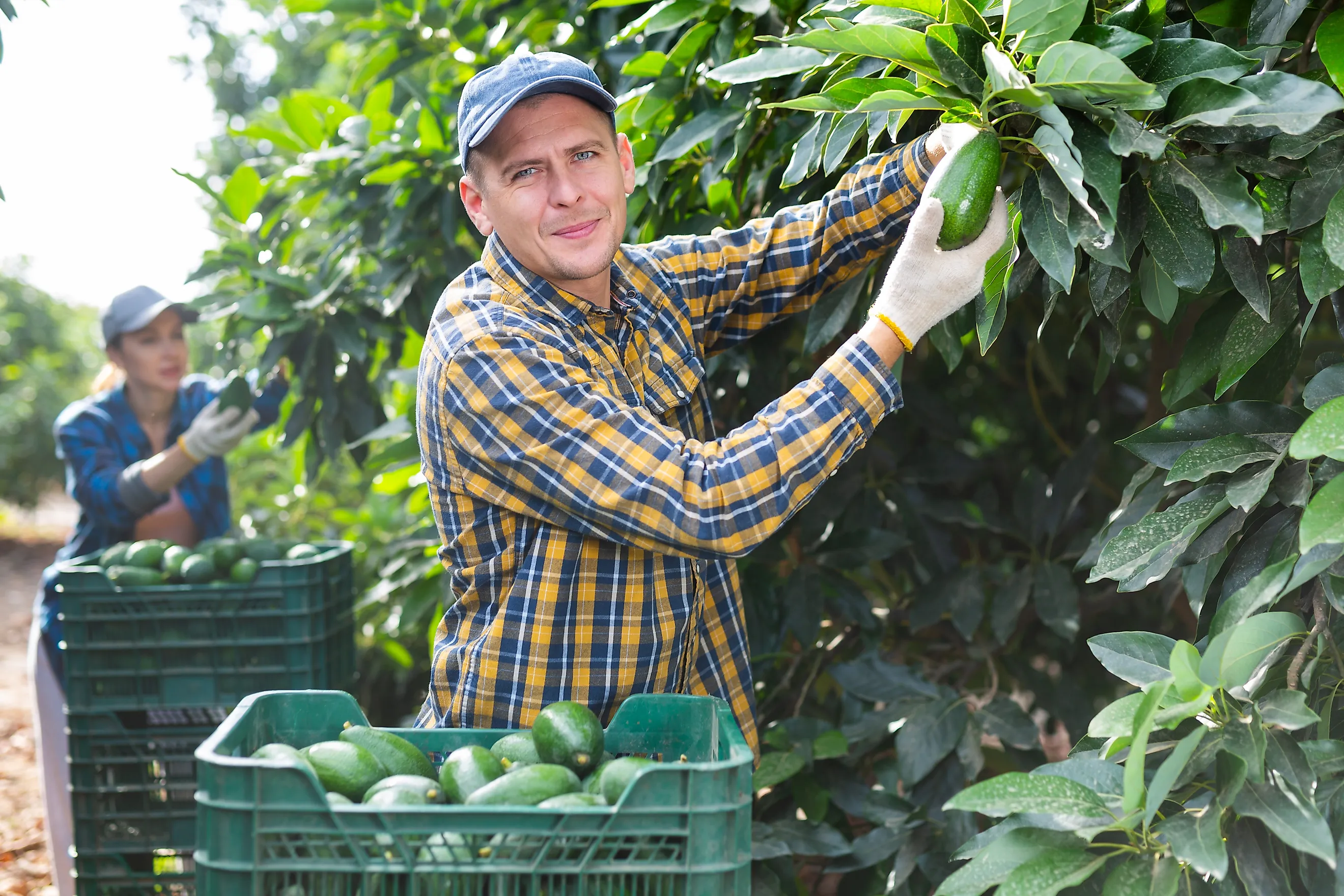
Avocados are the smallest crop on this list, at roughly 9 million tons, but among the fastest-growing. The fruit originated in south-central Mexico and was domesticated there around 5,000 years ago. The Aztecs ate it long before Europeans arrived and gave it its name, from the Nahuatl ahuacatl; Spanish explorers first described it in the early 1500s. Mexico is still the largest producer, at about 2.5 million tons, more than any other country.
Unusually for a fruit, the avocado is rich in healthy monounsaturated fats, which, along with its fibre, potassium, and vitamins E and K, make it a nutritional outlier.
The World's Most-Produced Fruits (2022)
| Rank | Fruit | 2022 Production (Million Metric Tons) |
|---|---|---|
| 1 | Bananas | 135.11 |
| 2 | Watermelons | 99.96 |
| 3 | Apples | 95.84 |
| 4 | Oranges | 76.41 |
| 5 | Grapes | 74.94 |
| 6 | Coconuts | 62.41 |
| 7 | Mangoes, guavas, and mangosteens | 59.15 |
| 8 | Pineapples | 29.36 |
| 9 | Peaches and nectarines | 26.35 |
| 10 | Pears | 26.32 |
| 11 | Lemons and limes | 21.53 |
| 12 | Papayas | 13.82 |
| 13 | Plums and sloes | 12.39 |
| 14 | Grapefruits and pomelos | 9.76 |
| 15 | Dates | 9.75 |
| 16 | Avocados | 8.98 |
Source: FAO, 2022. Tomatoes are left off because the FAO classifies them as a vegetable, though by weight (about 186 million tons) they would otherwise top the list. Plantains, mandarins and tangerines, and melons are each tracked under separate FAO categories.