These 7 New Jersey Towns Have The Best Historic Districts
Centuries of New Jersey history remain visible along the walkable streets of its small towns. Visitors can learn about the Revolution at Haddonfield’s Indian King Tavern or see Clinton’s Red Mill beside the Raritan River. The Old Cranbury School and Frenchtown’s riverfront buildings offer more examples of preserved architecture. Allentown has an old mill and a 19th-century church, while Mendham is home to the Black Horse Tavern. Mount Holly rounds out the tour with its historic courthouse and prison museum.
Haddonfield

Haddonfield's roots stretch back to the late 17th century, when Francis Collins established the Mountwell plantation in 1682. Elizabeth Haddon later became central to the community's development, and a Quaker meetinghouse and burial ground were established along what is now King's Highway in 1721. The settlement subsequently grew into an important commercial center serving surrounding farms, with blacksmiths, tanners, saddlers, stores, and taverns drawing people into the community. During the American Revolution, the New Jersey Assembly met at the Indian King Tavern in 1777, where lawmakers conducted state business while British forces occupied parts of New Jersey.
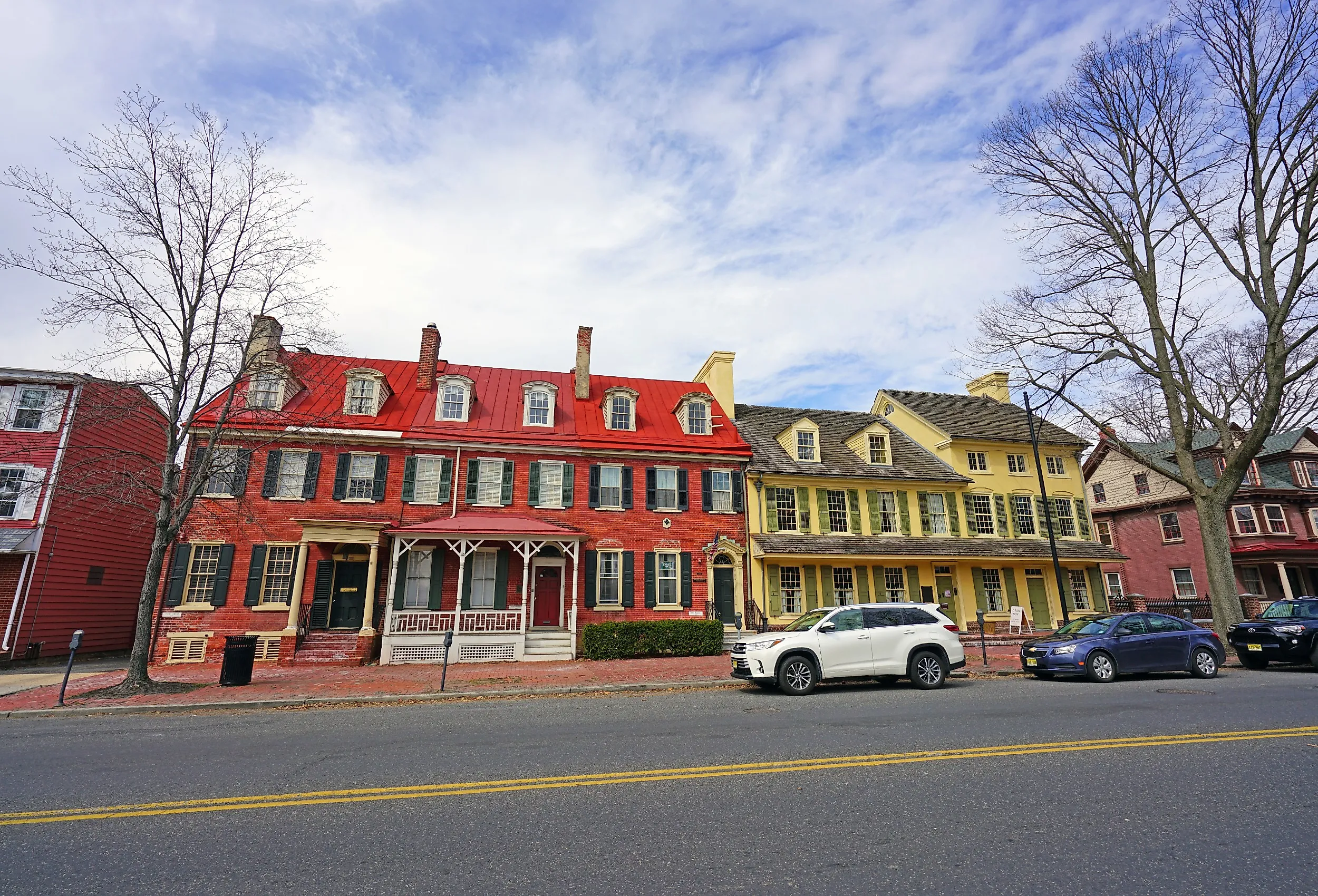
The Haddonfield Historic District preserves much of the community that developed around these early crossroads. Its boundaries encompass portions of King's Highway, Haddon Avenue, Tanner Street, Lake Street, Grove Street, Warwick Road, and Washington Avenue. The district was established locally in 1971 after residents became concerned about development threatening older buildings. Visitors can explore the Indian King Tavern, walk along King's Highway, see the Friends Meetinghouse, and visit Greenfield Hall.
Clinton

This town developed around the South Branch of the Raritan River, where waterpower, mills, and nearby limestone deposits encouraged industry and commerce. The community grew from a crossroads settlement into an agricultural and mill center, with entrepreneurs taking advantage of the river and quarry resources. The town also experienced a major setback in 1891, when the Great Fire destroyed 23 buildings and 17 businesses along Main Street. Buildings constructed afterward helped shape the streetscape that remains today.
The Clinton Historic District covers about 175 acres and contains 270 contributing buildings, along with contributing structures and sites. Its architecture includes Federal, Greek Revival, Italianate, and later revival styles, while the district's surviving buildings reflect the area's commercial, industrial, and residential development. Red Mill, Dunham's Mill, the Main Street Bridge, and the Clinton House are among the notable sites connected with the district. Visitors can also explore the Red Mill Museum Village and walk along Main Street through the district.
Cranbury

This town's village developed around agriculture, milling, and transportation, with many of its surviving buildings dating to the 18th and 19th centuries. The Cranbury Historic District encompasses approximately 175 acres along Main and Prospect streets and several surrounding roads. It was added to the National Register of Historic Places in 1980 for its architectural and commercial significance and contains 177 contributing buildings. The Old Cranbury School, which dates to the 19th century, is also individually listed on the National Register.
The district provides a concentrated look at Cranbury's development as a village, particularly along Main Street, where older homes and commercial structures remain. The Cranbury Inn is one of the area's recognizable landmarks, while the Old Cranbury School connects to the community's educational past. Visitors can walk along Main Street, see the Cranbury Inn, visit the Old Cranbury School, and explore the surrounding village streets.
Frenchtown

This town's story began before the American Revolution, when Thomas Lowrey owned the land along the Delaware River and established a gristmill. In 1794, Lowrey sold 968 acres to Paul Henri Mallet-Prevost, a Swiss-born man who had served during the French Revolution. His name helped give the settlement its French association, although he himself was Swiss rather than French. By the late 19th century, the community had developed mills, stores, and taverns, and Frenchtown became a separate borough in 1867.
The Frenchtown Historic District extends between the Delaware River, Nishisakawick Creek, Washington Street, and 12th Street. Its National Register significance covers architecture, commerce, transportation, and community development, with Federal, Greek Revival, and Italianate buildings representing different periods of growth. Visitors can walk through the Frenchtown Historic District, explore the Delaware River waterfront, browse local shops along Bridge Street, and follow portions of the Delaware River Scenic Byway.
Allentown

This town developed as a small community around the roads, waterways, mills, and religious institutions that supported local life. The Allentown Historic District encompasses 17 acres along North and South Main streets and portions of Church, Pearl, Hamilton, Lakeview Drive, and Yardville Road. It was added to the National Register in 1982 because of its significance in architecture, commerce, education, industry, invention, religion, and transportation. The district contains 219 contributing buildings, including the Allentown Mill.
Several surviving structures demonstrate how the community changed over time. The Allentown Mill reflects the area's industrial history, while the Allentown Presbyterian Church, built in 1837 and expanded in 1858, represents its religious development. The John Imlay House and Ephraim Robbins House, which now serves as Borough Hall, add residential and civic examples to the district. Visitors can walk Main Street, see the Allentown Mill, visit the Allentown Public Library, and view the John Imlay House.
Mendham

This town's earliest land transactions date to 1708, with permanent settlers arriving during the 1720s. The community developed around Indian Brook, where a meetinghouse and grist mill were established. Over time, the intersection at the center of the village became a commercial and community hub. Mendham Borough was incorporated in 1906, and its district now preserves buildings representing the community's development from its 18th-century beginnings through the early 20th century.
The Mendham Historic District consists of 140 properties, with key buildings including the Black Horse Tavern, Phoenix House, Methodist Church, and St. Mark's Church. The combination of religious, residential, and commercial buildings reflects the village's role as a local center for generations. Visitors can walk along Main Street, see the Black Horse Tavern, visit St. Mark's Church, and view the Phoenix House.
Mount Holly

This town's development reaches back to the colonial era, when the settlement was known as Bridgetown. Its location and transportation connections helped it grow into an important Burlington County community. The Mount Holly Historic District covers about 260 acres and was added to the National Register in 1973 for significance in architecture, education, landscape architecture, politics and government, and transportation. The district encompasses much of the community's older downtown area.
The district contains buildings connected to Mount Holly's civic, commercial, educational, and political development. Among the notable structures are the Burlington County Courthouse, Burlington County Prison, Stephen Girard House, and Old Fire Department Building. Visitors can walk along High Street, explore the Burlington County Prison Museum, view the Historic Olde Courthouse, and see the privately owned Stephen Girard House from the street.
From Haddonfield's Revolutionary-era connections to Clinton's mill-centered development and Frenchtown's Delaware River heritage, these New Jersey communities preserve different chapters of the state's past. Their designated districts bring together houses, churches, mills, taverns, bridges, public buildings, and commercial streets that help explain how each community developed. For visitors interested in New Jersey's past, these districts also offer opportunities to experience history while exploring walkable downtowns and local landmarks. Cranbury, Allentown, Mendham, and Mount Holly provide further examples of how smaller communities have retained buildings and streetscapes from their earliest periods of growth.