Why Some Forests Burn Every Few Years On Purpose
Setting fire to a forest on purpose sounds reckless, especially after decades of Smokey Bear (the US Forest Service's wildfire-prevention mascot) urging everyone to prevent the opposite. Yet many of the healthiest forests in North America owe their vigor to fire. A prescribed burn, sometimes called a controlled or planned fire, is a carefully engineered version of the low-intensity fires that swept these landscapes for millennia before people started putting every one of them out. So why light one on purpose? The reasons come down to what fire does for a forest that cannot get it any other way.
Crowded Forests Grow Unhealthy Without It

Fire is native to many landscapes, and the plants and animals in them evolved alongside it. Strip the fire away and the forest does not simply hold still; it thickens. Seedlings that a periodic burn would have thinned survive instead, and the stand grows dense with trees packed too close to share the water, light, and soil nutrients among them. Crowded trees are stressed trees, and stressed trees fall more easily to drought and disease.
A low burn restores that balance. It kills the weakest and most crowded stems, and the survivors have more water, light, and soil to draw on as a result. The trees left standing are fewer, stronger, and better spaced. The same fire that looks destructive does the thinning these forests evolved with.
Fire Returns Nutrients to the Soil

Dead wood, fallen needles, and leaf litter lock up nutrients that living plants cannot use while the material sits on the forest floor slowly rotting. In wetter climates, decay recycles it quickly enough. In the dry conifer country of the American West, that debris can pile up for decades, holding its nitrogen, phosphorus, and potassium out of circulation.
A burn frees it fast. Fire converts the accumulated litter to ash, and the minerals in that ash wash into the soil with the next rain, giving roots a sudden pulse of fertility. The flush of green that follows a burn is the visible result: seedlings and grasses feeding on nutrients that had been stalled in the litter layer for years.
Fire Clears Out Insects, Disease, and Invaders

A crowded, unburned forest is a nursery for its own pests. Bark beetles, fungal pathogens, and parasitic plants like mistletoe move easily between trees standing shoulder to shoulder, and a stand weakened by competition offers them one stressed host after another. Mountain pine beetles alone killed lodgepole pines across millions of acres of the Rockies through the late 1990s and 2000s.
A low fire thins the crowded stands where those outbreaks build. It removes many of the weakened, infested, and diseased trees before they can seed the next wave, and the heat kills insect eggs and larvae in the litter and lower bark. Burns also knock back invasive plants that lack fire adaptations, clearing ground for native and fire-adapted species to take hold again.
Some Trees Cannot Reproduce Without It

For a category of plants called pyrophytes, fire is not a threat to survive but a signal to reproduce. The lodgepole pine, several eucalyptus species, and the Australian banksia seal their cones or fruit shut with resin, and only the heat of a passing fire melts that seal and releases the seeds. Without the burn, the seeds stay locked away.
Others wait on chemistry rather than heat. Certain seeds break dormancy only in the presence of smoke or charred plant matter, and some lie in the soil for decades until a fire triggers them into growth. After the 1988 Yellowstone fires, lodgepole pine seedlings rose in dense carpets beside the blackened trunks of the parent trees that the same fire had killed. Some lily species flower only in the season after a burn, and the Australian grass tree is famous for the growth spurt it puts on once fire clears the ground around it.
Fire Rebuilds Habitat for Wildlife

A burn does more than thin the trees. Once flames burn a gap in the canopy, sunlight reaches the forest floor for the first time in years, and a flush of new growth follows. More species live in that patchwork of old stands, cleared ground, and fresh vegetation than in an unbroken wall of mature timber.
The dead trees left behind matter as much as the new shoots. Woodpeckers, owls, and other cavity nesters depend on standing snags for nesting and feeding, and a low fire produces them in quantity. Grazing animals come to the tender forage on the open, grassy ground that follows a burn, and the predators that hunt them come after.
Small Burns Prevent Catastrophic Ones

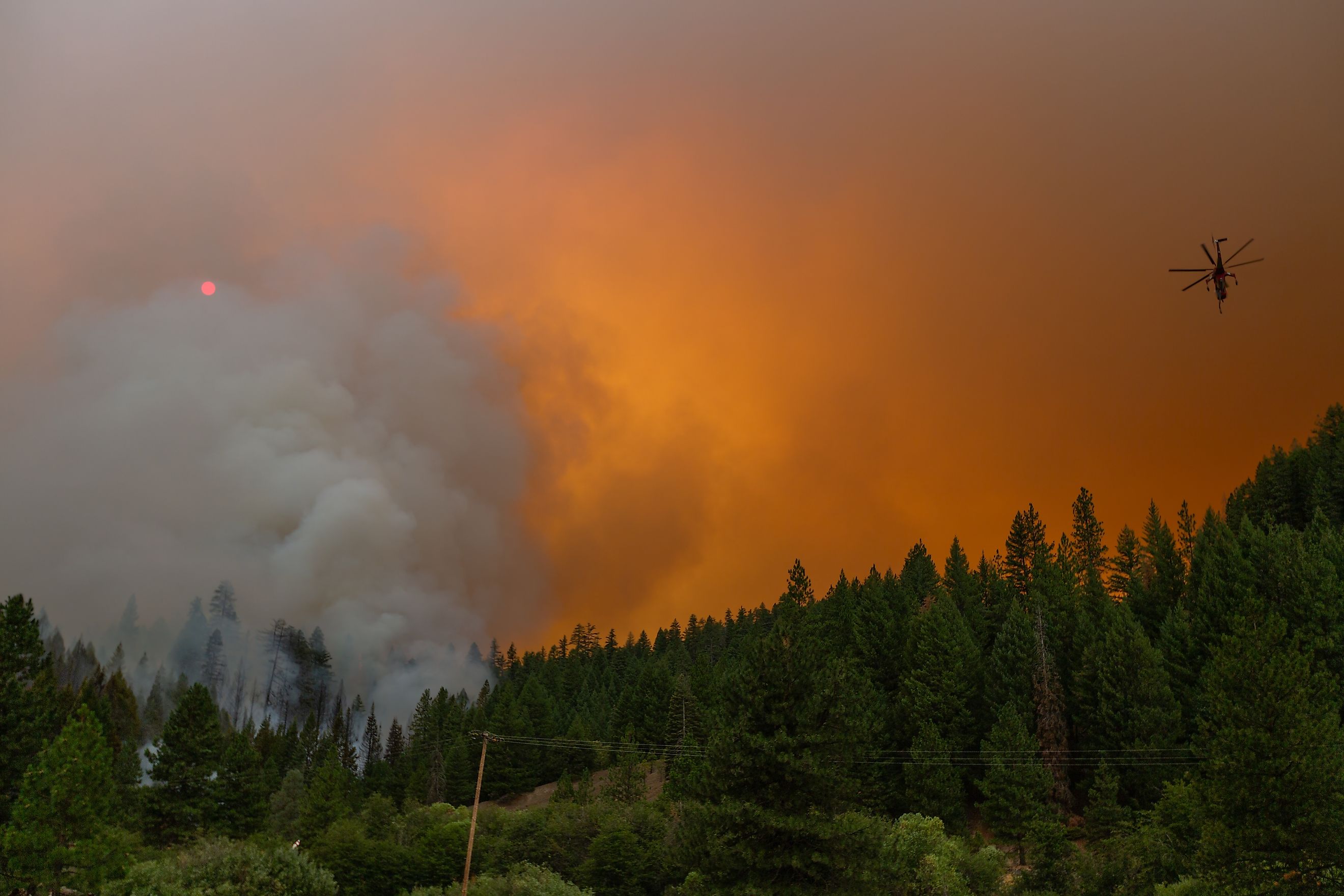
The most immediate reason to light a small fire is to prevent a large one. Twigs, grasses, pine straw, and leaf litter are the fuel a wildfire feeds on, and they pile up year after year in a forest where every fire is suppressed. A prescribed burn removes that fuel on purpose, under supervision, so there is less of it waiting when a wildfire does arrive.
Where the fuel is already gone, firefighters have a fighting chance and the communities nearby are safer, because flames without fuel cannot build. That matters because wildfires are so hard to stop once they gain size. Wind pushes them fast and shifts their direction without warning, the heat can ignite buildings and vegetation before the flames even reach them, and the smoke carries fine ash and toxic gases for hundreds of miles downwind.
Fire as Part of the Rhythm

None of this makes fire right for every landscape. Western conifer forests carried frequent, low-intensity lightning fires for thousands of years and respond well to a controlled version of the same thing, but the chaparral of Southern California is the opposite case: there people already ignite too many fires, the Santa Ana winds drive them hard, and the native shrubs get no time to mature between burns. Fire management always starts with the specific ecosystem, never a single rule applied everywhere.
Where fire does belong, a forest that burns every few years is not a forest in trouble. Periodic fire is as much a part of the cycle as rain or the turning of the seasons, and the burned ground it leaves is the first step in a long recovery that runs through wildflowers, grasses, and pioneer trees toward a mature forest again. Planned and supervised, these burns leave forests more varied, more resilient, and better braced against the far larger wildfires that a warming climate is making more frequent.