Florida's Most Populous County
Miami-Dade County is the most populous county in the state of Florida, with a total population of 2.802 million people. It isn't just large by population; it's also the third-largest county by land area at 1,900 square miles.
However, this county had a very humble beginning, as the site of a war between settlers and Seminole natives, and only became so populous due to the efforts of locals to transform the city of Miami into a major hub. In fact, Miami-Dade County has made major changes to its administration and even its name over the years.
There's more than just people in Miami-Dade, as it also contains both crocodiles and alligators in protected wetlands, along with a vast coral reef off of Biscayne Bay. In fact, what makes up a significant portion of the county's size is not populated areas but instead two vast, biologically rich national parks.
The contender counties

The two counties that come the closest to meeting Miami-Dade in terms of population are Broward County and Palm Beach County.
Broward County is home to about 1.97 million people, according to the most recent estimates by the US Census Bureau. Its county seat of Fort Lauderdale lies 30 miles to the north of Miami and is often referred to as the Venice of America for its inland waterways, allowing guests to travel the city aboard a water taxi.
Palm Beach County is the third most populous county in Florida, with a population of about 1.53 million people. It is also the second largest county by land area at 1,977 square miles. It used to be a part of Dade County(the former name of Miami-Dade County) when it split off in 1909.
History

Miami-Dade County has only been called by that name since 1997. Prior to that, the county's name was Dade County, after a man who had quite the unlucky fate.
The area was visited by Spanish explorers as early as 1513, and they established a European mission there in 1567. Spain ceded Florida, including modern-day Dade County, to the US in 1821, with the US assuming up to $5 million in claims. However, settlers would come into conflict with Native Americans who already lived there, including the Seminoles.
In 1835, Major Francis L. Dade was sent off to chase down a group of Seminoles, but he was slowed down by the natives who destroyed bridges. On December 28, 1835, he and his 108 men were attacked by a group of Seminoles, killing Francis Dade and all but three of his soldiers in an event known as the Dade Massacre. This event sparked the Second Seminole War, which saw significant fighting around the land that would later become a part of Miami. This war ended in 1842 with most Seminoles forcibly removed from Florida.
Just a month after the death of Francis Dade, Dade County was established to honor his memory. This county included not just modern-day Miami-Dade County but also Palm Beach and Broward County, making it far larger than modern-day Miami-Dade.
Growth was very slow in the region, with under 100 residents as of the 1870s, including the town of Miami. What contributed to its growth was the railroad. In 1896, businessman Henry Flagler extended the Florida East Coast Railway to Miami, at the urging of heiress Julia Tuttle, who saw potential for the city to become a major international hub. That same year, the city voted to incorporate.
Flagler also financed several efforts to expand Miami, building streets and draining water from the Everglades. This project was taken over by Governor Napoleon Bonaparte Broward during his 1904 campaign, who aimed to create an "Empire of the Everglades" in Florida.
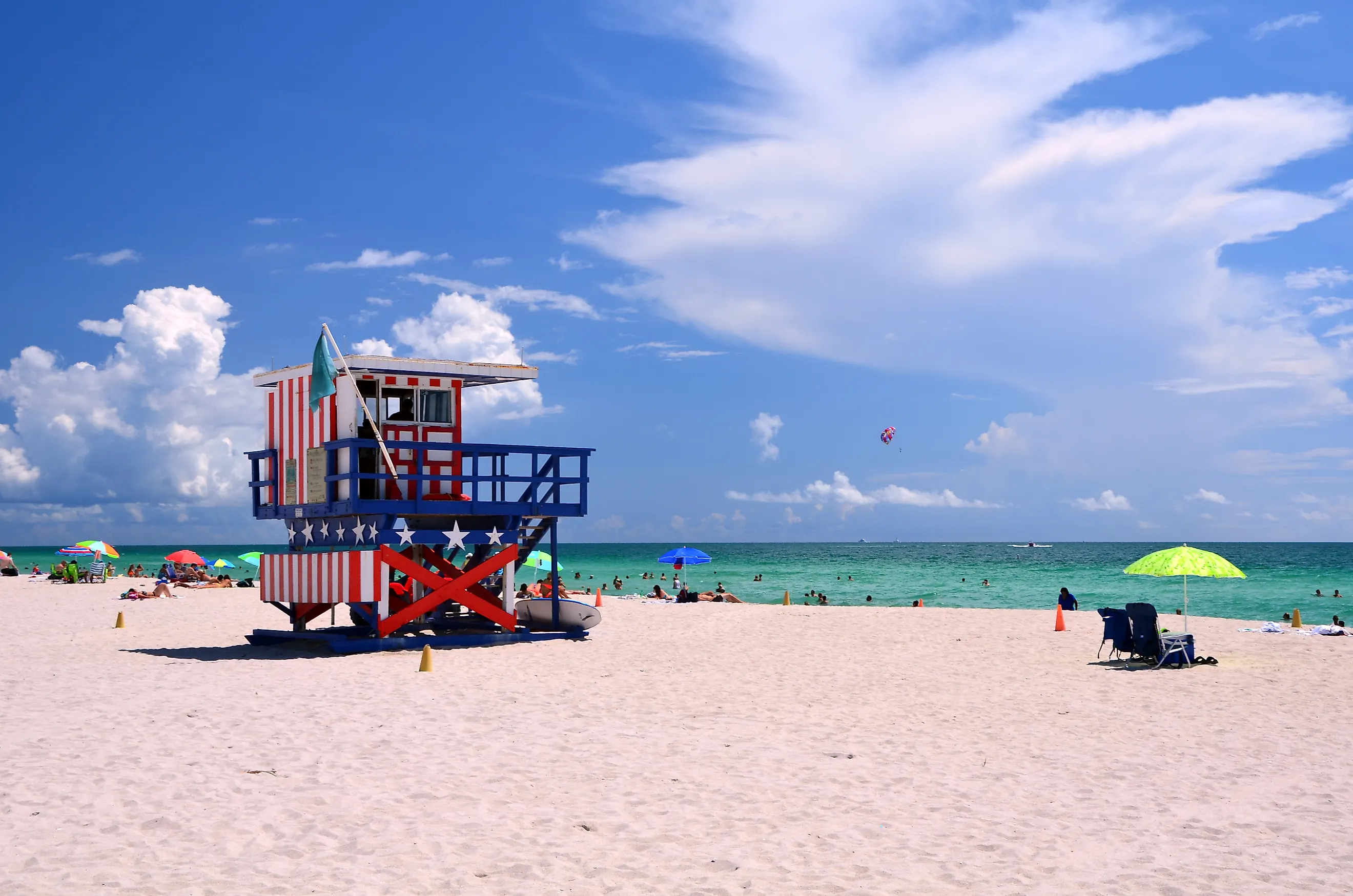
Tourism became a major draw for Miami's beach area, with John Collins and Carl Fisher constructing hotels, shops, and nightclubs in the early 1900s.
Although the Great Depression and a hurricane of 1926 impacted the city greatly, World War II brought in larger numbers of soldiers to train, who after the war would return to settle. In addition, larger numbers of Cubans fled to Miami in 1959 following the rise of Fidel Castro to power.
A major change in administration

Two major changes impacted the administration and culture of Dade County. The first was the creation of the Miami-Dade County Home Rule Charter of 1957, which was made possible through the Dade County Home Rule Amendment of 1956 of the Florida Constitution. This charter gave the county expanded authority over the various municipalities of the county, enabling them to handle sewerage, transportation, zoning, and other issues.
For example, the county could change municipalities, and create a metro court system. In essence, this helped centralize the county and avoid conflicting jurisdictions. In addition, the Dade County Home Rule Amendment gave the county the right to change its name.
This would bear fruit in 1997 with the name change from Dade to Miami-Dade County. This decision was in part driven by the international importance of Miami, which had grown to become a diverse city, while still acknowledging the legacy of Dade County.
Protecting the Everglades

Even as authorities were draining the subtropical wetlands known as the Everglades, there were also efforts to protect the environment, especially due to its importance as an ecosystem for wading birds. In 1901, Florida banned plume hunting, but enforcement was difficult and could at times lead to violent encounters, such as the murder of Guy Bradley in 1905, the first bird warden for the Everglades region.
In 1916, the Florida Federation of Women's Clubs gathered funds to purchase 960 acres of Everglades to turn into the Royal Palm State Park to protect rare tropical plants and animals. They gradually expanded it over the years until it reached 4,000 acres.
At the same time, conservatives were lobbying Congress to create a national park to protect the rapidly disappearing Everglades of Dade County, Collier County, and Monroe County. They officially received Congressional approval in 1934, but it would take 13 years to secure all the necessary lands, including Royal Palm State Park. Everglades National Park officially opened on December 6, 1947.
Today, about a third of Miami-Dade is part of the Everglades National Park, covering approximately 521,591 acres of the county. This isn't the only national park in the county, as right off the coast of Miami sits Biscayne National Park, a series of islands and coral reefs consisting of about 173,000 acres.
This county is still growing
Today, Miami-Dade County is still growing, as its population increased from 2.701 million people in 2020 to 2.802 million in 2025, which is an overall growth rate of 3.7%.
The primary driver of this growth has been immigration, as it was the biggest county for international immigration in 2024. In addition to immigration, Miami-Dade sees a significant amount of tourism, with 32% of tourists coming from Florida itself, and 46% from elsewhere in the U.S.
Visitors are also drawn in by the valuable coral reefs of Biscayne National Park, along with the crocodilian wildlife and biologically rich waters of the Everglades National Park. What really sets this county apart is its ability to constantly reinvent itself from a remote region to a major travel hub and a modern administrative center that still protects its natural treasures.