Where People Are Moving To In Idaho In 2026
Idaho added 28,861 residents in the year ending July 2025. That 1.4% clip trailed only South Carolina nationally. Three counties took almost all of it. Ada and Canyon led the surge. Kootenai in the north held the rest. Together the three absorbed more than 75% of the gain. The Treasure Valley squeeze explains most of the movement inside the state. A typical Canyon County home costs roughly $130,000 less than one in Ada County. Buyers priced out of Boise and Meridian keep pushing west after the cheaper lots. The seven places below show where they landed.
Caldwell

Caldwell led Idaho cities in residents gained for the second straight year, adding 3,452 people in 2025 per Census Vintage 2025 estimates. The Canyon County seat grew from 59,996 at the 2020 Census to roughly 76,500, a gain of more than a quarter in five years. The driver is price. Ada County's median sale price sat near $555,000 in late 2025. Caldwell's ran under $400,000, the most affordable entry point in the Treasure Valley.
That gap has pulled first-time buyers and Ada County families west along Interstate 84. New subdivisions now ring the south and east edges of the city, and more than half of Canyon County listings are new construction. The College of Idaho, the state's oldest private college, sits in the older core. Indian Creek runs through a downtown where restaurants and a farmers market have returned to its banks.
Nampa

Nampa, the largest city in Canyon County, added 2,807 residents in 2025 for the third-highest numeric gain in the state. The city rose from 100,200 at the 2020 Census to roughly 120,000 by 2025. Like Caldwell, Nampa competes on affordability. Its median home price held near $415,000 in late 2025, well below Ada County's.
Most buyers are Treasure Valley households trading a shorter Boise commute for more house, a pattern visible in the rooftops climbing across south Nampa. Employment has kept pace with the housing. The College of Western Idaho operates its main campus in Nampa, and an Amazon fulfillment center off Interstate 84 ranks among the area's larger private employers. Downtown has filled in around the historic Nampa Train Depot, where restored brick storefronts have brought foot traffic back to a core that emptied out decades ago.
Star

Star posted the fastest growth rate of any Idaho city in 2025 at 14.8%, adding 2,694 residents. The Ada County town stood at 11,117 in the 2020 Census and has nearly doubled to about 21,000 since. Its growth is largely an intra-Ada story, with newcomers arriving from Boise, Eagle, and Meridian. Those moves do not surface in IRS county-to-county data, which tracks only crossings between counties.
The appeal is newer housing on open land at the valley's western edge. Star's median sale price near $572,000 lands above Canyon County but below Eagle, the niche it has carved for buyers who want a larger home inside Ada County. Development has spread north from State Highway 44 toward the Boise River. The schools split between the West Ada and Middleton districts, a quirk that reflects how fast the town outgrew its original boundaries.
Kuna

Kuna ranked second among Idaho cities in percentage growth in 2025 at 8.4%, adding 2,436 residents. The Ada County city climbed from 24,011 at the 2020 Census to about 31,500. Like Star, Kuna takes most of its newcomers from elsewhere in Ada County, especially Meridian. Meridian prices reached about $515,000, against Kuna's $449,000. Buyers accept a longer drive to the valley's southern edge in exchange for newer homes and lower prices.
The result shows up in subdivision after subdivision filling the farmland south of Kuna Road. Kuna also serves as the northern gateway to the Morley Nelson Snake River Birds of Prey National Conservation Area. The protected Snake River canyon holds one of the densest nesting raptor populations in North America. That stretch of public land, minutes from a fast-growing downtown, gives Kuna an open-space appeal the inner-valley suburbs cannot match.
Middleton

Middleton expanded from 9,425 residents at the 2020 Census to 12,288 by 2025, a gain of roughly a third in five years per Census Vintage 2025 estimates. The town held only 5,524 residents in 2010, so its climb past 12,000 ranks among the steeper trajectories in the valley. Middleton occupies the premium end of Canyon County, where homes sell for a median near $460,000, above Caldwell and Nampa but well under Ada County.
Buyers here tend to be Ada County families who want larger homes on bigger lots and accept a commute east toward Boise. The Middleton School District has opened additional schools to keep up with surging enrollment. Farmland along State Highway 44 continues to convert to housing, extending the town toward Star and narrowing what was once a clear rural buffer between the two.
Post Falls

Post Falls stands as the engine of North Idaho's growth, the second-largest city in Kootenai County and one of the state's top gainers since 2020. The city grew from 38,485 at the 2020 Census to about 45,800 by 2024, an 18.6% rise. Vintage 2025 estimates push it past 46,000. Inside Idaho, much of that comes from Kootenai County churn, as buyers priced out of Coeur d'Alene move a few miles west for cheaper lots.
The larger force, though, is out-of-state. Post Falls sits on Interstate 90 just across the line from Spokane, Washington, and draws commuters from the Spokane metro along with California arrivals. The Spokane River cuts through the center of town, and Q'emiln Park on its south bank gives residents quick access to rock climbing, trails, and river launches. New retail and housing have clustered along the Pleasant View and Prairie corridors near the state line.
Coeur d'Alene

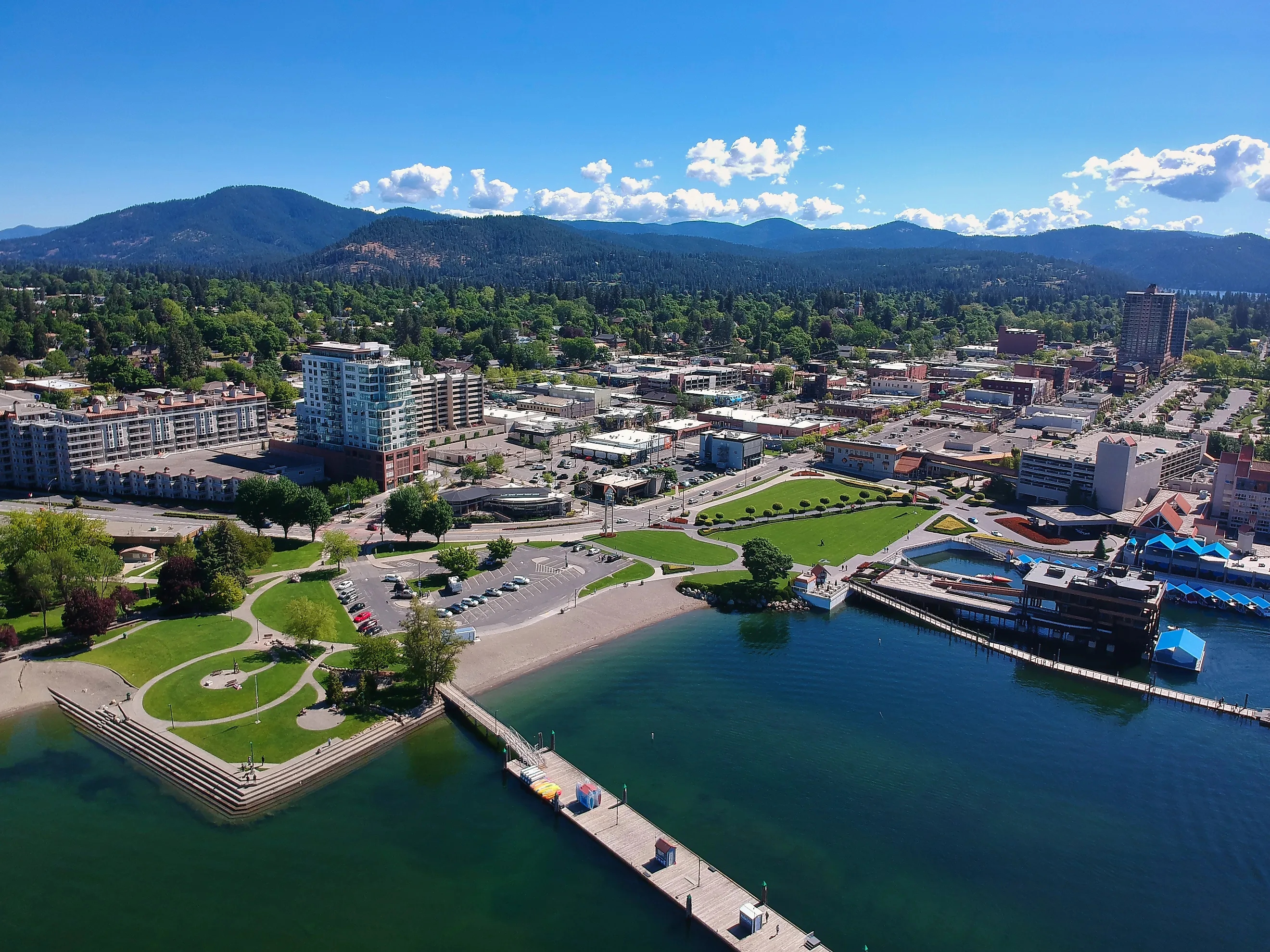
Coeur d'Alene wraps around the north end of its namesake lake and serves as Kootenai County's seat and largest city. Growth here has cooled from its pandemic peak but stayed positive, the city rising past 1.4% in 2025 from a 2020 Census base of 54,628 to roughly 57,000. The in-state piece is modest. Some Kootenai County residents move into the city for work, while others leave it for cheaper Post Falls and Rathdrum.
The dominant inflow is out-of-state, coming from the Spokane metro next door and from California and the West Coast. Lake Coeur d'Alene drives the economy, feeding a tourism, hospitality, and second-home market that has pushed prices among the highest in North Idaho. Resort-driven downtown development keeps the city the regional hub, even as much of the raw population growth shifts to its suburbs.
Where Idaho's Growth Is Headed
Idaho's growth corridor runs on two axes: the Treasure Valley pushes households west from Ada County into Canyon County, and the Kootenai County panhandle holds the north. The rural map looks different, as eight counties lost residents in 2025 and Clearwater, Lewis, and Elmore have declined three years running. For Idahoans in the growth zones, that means heavier traffic on the Interstate 84 and 90 corridors and steady pressure on Canyon County prices as the Ada gap narrows. School districts in Caldwell, Kuna, and Middleton are already building to keep pace.