11 Nevada Towns With A Slower Pace Of Life
Genoa was a Mormon trading post in 1851, a decade before Nevada was a state, and it has never been in a hurry since. Up and down the eastern slope of the Sierra Nevada and out across the Great Basin, the towns that grew up around silver strikes, railroad water stops, and dam construction camps mostly emptied out when the work ran dry, and what stayed behind is a string of places where the clock loosened its grip. Opera houses still host the occasional show. Saloons still pour for whoever walks in. The eleven towns below trade Nevada's neon for porch time, dark skies, and roads with almost nothing on them.
Genoa

The Genoa Bar and Saloon has been pouring drinks since 1853, which makes it the oldest bar in the state, and most of its counter and fixtures date to the 1860s. That is the pace of the place in one building. Genoa itself is Nevada's oldest permanent settlement, and Mormon Station State Historic Park preserves a reconstructed log trading post on the site of the original 1851 station, with a small museum and grounds that fill up for community events through the summer. Genoa Town Park carries the warm-month concert schedule. When the afternoon calls for it, David Walley's Resort sits a short walk off, with mineral hot springs that have drawn soakers to this corner of the Carson Valley for well over a century.
Ely

At the Nevada Northern Railway Museum, the locomotives are not models behind glass; the collection is one of the most complete original short-line operations left in the country, and the steam excursions run on the same track the copper trains used. That is Ely's main event, and it sets the tempo. The Ward Charcoal Ovens State Historic Park, just outside town, preserves six beehive-shaped stone kilns that fed the smelters during the mining boom, close enough to reach for an afternoon. The White Pine Public Museum fills in the rest, with mining, ranching, and Native history. Back on Aultman Street, the Hotel Nevada and Gambling Hall has anchored downtown since it opened in 1929, when it was briefly the tallest building in the state, and it still pours a cold one for anyone coming in off Highway 50.
Tonopah

On a clear, moonless night at the Clair Blackburn Memorial Stargazing Park, you can pick out more than 7,000 stars with your eyes alone. Most cities show you 25 or 50. The park, off Highway 95 with concrete pads laid out for telescopes, is reason enough to time a visit around the new moon. By day, the Tonopah Historic Mining Park spreads across 100 acres of the original silver works, with tunnels and headframes from the boom that built the town. The Mizpah Hotel, restored and operating since its 1907 opening, holds the Pittman Café for breakfast and the Jack Dempsey Room for a sit-down dinner, named for the heavyweight champion who once worked the hotel as a bouncer.
Virginia City

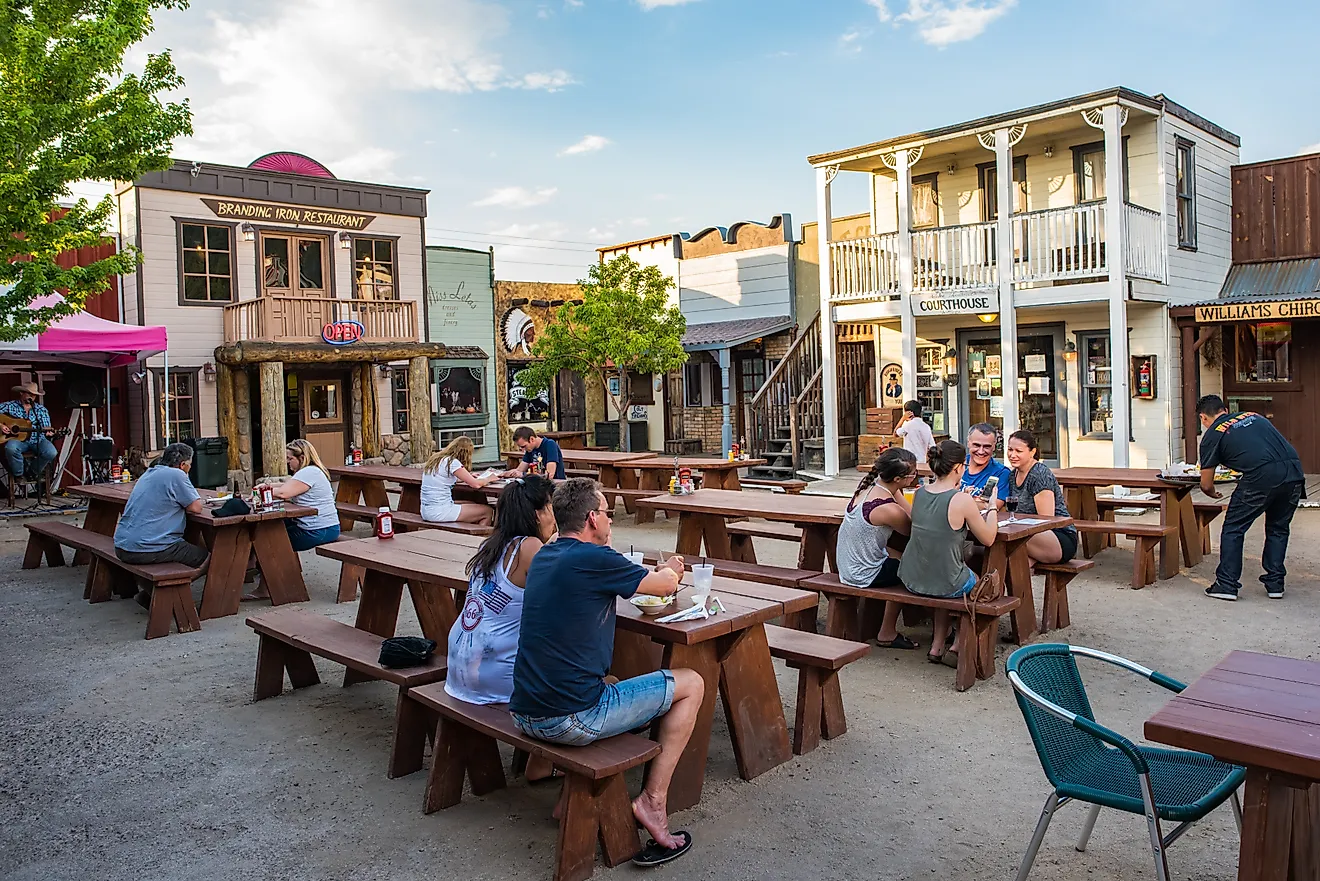
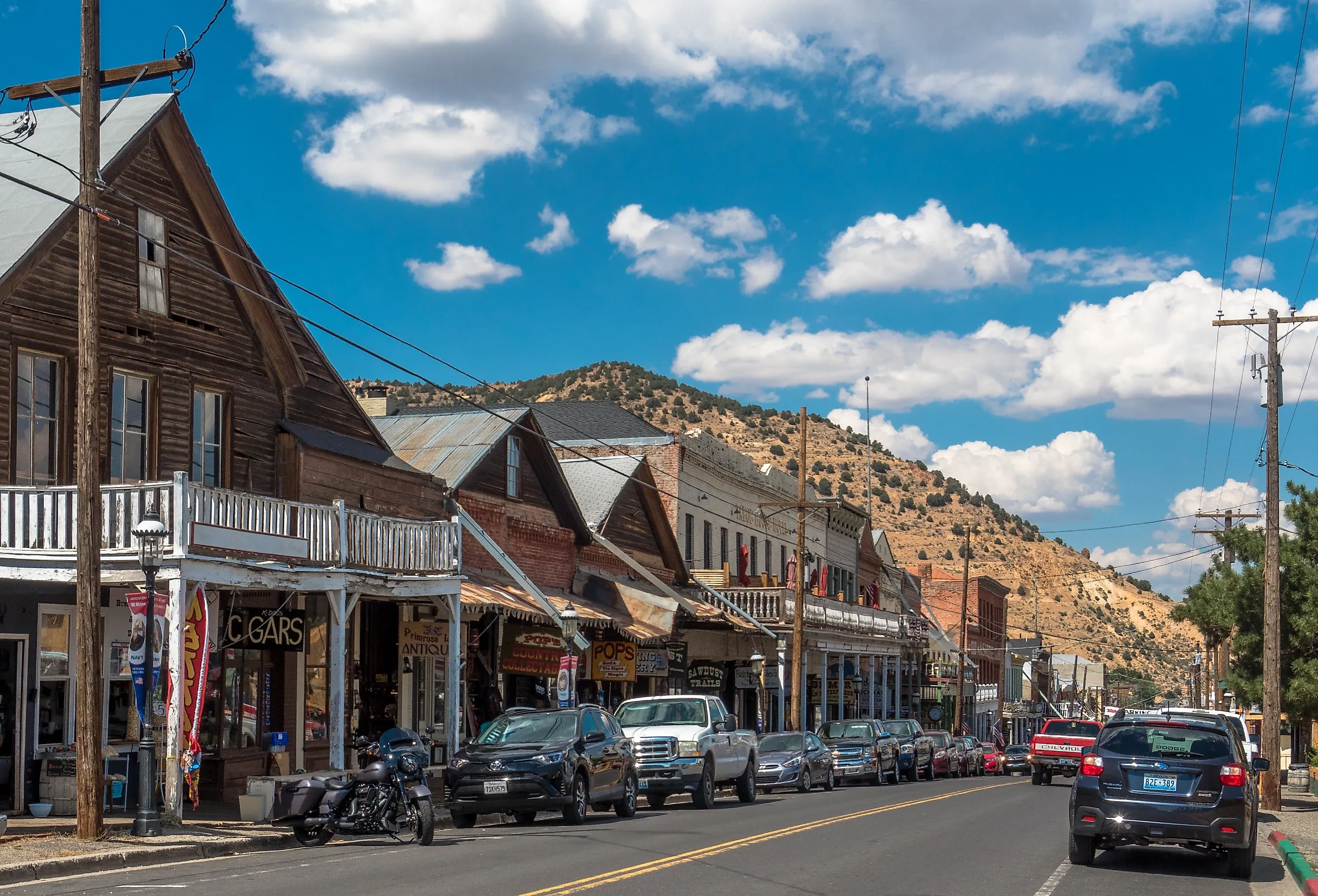
The Comstock Lode silver strike of 1859 turned Virginia City into one of the richest mining centers in the West almost overnight, and the wooden boardwalks and stacked 19th-century storefronts climbing the hillside are what the money left behind. The Virginia and Truckee Railroad runs short excursions along the old mining route, and the Chollar Mine tour takes you underground into the works themselves. The Bucket of Blood Saloon has been serving since 1876, built on the footprint of an earlier saloon right after the Great Fire of 1875 cleared the block. It is an easy place to lose a slow afternoon over a beer.
Boulder City

Gambling is illegal here by city ordinance, one of only two Nevada towns where that is true, a rule that traces straight back to why the town exists. The federal government built Boulder City in the early 1930s to house the workers raising Hoover Dam, laying out organized streets and civic buildings, and the planned layout still shapes a walkable downtown. The dam itself draws most visitors, best taken in without rushing. The Boulder City-Hoover Dam Museum, inside the historic Boulder Dam Hotel, tells the Depression-era construction story, and the Coffee Cup Café is the institution where locals linger over breakfast. At Hemenway Park, desert bighorn sheep come down to graze against the backdrop of Lake Mead country.
Caliente

The Caliente Railroad Depot, a restored Mission Revival building from the Union Pacific era, now does double duty as the town's visitor center and the anchor of its main street. The name comes from the hot springs that first drew settlers, and cottonwoods shade a town that sits well off the southern Nevada rush. Two miles south, Kershaw-Ryan State Park tucks shaded picnic areas, spring-fed wading pools, and trails beneath steep canyon walls. The Barnes Canyon trail network gives mountain bikers and hikers desert terrain to work through at their own speed, and Meadow Valley Wash supports cottonwood stands and wildlife unusual for country this dry.
Eureka

Sixteen smelters once belched enough smoke over Eureka to earn it the nickname "Pittsburgh of the West," back when 9,000 people and a hundred-odd saloons crowded the canyon. About 600 people live here now, and the boom-era buildings have the streets mostly to themselves. The Eureka Opera House, built in 1880 on a block cleared by the previous year's fire, still stages performances under its restored interior. The Eureka Sentinel Museum occupies the original 1879 newspaper building, presses and type cases left where they sat. The Jackson House Hotel has put up guests since the 19th century, and the Owl Club Bar and Steakhouse feeds travelers and locals along Highway 50, the stretch a magazine once branded the Loneliest Road in America.
Gardnerville

Basque sheepherders settled the Carson Valley, and their cooking is still the reason to plan dinner in Gardnerville, served family-style at long tables in the valley's old boarding-house tradition. The town grew as a ranching center under the Sierra Nevada, and the Carson Valley Museum and Cultural Center, housed in a former high school, lays out that agricultural and pioneer history. Lampe Park gives the community its gathering ground, with a quiet stream and walking paths and a calendar of seasonal events. Jobs Peak rises over the whole valley, a granite wall that turns gold at the end of the day.
Wells

The Angel Lake Scenic Byway climbs out of the desert flats into the East Humboldt Range, ending at a glacial lake cupped high against the peaks, good for a morning of fishing or a slow walk along the alpine shore. Wells grew up as a railroad town, and the Front Street Historic District still shows the bones of that era, when this was a working junction on the transcontinental line. The Trail of the 49ers Interpretive Center on 6th Street covers the emigrant routes that funneled through here on the way west, the California Trail travelers who passed through long before the rails did.
Winnemucca

The Humboldt River made Winnemucca a crossing long before the railroad came through, and the Humboldt Museum tells that regional story through Native, ranching, and transportation exhibits. The town's other inheritance is Basque: sheepherders settled here in numbers, and the dining room at the Martin Hotel still serves the lamb and the family-style spread that the town celebrates each summer at its Basque Festival. The Winnemucca Sand Dunes draw the off-road and open-desert crowd just outside town. For something quieter, Water Canyon climbs along a running stream into terrain more rugged than the valley floor lets on.
Lovelock

The Pershing County Courthouse is round, one of the few circular courthouses still in use anywhere in the country, and it sits at the center of town with its early-20th-century architecture intact. Behind it, Lovers Lock Plaza invites visitors to clip a padlock to a chain as a token of commitment, a small local tradition that has become the town's signature stop. The deeper history is just outside town at Lovelock Cave, where excavations turned up evidence of human use going back thousands of years. Rye Patch State Recreation Area, along the reservoir on the Humboldt River, handles the boating, fishing, and lakeside afternoons.
Wide Open Spaces And Unhurried Places
What these towns share is not scenery so much as arithmetic: the work that built them mostly left, and the people who stayed kept the opera houses, the saloons, and the depots running at a fraction of the old traffic. That is why a steam train in Ely or a 7,000-star sky over Tonopah feels unhurried in a way a manufactured attraction never quite manages. The pace was not designed. It is what is left when the boom moves on and the place decides to stay anyway.