5 Old-Timey Mining Towns In Wyoming
The Wyoming towns of Encampment, Rock Springs, and Evanston only exist because of what miners extracted in the late 1800s. Mining took off here in the 1860s when prospectors staked the Carissa lode near South Pass. Soon after, mining towns were popping up everywhere across the state. Copper and coal strikes followed across the territory, each one leaving its mark on the landscape. Here is where to experience Wyoming's mining past at its "old-timey" best.
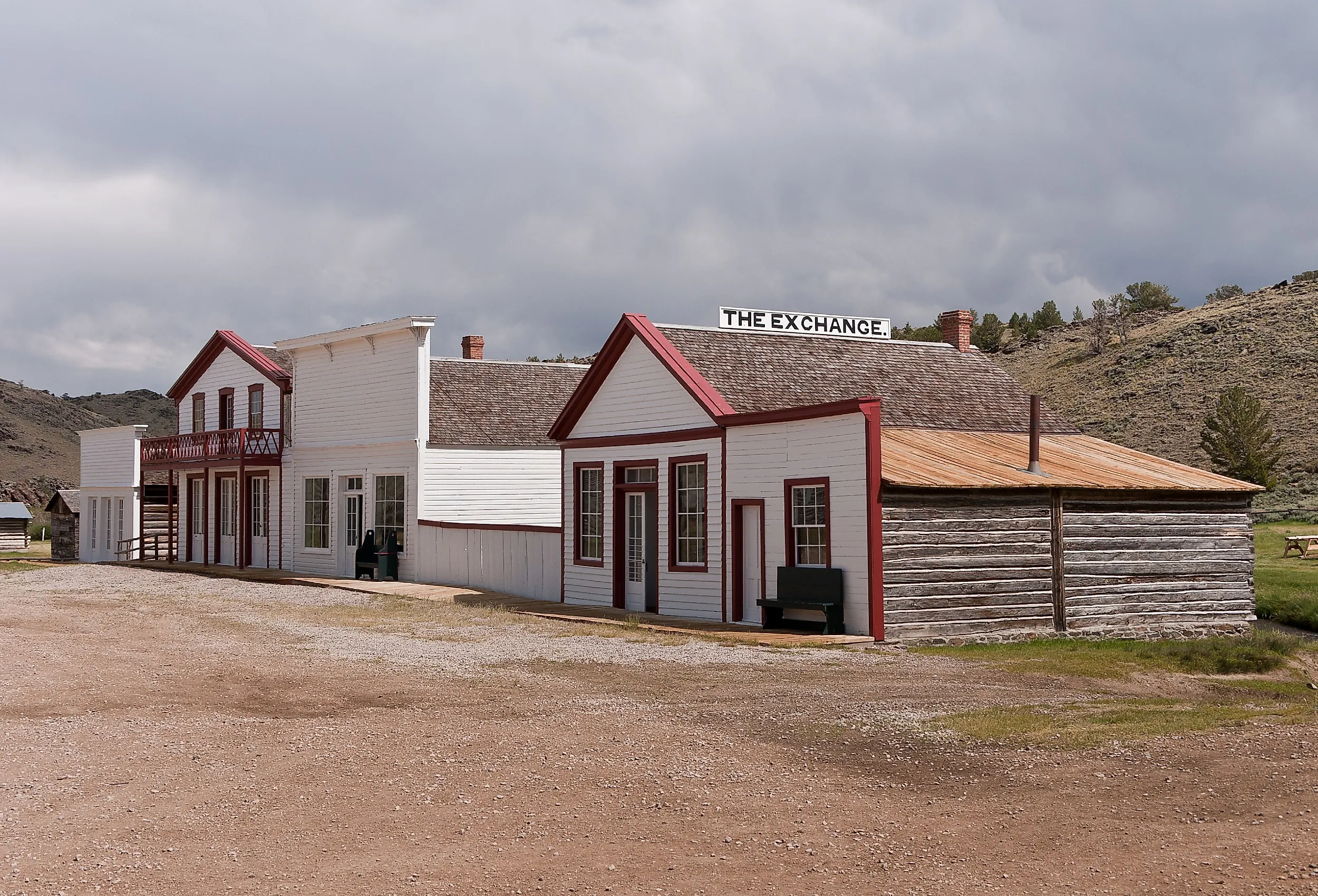
South Pass City

Wyoming's first gold rush played out in the foothills of the Wind River Mountains. Soldiers from Fort Bridger staked the region's first claim in June 1867, and the Carissa Mine became the district's richest producer of gold. South Pass City was established soon after near the mine to supply the miners, fuelling the extraction of $7 million worth of gold until the mines closed in 1954.
The town made history of another kind in 1869 with the introduction of the bill that made Wyoming Territory the first government in the world to grant women the vote. Today, the entire town is part of the South Pass City State Historic Site, with some 20 original buildings restored and open to the public. These include the historic South Pass Hotel and the Smith-Sherlock General Store, both associated with prominent local businesswoman Janet Sherlock-Smith.

Guided tours of the Carissa Mine are fun, especially as the old milling equipment is fired up to demonstrate how ore was crushed and processed. Gold panning experiences in the creek that runs past town are also available, and interpretive trails pass brick kilns and hillside prospects. Time a visit for the town's Gold Rush Days. Held each July, this two-day celebration features vintage baseball games, live saloon music, and costumed reenactments.
Encampment

When Ed Haggarty found copper in the Sierra Madre Mountains in 1897, his strike transformed a quiet ranching outpost on the Encampment River into one of the busiest mining camps in the Rocky Mountains. The Ferris-Haggarty Mine shipped ore by the ton, a smelter opened in town in 1902, and the world's longest aerial tramway, 16 miles long, was built to move the copper from the mountains in huge buckets.
The Grand Encampment Museum does a wonderful job of explaining the town's boom-and-bust story. Highlights include 15 historic buildings, along with the much-photographed two-story outhouse and the relocated Slash Ridge Fire Tower. The museum grounds preserve part of the historic tram-tower system and display equipment connected to the region’s copper-mining industry. The museum also helps preserve the work of Lora Webb Nichols, a local photographer who took thousands of photos of everyday life in the valley between 1899 and the 1940s.
One of the town's most popular events is the Woodchoppers Jamboree and Rodeo. Held on the Father's Day weekend for more than 60 years, its highlights include logging competitions and a rodeo. That same weekend, old-fashioned melodramas where audiences cheer the hero and boo the villain are held in the Grand Encampment Opera House, built in 1902.
Kemmerer

Coal put Kemmerer on the map in 1897 when mine operator Patrick Quealy and financier Mahlon Kemmerer laid out the town near the mines along the Hams Fork River. The pair sold lots to private buyers rather than running a company town, and the independent community that resulted attracted merchants as well as miners in droves.
One of them was James Cash Penney, who opened his Golden Rule Store here in 1902. That little shop grew into the JCPenney retail empire. The JCPenney Mother Store in downtown Kemmerer sells current merchandise alongside displays of artifacts from the original store. J.C. Penney House, the founder's early home, just down the street, is open as a museum, while a bronze statue of the retailer watches over the town park.
Mining here came at a heavy price, however. On August 14, 1923, an explosion at the nearby Frontier Mine killed 99 men, one of the deadliest coal mining accidents in Wyoming. The towns of Kemmerer and Frontier held a joint three-day funeral for the victims. The Hamsfork Museum, housed in an old church, tells these stories through a replica coal mine, mining equipment, and even bootlegging stills from the Prohibition years, when the local liquor trade earned the town the nickname "Lil Chicago."

Kemmerer's other claim to fame is 50 million years old. Fossil Butte National Monument, 15 miles west of town, protects one of the richest fossil deposits on the planet. The monument's visitor center displays more than 300 specimens and is the start of the 2.5-mile Historic Quarry Trail. Private quarries, such as American Fossil, let visitors dig for fossils to take home.
Rock Springs

No Wyoming town was more dependent on coal mining than Rock Springs. The first mines opened here in 1868 as the Union Pacific Railroad pushed west, and over the following century, more than 100 million tons of coal were extracted until the mines closed in 1963. Abandoned tunnels later caused sinkholes, leading to state projects to fill voids, such as one that developed beneath Interstate 80.
Mining activities attracted immigrants from across the globe, and Rock Springs became known as the "Home of 56 Nationalities." This rich heritage is celebrated every summer at the International Day festival with music, dancing, and food from dozens of cultures. You can learn more about the town and its people at the Rock Springs Historical Museum. Housed in the old city hall from 1893, the displays include mining tools, historical photographs, and details of the tragic 1885 Rock Springs Massacre, when a white mob killed 28 Chinese miners.
The town's most popular selfie spot is the Rock Springs Coal Arch. This steel welcome sign reads "Home of Rock Springs Coal" and has greeted visitors since the 1920s. From here, head to the Downtown Rock Springs Historic District. Highlights include the Park Hotel, opened in 1914, and the First National Bank building, completed in 1919.
The most impressive mining relic, though, is the Reliance Tipple. Built in 1936 by the Union Pacific Coal Company and one of only two such surviving structures in Wyoming, it sorted and loaded 500 tons of coal per hour at its peak.
Evanston

Three miles northwest of Evanston, the Almy coal camp once stretched for five miles along the Bear River and housed 4,000 miners and their families. Opened in 1868, Almy supplied the Union Pacific Railroad until their closure in 1900 and was considered one of the most dangerous mines in Wyoming after an explosion killed 38 men. Almy was eventually abandoned and absorbed by the neighboring railroad town of Evanston.
With many Almy miners of Chinese descent, Evanston's Chinatown along the Bear River grew into one of the largest in the region. Visit Depot Square today, and you will see Joss House, an elaborately decorated replica of the town's original temple. The square itself is a pleasant place to linger, its brick paths leading to restored landmarks like the Beeman-Cashin Building, an old warehouse from the 1880s. The Chinese Joss House Museum and nearby Wing Family Chinese Gazebo and Garden commemorate Evanston’s historic Chinese community throughout the visitor season.
The Roundhouse and Railyards is another must-visit. This vast brick locomotive facility was built in 1912 and is the last remaining roundhouse on this stretch of the Union Pacific line. Highlights include the historic turntable, restored gallery and event spaces, and guided tours arranged through the City of Evanston. The Uinta County Museum covers the area's mining and frontier past in detail, while the Uinta County Courthouse is the oldest still in use in Wyoming.
Wyoming's Mining Past
Mining gave each of these five towns its start, and each still proudly displays its mining heritage for visitors to enjoy. Pay a visit today, and you are as likely to find yourself panning for gold as you are exploring old mine sites that still possess some of their original mining structures. For those who enjoy authentic travel experiences, Wyoming's old-timey mining towns are well worth building a road trip around.