This US Downtown Is Made For Strolling
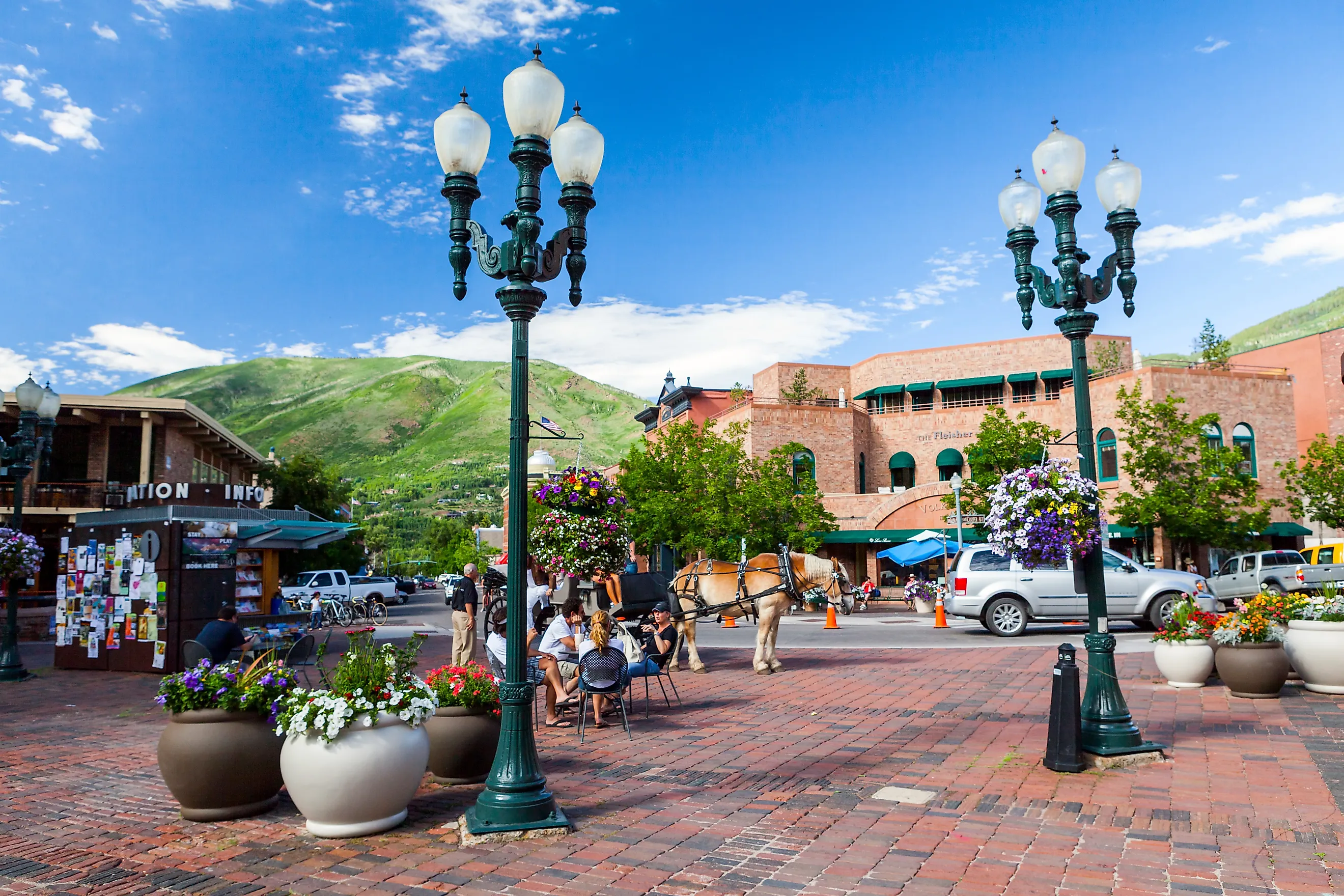
Aspen has a reputation for luxury, yet its best feature is surprisingly simple: it’s genuinely walkable. The downtown core is compact enough that you can move between parks, museums, historic homes, and the base of Aspen Mountain without ever needing to drive. That makes it an ideal stop for travelers who want mountain scenery with an easy, pedestrian-friendly layout, whether you’re visiting in peak ski season or catching the town in quieter months. Below are a few of the best sights to explore in and around downtown Aspen, all close enough for a relaxed afternoon on foot.
How The World's Most Famous Ski Town Came To Be

Aspen began as a mining settlement in the late 1870s after silver was discovered in the Roaring Fork Valley. Originally called Ute City, the town was renamed Aspen in 1880, after the abundant aspen groves in the area, and was officially incorporated in 1881. Throughout the next decade, it would go on to become one of the largest silver producers in the United States, with a population exceeding 5,000, huge for its time and remote location deep in the Rocky Mountains.
The Silver Crash of 1893, however, caused the local economy to collapse, triggering decades of decline and near abandonment. Aspen’s revival began in the mid-20th century when Chicago industrialist Walter Paepcke decided to invest heavily in the community, promoting it as a cultural and recreational center, particularly for skiing, its main draw to this day.

With that, the Aspen Skiing Company was founded in 1946, transforming the area into a world-class winter sports destination, all while other cultural institutions such as the Aspen Music Festival and the Aspen Institute followed, helping shape the town's modern identity as a blend of mountain resort, arts hub, and affluent retreat.
Explore These Sights And Sounds In Downtown Aspen
While you should definitely try to hit the slopes or hike one or more of the dozens of local trails in the surrounding parklands (depending on which season you arrive, of course), here are some of the best local attractions directly in town for a more relaxed afternoon outing instead.
John Denver Sanctuary

The John Denver Sanctuary sits along the Roaring Fork River at the edge of Aspen’s downtown core and is easily reached on foot from most of its shops, restaurants, and hotels. Created in 1998, this cozy urban greenspace was meant to honor musician and environmental advocate John Denver, a longtime Aspen resident.
Here, stone walls throughout the sanctuary are engraved with lyrics from the world-renowned artist's songs, reflecting his long-standing interest in Colorado and its conservation. The site also functions as a public garden, with an assortment of native plants, small ponds, and riverside viewpoints. Furthermore, its proximity to Rio Grande Park and downtown pedestrian paths makes it a natural stopping point for walkers exploring Aspen’s central attractions.
Aspen Art Museum

The Aspen Art Museum is located in the heart of town, making it easily accessible from a multitude of streets and public spaces such as the John Denver Sanctuary, as well as the rest of the riverfront area. This top-notch museum occupies quite an architecturally striking building, designed by Shigeru Ban and completed in 2014. Better yet, admission is free, encouraging casual visits by all pedestrians strolling the downtown core.
It focuses on rotating exhibitions of international contemporary art rather than permanent collections, ensuring lots of revisit value in case you ever decide to come back another year. A rooftop café and an open stair design further integrate the building into the environment, making it not only a fascinating stop for art lovers but also a convenient one.
Silver Queen Gondola

For perhaps the best view in town, the Silver Queen Gondola departs directly from downtown Aspen at the base of Aspen Mountain, just a few blocks away from the aforementioned art museum. This gondola rises more than 3,267 vertical feet to the summit, offering sweeping sights of the valley below.
Operating year-round, it provides connections to hiking trails in the warmer months and ski terrain when snow is on the ground. At the top, you'll also find the Aspen Mountain Ski Resort Sundeck, along with a number of other, quieter observation areas.
Note that the region is remarkably beautiful in autumn, when its abundant forests of aspen trees almost simultaneously turn golden yellow, an event that draws swathes of landscape photographers each season.
Aspen Historical Society

Learn more about this community's past at the Aspen Historical Society, which preserves and interprets the town’s mining, cultural, and social history through several sites located within or near Aspen. Its main campus includes the Wheeler/Stallard Museum, housed in a restored 1888 Victorian home just steps from Main Street. Additional properties, such as the Holden/Marolt Mining and Ranching Museum, are also reachable via nearby pedestrian paths.
Displays focus on Aspen’s silver boom, post-1893 decline, and mid-20th-century revival, while guided tours, archives, and a rotation of exhibits make these old-timey landmarks a perfect way for history buffs to spend a few hours.
Other Rocky Mountain Towns You Should Visit

Looking to extend your trip? Both Telluride and Salida offer similar yet distinct Colorado mountain-town experiences just a few hours away in each direction.
Telluride is tucked in a steep, highly scenic box canyon in the San Juan Mountains and is known for its meticulously maintained historic district, former mining roots, and world-class ski resorts. Moreover, Telluride's free gondola connects the town with adjacent Mountain Village, making it easy to explore the region's high-altitude landscapes without a car.
On the other hand, much closer to Colorado Springs to the east, Salida sits along the Arkansas River and rests at a lower elevation. Its compact downtown features a nice assortment of galleries, mom-and-pop eateries, breweries, and access zones for the river (where tubing in the summer is popular), while nearby Browns Canyon National Monument draws hikers and rafters alike.