American Towns Tourists Ruined
Ask people in a dozen American resort towns how they feel about tourism, and you will hear a version of the same story. Moab traded uranium mining for the crowds heading into Arches, and three million visitors a year now overload its water and sewer systems. Bar Harbor capped cruise disembarkations at 1,000 a day and has defended that limit in federal court since 2022. In Nantucket, the median home now runs about 3.5 million dollars, and the workers who keep the island running commute in by ferry. Each of these ten towns ahead bets on tourism, and each is now wrestling with what it won.
Bar Harbor, Maine

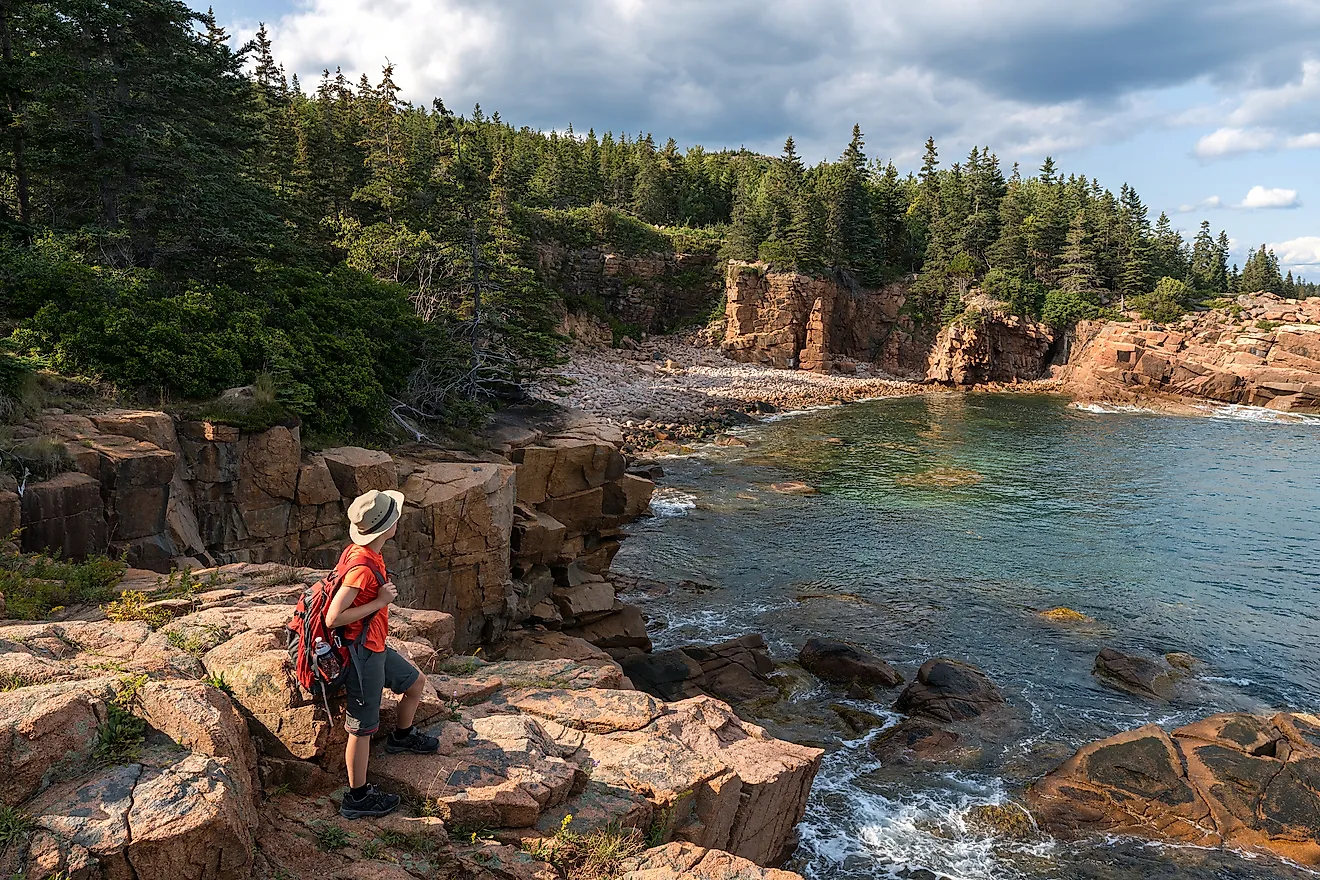
This New England coastal town has a working waterfront, a lobster industry that still lands boats daily, and a downtown of independent shops, seafood restaurants, and cafes. Bar Harbor grew up in the 19th century as a summer retreat for the Rockefellers and the Vanderbilts. It is also the gateway to Acadia National Park, where granite mountains meet the Atlantic and carriage roads and hiking trails run inland. That combination has drawn crowds for well over a century, and it now puts heavy pressure on the town and its roughly 5,300 residents.
Until recently, Bar Harbor was a major cruise port, with thousands of passengers coming ashore on peak days. In November 2022, voters approved an ordinance capping cruise disembarkations at 1,000 per day, and cruise traffic has fallen sharply since. The legal fight ran four years: a federal appeals court partly upheld and partly remanded the cap in August 2025, and in May 2026 a district court judge ruled it enforceable only in July and August, the peak months. Peak season still runs June through October, and total annual visitors remain in the millions. Because tourism has shaped the town for generations, residents have long adapted to the crowds. Of all the towns here, Bar Harbor is furthest along in working out a balance between the tourism economy and daily life.
Nantucket, Massachusetts

Nantucket earned its wealth from whaling long before tourism. The island, about 30 miles off the Massachusetts coast, holds one of the largest concentrations of pre-Civil War architecture in the country, with cobblestone streets and grey-shingled cottages. Reachable only by ferry or plane, it built a summer economy on that scarcity, drawing well-heeled visitors to its beaches, its historic downtown, and the rose-covered lanes of Sconset. The year-round population of about 14,000 is a fraction of the summer crowd.
That crowd is the problem. The population swells past 60,000 at peak, and the strain shows most in housing. The median home price has climbed to around 3.5 million dollars, and much of the housing stock sits vacant most of the year or serves as short-term rentals, leaving teachers, nurses, and service workers scrambling for places to live. Some employers now house their own staff. The Sconset Bluff Walk, a footpath past private cottages, drew such crowds that residents pushed for recommended visiting hours and volunteer docents. Islanders have voted repeatedly on how to balance the tourism economy against the housing crunch, with no easy answer yet.
Sedona, Arizona

Sedona is a frequent example of overtourism in the American Southwest. Its draw is the red rock: sandstone buttes, mesas, and spires that glow orange at sunrise and sunset, plus hiking trails for every level and the green cut of Oak Creek Canyon through the desert. A mild climate and an arts-and-wellness scene keep visitors coming year-round.
Residents have been vocal about the cost. They point to traffic, crowded trailheads, rising housing prices, and commercialization as the drivers of a decline in livability. Service workers often cannot afford to live in the town they staff. Many residents feel the focus on visitors is eroding the town's character, and they argue the tourism economy has largely bypassed local independent businesses in favor of outside corporations.
Moab, Utah

Moab was a sleepy uranium-mining town in the 1950s before it became one of the busiest adventure-tourism hubs in the West. It sits between Arches and Canyonlands national parks and serves as a base for mountain biking, rafting, and off-roading. Arches alone drew about 1.5 million visitors in 2025, and on a summer weekend the town of roughly 5,000 residents can host several times that number. When the mines closed, Moab reinvented itself around recreation and was held up as a national model for the transition.
The model buckled under its own success. Three million annual visitors to the area strain the sewer, water, and solid-waste systems, and Grand County runs one of the busiest search-and-rescue operations in the state. An influx of remote workers and second-home buyers has driven housing costs so high that rangers and other essential workers struggle to find anywhere affordable nearby. Arches ran a timed-entry reservation pilot for several summers to spread out the crush, though the federal government ended that program for the 2026 season. Residents remain split between the revenue and the daily reality of a town many describe as overrun.
Key West, Florida

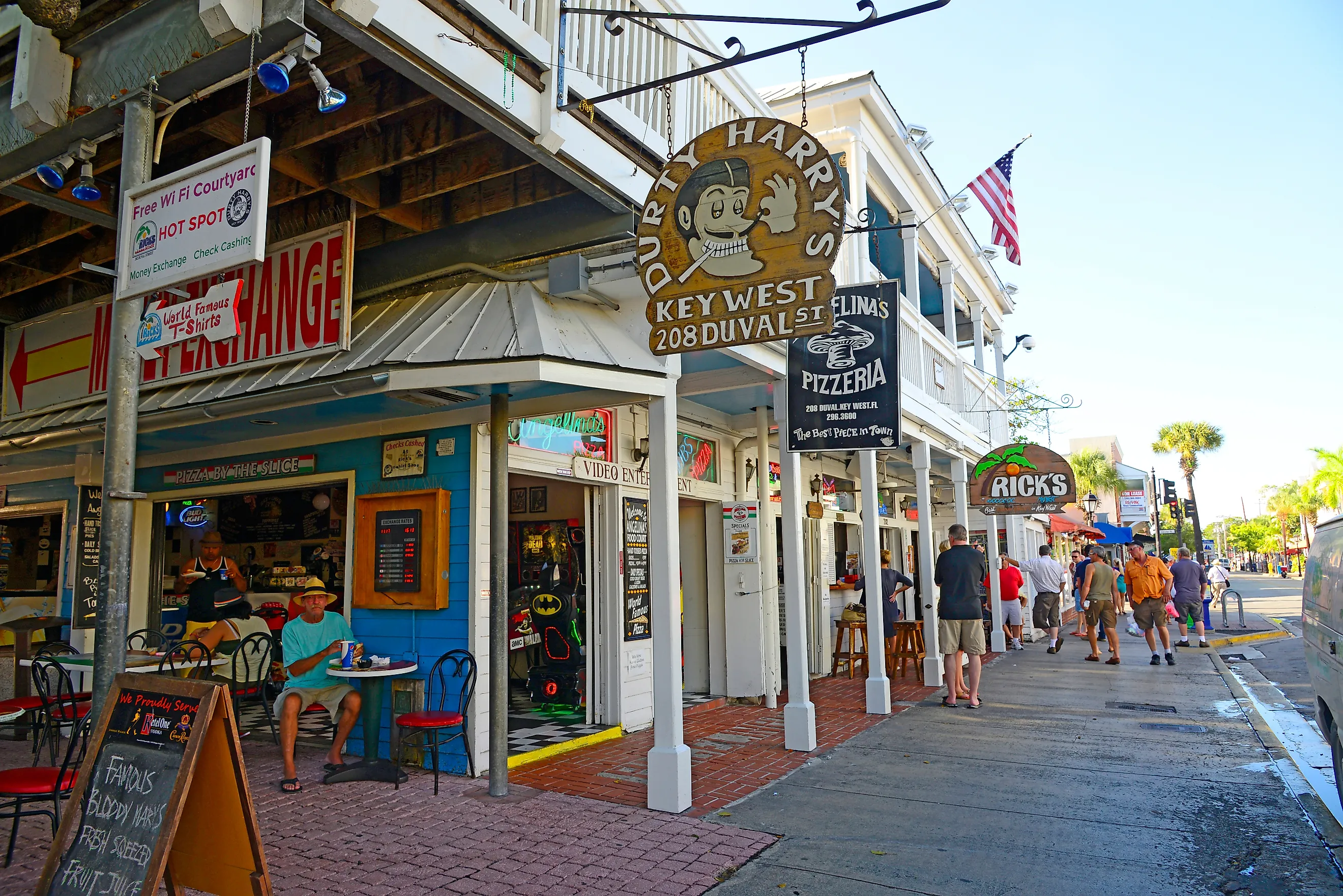
In Key West, tourism and civic life have become one and the same. Tourism has long been the main industry, and residential life orbits it in a way that is hard to change. The town trades on its laid-back island character: sunsets over clear water, a lively nightlife, its billing as the southernmost point in the continental United States, a connection to Ernest Hemingway, and a vibrant mix of Florida and Caribbean culture.
Residents have long worried the town has lost its edge. Many argue that cruise ships and their passengers contribute far less to the local economy than is often assumed, and that overnight visitors put in the most. De-emphasizing cruise tourism is therefore central to the local case for improving quality of life. Few residents want Key West to turn away from tourism altogether. What they want is a balance that favors visitors who stay several nights, engage with the town, and spend accordingly.
Jackson, Wyoming

Jackson sits in the valley of Jackson Hole, at the doorstep of Grand Teton and a short drive from Yellowstone, and its antler-arch town square is one of the most photographed blocks in the Rockies. An international airport finished in 1983 turned a quiet ranching and skiing community into a global destination. On a summer day, visitor counts run several times the town's roughly 10,700 residents, and both parks regularly break attendance records. Grand Teton's roadside pullouts fill fast, and the evening rush across town is its own ordeal.
The deeper strain is money and where people can afford to live. Teton County has among the highest per-capita asset income in the country, and home prices routinely run into the millions, pushing much of the workforce out of the valley. Thousands now commute over Teton Pass from Idaho, a fragile lifeline that snapped in 2024 when a landslide destroyed part of the highway and turned a 35-minute drive into a multi-hour detour. In a county survey, only about a quarter of residents said tourism's benefits outweighed its drawbacks, and a majority said they would accept higher taxes for fewer visitors.
Estes Park, Colorado

Estes Park is the eastern gateway to Rocky Mountain National Park, one of the five most-visited national parks in the country, which drew more than 4.1 million visitors in 2025. The park sits a few miles from town, and much of that traffic passes straight through the small downtown to reach it. The town leans on its setting: the historic Stanley Hotel, alpine trails and Trail Ridge Road, and an easy mountain escape for Front Range residents from Denver, Boulder, and Fort Collins. Its year-round population of fewer than 6,000 nearly doubles when summer residents return.
The crush is worst on summer and fall weekends, when day-trippers arrive by car all at once and downtown fills with idling traffic. The park introduced a timed-entry permit system to spread visitors through the day, which locals say has helped. The town also broke ground on a roughly 42-million-dollar downtown traffic project, more than a decade in the making, meant to move park-bound cars through faster and ease the gridlock. Longtime shop owners describe a place built on tourism that has become, at peak times, unpleasant to live and work in.
Gatlinburg, Tennessee

Gatlinburg is the gateway to Great Smoky Mountains National Park, the most-visited national park in the United States, which drew about 12.2 million visitors in 2024. As the main access point to the mountains, the town gets treated as a thoroughfare. Residents say the commercial center is over-developed and tacky, crowded year-round, with most tourist dollars flowing to outside corporations rather than staying local. The permanent population is only around 3,500, while the millions bound for the park pass through to get there.
Traffic and downtown overcrowding are the daily problems, and parking is chronically short. Trails near town, such as Laurel Falls, Alum Cave, and Kuwohi (formerly Clingmans Dome), are packed and noisy, leaving residents shut out of their own backcountry. The park itself is under heavy pressure: congested roads, overflowing lots, trail erosion, litter, and disturbed wildlife. The park service has moved to manage the flow, including a paid parking tag system.
Carmel-by-the-Sea, California

Carmel-by-the-Sea packs an outsized reputation into a single square mile of the Monterey Peninsula. The village cultivated its character on purpose, with no traffic lights and, for more than a century, no street numbers or parking meters. It has a white-sand beach at the foot of Ocean Avenue, a downtown of independent galleries and restaurants that bars chain stores, and roots as an artists' colony settled by writers and photographers after the 1906 San Francisco earthquake. Clint Eastwood served as mayor in the 1980s. For a town of about 3,200 residents, it draws a remarkable number of visitors.
Weekend crowds have long been the friction point, arriving off the Pacific Coast Highway, and social media has intensified the flow. Residents say the downtown gets so busy that ordinary errands like grabbing takeout or finding a parking spot become a chore. The tension surfaced in June 2026, when the city council passed its annual budget but cut the roughly 292,000-dollar contribution to the county tourism bureau, responding to homeowner complaints. Business owners countered that marketing keeps the local economy alive, and in July 2026 the council voted to restore the funding after the bureau agreed to put part of it toward a visitor-management study. It is the same debate that runs through every town on this list.
Branson, Missouri

Branson is the rare town here that built its own attraction rather than inheriting one from nature. Set in the Ozarks of southwestern Missouri, it grew from a small lake town into a live-entertainment capital, with a strip of theaters, the Silver Dollar City theme park, and the lakes and hills around Table Rock and Lake Taneycomo. It markets hard to family and bus-tour audiences, and the small permanent population is dwarfed by the millions who arrive each year for the shows.
Because the town was engineered around visitors, its strains look different. The entertainment strip chokes with traffic in peak season, and the economy leans on seasonal, often low-paying service jobs that make year-round life precarious. Development has sprawled along the highway corridor, and residents live with the noise, congestion, and commercialization of a full-time attraction. Branson shows the flip side of the natural-wonder towns: a manufactured tourism economy can boom, but the community still has to live inside the machine it built.
Finding a Balance Between Visitors and Residents
Sustainable tourism is the common thread in how these towns respond. Where residents decide the added revenue is not worth the cost, a town can shift toward a longer-term footing without driving visitors away. Regulating short-term rentals, diversifying the economy beyond tourism, and spreading amenities out to ease crowding all help a community host visitors without losing the place for the people who live there. Destination stewardship lets a town protect housing affordability, hold onto the character that drew visitors in the first place, and invest in transportation and downtown businesses that serve residents too. When the economy works for residents and visitors alike, a town can avoid being ruined by the industry it set out to attract.