9 Nicest Small Towns In Michigan
Frankenmuth paints "Willkommen" across its storefronts and treats the greeting as a standing invitation. That instinct to fold a stranger in is what earns these towns the word "nicest." South Haven puts its 300 blueberry growers front and center at one August festival. Holland spends every May teaching visitors the dances its Dutch settlers brought over. Saugatuck hands its galleries and studios to anyone who wants to look. These nine small towns are run by people who would rather show you around than sell you a ticket.
Charlevoix

Boulder Manor and the Half House look like they grew out of the ground rather than being built on it. Self-taught architect Earl Young started shaping these stone-and-boulder homes in 1919 and kept at it for half a century, and drivers still slow down along the roadside to stare. Locals call them the Mushroom Houses, and several are still lived in today. No two of them share a straight line.
Charlevoix also baked its way into the record books in 1976, when a townwide effort produced a cherry pie weighing more than 17,000 pounds. It held the title of world's largest until Traverse City topped it a decade later, and the original pie tin sits on display just outside town. For a fresh bite closer to the water, The Landing Restaurant sits right on Lake Charlevoix, and sailors dock their boats to eat lobster rolls and crab cakes on the pier. The tables fill up as fast as the slips do.
Petoskey

Petoskey stones turn up right along the shoreline, and hunting them is half the reason people come to Petoskey. These fossilized corals wash up at Petoskey State Park, which also gives beachgoers a mile of Lake Michigan sand to work through. Once your pockets are full, head to Maple Moon Sugarbush and Winery, the first maple winery in the country. The family-owned operation ferments its wine from maple syrup rather than grapes, and the tour runs through eleven varieties plus hard ciders and syrup straight from the trees.
Downtown, the Gaslight Shopping District packs more than 100 businesses into a walkable stretch of storefronts. A free summer trolley loops through it, so nobody has to hunt for parking twice.
Saugatuck

Artists have run this town for generations, which is why locals call it the Art Coast of Michigan. Gallery walls double as the main attraction in Saugatuck, and the Saugatuck Center for the Arts keeps the community stitched together with live shows, exhibitions, and classes for the next generation of painters. Once a year the whole scene spills outdoors, when creators set up booths to sell prints and crafts at the Village Square Art Fair.
The beach earns its own following. Oval Beach stretches along the Lake Michigan shoreline behind a wall of dunes, and its sunsets have landed it on national best-beach lists. Just outside town, Evergreen Lane Farm & Creamery turns goat and cow milk from nearby farms into artisan cheese you can taste on the spot.
Frankenmuth

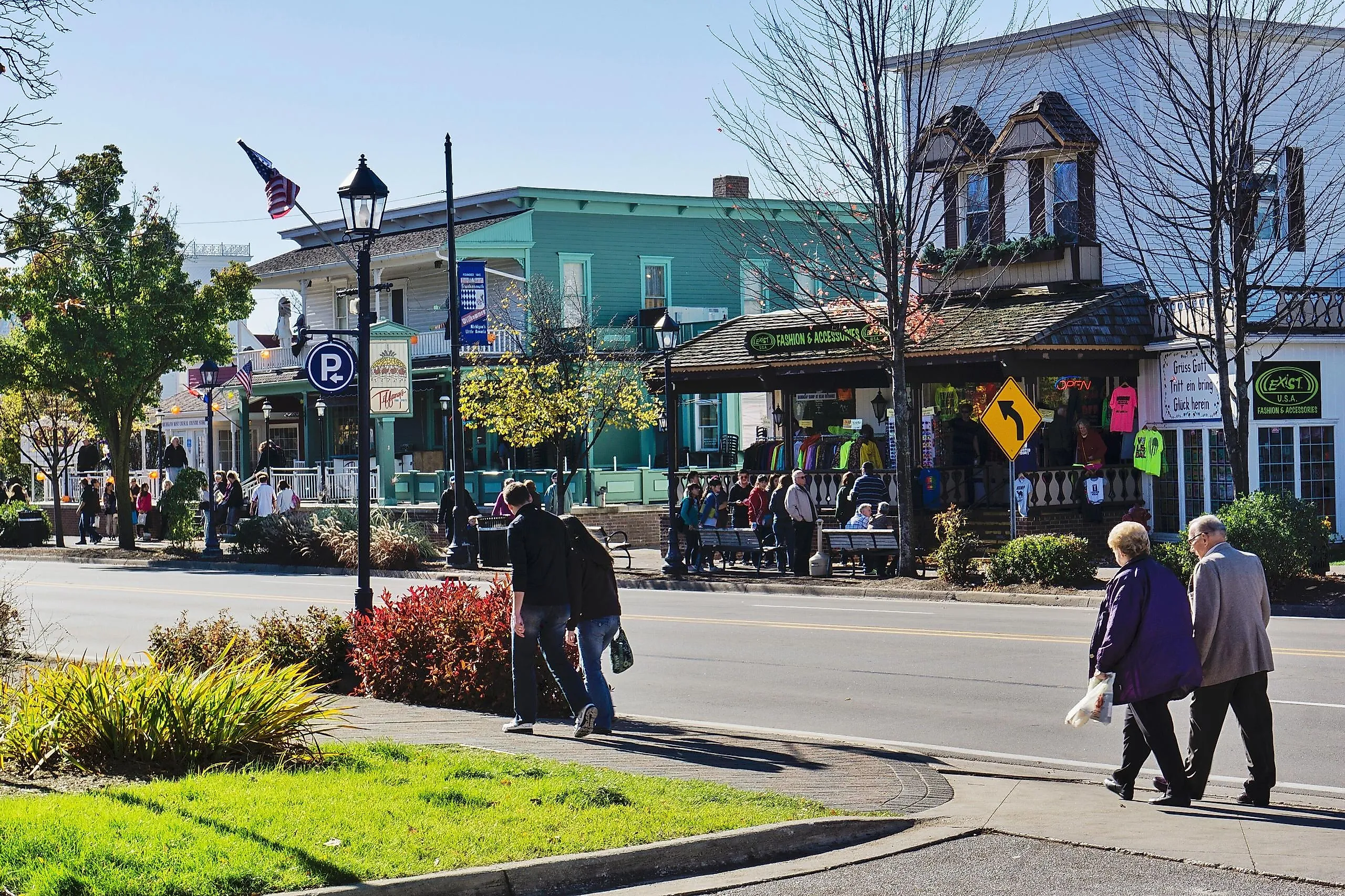
The town greets you with "Willkommen to Michigan's Little Bavaria," and it means it. Frankenmuth leans all the way into its German roots, starting with the Bavarian Belle Riverboat, a paddlewheeler that narrates the town's history on a slow cruise down the Cass River. Step off near Heritage Park, where the September Oktoberfest brings out the dancing, the accordion, and the Hofbräuhaus beer poured under the tent. The whole thing takes its cue from the original celebration in Munich.
Food and heritage share the same block here. Cherry Republic's tasting room stocks more than 100 cherry-infused products, a fitting spread in a state built on cherries. Down the street, the Frankenmuth Cheese Haus has stacked its counters with gourmet cheese since 1968, and the family behind it still hands out samples to anyone who wanders in.
South Haven

Blueberries built this town, and every August it throws a party to prove it. The National Blueberry Festival has run since 1963, and its parade and 5k race honor the nearly 300 blueberry growers working the fields around South Haven. To meet those growers the rest of the year, the South Haven Farm Market lines up seasonal booths of Michigan produce, herbs, and dairy pulled straight from local farms.
The roots go back further than the festival. The Liberty Hyde Bailey Museum & Gardens sits inside one of the oldest homes in town, on land that held one of South Haven's first commercial fruit orchards. It tells you exactly how a lakeside town turned itself into a fruit powerhouse.
Holland

Every May, millions of tulips open across Holland and the town turns into a working piece of the Netherlands. The Tulip Time Festival fills the streets with Dutch dancers, a parade, and arrangements staged by horticulturists, all of it drawn from the town's settler roots. Veldheer, the state's only tulip farm and perennial garden, anchors the bloom. Locals have been showing up for it their whole lives.
The other landmark runs on wind. De Zwaan, Dutch for "the Swan," arrived from the Netherlands in 1964 and stands as the only authentic working Dutch windmill in the country. Its blades still turn, grinding wheat and other grains into flour that the mill sells on-site. Nearby, the Holland Peanut Store has been roasting nuts and hand-dipping chocolates since 1954.
Traverse City

This is the Cherry Capital of the World, and it has the festival to back the claim. The National Cherry Festival started in 1925 and hits its hundredth year in 2026, pulling growers and visitors into downtown for parades and pie-eating contests every summer. The orchards that feed it climb the hills around Grand Traverse Bay. So do the vineyards, and a tour of Mari Vineyards, one of more than 50 wineries in the area, walks you through the tasting room and the production floor both.
The wild side of town holds up just as well. The Grand Traverse Commons Natural Area threads bike and walking trails through preserved wetlands and hardwood forest a short ride from downtown. Back in the galleries, Art on Union gathers more than 30 local artists working in canvas, wood, and clay, most of them taking their cues from the same landscape outside.
Ludington

Ludington runs on the water, and Stearns Park gives it 2,500 feet of Lake Michigan beach to prove the point. Anglers work the harbor for fresh catches while the Ludington North Breakwater Light stands guard over the channel. For the backstory, the Port of Ludington Maritime Museum fills a 1934 Coast Guard station with artifacts and photographs of the shipwrecks and freighters that shaped the Great Lakes.
North of the beach, Ludington State Park draws campers and hikers into its dunes and pine all summer. Its open-air amphitheater books live bands, so an evening on the trails can end with a concert under the trees.
Harbor Springs

Little Traverse Bay made Harbor Springs a resort town, and the shoreline still does most of the talking. Zorn Park (City) Beach handles the swimming, and the adjacent Zorn Park sets out picnic tables for anyone who would rather watch the bay than get in it. A few minutes away, Harbor Springs Deer Park lets visitors feed deer that come right up to the fence.
The quiet stretches inland too. Thorne Swift Nature Preserve carries its trails to the edge of the wetlands, where wildflowers and birdsong take over. The exception to the calm is the Blissfest Folk & Roots Festival, an annual weekend of art and music that draws crowds for both rising acts and established roots and folk names.
Nine Towns, One State Worth Knowing
What ties these towns together is that they were never built for tourists in the first place. Holland dances at Tulip Time because its founders were Dutch, and Frankenmuth pours Oktoberfest beer because its founders were Bavarian. South Haven and Traverse City still measure their calendars by the blueberry and cherry harvests. The festivals, the working windmill, and the boulder houses are the daily fabric of these places, and that is exactly why they hold up for the people who already live here.