American Towns Frozen in a Single Decade
The best-preserved towns in America are often the ones a disaster quietly saved. Bodie kept its 1870s gold rush intact only after the ore gave out and the miners left for good. Calumet still wears its copper-boom face because the mines closed and no profit remained to rebuild. Seligman is stranger still, revived on purpose by a barber after Interstate 40 bypassed Route 66 in 1978. Greenbelt went further and has run on its original 1930s New Deal blueprint for nearly ninety years. These six towns each froze in one decade for a reason entirely their own.
Bodie, California

Bodie is the rare ghost town that got frozen on purpose. California State Parks preserves it in a condition called "arrested decay," which means the buildings get stabilized against collapse but never fixed up to look new. The peeling paint and the broken windows stay exactly as the last residents left them. Rangers keep the roof on and let the rest tell the truth.
The gold turned up here in 1859, and the boom hit hard between 1877 and 1881. At its peak Bodie held close to 10,000 people, dozens of saloons, and a reputation as one of the wildest camps in the West. When the ore ran thin, families packed up and moved on rather than tearing anything down. That is why the town never got a second act to bury the first one.
More than 100 of the original buildings still stand along the dusty streets, from homes and a church to the old Boone Store with goods on its shelves. Bodie became a State Historic Park in 1962, which locked in the town just as the last holdouts had walked away from it. The 1932 fire had already taken most of the place, so what survives is the tough, unglamorous remainder. You visit the version of Bodie that outlasted the gold.
Greenbelt, Maryland

Greenbelt froze because a group of New Deal planners drew it that way and the town simply agreed with them. Walk behind the original neighborhoods and you find pedestrian paths and underpasses that carry you clear of the car traffic. That superblock layout was a radical idea in the 1930s, and Greenbelt still runs on it every single day.
The federal government built the town between 1935 and 1937 as one of three planned communities under the Resettlement Administration. The goal was ambitious and idealistic: affordable homes, shared green space, and a walkable common at the center of daily life. The design also carried the ugly rules of its era, since Black workers helped build Greenbelt but Black families were shut out of living there. Both the vision and its limits are baked into the plan.
Nearly ninety years on, the same parks and paths and community center are still in use by the people who live there. The town common holds one of the oldest planned shopping centers in the country, anchored by Lenore Thomas's "Mother and Child" sculpture. Residents did not preserve a few landmarks here. They kept an entire theory of how a neighborhood should work.
Calumet, Michigan

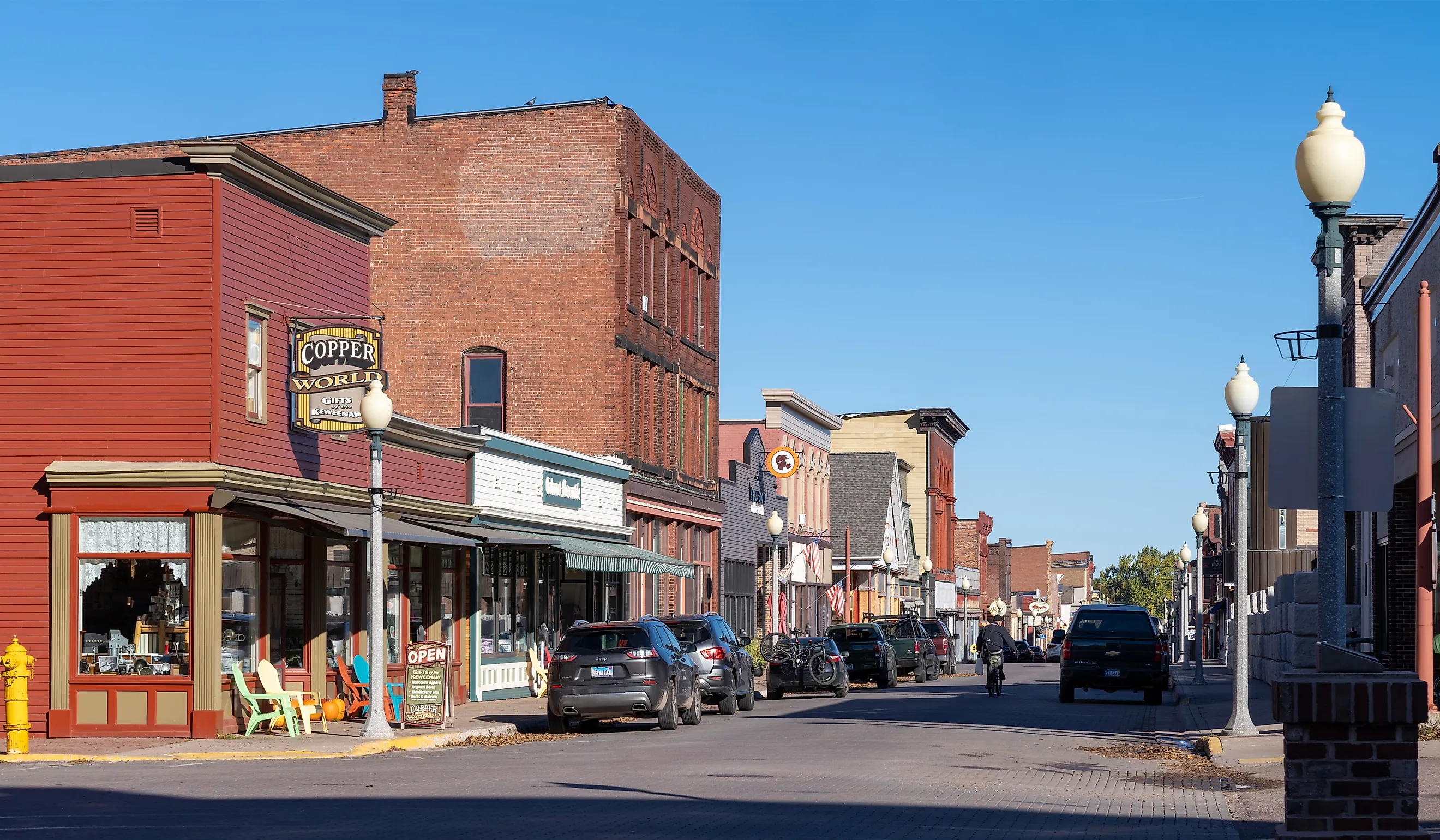
Calumet froze because the copper that built it dried up and took the money for new construction with it. This village sits near the base of the Keweenaw Peninsula, the thumb of land that juts into Lake Superior. It was settled in 1864 as Red Jacket and grew into the heart of North American copper mining. The Calumet and Hecla company drove the boom and poured its profits into sandstone banks, churches, and public buildings.
At the turn of the century the mining district around the village held tens of thousands of people, drawn from Finland, Croatia, Poland, Scotland, and beyond. The company built much of the housing and set the rhythm of the whole community. Calumet and Hecla produced more than half the copper in the United States through the 1870s. The lavish 1900 Calumet Theatre still stands as a monument to how much wealth moved through this remote corner.
Rising costs and hard labor strikes wore the industry down, and the last major mine closed in 1968. The jobs left, the people left, and the village shrank to fewer than a thousand residents. Because the money was gone, nobody had a reason to tear the old buildings down, so the copper-era streetscape simply stayed. Keweenaw National Historical Park was established in 1992 to hold that turn-of-the-century town in place.
Seligman, Arizona

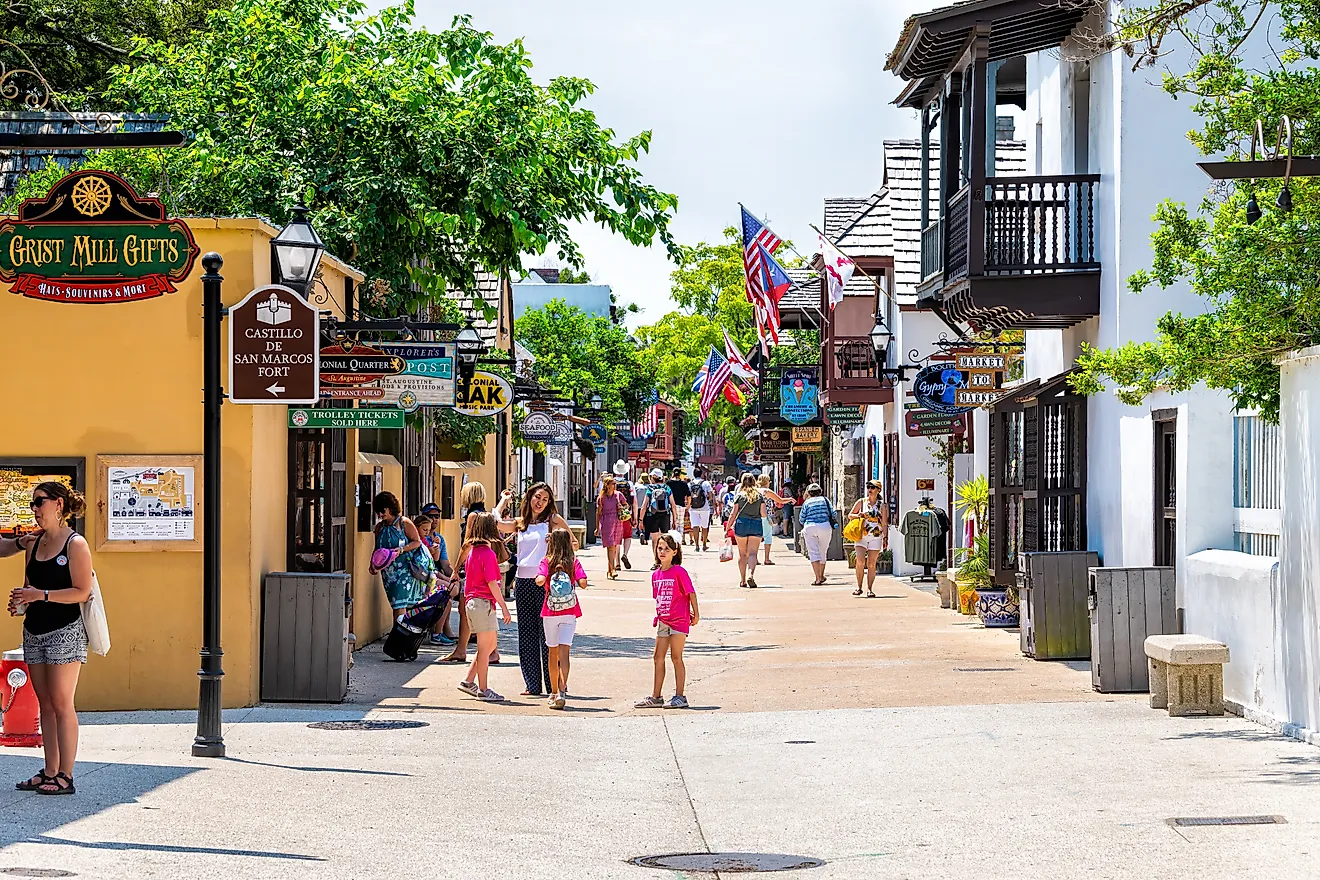
Seligman froze because one barber flatly refused to let it disappear. For decades the town thrived as a service stop on Route 66, feeding travelers at its diners, motels, and gas stations. Then Interstate 40 opened its bypass on September 22, 1978, and the cars that fed the town were routed straight around it. Almost overnight, the main drag went quiet.
Angel Delgadillo cut hair on that main drag and watched the businesses around him shutter. Rather than move on, he gathered a handful of fellow shop owners at the Copper Cart restaurant in 1987 and founded the Historic Route 66 Association of Arizona. Their goal was simple and stubborn: get the state to recognize and sign the old road as Historic Route 66. It worked, and similar groups sprang up in every Route 66 state after them.
That grassroots push is why Seligman now calls itself the birthplace of Historic Route 66. The vintage neon signs and mid-century storefronts still glow along the old alignment, and the Snow Cap Drive-In still serves a crowd. Delgadillo cut hair until 2022 and remains the town's guiding spirit. Seligman kept its postwar roadside self alive by choosing to.
Virginia City, Nevada

Virginia City froze because the richest silver strike in the country eventually gave out and the town never had a reason to rebuild past it. Wooden boardwalks and Victorian storefronts still follow the streets carved during the boom. The discovery of the Comstock Lode in 1859 turned a rough camp into one of the wealthiest places in the West. By the mid-1870s roughly 25,000 people lived here.
The silver money built newspapers, theaters, hotels, and the ornate C Street buildings that define the town today. A young reporter named Samuel Clemens worked at the Territorial Enterprise here and first signed his stories "Mark Twain." Engineers invented square-set timbering underground just to keep the enormous mine chambers from caving in. The town was inventing the modern mining boomtown as it went.
Mining output fell off after 1878, and the population drained away with it. Because so little new growth ever came, the boom-era buildings survived instead of getting replaced. Fewer than a thousand people live here now, which earns Virginia City its nickname as a living ghost town. You can still walk C Street and the Fourth Ward School and feel the afterimage of 25,000 souls.
Port Gamble, Washington

Port Gamble froze because a single company held the deed for 142 years and never let the town fragment. White wooden houses still look down on the bay from the bluff, built in the New England style the founders carried west. Captain William Talbot and his partners started the sawmill and its town in 1853. They modeled the place on their hometown of East Machias, Maine, right down to the steepled churches and picket fences.
The Puget Mill Company built the housing, the schools, the churches, and the store, and it owned nearly all of it for more than a century. That total ownership is exactly what spared Port Gamble the piecemeal redevelopment that reshaped so many mill towns. When one landlord controls everything, nothing gets torn down for a quick profit. The town stayed whole because the company kept it that way.
The mill sawed its last log on November 30, 1995, closing as the oldest continuously operating sawmill in the United States after 142 years. The buildings on the bluff came through it all. Today shops, cafes, and restaurants fill the original houses, including the grand Walker-Ames House. A working lumber town became a preserved one without ever losing its shape.
One Moment, Held for Different Reasons
Put these six towns side by side and the pattern is not in how they look but in why they stopped. Bodie was abandoned and then guarded in its ruin, while Greenbelt was designed once and never redesigned. Pullman was frozen by a company's total control, and Seligman was saved by one man's refusal to quit. Virginia City simply outlived its silver, and Port Gamble stayed intact because a single owner held the deed for generations.
What ties them together is that a town does not need to keep changing to stay alive. Sometimes an economic collapse does the preserving, sometimes a planner's blueprint does, and sometimes it takes a stubborn barber with a good sign. Each of these places made its peace with one particular decade and decided to live there. That decision is what you are really visiting when you walk their streets.