9 Tiny Off-Grid Towns In Alaska
Many of Alaska's small communities exist where the road systems do not reach. Populations are often under a few hundred, and life is shaped by distance and seasonal access, whether in island fishing villages with boardwalks or interior settlements set among mountains and rivers. Some, like McCarthy at the end of a 60-mile gravel road, preserve mining-era history from the gold rush. Others remain working fishing villages reachable only by boat or floatplane. In these places, limited access continues to shape daily routines and long-standing local traditions beyond the main highway system.
McCarthy

Deep within Wrangell-St. Elias National Park lies McCarthy, once a hub for nearby mining operations. Situated at the end of a 60-mile dirt road, this tiny community is an eight-hour drive from Anchorage, with the final stretch on an unpaved route. Historically, McCarthy served as a primary relaxation and entertainment spot for miners and prospectors from the nearby mill town of Kennecott. After the mills shut down, McCarthy declined, only to later reemerge as a seasonal community. The entire town is so small that a 10-minute walk covers the whole area. Visitors arriving between May and September can join a guided hike to explore the vast Wrangell-St. Elias National Park. Visitors can view glaciers up close, particularly Root Glacier. A self-guided walking tour leads beneath the Saint Elias Mountains, highlighting the town's mining-era history.
Tenakee Springs

The small town of Tenakee Springs is located on Chichagof Island in Southeast Alaska and has a small community of about 116 people. The town centers on a bathhouse with a 106-degree sulfur mineral spring open to the public. Early prospectors and fishermen came to Tenakee Springs to wait out winters and use the hot springs. There are quite a few historic structures worth visiting, including the St. Francis Chapel, Snyder Mercantile, and the Seaplane Dock. Some of the things to do in this place include fishing in the calm waters of the Tenakee Inlet. Species like coho salmon and chum salmon are abundant in this inlet, and it is a good place to fish. Hunting is another activity for visitors, as is whale watching, where one can watch humpback whales bubble-feeding. Guests also visit the natural hot springs for their high mineral content and natural heat.
Pelican

Located on the northwest coast of Chichagof Island, Pelican is a small fishing village on the Lisianski Inlet of Alaska. The community has fewer than 100 residents, with about 200 staying during the summer. The town is known as a boardwalk town, as its boardwalks are built on pilings above the water. In summer, the docks are busy with commercial boats and floatplanes. Local activities include arranging a day tour with Pelican Charter boat operators to White Sulphur Hot Springs, located 20 miles away, to enjoy the relaxing, healing springs. This village is also known for sea kayaking on 40 miles of protected waters in the Lisianski Strait and Stag Bay. Finally, visitors love Rose's Bar and Grill, a classic Alaskan fisherman's bar, where they can talk with locals and travelers.
Eagle

Eagle, Alaska, is located near the Canada-U.S. border and is situated along the banks of the Yukon River. The population of Eagle today is about 100 people. The first people to settle here were the Hän, long before other settlers arrived. Eagle has a rich history rooted in the gold rush, and it remains a popular stop for river canoeists. This small village offers several activities. Visitors can go fishing on the Yukon River or go camping to enjoy scenic views and nearby trails. Another major attraction is taking summer float trips on the Yukon and Charley Rivers in the Yukon-Charley Rivers National Preserve. These trips head downriver into Interior Alaska and pass historic sites along the Yukon-Charley corridor.
Bettles

Bettles, one of the smallest incorporated cities in Alaska, is located on the banks of the Koyukuk River, near the village of Evansville. Air taxis operate frequently in this area, as Bettles is a common hub, and one can access the town by commercial air service from Fairbanks. Bettles is an important place where several Native communities, including the Koyukon Athabascans, have lived for generations. The town is famous for its wilderness camps and lodges. A floatplane can drop travelers at a remote lake or river access point, where they can explore part of the 8.4-million-acre Gates of the Arctic National Park & Preserve. Air taxis also take visitors from this gateway near the Brooks Range to see the Kobuk Valley National Park and its famous sand dunes. Whether exploring by air or on foot, Bettles offers a true Arctic Circle adventure.
Chicken

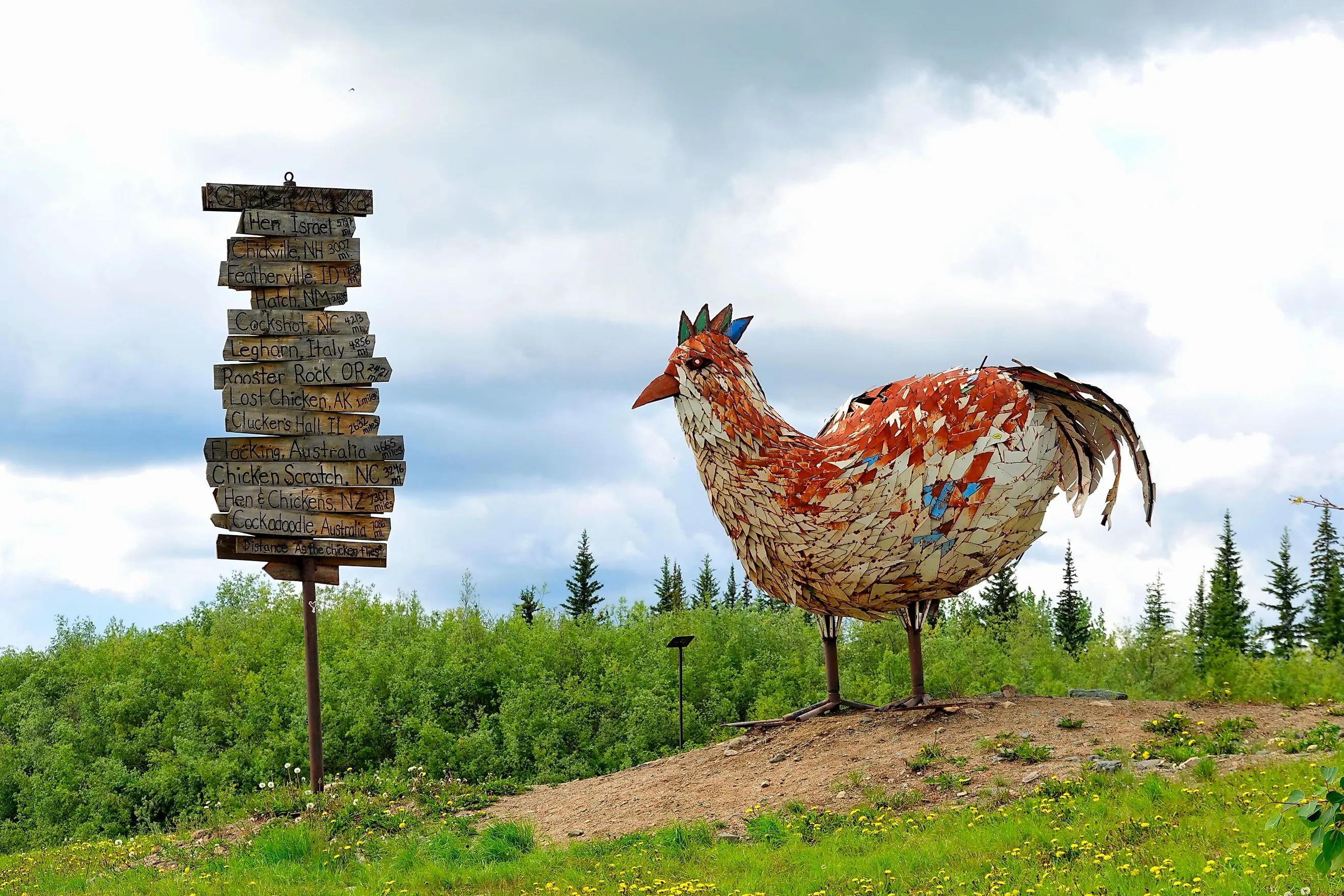
Located along the Taylor Highway, Chicken is a remote gold mining community established around 1898. As one of the few surviving gold rush towns, Chicken offers a rare look at Alaska's most rural areas. The town is situated at mile 66 of the highway, which is only open seasonally from April to mid-October. Because of its isolation, travelers arriving from Anchorage should plan for a full day of driving and be prepared for limited services along the way. There is plenty of history to explore here, such as the Mosquito Fork Dredge Hiking Trail. This 1.5-mile hike leads to an overlook of a mining dredge that was shut down in 1938. At milepost 69, tourists can see the Lost Chicken Hill Mine, which was named after a "lost" pay streak of gold. For those seeking adventure, float trips on the Fortymile Wild and Scenic River provide solitude and views of trapper cabins and old mining sites near the Yukon River watershed.
Anaktuvuk Pass

Located in the center of the Brooks Range is the beautiful Anaktuvuk Pass. The village has a population of about 363 people and is located 250 miles northwest of Fairbanks. Anaktuvuk Pass is surrounded by beautiful rivers, lakes, and tall mountains. This is a historic place and a major caribou migration route, serving as the last settlement of the inland Iñupiat, the Nunamiut. Anaktuvuk Pass is accessible by commercial air service from Fairbanks and is a great place to start your exploration of Gates of the Arctic National Park. Visitors can camp at Anaktuvuk Pass, as the city council has designated the area around the access road on the east side of the airstrip for visitor camping. In this region, 6- and 8-wheeled ATVs are allowed for subsistence use on federal non-wilderness lands, offering a unique way to navigate the rugged landscape.
Port Alexander

Port Alexander is located on the southern tip of Baranof Island within the Alexander Archipelago. Port Alexander is located about 133 miles northwest of Ketchikan and 62 miles southeast of Sitka. This tiny, isolated fishing village has a year-round population of about 50 people, though that number grows during the commercial fishing season. Accessible only by floatplane or boat, the town has no roads and is famous for its wooden boardwalks that connect the homes and docks. Visitors come here for some of the best self-guided fishing, targeting king salmon and halibut. Visitors can also spend their time sea kayaking in the protected coves. It is a true off-the-grid spot where one can unplug, watch for whales, and experience the quiet life of a remote Alaskan settlement.
Wiseman

Wiseman is a small Arctic village located about 630 miles north of Anchorage and 60 miles north of the Arctic Circle. The Dalton Highway provides a route through the peaks of the Brooks Range. Both summer and winter serve as great seasons for different activities. If tourists want to experience the true Arctic, dog-sledding is a must. One can even view the Northern Lights on a winter night from late August to mid-April. For those seeking adventure sports, you can go skiing or explore the stunning hikes and vast wilderness that the Brooks Range offers. This historic mining town is situated near the Koyukuk River and serves as a primary access point for researchers and hikers entering Gates of the Arctic National Park.
Alaska is a place that stays with you long after you leave. Whether you are walking the boardwalks of Pelican or standing under the huge peaks of the Brooks Range in Wiseman, these towns show you a side of life that is hard to find anywhere else. From the healing waters of Tenakee Springs to the gold rush trails of Eagle, every stop offers a chance to slow down and breathe. So, pack your bags, hop on a floatplane, and get ready to experience the Arctic Circle.