9 Old-World Towns to Visit in Indiana
Indiana was one of the first states settled in the Midwest, and its small towns still carry the evidence. In Clarksville, the Falls of the Ohio preserve a fossil bed that predates human history, while the Lewis and Clark expedition gathered supplies along the same riverbank in 1803. In New Harmony, two failed utopian experiments left behind one of the most unusual historic districts in the country. And in Vincennes, French fur traders built a settlement decades before the American Revolution. Here are nine old-world towns in Indiana worth exploring today.
Clarksville

Clarksville's history starts in 1783, when the Virginia legislature granted this Ohio River land to George Rogers Clark and other Revolutionary War veterans. Two decades later, Meriwether Lewis and William Clark gathered their expedition party at the Falls of the Ohio in 1803 before heading west to explore the newly purchased Louisiana Territory. The Falls of the Ohio Interpretive Center displays fossils from the ancient Devonian-era reef bed that lines the riverbank, some dating back 390 million years. On low-tide days, visitors can hunt for fossils in the exposed riverbed themselves. Lewis and Clark Bicentennial Park marks the expedition's gathering point, and the Colgate Clock, standing 40 feet in diameter outside the former Colgate-Palmolive factory, ranks among the largest clocks in the world.
New Harmony

Founded in 1814, two years before Indiana statehood, New Harmony was built as a utopian Christian community by George Rapp and his Harmony Society. After a decade, they sold the entire town to Robert Owen, a Welsh industrialist who tried to remake it as a socialist community focused on education and equality. Neither experiment lasted, but both left their mark. Many original buildings survive, and later additions were inspired by the same ideals of peace and communal purpose.
Thrall's Opera House started as a dormitory in 1824 before becoming a performance venue in 1888. The 1822 Community House #2 is where the Harmonists lived under one roof. The Roofless Church, an open-air sanctuary enclosed by walls but open to the sky, is one of the most striking sacred spaces in the Midwest. And the Harmonist Labyrinth, a hedge maze originally created by Rapp's followers and reconstructed in 2008, was designed to encourage spiritual reflection through the simple act of walking.
Jasper

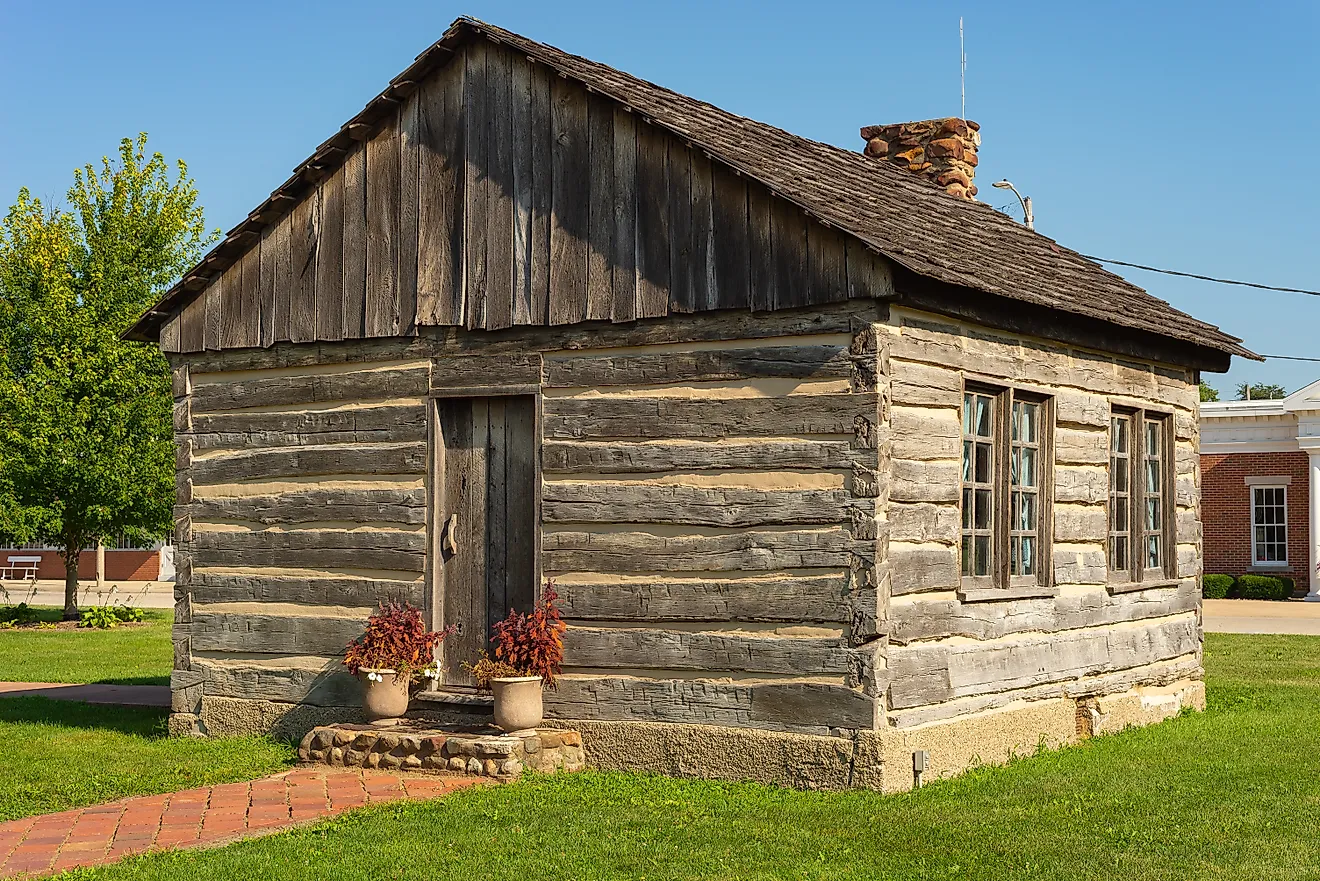
Jasper takes its name from the Bible: Revelation 21:19 lists jasper among the stones decorating the walls of the New Jerusalem. Settlers arrived in the early 1800s, and the town's identity took shape in the 1830s when Father Joseph Kundek, a priest who spoke French and German, arrived in 1837 and drew a wave of German Catholic immigrants. Their influence shows most clearly in St. Joseph Catholic Church, completed in 1880 and still one of the most impressive churches in southern Indiana. The Alexander School House, originally built in 1820 and reconstructed in 1918, was one of Dubois County's first schools. The Dubois County Museum, Indiana's largest county museum, holds over 56,000 artifacts, including an 1885 two-pen log house reassembled on the grounds.
Madison

Founded in 1810 on the Ohio River, Madison thrived as a steamboat hub and never lost the architecture that came with the money. The 1844 Lanier Mansion, a Greek Revival showpiece with towering columns, is now a State Historic Site. The Shrewsbury-Windle House matches it in ambition, with 12-foot-tall doors, a spiral staircase, and detailed stonework. Historic Eleutherian College, a three-story stone building constructed between 1853 and 1856, stands as a monument to a community that admitted students regardless of race or gender decades before most institutions considered it. Springdale Cemetery rounds out the historic circuit with marble monuments and the graves of Civil War veterans.
Oldenburg

Like Jasper, Oldenburg grew out of German Catholic immigration in the early 1800s, well before its official platting in 1837. The town earned the nickname "Village of Spires" for the steeples that still dominate its skyline: the Immaculate Conception Convent Church, the Holy Family Church, and the Old Stone Church, built in 1862 by Father Franz Joseph Rudolph, who actively recruited immigrants to settle here. Much of the town falls within the Oldenburg Historic District, which includes the churches alongside historic German businesses like the 1850 Fischer Tavern. The annual Freudenfest celebrates this heritage with games, auctions, German music, and beer.
Troy

Troy is old by Indiana standards, with settlers from Virginia and Kentucky arriving in 1804, drawn by the spot where Anderson Creek flows into the Ohio River. Despite a population of about 350, the town holds real historic weight. The Nester House, a three-story brick building from the mid-1800s, had a tunnel beneath it used as part of the Underground Railroad to shelter freedom seekers. The house has been remodeled over the years but keeps its 19th-century character.
An 11-foot statue of Jesus Christ, known as the Christ of the Ohio, was sculpted by a German artist and erected in 1956. In the nearby community of Anderson, the 148-foot Huffman Mill Covered Bridge, a Burr arch-truss design built from wood, stone, and steel during the Civil War (1864-1865), spans the creek in one of Indiana's more striking pieces of 19th-century engineering.
Corydon

Corydon served as Indiana's first state capital from 1816 to 1825, before the legislature moved north to Indianapolis as the state's population shifted. That short tenure left a concentrated collection of early statehood landmarks. The Federal-style capitol building is now the Corydon State Historic Site. The 1817 Governor Hendricks' Headquarters, a two-story brick house, sits nearby. The Harrison County Discovery Center preserves artifacts from this period, and the Battle of Corydon Historic Site marks the only Civil War battle fought on Indiana soil, a brief but significant engagement during Morgan's Raid in July 1863.
New Albany

Settled by the Scribner brothers between 1812 and 1813, New Albany grew fast enough to become Indiana's largest city by 1850. The boom years left behind architecture that the town has kept in remarkably good shape. The Scribner House, built between 1813 and 1814 from ash, oak, and poplar, shows the New England Federal style the brothers brought with them. Mansion Row is the main draw, anchored by the Culbertson Mansion, an 1867 Second Empire house with 25 rooms, frescoed ceilings, carved staircases, and marble fireplaces. The Carnegie Center for Art and History, in a downtown Carnegie library building, covers local history and hosts rotating art exhibitions.
Vincennes

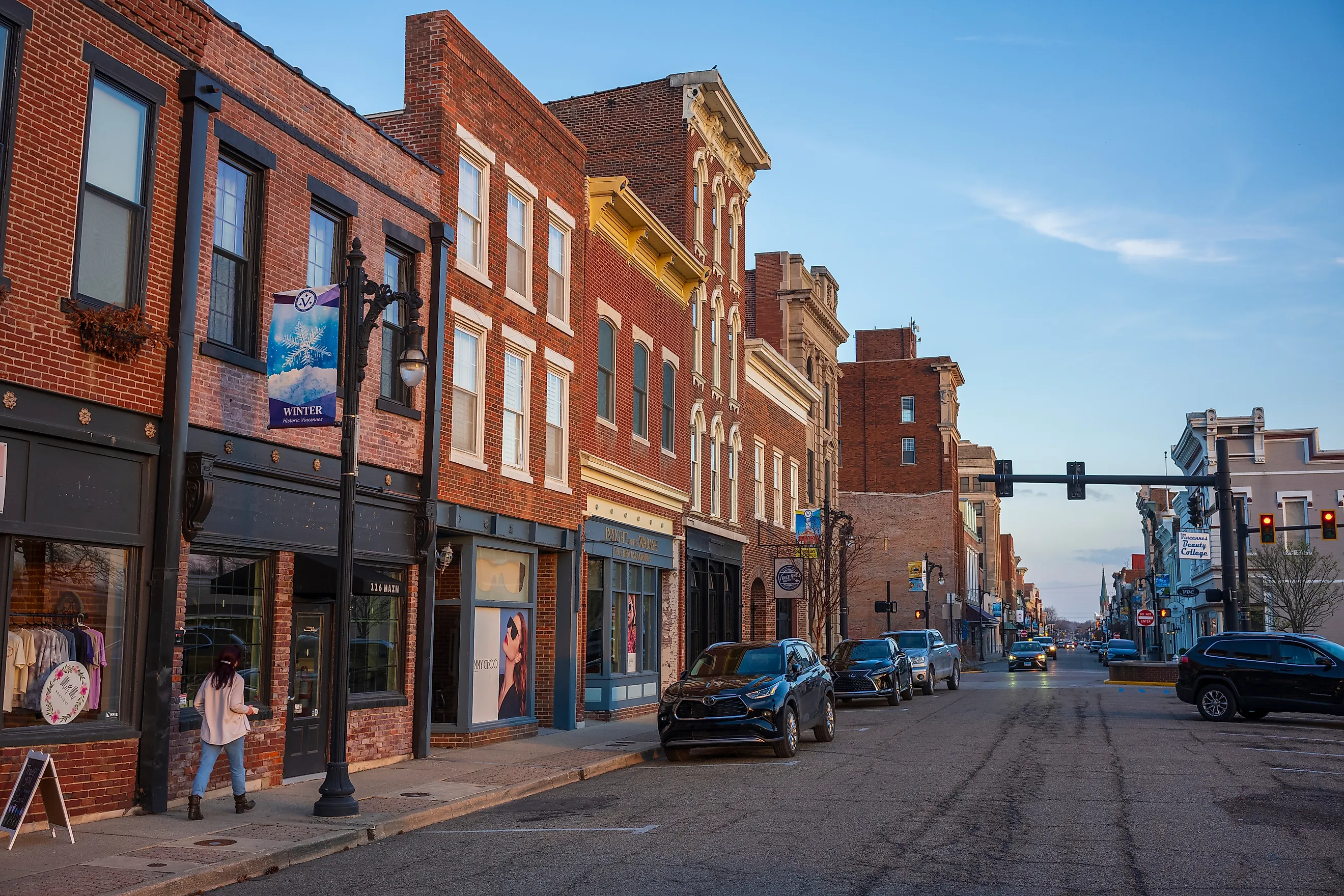
Vincennes is the oldest settlement in Indiana by a wide margin. Francois-Marie Bissot, Sieur de Vincennes, established a fur trading post here in 1732 to hold this stretch of New France against the British. The territory changed hands after the Seven Years' War and was claimed for the United States by George Rogers Clark in 1779. The George Rogers Clark National Historical Park, one of the largest national memorials outside of Washington, D.C., honors that campaign. The Michel Brouillet House, a French Creole structure from 1809, is among Indiana's oldest surviving buildings. The Territorial Capitol, a red-painted structure that served as the seat of Indiana Territory from 1800 to 1813, stands nearby before the capital moved to Corydon.
Indiana is not the oldest state, but its 18th- and 19th-century settlement history runs deep, shaped by French fur traders, German Catholic immigrants, utopian dreamers, and frontier veterans. These nine towns preserve that story in hedge labyrinths, Greek Revival mansions, covered bridges, and local museums that bring the state's founding generations into focus. For anyone interested in how the Midwest was built, these are the towns to visit.