9 Of The Most Adorable Small Towns In The United States
A skyline looks the same from any hotel window. A copper camp built up the wall of a canyon does not, and neither do the coquina walls of a Spanish fort finished in 1695. The nine small towns here each grew up around one hard, particular job. In Astoria that job was fur, then salmon; in Georgetown it was rice; in Venice it is still the fossilized shark teeth that wash ashore, and residents work at these trades to this day. Spend a weekend in any of them and you find that job out in the streets, in the ore cars and the cannery pilings and the old mission bells, not roped off in a museum. These are nine of the most adorable small towns in America, and the most rewarding to walk.
Bethany Beach, Delaware

Fewer than a thousand people live in Bethany Beach through the winter, and then July arrives and the population multiplies many times over. That seasonal swing tells you everything about what this stretch of the Delaware coast in Sussex County is for. The half-mile boardwalk carries the whole town in summer, with local shops and restaurants like Off the Hook and the souvenir stop All About the Beach a short walk from the sand. Just south, Delaware Seashore State Park opens onto the Atlantic, where dolphins are a common sight offshore and anglers work the surf. Swimming, sailing, and long afternoons of doing nothing in particular are the point here, and the quiet Bethany keeps most of the year is part of the appeal.
Georgetown, South Carolina

Georgetown sits where the Sampit, Black, Waccamaw, and Great Pee Dee rivers all empty into Winyah Bay, and that convergence made it rich. Formally established in 1734, the third-oldest town in South Carolina, it built its early fortune on indigo and rice, and by the mid-1800s the surrounding county grew a large share of the country's rice crop. The Lowcountry money left a downtown you can still walk today. Along the Historic District's streets stand the Rainey House and other homes on the National Register of Historic Places, and the Harborwalk runs the waterfront past the brick clock tower. Beyond the town proper, the Waccamaw National Wildlife Refuge preserves the cypress swamps and old rice fields that started it all, best seen by boat or bike. In cooler months, organizers gather more than a hundred classic craft along the harbor for the Wooden Boat Show, and the whole waterfront turns out to look them over.
Astoria, Oregon

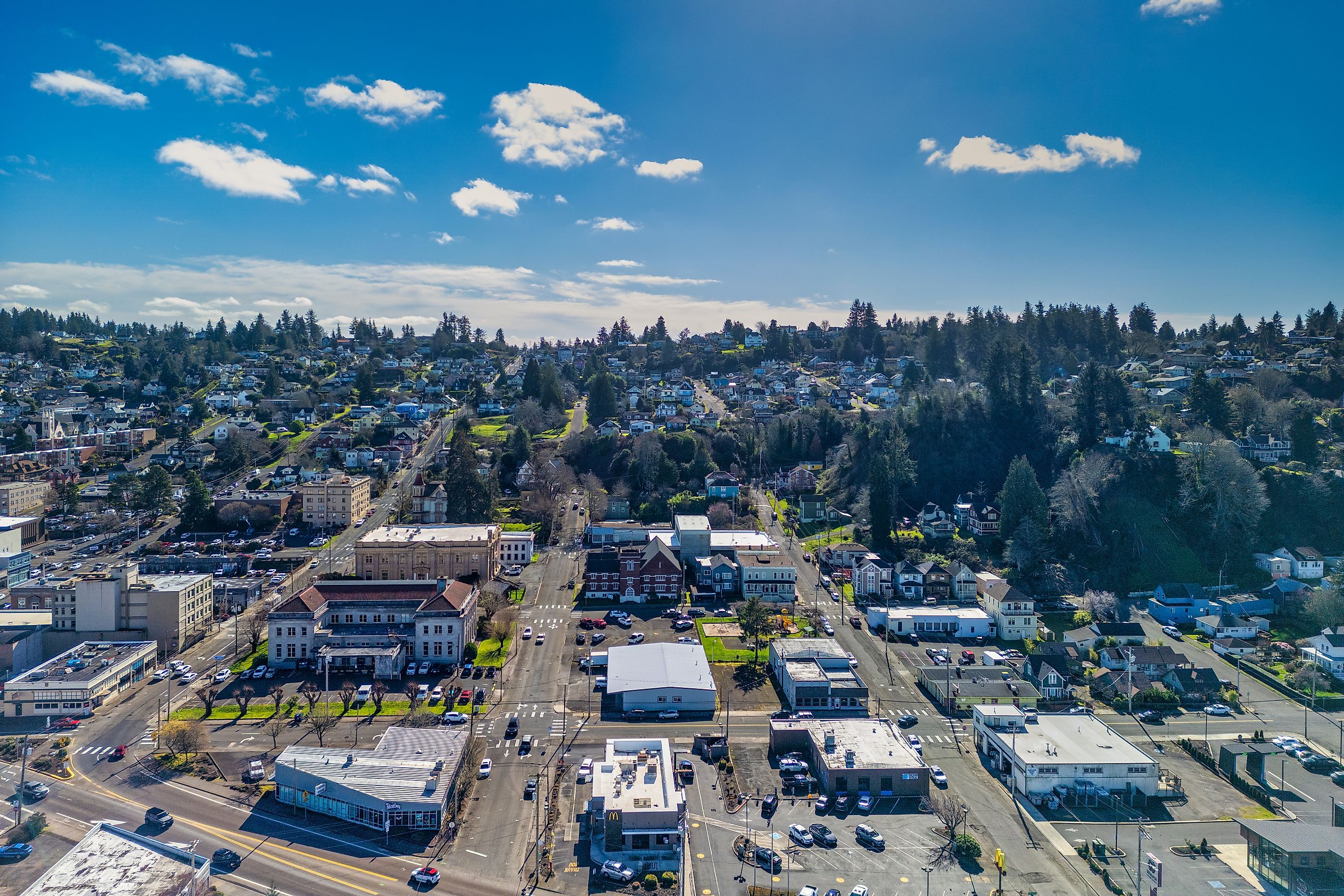
In 1811, John Jacob Astor's Pacific Fur Company put a trading post at the mouth of the Columbia River, and Astoria has been the oldest American settlement west of the Rockies ever since. The fur trade gave way to salmon canning, then lumber and shipping, and residents have since rebuilt the town around all that saltwater history. The best way to take it in is the Astoria Riverfront Trolley, which rolls along the water past the old cannery pilings and mooring basins where sea lions haul out. Uphill, visitors tour the preserved rooms and gardens of the 1885 Flavel House, built on a shipping fortune, and higher still, the 125-foot Astoria Column rises over Coxcomb Hill, with 164 spiral steps to a deck that looks out over the river, the ocean, and the forests beyond. The Astoria-Megler Bridge stretches four miles across the Columbia to Washington, a working reminder of a town that has always lived off the river.
Bandon, Oregon

Sea stacks stand offshore at Bandon like a scattered row of monuments, and the strangest of them, Face Rock, comes with a Coquille legend about a woman turned to stone by a sea spirit. Irish settlers founded the town in the 1870s where the Coquille River reaches the Pacific, and the coast is still the whole draw. Face Rock State Scenic Viewpoint looks straight out at the formations, while the 1895 Coquille River Lighthouse marks the river mouth. Golfers cross the country for Bandon Dunes, a set of links-style courses laid along the bluffs in the Scottish tradition. Along the Old Town waterfront, the fishing heritage sits side by side with galleries and seafood spots like The Wheelhouse. Cranberries grow in the bogs inland, and each fall residents mark the harvest with the Cranberry Festival, a parade and plenty of food.
Carmel-by-the-Sea, California

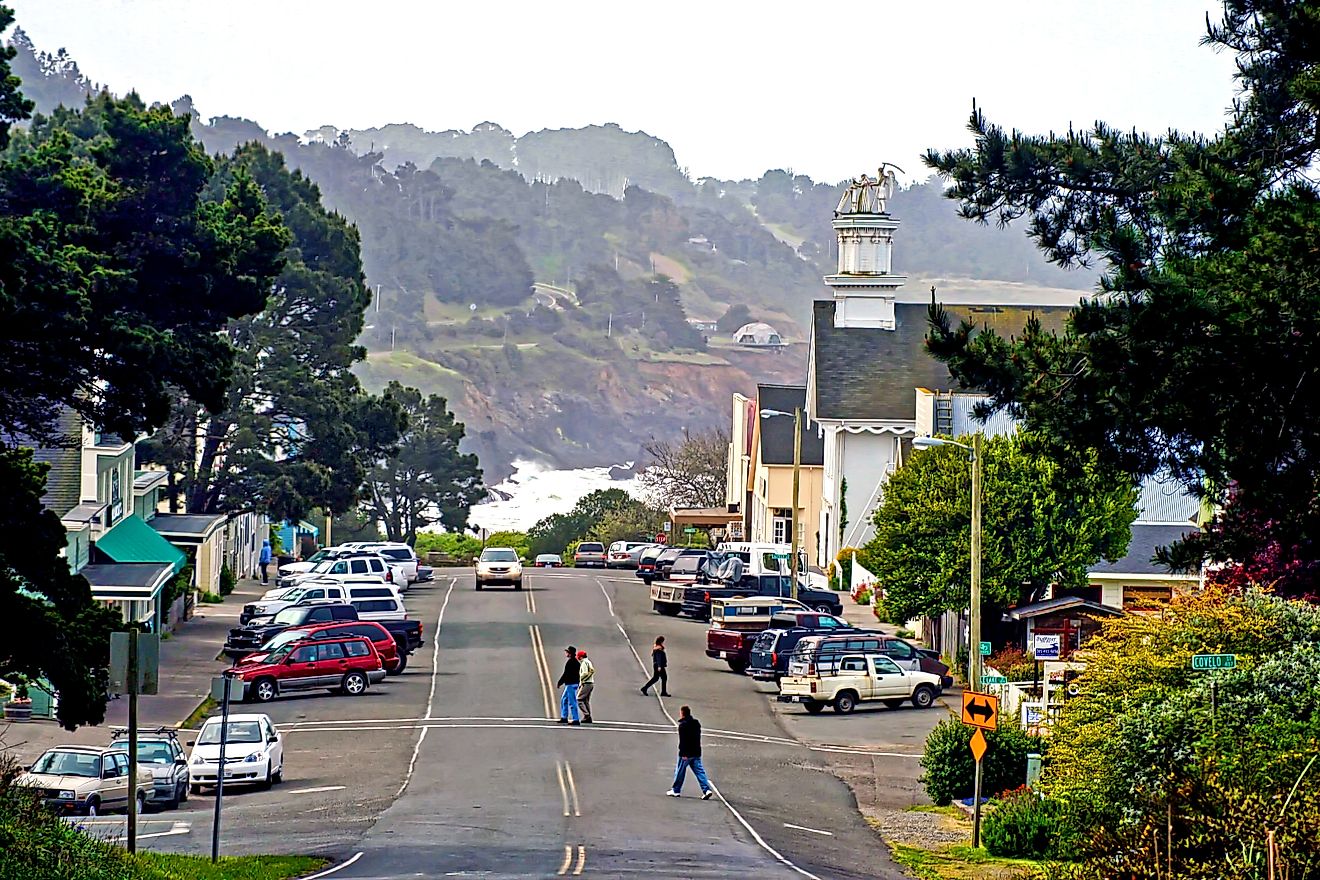
Carmel-by-the-Sea grew up around a mission, and it has been a place for artists and dreamers ever since. Father Junípero Serra moved Mission San Carlos Borromeo here in 1771, and the mission church still stands on the edge of town. The village itself came later, incorporating in 1916, and the writers and painters who settled it built the one-square-mile downtown in the deliberate cottage-and-courtyard style you see today, most of it dating to the 1920s. Set on the Monterey Peninsula, Carmel has no street lights, no parking meters, and house numbers so scarce that residents pick up mail at the post office. Ocean Avenue runs down to a white crescent of beach, past galleries, wine rooms, and the shops of Carmel Plaza. Behind the mission, the Mission Trail Nature Preserve takes in 35 acres of Monterey pine and coast live oak, a piece of the landscape the Spanish first found. The film festival each fall keeps the creative streak alive.
St. Augustine, Florida

The Spanish admiral Pedro Menéndez de Avilés came ashore here in 1565 and founded a garrison town, which makes St. Augustine the oldest continuously occupied European-established settlement in the continental United States, 42 years ahead of Jamestown. It was built to hold ground for Spain, and the fortifications are still the heart of it. The Castillo de San Marcos, finished in 1695 of coquina shellstone that absorbed cannon fire rather than shattering, still stands over the harbor as the oldest masonry fort in the continental U.S. Fort Matanzas sits on the southern inlet a short ferry ride away. Between them lies the old quarter, where St. George Street threads past colonial homes, the Oldest Wooden Schoolhouse, and the Fountain of Youth Archaeological Park. When the history starts to blur together, Anastasia State Park sits minutes east with 1,600 acres of beach and dunes, and mild winters keep the shoreline in use all year.
Venice, Florida

Venice was drawn on paper before it was a town. City planner John Nolen laid it out in the 1920s in a Mediterranean Revival style, with palm-lined boulevards and Venice Avenue running in a straight line to the Gulf, and the Brotherhood of Locomotive Engineers helped fund the whole experiment. That planned grid still holds, and it earned the town its Italian namesake. What put Venice on the map, though, lies underfoot: the beaches sit atop a prehistoric fossil bed, and the surf keeps washing fossilized shark teeth ashore, which is why locals call it the "Shark Tooth Capital of the World." Caspersen Beach is the quiet stretch fossil hunters favor, while the crowds gather at Venice Beach, and the fishing pier runs some 700 feet into the Gulf beside Sharky's on the Pier. Downtown, the 1927 Triangle Inn now houses the Venice Museum and Archives, and each spring, locals turn the town's odd claim to fame into a street party at the Shark Tooth Festival, with food trucks, music, and vendors.
Payson, Arizona

Payson sits almost exactly at the center of Arizona, just below the Mogollon Rim, which earns it the nickname "Heart of Arizona." A former ranching, logging, and mining town from the 1880s, it now trades on the wilderness at its doorstep. The Tonto National Forest wraps around it, 2.8 million acres of the largest contiguous ponderosa pine forest in the world, and a drive up to the rim reaches overlooks with pine spilling to the horizon in every direction. Hiking, camping, cycling, and horseback riding fill the calendar, and the ranching past stays on display at the Rim Country Museum and the Zane Grey Cabin near Green Valley Park. Every August, cowboys and crowds fill the Payson Event Center for the Payson Rodeo, which its organizers bill as the world's oldest continuous rodeo, dating the run to 1884, a claim they good-naturedly defend against a rival title held by Prescott. Either way, the bull riding and the crowds make for a genuine Old West afternoon.
Bisbee, Arizona

Bisbee's streets do not follow a grid. They follow the canyon floor of the Mule Mountains, then climb the walls on nine public staircases totaling more than a thousand steps, because that is how you build a town on top of a copper mine. Founded as a mining camp in the 1880s near the Mexican border, this Cochise County seat pulled gold, silver, and enormous quantities of copper out of the ground, and the ore money raised the Victorian, Art Deco, and Mission Revival buildings that still climb the hillsides. The Queen Mine Tour runs visitors 1,500 feet into a retired shaft aboard the original ore cars, led by miners who once worked it, hard hats required. Just outside downtown, the open Lavender Pit drops away in tiers, a startling reminder of the scale of it all. Today the old saloons along Main Street hold galleries and cafes like the Bisbee Breakfast Club, and each October, competitors race up those antique staircases in the Bisbee 1000.
Nine Towns, Nine Reasons They Exist
What makes these places stick is not that they are pretty, though they are. It is that in each one, the original purpose is still plain to see. In Astoria, the trolley rolls past the old cannery pilings; in St. Augustine, the coquina fort still stands over the water; in Bisbee, the staircases still climb the canyon the miners carved. Scattered across the country, these towns show how much a small place can hold when the people in it never let go of what it was built to do. Pick any one for a weekend, walk the streets with that history in mind, and you will find the whole town easy to read.