9 Nicest Small Towns In Kansas
The man buried in a glass-topped coffin in Lucas built his own tomb before he needed it. Abilene keeps a 25-room mansion wired with the first electric lights its town ever saw. Lindsborg throws a festival where volunteers dress as waffles and hand out jokes on the street. These are not the stories you expect from the Kansas plains. They are exactly why these nine Kansas towns earn their reputation for treating a stranger like a returning friend.
Council Grove

Start with a building that has worn three different lives. The structure that now holds the Council Grove Trail Days Cafe and Museum began as a residence around 1860, then spent years as a filling station, and now serves lunch alongside its local history exhibits. A few blocks away sits the Kaw Mission, a two-story native stone building completed in 1851 as a school for thirty Kaw boys. It taught classes for only three years before the cost shut it down, and it landed on the National Register of Historic Places in 1971. Both buildings stand within walking distance of the Santa Fe Trail ruts that put this town on the map.
When the history walking wears you out, the town pours its own beer. Riverbank Brewing is barely past its opening, but it has already become one of the spots locals point newcomers toward, with a rotating tap list that rarely looks the same twice. The fact that a town this size sustains a craft brewery at all tells you something about how people here show up for their neighbors.
Dodge City

Few town names carry as much Old West baggage as Dodge City, and the easiest way to sort fact from legend is from a trolley seat. The Dodge City Trolley runs a roughly 90-minute loop past Fort Dodge and the old Santa Fe Trail route, operating daily through the summer season. A guide narrates the whole way, which means the gunfighter stories come with the actual dates attached. It is the rare tour where the tall tales get fact-checked in real time.
The Boot Hill Museum sits on the grounds of the original Boot Hill Cemetery, and it does not treat the Old West as a costume. Staff stage variety shows and gunfight reenactments while the exhibits lay out the real history of the lawmen and outlaws who passed through. When the family has had its fill of frontier grit, the Long Branch Lagoon nearby trades it for a western-themed water park, complete with slides, a climbing wall, and a lazy river. One end of town hands you history and the other hands you an inner tube.
Leavenworth

You can still ride a carousel built in 1913 here, restored horse by restored horse. It turns at the C.W. Parker Carousel Museum, one of three museums run by the Leavenworth Historical Museum Association, and its collection runs past a thousand items tied to the carousel-building trade. The First City Museum covers the rest of the town's story through exhibits on the federal prison, the railroad, and local manufacturing. Together they make the fastest way for a newcomer to understand how this Missouri River town actually grew.
The third museum honors the Harvey family, whose railroad dining empire shaped how an entire country ate on the move. After a morning of that, the obvious move is lunch at Homer's Drive In, an old-fashioned diner that has been flipping burgers since 1931. Order the milkshake. Ninety years of practice tends to show up in the glass.
Fort Scott

Gordon Parks shot photographs, directed films, wrote books, and composed music, and he came from this town. The Gordon Parks Museum gathers his photographs, paintings, awards, and certificates in one place, a tribute to one of the most versatile artists the state ever produced. Fort Scott does not hide its famous sons. It builds rooms around them and asks you to stay a while.
The Artificers gallery works the same instinct on living artists, doubling as a shop, a working studio, and a teaching space for present-day residents. The thread running through town ties back to the Fort Scott National Historic Site, the restored frontier fort that anchors everything else. Its grounds tell the tangled story of westward expansion, the Civil War, and the railroad all on one parade ground. Spend an afternoon there and the rest of the town starts to make sense.
Cottonwood Falls

The businesses on the main street in Cottonwood Falls have outlasted most of their competition by decades. Tallgrass Antiques is the one visitors keep coming back for, a shop stocked with refurbished furniture, antiques, and the kind of odd collectible you did not know you wanted until it caught your eye. The store has become a fixture for newcomers hoping to leave town carrying something with a story attached.
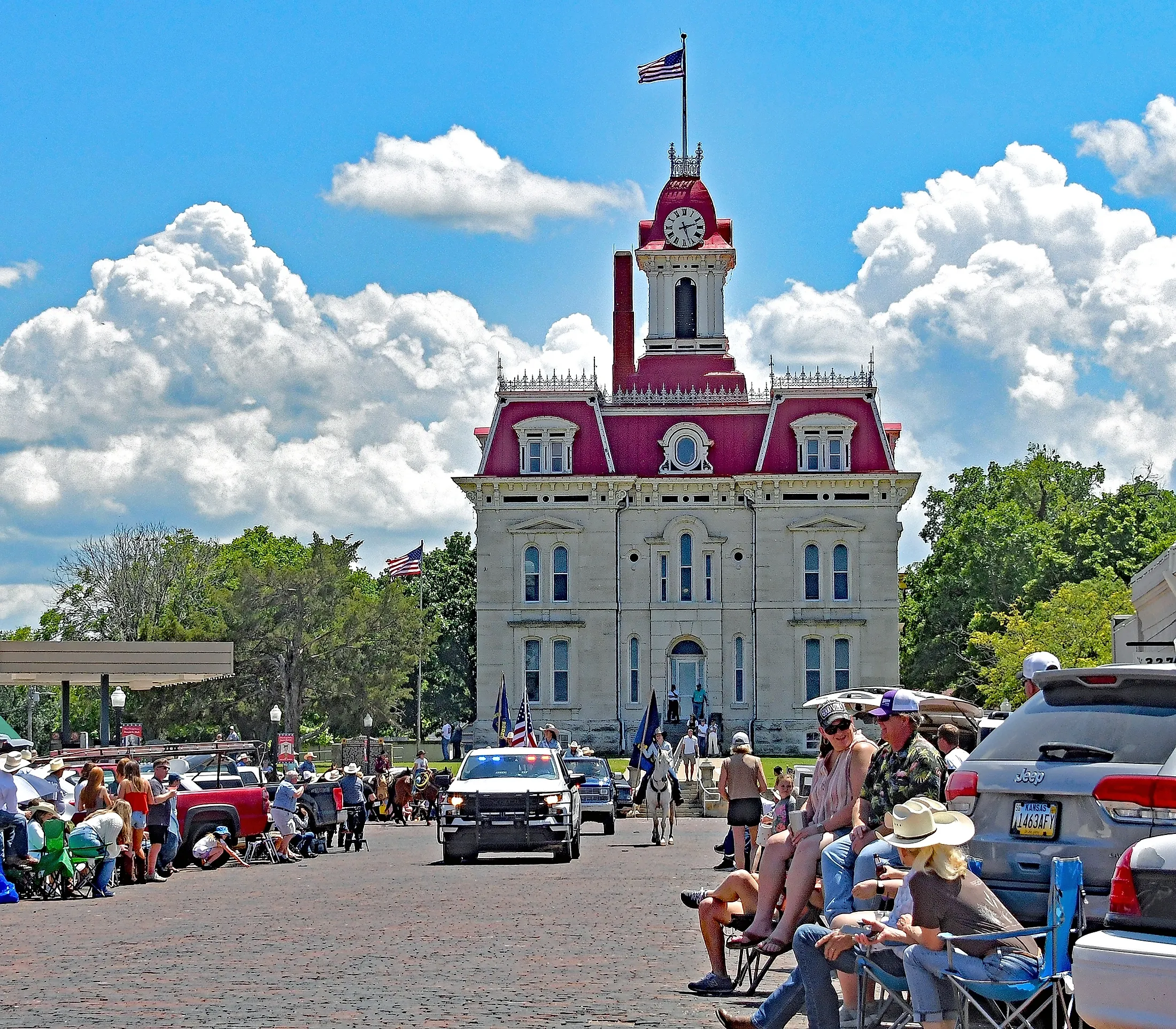
Just outside town, Chase Lake Falls drops through the Chase State Fishing Lake and Wildlife Area, and while it is not the tallest waterfall in Kansas, it photographs better than most. You can fish the lake, hike the trails, and end the night in the 1879 Stone House, an actual nineteenth-century home kept as an overnight rental. Time your visit for May and you catch the Flint Hills Rodeo Parade, which runs from Cottonwood Falls over to neighboring Strong City before it reaches the rodeo grounds. It is the oldest consecutive rodeo in the state, and the whole county turns out for it.
Norton

A fabric store can double as a museum if it keeps its old machines on display. Stitch Up A Storm does exactly that in downtown Norton, lining its shelves with quilting books, patterns, and kits while vintage sewing machines sit out for visitors to admire. The staff greet newcomers like they have known them for years, which is the whole point of a town like this one.
The bigger draw sits a short drive out at Prairie Dog State Park, 1,150 acres along the shore of Keith Sebelius Reservoir. The Steve Mathes Nature Trail runs more than a mile through it, branching off toward archery ranges, the Norton Wildlife Area, and cabins for anyone who wants to stay the night. Illustrated signs line parts of the path, turning a simple walk into something a kid will actually remember. You rarely cover ground here without someone offering directions you did not ask for.
Lucas

In 1907, a Civil War veteran named Samuel Perry Dinsmoor started pouring concrete into the shape of the Book of Genesis, and he did not stop for two decades. His Garden of Eden, built from cement and native post rock, still stands as one of the country's great works of self-taught art, and Dinsmoor himself remains on the property in a glass-topped coffin he designed. That oddball spirit earned Lucas its title as the grassroots art capital of Kansas. The Civil War veteran's monument set the tone, and the nearby Grassroots Art Center carries it forward with work built from recycled wood, metal, and limestone.
The other landmark has a name that takes a full breath to say. World's Largest Things is the home of artist Erika Nelson's collection of the world's smallest versions of the world's largest things, a museum of handmade miniatures of the giant roadside attractions scattered across America. Nelson built every tiny ketchup bottle and miniature ball of twine herself after visiting the colossal originals. The collection sits open from spring through fall, and seeing it in person is the only way the joke fully lands.
Lindsborg

They call it Little Sweden, and the town has earned the nickname the hard way. Lindsborg's Swedish settlers left their mark on the storefronts and the street signs, and the locals lean into that heritage every chance they get. The clearest example is Våffeldagen, the Swedish Waffle Day held each March, when shops across town serve waffles in every form imaginable from breakfast through dinner. Costumed volunteers known as the Waffle People rove downtown handing out goodies and jokes. It is a Swedish tradition stretched into pure small-town silliness, and nobody in Lindsborg seems embarrassed by it.
The bigger celebration comes at Midsummer, the traditional Swedish festival that fills the town with dancing, craft shows, food carts, and yes, Vikings. The arts run deeper than the festivals, though. The Red Barn Studio Museum preserves the work of painter Lester Raymer across his paintings, prints, and ceramics, and its Artist-in-Residence program keeps the building working by handing studio space to a rotating cast of newcomers. The heritage here is not a museum piece. It is something the town performs every year.
Abilene

Most of the summer, a whole frontier town comes back to life on the edge of Abilene. Old Abilene Town stages dancers, recreated street gunfights, live cattle, and country music across the warm months, a working recreation of the cattle-drive boomtown this place once was. It is the loud, theatrical front door to a town that knows how to host.
The quieter marvel is the Seelye Mansion, a 25-room home finished in 1905 by a patent medicine magnate who furnished it with treasures hauled back from the 1904 World's Fair. The tour winds past original Edison light fixtures and a Tiffany-designed fireplace, the kind of turn-of-the-century technology that drew gawkers when it was new. A young Dwight Eisenhower used to deliver ice to the back door. When you are ready to take something home, the Abilene Downtown Antique Mall is the largest of the town's many antique shops, and the staff will steer you toward the find you did not know you were hunting.
The Welcome Behind the Reputation
Kansas hospitality is not an accident of geography. It shows up in the volunteer dressed as a waffle in Lindsborg and the brewery a small town in the Flint Hills decided it deserved. It shows up in the artist who spends her winters building tiny monuments and the tour guide who corrects a gunfighter legend mid-sentence. What links these nine towns is a habit of putting effort into the welcome, whether through a preserved mission, a restored carousel, or a frontier reenactment staged for the hundredth time. The reputation holds because the people keep deciding it should.