9 Most Relaxing California Towns
California has a collection of laid-back small towns within a variety of geographical settings. In Mammoth Lakes, dozens of alpine lakes and trails stretch into the Sierra Nevada. Fort Bragg, with its iconic Glass Beach, features coastal paths and the Laguna Point Boardwalk within MacKerricher State Park. Historical places such as Placerville and Auburn also highlight the state’s past. Regardless of how you prefer to spend your time, these towns offer plenty of natural beauty, calming activities, and opportunities to explore history at a relaxed pace.
Bishop

Bishop sits at the eastern border of California, between the Sierra Nevada and White Mountains. The town is known for attracting outdoorsmen due to its access to the nearby John Muir Trail and Lake Sabrina, North Lake, and South Lake. Bishop Creek flows from the mountains east of town to the nearby Owens River, a popular waterway for flyfishing or river floats.
The community has a backdrop of Mt. Tom and its neighboring Sierra peaks, and is largely walkable. Bishop has several mural scenes throughout town that portray its historical connections to the 20-mule team, tungsten mining, and the formation of the Los Angeles Aqueduct. It is also home to the Bishop Paiute Tribe, one of the largest Native American tribes in California. The tribe’s legacy is celebrated at the Owens Valley Paiute-Shoshone Cultural Center with exhibits and displays.
Bishop is a place to slow down and spend time outdoors in the mountain air. The Bishop City Park at the town’s center is a place for tennis or public swimming. Across the street, Erick Schat's Bakkery is a local landmark with a selection of breads, pastries, and sandwiches. The nearby Laws Railroad Museum has recreated historic buildings, train cars, and a mule museum staffed with guides. The vintage-style Bishop Twin Theatre is another small downtown landmark. Bishop also provides direct access to surrounding trails, lakes, and mountain landscapes.
Tehachapi

Tehachapi is halfway between the Antelope Valley and Bakersfield and sits in the foothills of central California. It lies in a natural pass between California’s San Joaquin Valley and the Mojave Desert. This setting supports wildlife such as red-tailed hawks, mule deer, and Tule elk. The surrounding farmland produces grapes and other crops due to the area’s elevation and temperature swings. The Tehachapi Pass Wind Farm east of town along Tehachapi Willow Springs Road provides a long rural drive past rows of wind turbines.
The town also reflects the region’s rail history. Downtown, the Tehachapi Depot Museum commemorates nearly 150 years of railroad activity. The area is home to the Southern Pacific Railroad’s famous Tehachapi Loop, a spiral of track that allows trains to maneuver a 1,500-foot elevation change through the pass. The Historic Tehachapi Jail, built in 1903, preserves another piece of the town’s early development.
The downtown district contains restaurants and shops along streets near the railroad tracks. Residents and visitors also spend time horseback riding or exploring nearby foothills. The Tehachapi Sportsman Club and several open fields in the area support outdoor hobbies such as shooting sports and model aircraft flying. Tehachapi provides access to countryside landscapes and open terrain.
Cambria

Cambria sits along California’s central coast where the Pacific Ocean meets Monterey pine forests. The Fiscalini Ranch Preserve contains a network of trails and open space with views of the ocean. The Moonstone Beach Boardwalk runs along the shoreline, allowing visitors to walk beside the water. From these paths, it is common to see whales, otters, seals, and sea lions offshore.
Downtown Cambria contains small shops, cafés, and galleries. Linn’s Restaurant reflects the town’s local history, and the Cambria Center for the Arts hosts exhibits and events year-round. The Cambria Historical Museum explains the history of the Chumash and Salinan Native American communities connected to the region. Forest trails surrounding the town offer opportunities for birdwatching and photography. The Piedras Blancas Light Station stands nearby along the coast and is part of a protected shoreline area where visitors walk along coastal paths and observe wildlife.
Placerville

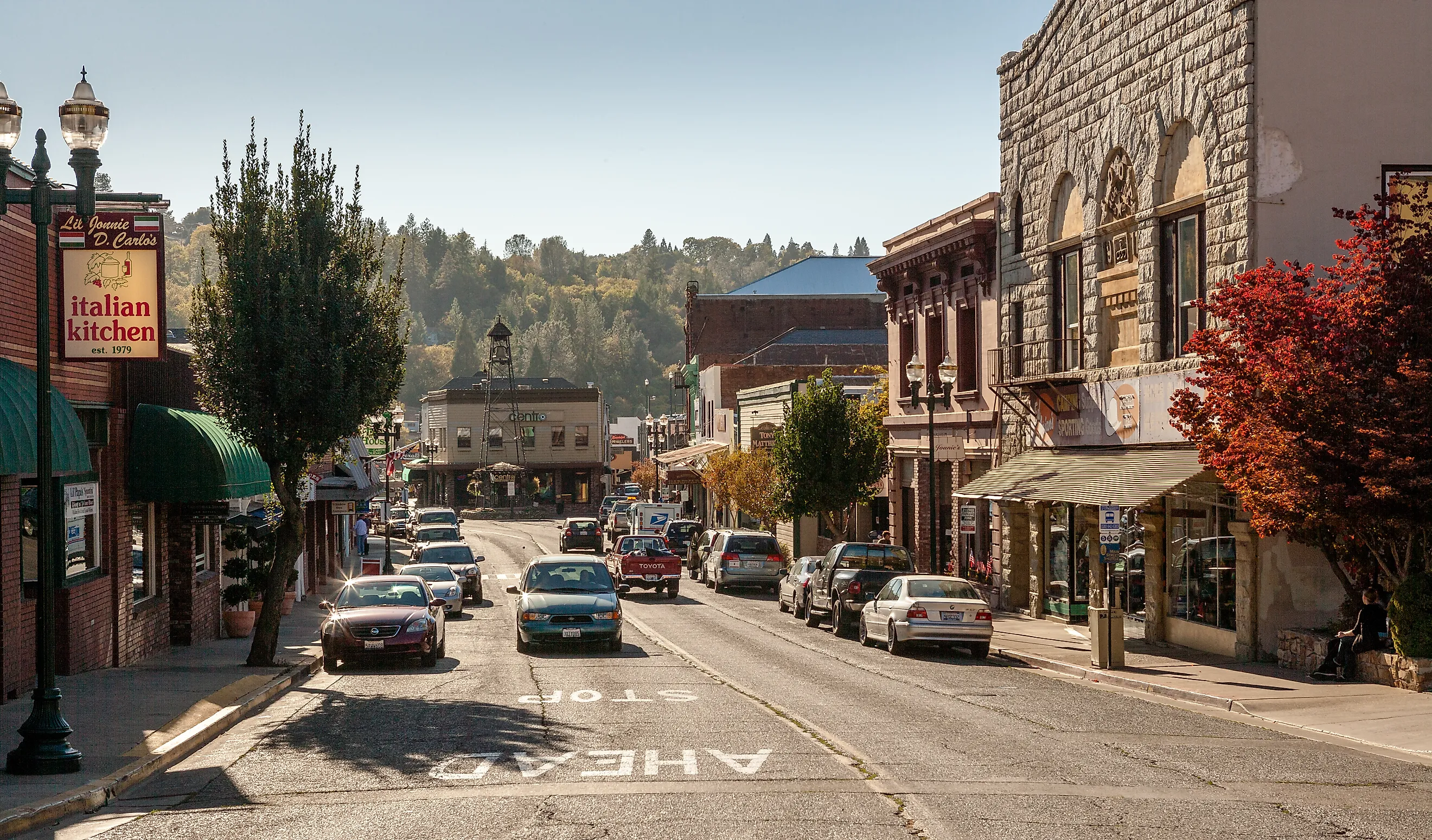
Located in California’s gold country, Placerville is a small town between Sacramento and Lake Tahoe. It sits a few miles from the American River in the foothills of the Sierra Nevada Mountains. Oak woodlands surround the town and change color in autumn. The El Dorado Trail runs through the area and provides a path for hiking or biking beside Hangtown Creek. Placerville also contains several buildings listed on the National Register of Historic Places, including Fountain-Tallman Soda Works and Confidence Hall.
The Gold Bug Park and Mine sits a short drive from town. Visitors can walk through a preserved mining site from the Gold Rush era. Nearby orchards at Apple Hill and Boa Vista Orchards allow seasonal apple picking. Vineyards such as Boeger and Lava Cap also operate in the surrounding foothills.
Outdoor recreation remains a major part of daily life here. Trails near the American River attract hikers and cyclists. The South Fork of the American River supports rafting and fishing, depending on water levels. Placerville blends historic buildings with access to nearby rivers and wooded hills.
Truckee

Truckee sits on the California-Nevada border about 30 miles north of Lake Tahoe. The town stands at nearly 6,000 feet in elevation, and the Truckee River runs directly through it. Nearby Donner Lake offers fishing and boating in a smaller setting than nearby Tahoe. Trails surrounding the lake connect with sections of the Pacific Crest Trail.
The river itself supports floating, rafting, and fishing. The Truckee River Legacy Trail provides a paved walking and biking route that links neighborhoods with downtown. Anglers regularly catch trout, bass, and whitefish in the river. Historic Downtown Truckee includes art galleries, public murals, and the town’s original train depot. The Truckee Roundhouse Makerspace serves as a workshop for local craftsmen. Streets near the river feature are lined with small shops and restaurants, all within walking distance of river paths and trails.
Fort Bragg

Fort Bragg sits along California’s northern coast about 180 miles north of San Francisco. The town faces a rugged shoreline with rocky cliffs and beaches. Noyo Harbor remains an active fishing port where boats move through calm coastal waters. A few miles south stands the historic Point Cabrillo Light Station.
Fort Bragg Glass Beach formed from sea-worn glass fragments left from an earlier dump site. The area now forms a beach where visitors walk along the shoreline and examine polished pieces of glass. Another historic attraction is the Skunk Train, which travels through nearby redwood forests along tracks first laid in the nineteenth century. MacKerricher State Park lies just north of town and includes wetlands, beaches, and the Laguna Point Boardwalk. Visitors walk the boardwalk to watch seabirds and marine mammals along the coast. Nearby Virgin Creek and Pudding Creek Beaches also provide access to tidepools.
Auburn

Auburn rests in the foothills of Placer County east of Donner Pass. The town developed during the Gold Rush and still reflects that era in its historic districts. Roads wind through hills and descend toward the American River Canyon. Oak woodlands and seasonal wildflowers cover the surrounding slopes.
The Auburn State Recreation Area sits just outside town along the American River. Trails here support hiking, horseback riding, and cycling. The river itself flows into Lake Clementine, where people swim, raft, or fish. Old Town Auburn contains preserved brick buildings from the nineteenth century. The Gold Rush Museum explains the town’s mining history, and the Placer County Courthouse holds historical exhibits. Local vineyards in the surrounding foothills also draw visitors who travel through the countryside.
Mammoth Lakes

Mammoth Lakes lies in the eastern Sierra Nevada Mountains, distant from major cities, and is a great place to escape. The town has direct access to long sections of the John Muir Trail. Nearly twenty named lakes and dozens of hiking trails surround the community. Lake Mary and Crowley Lake support trout fishing during warmer months. Horseshoe Lake allows paddleboarding and swimming. The hike to Rainbow Falls at Devil’s Postpile National Monument leads to a 101-foot waterfall framed by basalt columns.
During winter, Mammoth Mountain operates a large ski area with more than 150 runs. Cross-country ski trails spread across nearby forests. Visitors also travel to Wild Willy’s Hot Springs, a geothermal pool located outside town. Golf courses such as Snowcreek Resort and Sierra Star operate during warmer seasons.
Relax In Laid-Back California Towns

These communities highlight different landscapes across California. Mountain towns in the Sierra Nevada provide access to rivers, lakes, and hiking trails. Coastal towns offer boardwalks, harbors, and shoreline paths. Historic towns in the foothills reflect the state’s mining and railroad past. Exploring these places at a slower pace lets the memories and the relaxation sink deep, giving you the escape you need from a demanding life.