9 Most Overlooked Washington Towns For 2026
The Washington towns worth your time in 2026 are the ones the travel guides skip. They get overlooked because they never chased tourists in the first place. Left alone, each one still has the kind of thing that gets paved over once the crowds and parking lots arrive. In one, candy makers still hand out free samples at a century-old kitchen. In another, the last ferry on the lower Columbia still runs. A third is home to the oldest working courthouse in the state. All nine stay under 30,000 residents. None of them will cost you an hour in line.
Cashmere

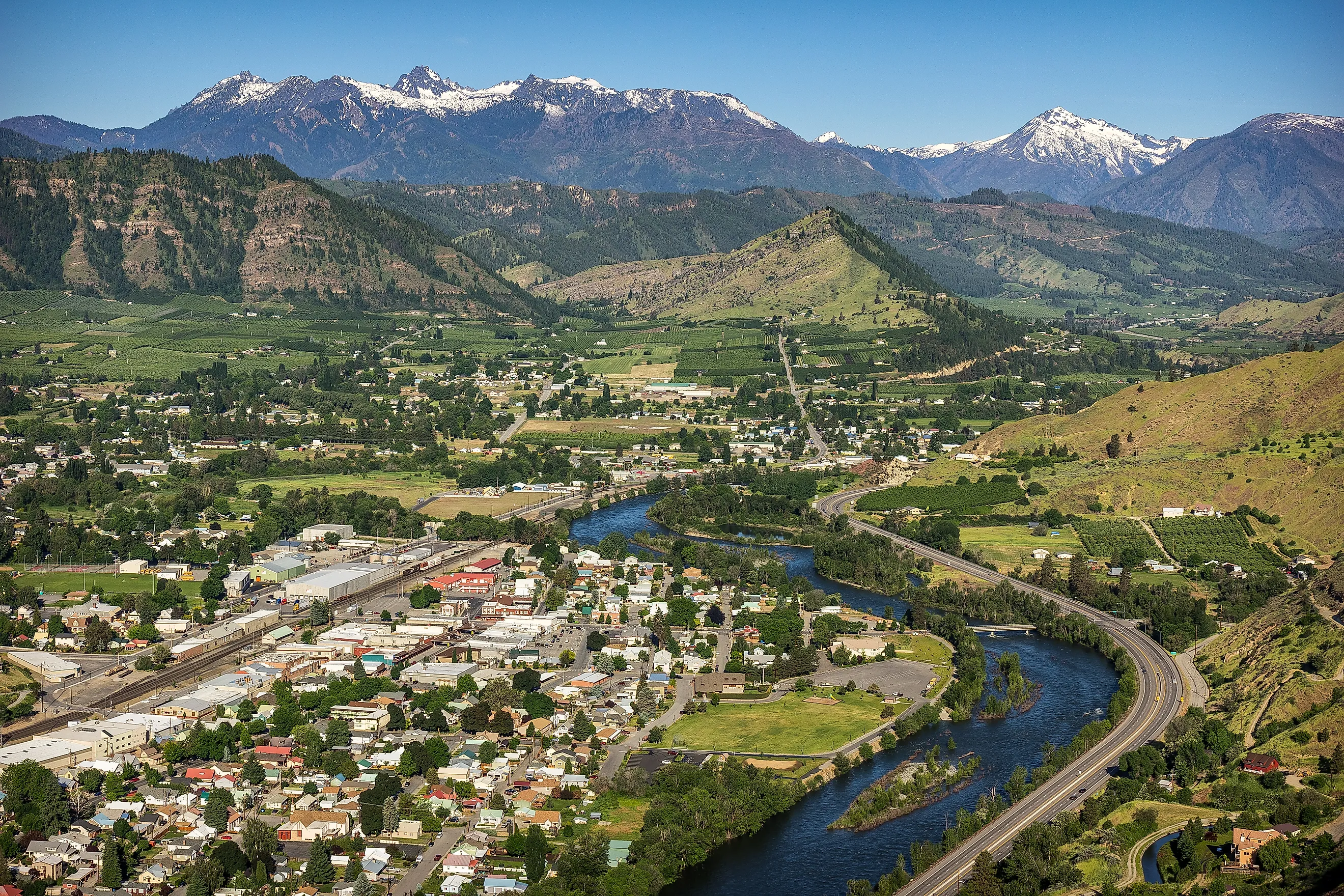
Apples built Cashmere, and one apple-based candy made it famous. Liberty Orchards has pressed apples and apricots into Aplets and Cotlets here since 1920, and the candy kitchen at 117 Mission Avenue still runs free tours that end with samples at the country store. Roughly 80,000 people find their way here each year for that alone. At the Cashmere Museum and Pioneer Village, 20 restored 1800s buildings stand along a walkable lot beside one of the region's deepest collections of Wenatchi artifacts. When the July heat climbs, locals drift down to Riverside Park and put their feet in the Wenatchee River. Wenatchee's shops and hospital sit a short drive east, which is why plenty of people choose the smaller town on purpose.
Prosser

Washington wine started here, in a research field instead of a vineyard. Dr. Walter Clore ran grape trials at the state agricultural station beginning in the 1930s, and the legislature later named him the father of the Washington wine industry for the work. You can trace that story at the Walter Clore Wine and Culinary Center, which reopened under Washington State University and pours tastings from across the state's growing regions. More than 20 wineries and tasting rooms ring the town now. The Benton County Historical Museum holds a collection covering the older chapters, back to the Yakama fishing camp that stood on the river long before the grapes. Come the second weekend of September, pilots launch dozens of balloons into the dawn sky over the Yakima River for the Great Prosser Balloon Rally, and half the town turns out to watch.
Dayton

Two record-holders stand a block apart in Dayton. The Dayton Historic Depot, built in 1881, is the oldest surviving railroad station in Washington, and volunteers now run it as a museum. Around the corner stands the Columbia County Courthouse, in continuous use since 1887 and the oldest working courthouse in the state, its Italianate design the work of architect William Burrows. Homesteader Jesse Day platted the town in 1871, and three National Register historic districts of Victorian homes fan out from the center. Just east of downtown, the Patit Creek campsite marks where Lewis and Clark stopped on their way home in 1806, staged now with life-size figures. Two blocks from the depot, the one-room Smith Hollow Schoolhouse opens on Saturdays through the warmer months for anyone curious what a country classroom felt like.
Chewelah

Skiers know the road out of Chewelah even if they have never stopped in town. Main Avenue turns into Flowery Trail Road at the only stoplight and climbs ten miles east to 49 Degrees North, the second-largest ski resort in Washington, with runs that double as hiking and huckleberry-picking trails once the snow melts. Residents have quietly built a second identity too: the Chewelah Creative District was the second such district the state ever recognized, and the Chewelah Center for the Arts runs a full calendar of concerts and theater. The name itself comes from a Kalispel word for watersnake, a nod to the creeks that thread the Colville River valley. For a town of about 2,500, that is a lot to hang onto.
Connell

Most drivers cross Franklin County's wheat fields without slowing for Connell, which began life in 1883 as a railroad stop called Palouse Junction. The ones who pull off find the Sunset Theatre, a single-screen 1950s house that August Aubert opened as the Aubert Theatre. When marquee letters kept breaking and out-of-towners kept mangling his name, he swapped three of them and the Aubert became the Sunset, and it still shows films most weekends. The North Franklin Heritage Museum, next to Heritage Park, holds a collection covering the county's farming and railroad history. The walking paths through the park make for an easy morning loop before the heat settles over the fields. Connell trades on none of the drama of a bigger town, and residents seem to like it that way.
Palouse

Founded in 1874, Palouse is the second-oldest town in Whitman County and once ran as the lumber capital of eastern Washington. Fire leveled Main Street in 1888, and the brick commercial buildings that went up afterward still stand: a four-block stretch of 23 structures earned a National Register listing in 1986. One of them holds the Roy M. Chatters Newspaper and Printing Museum and its old presses. The north fork of the Palouse River runs right through downtown, which is why photographers keep coming back for the light on the water. A few miles south, Kamiak Butte rises out of the wheat as a National Natural Landmark, and the Pine Ridge Trail climbs about 900 feet through pine and fir to a ridgeline view of the whole rolling region.
Cathlamet

Cathlamet is the seat of Wahkiakum County, Washington's second-smallest, and the town sits right on the bank of the Columbia River. The 1939 Julia Butler Hansen Bridge arcs across the Cathlamet Channel to Puget Island, and it remains the only bridge to span just part of the Columbia instead of the whole river. Cross it and the island opens into Dutch and Scandinavian dairy country, laced with flat lanes made for slow bicycling. At the island's far shore, the Wahkiakum County ferry, the Oscar B, carries a handful of cars at a time over to Westport, Oregon, the last operating ferry on the lower Columbia. Back in town, the Wahkiakum County Historical Museum holds a collection of maritime and logging history, and anglers and idlers gather at the Elochoman Slough marina to watch the water traffic pass.
Raymond

Life-size steel figures line the highways into Raymond, and first-time drivers routinely brake for deer that turn out to be metal. Local artists began the Wildlife Heritage Sculpture Corridor in 1993, and more than 200 cutouts and three-dimensional pieces now stand along Highways 101 and 6, laid out as a 2.8-mile art walk through this Willapa River mill town of about 3,000. The Northwest Carriage Museum holds a collection of more than 60 restored horse-drawn vehicles, a few of which rolled through classic films like Gone with the Wind. Downtown, older brick storefronts survive from the 1907 lumber boom that first built the place. Out along the Willapa waterfront, herons and shorebirds work the tidal flats, and an afternoon there passes at the speed of the river.
Mabton

Hops grow taller than a house on the fields around Mabton, and one family has tended them here for five generations. Puterbaugh Farms, which sells to brewers worldwide as Hops Direct, has raised hops in this stretch of the Yakima Valley since the 1930s and bred the Belma variety that now shows up in craft beer far from Washington. Family-run storefronts fill the small downtown of roughly 2,300 people, a tight and largely agricultural community. The Mabton Historical Society holds the settlement and farming record for anyone who wants the backstory. Around the edges of town, the valley opens into hop trellises and orchard rows that make for an unhurried drive at harvest, when the whole place smells green and resinous.
What These Towns Decided to Keep
Set these nine side by side and a pattern shows up in what their residents refused to give up. In Dayton, people kept a courthouse working for well over a century instead of building a new one. In Cathlamet, they kept the last ferry on the lower Columbia running when a bigger bridge would have been tidier. Connell's owners kept a 1950s theater lit, and the candy makers in Cashmere kept a recipe going for more than a hundred years. None of it depends on a crowd to justify itself, which is exactly why these places still feel like themselves in 2026. Point a car east or south of the usual Washington circuit and you can have most of it nearly to yourself.